Volkswagen Transporter Evolution Signals a New Era for Fleet Efficiency
The modern commercial vehicle is no longer just a means of transport, it has become a mobile workspace, a data node and, increasingly, a strategic asset in operational efficiency. Volkswagen Commercial Vehicles has expanded its Transporter ecosystem with this in mind, with a blend of product upgrades, digital tools and design evolution that reflects how the sector itself is changing.
The introduction of the new Transporter Commerce Pro S trim, alongside an enhanced telematics platform and continued development of the broader VW Bus family, points to a coordinated push rather than a standalone product launch. It is a response to a market that is balancing electrification, cost control, uptime and driver experience all at once. For fleet managers operating in construction and infrastructure, that combination is becoming non-negotiable.
At the same time, the continued success of the Multivan and the wider VW Bus line demonstrates how a heritage platform can evolve into a multi-role ecosystem spanning commercial fleets, passenger mobility and emerging autonomous applications. Taken together, these developments provide a snapshot of where medium commercial vehicles are heading and how manufacturers are repositioning themselves to meet shifting industry demands.
Briefing
- Volkswagen expands the Transporter range with the new Commerce Pro S trim, combining design upgrades with operational flexibility
- The latest Transporter wins ‘Best Medium Van’ and ‘Best Medium Electric Van’ at the What Car Van and Commercial Vehicle Awards 2026
- New Connect Pro telematics platform introduces real-time fleet visibility, predictive maintenance insights and OTA updates
- Electrification strategy continues with the e-Transporter offering up to 1,000 kg payload and strong towing capability
- The VW Bus ecosystem evolves further, with Multivan design updates and continued progress towards autonomous mobility
A Workhorse Reengineered for Modern Infrastructure Demands
Volkswagen Transporter has long held a reputation as a dependable mid-sized van, but its seventh generation reflects a shift in priorities. Payload capacity of up to 1.28 tonnes and load volumes approaching 6.8 cubic metres remain central, yet the emphasis has broadened to include driver comfort, digital integration and long-term cost predictability.
That repositioning is particularly relevant for infrastructure and construction operations, where vehicles are often deployed across dispersed sites, under variable conditions and with tight delivery schedules. Reliability alone no longer cuts it. Operators want vehicles that reduce downtime, integrate into digital workflows and provide clarity on running costs.
The latest iteration addresses this through a combination of engineering and service strategy. The inclusion of a comprehensive aftercare package, branded as the 5+ Promise, introduces a structured approach to maintenance and servicing. In practice, that means fewer unexpected costs and a more predictable lifecycle for fleet assets, which is a key concern for contractors managing large vehicle portfolios.
Commerce Pro S Adds Design Without Compromising Utility
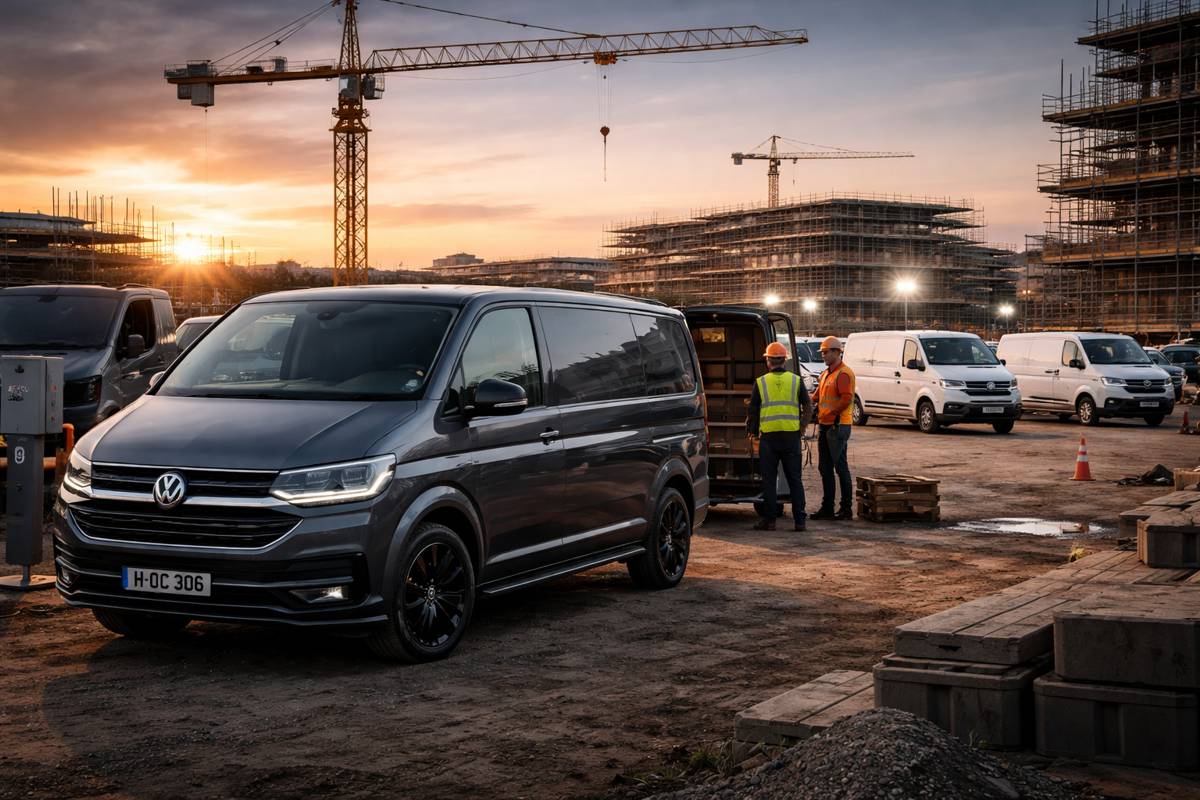
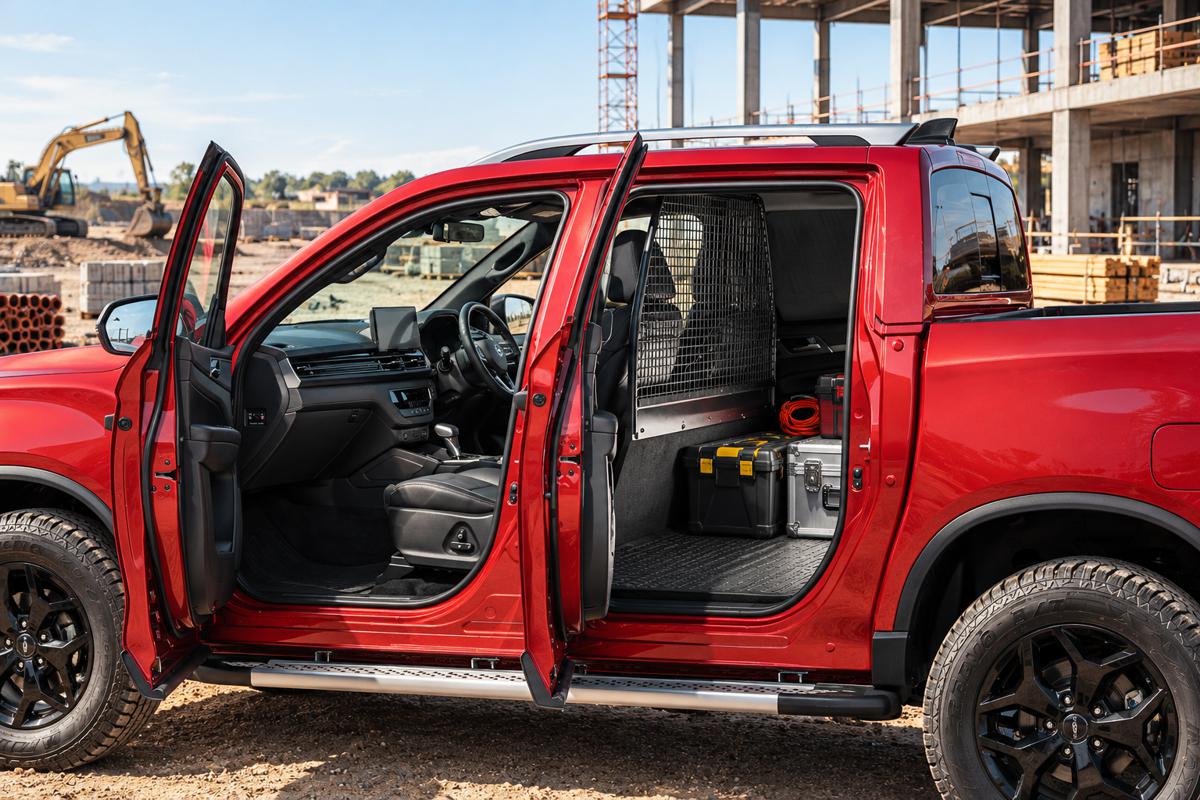
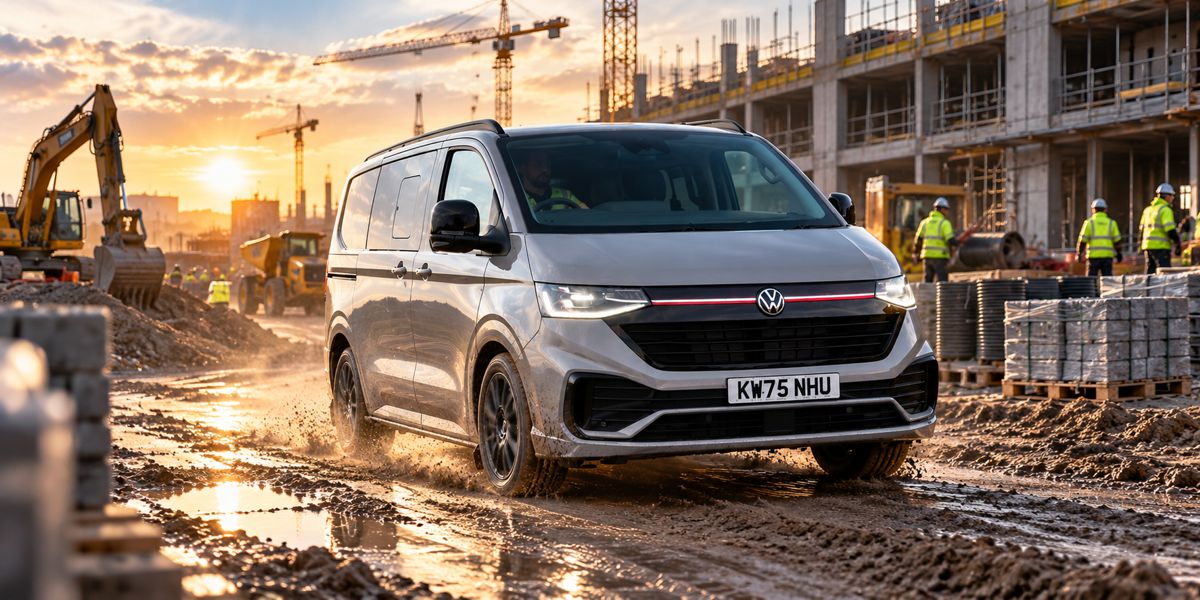
Volkswagen Transporter Commerce Pro S represents a subtle but telling shift in how commercial vehicles are positioned. While performance and payload remain unchanged, the addition of gloss black alloy wheels, a reworked front profile and refined interior detailing introduces a more deliberate visual identity.
For businesses operating in client-facing environments, such as utilities maintenance, urban construction or specialist contracting, vehicle presentation plays a role in brand perception. The Commerce Pro S trim acknowledges that reality without drifting into purely aesthetic territory. Features such as heated and power-folding mirrors, illuminated cabin elements and durable interior finishes still support daily operational use.
More importantly, the trim is available across both panel van and Kombi configurations, with short and long wheelbase options. That flexibility ensures it can slot into a range of operational scenarios, from transporting equipment to moving personnel between sites. Powertrain choice further reinforces that adaptability, with diesel and electric variants available and an eHybrid option expected to follow.
Electrification Gains Ground in the Medium Van Segment
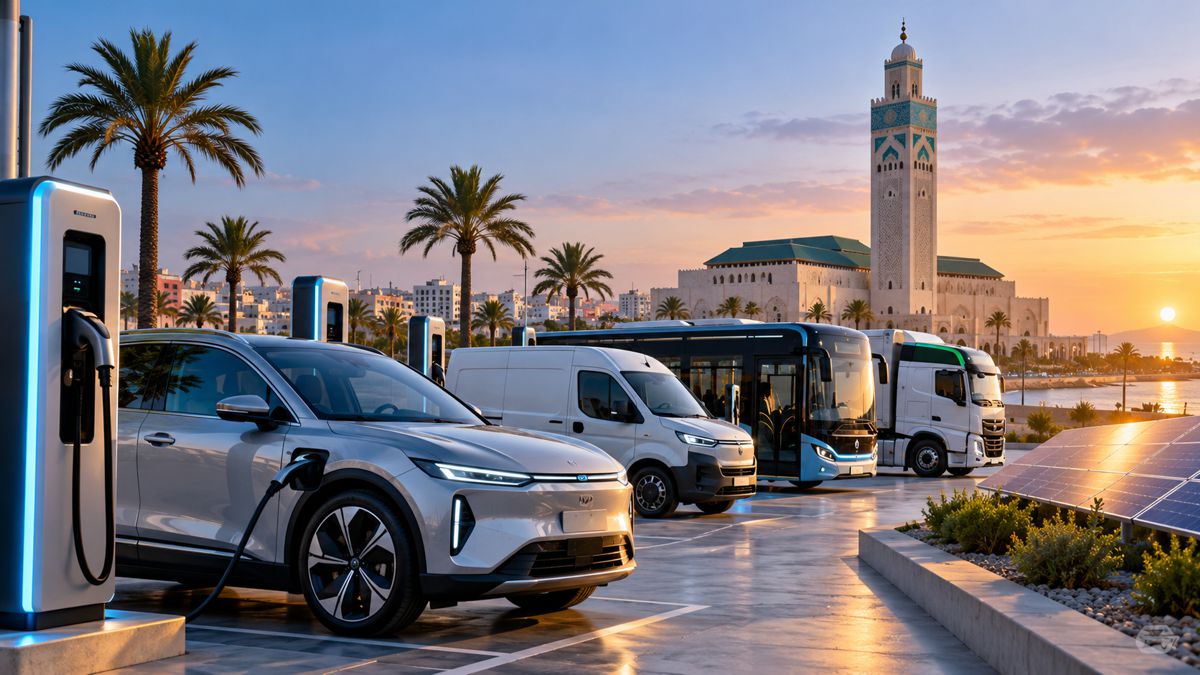
The rise of electric commercial vehicles is no longer speculative. It is already reshaping procurement decisions across Europe and beyond. The Volkswagen e-Transporter reflects this shift, offering power outputs of 136PS and 218PS alongside a payload capacity of up to 1,000 kilograms and towing capability of 2,300 kilograms.
These figures matter because they address one of the long-standing concerns around electrification in construction and infrastructure fleets: capability. Electric vans must match, or at least approach, the performance of their diesel counterparts to gain widespread adoption. The e-Transporter moves closer to that parity, particularly for urban and regional operations.
Recognition at the What Car Van and Commercial Vehicle Awards 2026 reinforces that progress. Judges highlighted not only the environmental credentials but also the vehicle’s usability and refinement. That combination is likely to accelerate adoption among businesses balancing sustainability targets with operational realities.
Digital Fleet Management Moves to the Forefront
Perhaps the most significant development is not physical but digital. The introduction of Volkswagen Connect Pro signals a deeper integration of vehicles into connected infrastructure systems.
The platform provides real-time visibility into vehicle location, route history, fuel consumption and battery state of charge. It also surfaces maintenance requirements and warning messages, allowing fleet managers to act before issues escalate. For construction firms managing tight project timelines, that level of insight can make the difference between meeting deadlines and costly delays.
Integration extends further with features such as online service booking and over-the-air software updates. These capabilities reduce the need for vehicles to be taken out of service for routine interventions, effectively increasing utilisation rates. In an industry where margins are often tight, incremental gains in uptime can translate into meaningful financial improvements.
The ability to manage mixed fleets through a single platform also reflects a practical reality. Few organisations transition entirely to electric or new vehicles overnight. A system that accommodates vehicles from 2021 onwards provides continuity, allowing gradual fleet renewal without sacrificing visibility or control.
The VW Bus Legacy Evolves into a Multi-Role Platform
Beyond the Transporter itself, the broader VW Bus family continues to evolve. With over 12.5 million units produced since 1950, the platform has moved through multiple phases, from post-war utility vehicle to cultural icon and now to a technologically advanced mobility solution.
The latest updates to the Volkswagen Multivan illustrate how design and functionality continue to converge. A redesigned front end, updated lighting signature and new material finishes reflect contemporary expectations, while maintaining the recognisable DNA of earlier generations.
Growth in deliveries, including a reported increase to 38,700 units in 2025, suggests sustained demand. That demand spans both commercial and private use, highlighting the platform’s versatility. For businesses, it offers a vehicle that can transition between roles, from transporting teams to supporting on-site operations.
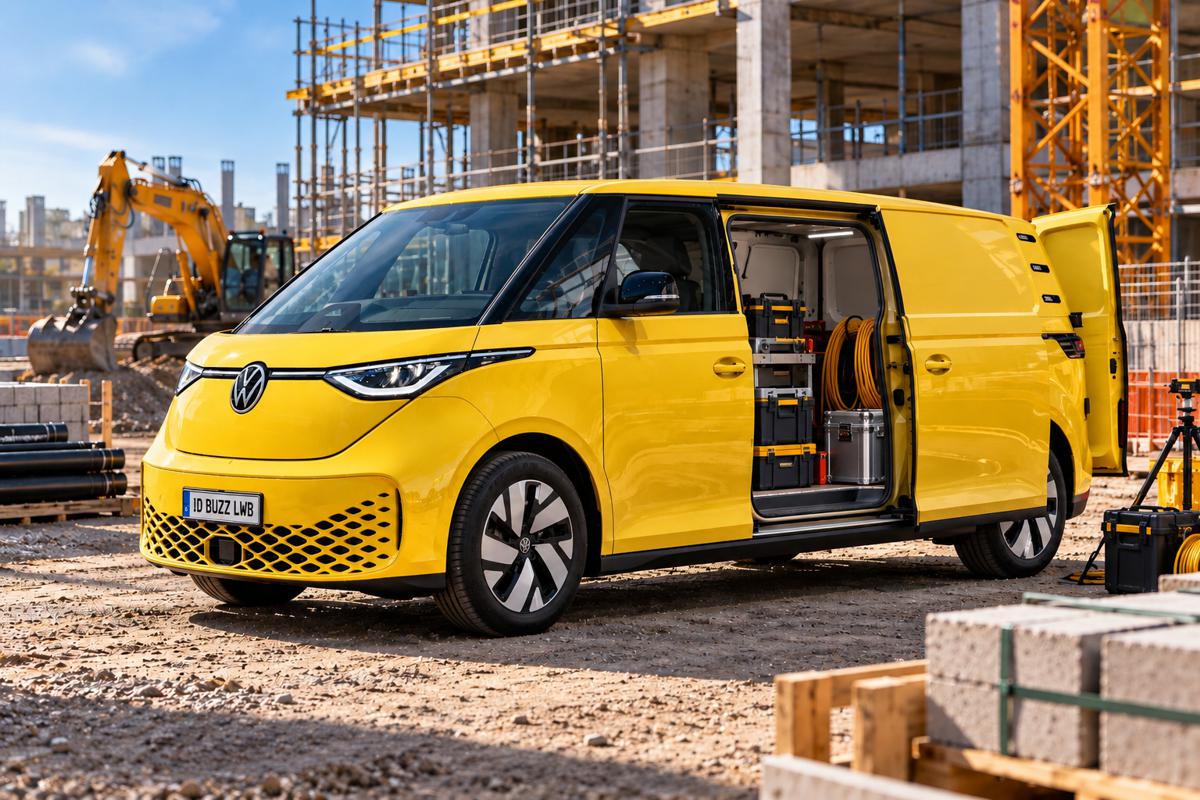
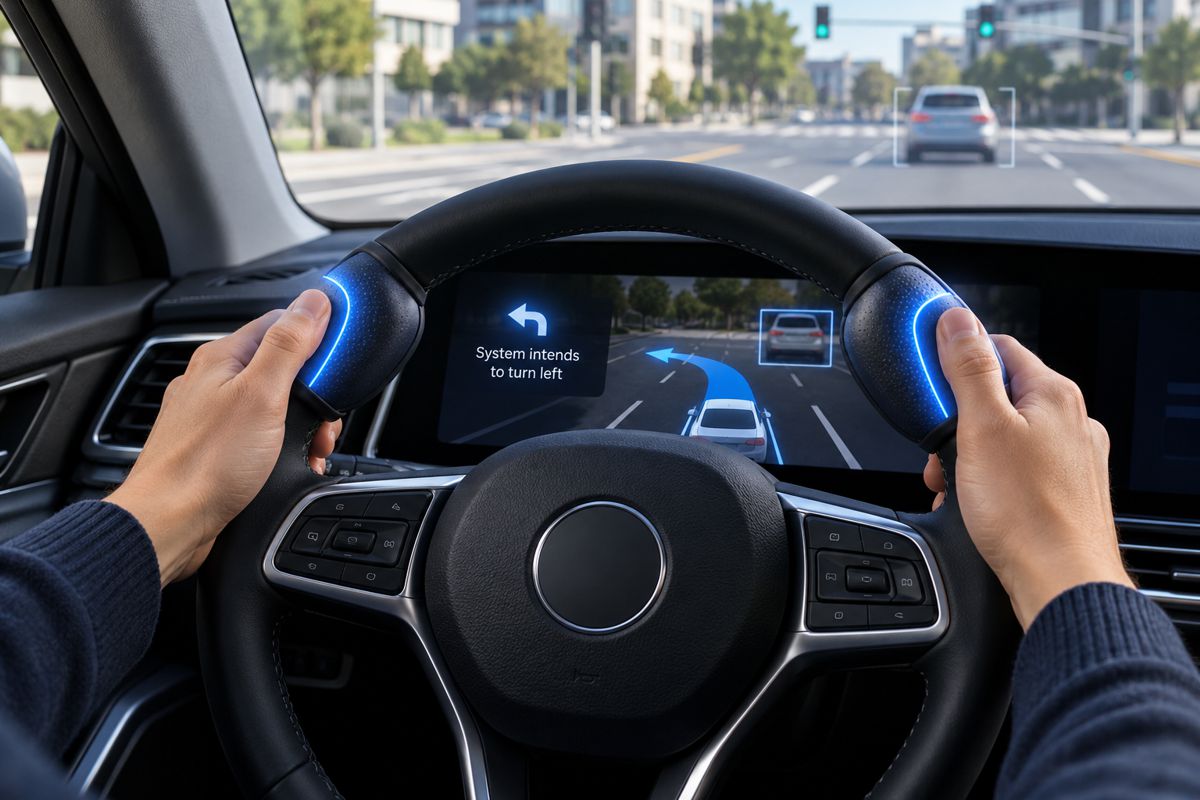
At the same time, developments such as the Volkswagen ID. Buzz AD indicate where the platform is heading. As one of the first fully autonomous production vehicles in Europe, it represents a step towards integrating automation into everyday mobility. For infrastructure sectors, that opens the door to new operational models, particularly in controlled environments such as logistics hubs or large construction sites.
Manufacturing Scale and Industrial Context
Behind these product developments sits a substantial industrial base. Production across facilities in Hanover, Poznań and Września involves more than 21,000 employees, supporting both commercial and passenger vehicle lines.
That scale matters in the context of global supply chains and infrastructure projects. Large fleet orders, particularly for public sector or major construction initiatives, require consistent production capacity and reliable delivery schedules. Manufacturers that can demonstrate both are better positioned to secure long-term contracts.
It also underlines the importance of European manufacturing in the transition towards cleaner and more connected mobility. As regulatory frameworks tighten around emissions and digital compliance, production ecosystems must adapt accordingly. The integration of electric drivetrains, software systems and advanced manufacturing processes is no longer optional.
Aligning Vehicles with Infrastructure Sector Priorities
The developments across the Transporter range and associated technologies reflect a broader alignment with the priorities of the construction and infrastructure sectors.
Key among these is cost control. Fuel efficiency, maintenance predictability and reduced downtime all contribute to more stable operating budgets. Telematics platforms such as Connect Pro add another layer, enabling data-driven decision making that can optimise routes, reduce idle time and extend vehicle lifespan.
Sustainability is another factor. With increasing pressure to reduce emissions, particularly in urban environments, electric and hybrid options are becoming essential. Vehicles that can deliver both environmental benefits and operational capability are likely to gain traction.
Driver experience should not be overlooked either. Comfortable, well-equipped vehicles can improve productivity and reduce fatigue, particularly for teams working long hours across multiple sites. Features that enhance usability, from intuitive controls to refined cabin environments, contribute to that outcome.
A Platform Positioned for the Next Phase of Mobility
What emerges from this suite of updates is not a single product story but a platform strategy. Volkswagen Commercial Vehicles is positioning the Transporter and its related models as part of a broader ecosystem that combines hardware, software and service.
That approach reflects the direction of the industry. Vehicles are becoming integrated components of digital infrastructure, connected to fleet management systems, energy networks and, eventually, autonomous mobility frameworks. Manufacturers that can deliver across these dimensions are likely to define the next phase of the market.
For construction professionals, investors and policymakers, the implications are clear. Vehicle procurement is increasingly intertwined with digital strategy, sustainability goals and operational efficiency. Decisions made today will shape not only fleet performance but also the ability to adapt to future requirements.
The Transporter’s latest evolution suggests that the boundaries between vehicle, tool and technology platform are continuing to blur. And as those lines fade, the role of the commercial vehicle in infrastructure development is set to expand well beyond transport alone.