Transforming Coastal Ferry Routes and Mobility in São Paulo
São Paulo’s extensive network of ferry routes has long served as a vital transport backbone for coastal communities, commuters, and regional industries. Now, with a bold public private partnership set to reshape the entire system, the state is preparing for a modernisation programme that blends cleaner propulsion, upgraded infrastructure, and a renewed focus on passenger experience.
The Acqua Vias SP Consortium, composed of BK Consultoria & Serviços, Internacional Marítima, Rodonave Navegações, Zetta Infraestrutura & Participações, and Innovia Soluções Inteligentes, secured the concession with a 12.63 percent discount on the reference bid. Their proposal stood out for both its financial competitiveness and its comprehensive approach to long term service enhancement.
The partnership forms part of the São Paulo State Investment Partnerships Program, reflecting the government’s broader strategy of attracting private capital to accelerate infrastructure upgrades. With an estimated R$2.5 billion in investments, equivalent to roughly US$469 million, the initiative represents one of Brazil’s most significant mobility focused PPPs in recent years. The programme aims to overhaul 14 ferry lines, which together accommodate about 11 million passengers and 10 million vehicles each year.
Investment In A Cleaner, More Efficient Fleet
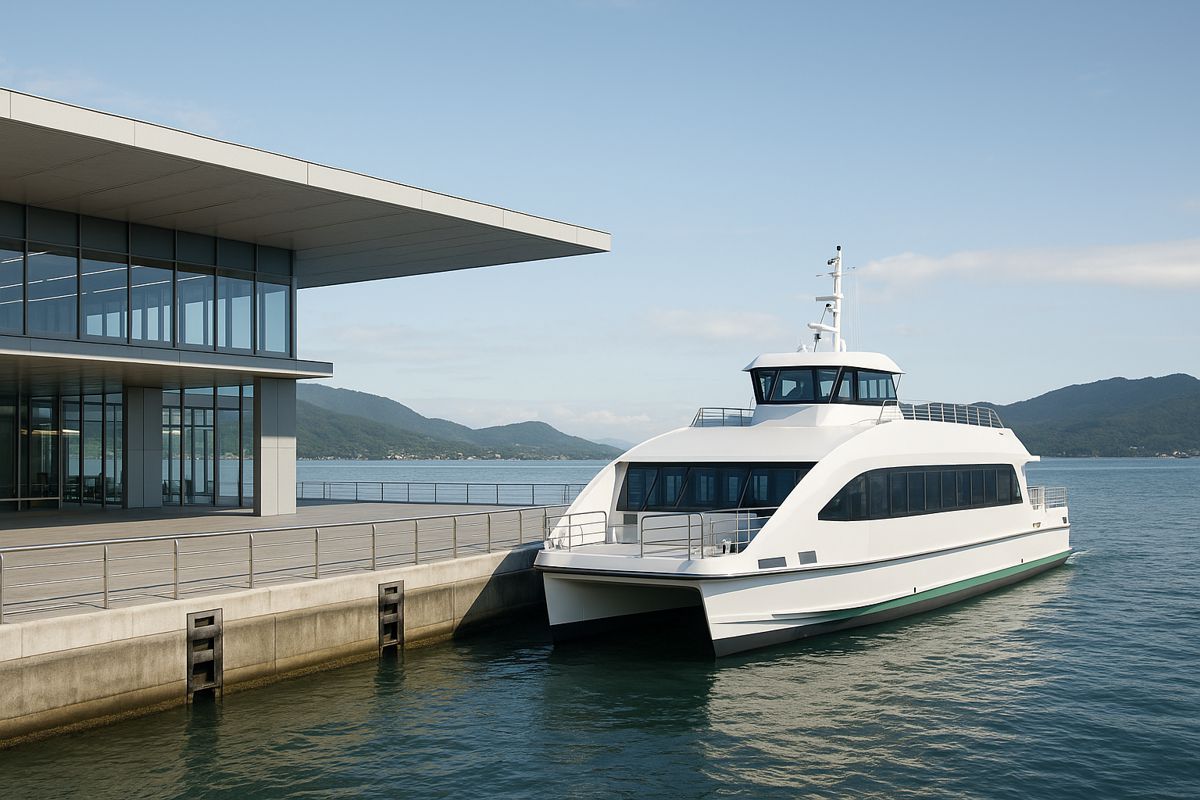
The contract outlines a 20 year vision built around more than 40 newly built vessels, most of them fully electric. This shift signals São Paulo’s growing commitment to reducing emissions from public transport. Industry reports indicate that electric propulsion systems in ferries can significantly cut operational noise, fuel consumption, and maintenance costs while enhancing reliability on shorter shuttle routes.
Stakeholders have increasingly pointed to electrification as a strategic priority across Latin American transport corridors. São Paulo’s leadership sees this programme as a milestone, aligning regional mobility with the state’s climate objectives and the global move toward decarbonised transport networks. Upgraded terminals, modern charging infrastructure, and digitalised operational control will allow electric operations to scale effectively across the system.
Expanding Terminals And Operational Infrastructure
The investment package also includes extensive terminal upgrades and expansions across 20 locations. These improvements focus on passenger capacity, accessibility, safety, and the ability to accommodate a more sophisticated and technologically advanced fleet. Enhancements will involve redesigned pontoons, reinforced docking areas, and new passenger flow layouts.
Additional components include new maintenance facilities and automated payment booths, alongside advanced automation and safety systems. These systems are expected to streamline operations, reduce congestion, and introduce greater predictability during peak demand periods. International benchmarks highlight how integrated control centres, when paired with automation, can substantially improve route reliability and minimise service interruptions.
Transition To Concessionaire Management
The contract is expected to be signed in the first half of 2026, following the formal completion of preparatory stages. Once signed, an operational transition period will begin. Semil will oversee operations during the first three months, collaborating directly with the concessionaire. By the seventh month, the consortium will assume full operational responsibility.
This phased approach is intended to reduce risks associated with the handover of complex transport systems. It also provides sufficient time for the new operator to deploy management systems, initiate construction works, and begin preparing its new vessels for service.
Implementation Schedule And Full Capacity Targets
The investment programme will roll out gradually, allowing each component to align with vessel construction schedules and terminal readiness. According to the contract timeline, every route should operate at full capacity by the end of year seven. By that stage, the entire electric fleet will be deployed and all terminal works completed.
Planning documents from comparable ferry modernisation schemes show that the seven year horizon reflects typical build and commissioning cycles for electric ferries and their associated charging systems. The timeline also allows for incremental delivery, ensuring that mobility improvements start benefiting communities well before full programme completion.
Routes Included In The PPP
The concession covers a broad geographic area, linking island communities, coastal hubs, and inland regions. The routes are:
- Bertioga–Guarujá
- Bororé–Grajaú
- Cananéia–Ariri
- Cananéia–Continente
- Cananéia–Ilha Comprida
- Iguape–Juréia
- João Basso–Taquacetuba
- Porto Natividade da Serra
- Porto Paraitinga
- Porto Varginha
- Santos–Guarujá
- Santos–Vicente de Carvalho
- São Sebastião–Ilhabela
- Taquacetuba–Bororé
These routes provide essential links for residents, tourists, and logistics operators, with the busiest corridors handling continuous flows of commuters and service vehicles. Modernisation aims not only to improve safety and comfort but also to accommodate future population growth and economic activity along the coast and within the Paraíba Valley.
Strengthening Economic And Social Connectivity
Improved water crossings are expected to deliver substantial socio economic benefits. Studies on ferry systems worldwide highlight how reliable cross water mobility supports tourism, local commerce, and labour market access. São Paulo’s initiative is projected to create a ripple effect that spans construction employment, fleet manufacturing, and the long term productivity of regional businesses.
International comparisons such as Norway’s ongoing transition to electric ferries demonstrate that upgraded systems can reduce carbon emissions dramatically. São Paulo’s approach mirrors these global trends, positioning the state as a leader in sustainable maritime mobility in South America.
A Forward Looking Transport Strategy
The Acqua Vias SP Consortium’s role will be central to realising this vision. Their responsibilities extend from vessel construction and terminal upgrades to long term operational standards. Authorities expect the partnership to set new benchmarks for safety, service quality, and environmental stewardship throughout the entire water crossing network.
As electrification advances and infrastructure investments begin reshaping the system, São Paulo’s coastal and inland waterways stand to experience a profound transformation. The programme signals a strategic shift that prioritises reliability, sustainability, and modern mobility for millions of users.