Jubail Buraidah Pipeline Marks Major Milestone In Saudi Water Security
Saudi Arabia has taken another decisive step toward long term water resilience with the Saudi Water Partnership Company confirming the financial close of the Jubail Buraidah Independent Water Transmission Pipeline Project. The announcement underscores a growing confidence in private sector partnerships, particularly as the initiative represents one of the Kingdom’s most ambitious water transmission schemes to date.
With a project finance investment of SAR 8.5 billion, equivalent to roughly US 2.26 billion, the project is fully financed by the private sector. Its scale reflects the critical nature of national water security and the drive to create reliable, future proof infrastructure capable of supplying rapidly growing population centres. The scheme is designed not only to expand supply, but also to stabilise water management across regions that rely heavily on consistent, high quality potable water.
The consortium behind the project is led by Al Jomaih Energy and Water Company, which holds a 45 percent stake. Supporting partners include Buhur for Investment Company with 35 percent and Nesma Company Limited with 20 percent. Collectively, the group brings substantial experience in large scale infrastructure delivery, energy systems, construction, and investment management across the Gulf.
Transforming Regional Water Connectivity
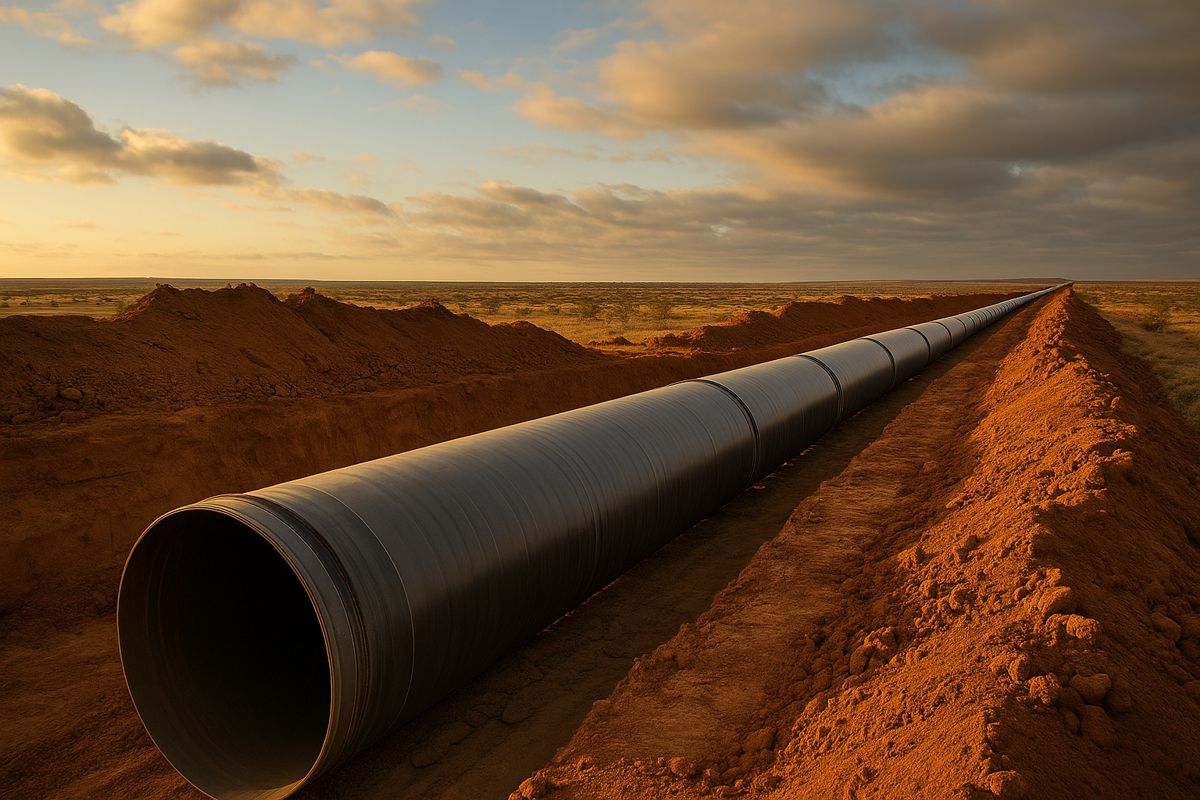
The pipeline’s strategic purpose lies in its ability to connect the Eastern Province with the Qassim region, making it the first transmission system to link the two critical population centres. It is expected to serve over two million people by delivering potable water across a 587 kilometre network. The system includes a transmission capacity of 650,000 cubic metres per day and dedicated storage volumes reaching 1,634,500 cubic metres.
This scale of capacity ensures that the pipeline becomes a cornerstone asset within the Kingdom’s wider water infrastructure, bolstering supply stability and helping safeguard against seasonal fluctuations. Notably, the design includes a reverse flow capability to support operational flexibility throughout the year, enabling operators to respond swiftly to regional demand variations while maintaining high system efficiency.
International benchmarks for large scale water transmission pipelines highlight the significance of such flexibility. In comparable regions, reverse flow infrastructure has proved essential in building responsive water grids capable of adapting to climate patterns, unexpected shortages, and emergency supply shifts. By integrating this capability, Saudi Arabia positions itself at the forefront of resilient water system engineering.
BOOT Model Strengthening Private Sector Role
The project will be delivered under a Build, Own, Operate and Transfer model through the Stream Water Transmission Company. This structure reflects ongoing national efforts to encourage private investment and expertise within the utilities sector. The BOOT agreement spans 35 years beginning from the commercial operation date, expected in the first quarter of 2029.
The long term agreement offers the stability required for private stakeholders to engage in capital intensive water transmission investments. At the same time, it ensures the asset is ultimately transferred to national ownership, retaining long term strategic value for the Kingdom. Similar models have been deployed across major desalination and wastewater initiatives under the Ministry of Environment, Water and Agriculture, demonstrating the growing maturity of Saudi Arabia’s public private partnership framework.
Meeting Vision 2030 Water Sector Goals
The consortium noted its commitment to delivering exceptional standards of performance, stating that the project will achieve operational availability of not less than 98 percent. This target aligns with broader public sector ambitions to enhance efficiency across critical utilities. Operational reliability at such levels is crucial for ensuring consistent water availability across rapidly developing regions.
As one consortium representative stated: “The project supports the Kingdom’s objective to create sustainable, long term water solutions while promoting effective partnerships with the private sector.” This position echoes ongoing government priorities to increase water reuse, diversify supply routes, and enable advanced infrastructure engineering across the nation.
Vision 2030 places strong emphasis on improving service delivery while enabling strategic investment from outside public budgets. By prioritising large scale, resilient infrastructure, the Kingdom is reducing pressure on existing systems and helping future proof its water sector against shifting environmental and demographic conditions.
Enhancing Operational Sustainability
Engineering considerations for the pipeline also reinforce the Kingdom’s sustainability objectives. Large diameter transmission networks reduce energy consumption by improving linear flow efficiencies, while modern pump station technologies can significantly lower operational costs and emissions.
Research from international water utilities suggests that increasing system automation can reduce energy usage by up to 20 percent. Saudi Arabia’s continued adoption of digital control systems, advanced sensors and real time monitoring across major networks positions this pipeline to integrate seamlessly with next generation water management platforms.
The pipeline design also complements efforts to expand the Kingdom’s desalination capacity, particularly along the Gulf. By creating a robust transmission route into the interior, desalinated water can be distributed more efficiently, reducing logistical and environmental pressures on local aquifers.
Regional Impact And Long Term Value
Beyond its national significance, the Jubail Buraidah pipeline carries substantial regional value. Water supply reliability is essential for agricultural development across Qassim, a region known for its date farming and domestic food production. Improved transmission capacity not only stabilises urban consumption but also supports regional economic growth.
Linking major provinces through integrated infrastructure creates a platform for broader development initiatives, enabling industries dependent on consistent water supply to expand with greater confidence. The project also demonstrates the growing sophistication of Saudi Arabia’s infrastructure financing landscape, where multi billion riyal schemes are increasingly backed by both local and international investors.
Strengthening National Water Strategy
The Kingdom’s long term National Water Strategy sets out targets to improve sustainability, reduce losses across networks, and increase private sector involvement. The Jubail Buraidah project speaks directly to these goals, presenting a blueprint for future transmission schemes.
As water demand continues to rise with population growth and industrial expansion, investments of this scale will remain essential. By delivering a high capacity pipeline with strong operational guarantees, the Kingdom helps safeguard its water future while supporting continued urban and economic development.
Moving Forward With Confidence
With financial close now achieved, engineering, procurement and construction activities are expected to accelerate. The pipeline stands as a major milestone in the Kingdom’s broader investment in resilient water networks. Its 2029 operation target places it within a period of intense infrastructure development across transport, energy and utilities.
By securing long term financing and reinforcing the role of private sector partners, the project sets a strong precedent for future initiatives designed to enhance national water security. As Saudi Arabia continues its transition toward diversified, sustainable resource management, the Jubail Buraidah pipeline will serve as a vital backbone in the country’s modern water infrastructure.