Heathrow Expansion and the Future of UK Airport Capacity
Heathrow’s long-debated third runway has resurfaced as one of the UK’s most consequential infrastructure proposals, promising to reshape national aviation capacity while reigniting environmental and political tensions.
The government’s recent decision to support Heathrow Airport’s preferred option marks a defining moment for a country balancing global connectivity with climate commitments. With project finance estimated at GBP49 billion and timelines stretching toward 2029 for final approval, the plan has set the stage for one of Europe’s most ambitious aviation developments.
Heathrow’s Third Runway Moves Forward
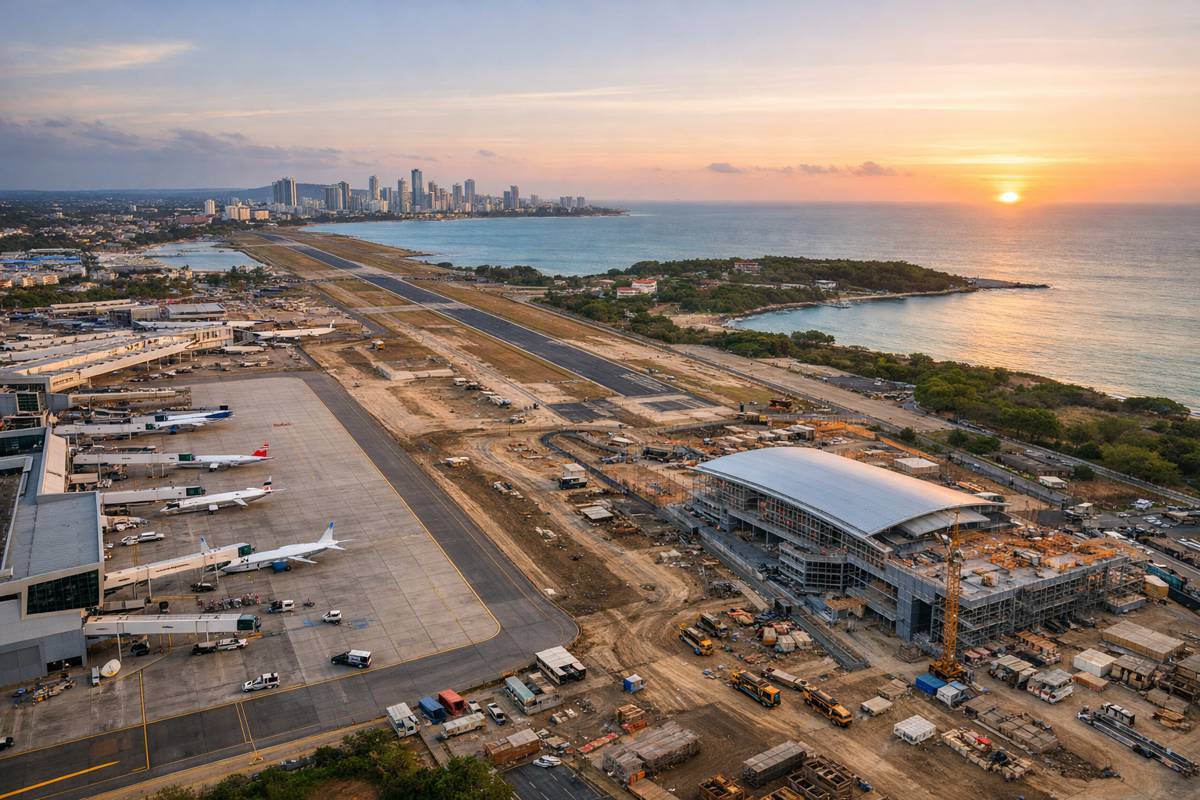
Heathrow’s proposal centres on constructing a 3.5 km runway positioned northwest of the existing northern runway, transforming the airport’s operational profile and increasing annual capacity to 756,000 flights and 150 million passengers. This would represent a dramatic leap from the 84 million travellers currently passing through Heathrow each year.
Central to the plan is a major reconfiguration of the M25 motorway. Heathrow intends to tunnel the motorway beneath the new runway footprint, followed by widening works between junctions 14 and 15. This approach aims to avoid severe traffic disruption while ensuring long‑term resilience of one of the UK’s busiest transport arteries.
The alternative proposal from the Arora Group favoured a shorter and more affordable runway that avoided moving the M25 altogether. However, the government ultimately backed Heathrow’s concept, arguing that the larger runway would better accommodate long‑term demand. A detailed planning application is expected nearer the end of the decade, with a final government ruling anticipated in 2029.
Terminal Expansions And Satellite Development
Heathrow’s plans go far beyond a new strip of concrete. The expansion represents a substantial redevelopment of terminal infrastructure. A new facility, labelled T5X, is envisioned to work alongside an expanded Terminal 2, replacing Terminal 3 entirely. The airport also intends to add three satellite terminals to support the forecasted surge in aircraft movements and passenger flows.
These developments mirror broader international trends in hub airport modernisation, where operators seek to create seamless, high‑capacity environments capable of supporting new aircraft types and digitally enhanced passenger processing. Heathrow’s redesign would place it in stronger competition with major European hubs such as Schiphol, Frankfurt and Paris Charles de Gaulle, each undertaking their own long‑term upgrades.
Surface Access Improvements And Integrated Transport Links
Complementing the airside works is a suite of surface transport proposals designed to enhance regional integration. Heathrow intends to upgrade its existing bus and coach stations, improve forecourt layouts and enhance accessibility for passengers arriving from across the South East.
Rail connectivity forms a key element of the strategy. While the western rail link to Heathrow remains under review, pressure continues to grow for its reinstatement due to its potential to significantly reduce road traffic and cut passenger travel times from the Thames Valley. Similarly, the proposed Southern Rail Link, led by private-sector promoters, aims to connect Heathrow directly with Clapham Junction and Waterloo, although government progress on the scheme remains slow.
Taken together, these transport enhancements represent significant steps toward decarbonising passenger journeys, a priority for both the UK government and Heathrow’s sustainability commitments.
Airport Developments Across The UK
Heathrow’s expansion is only one element of a broader reshaping of Britain’s aviation landscape. Across the UK, airports have launched or revived major development plans in response to shifting passenger demand, airline strategies and environmental policy.
At Manchester Airport, the GBP1.3 billion Transformation Programme continues to overhaul Terminal 2, with additional airfield expansions underway to increase capacity and improve passenger experience. The scheme includes new piers, state‑of‑the‑art baggage systems and improved security screening, placing Manchester as the North’s primary international gateway.
Gatwick Airport, meanwhile, has advanced its own runway project by seeking permission to bring its standby northern runway into routine use. The airport argues that the scheme can deliver significant capacity increases without the environmental footprint of constructing a new full-length runway. Gatwick’s Development Consent Order application was accepted in 2023, and examination of the proposal is ongoing.
In Scotland, Edinburgh Airport has pursued airfield improvements and terminal expansions to handle long‑term growth projections, with works focusing on taxiway enhancements and sustainability‑oriented upgrades. Glasgow Airport continues to invest in airside efficiency measures and passenger service enhancements despite slower recovery in long‑haul operations.
Challenges, Environmental Concerns And Regulatory Oversight
Heathrow’s third runway project remains controversial, particularly among environmental groups and local communities. Campaigners have long argued that expansion is incompatible with the UK’s legally binding carbon budgets. Previous legal challenges resulted in temporary setbacks, with the Court of Appeal ruling in 2020 that the government’s approval process had failed to adequately consider climate commitments. The Supreme Court later overturned that ruling, allowing the project to proceed.
Opponents warn that the increased flight capacity risks undermining national decarbonisation targets, despite Heathrow’s pledge to operate net‑zero aviation by 2050. The airport has stated: “Our expansion will be designed to meet the UK’s carbon objectives, supported by cleaner aircraft, sustainable aviation fuels and advances in airspace modernisation.”
Local residents also continue to raise concerns regarding noise, air quality and construction disruption. Heathrow has responded with commitments to improved noise insulation schemes, air-quality monitoring and community engagement programmes. However, campaign groups remain sceptical, emphasising the scale of environmental and social impacts.
Economic Rationale And Forecasted Benefits
Backers of the third runway highlight the substantial economic dividends associated with increased aviation capacity. The UK’s lack of runway capacity in the South East has long been cited as a barrier to international trade, investment and tourism. Independent forecasts commissioned by government suggest that expansion could generate tens of billions of pounds in economic value over coming decades.
Airlines have maintained consistent pressure for increased capacity at Heathrow, which continues to operate close to full utilisation. The third runway would offer improved slot availability, enabling new destinations, more frequent services and reduced delays.
Further potential benefits extend to construction supply chains and employment. Heathrow estimates that expansion could support up to 180,000 new jobs across the UK, once both direct and indirect economic activity is accounted for.
UK Aviation Development
The coming years will be critical as Heathrow prepares its detailed planning submission and navigates the Development Consent Order process. Only after a full public examination will ministers decide whether the project can proceed.
Although uncertainty remains, the UK’s aviation landscape is clearly entering a transformative phase. Heathrow’s third runway sits at the centre of a wider national conversation about connectivity, economic growth and environmental responsibility. Alongside parallel developments at Gatwick, Manchester and other regional airports, the country is preparing for a new era of modernised, high‑capacity aviation infrastructure.
The final decision in 2029 will shape the trajectory of UK aviation for generations. Whether approval is granted or not, the debate has already prompted a re-evaluation of how the UK aligns its global transport ambitions with its sustainability commitments.