Sovereign AI Meets Street-Level Operations with H2O.ai and Certis
The global race to “AI-enable” infrastructure has reached a point where glossy demos and isolated pilots are no longer enough. Transport networks, public spaces, critical facilities and urban security operations sit at the sharp end of real-world complexity, where the data is messy, the timelines are tight, and decisions carry consequences. In this environment, the most valuable AI is the kind that can be trusted, governed, and deployed repeatedly, without becoming a fragile science project that only works on a good day.
That’s the context behind a new Memorandum of Understanding (MOU) signed between H2O.ai and Singapore-based Certis Group, aimed at scaling the use of AI across Certis’ operational environments. The stated focus is on deploying agentic and predictive AI capabilities in day-to-day settings, strengthening operational resilience, improving decision-making, and supporting safety across complex infrastructure and urban operations.
It may sound like another partnership announcement, but the intent is more ambitious than a typical “let’s explore opportunities” handshake. The collaboration is positioned around operationalising AI in the places that matter most: on the ground, under pressure, and at scale, across domains such as urban security, transportation, and critical infrastructure.
From Dashboards to Decision Advantage in Transport and Critical Infrastructure
Infrastructure operations are increasingly defined by how quickly an organisation can detect risk, understand what’s unfolding, and coordinate a response. For transport operators, that can mean crowd flows in stations, incidents in tunnels, disruption on arterial routes, or weather-driven knock-on effects that cascade through an urban system. For critical infrastructure, it could be anything from perimeter breaches to equipment anomalies, to supply chain disruption that forces operational re-planning.
What AI offers, when it’s deployed properly, is not just another layer of data visualisation. The prize is decision advantage. Predictive capability can surface early warnings before a disruption becomes a crisis. Agentic capability, used carefully, can support coordination by proposing responses, triggering workflows, or highlighting the best next action based on context and rules. In other words, the real shift is from “monitoring what’s happening” to “anticipating what’s likely next, and acting with intent.”
That’s especially relevant for high-stakes operational environments where resources are finite and human attention is the most limited asset of all. In these environments, a few minutes of earlier warning or a clearer understanding of likely outcomes can change the operational picture completely. And because infrastructure operators often manage multiple asset types and service expectations at once, they don’t need AI that’s impressive in isolation. They need AI that fits into the messy middle of real systems, where people, processes and platforms all collide.
Combining Orchestration and Predictive AI for Real-Time Situational Awareness
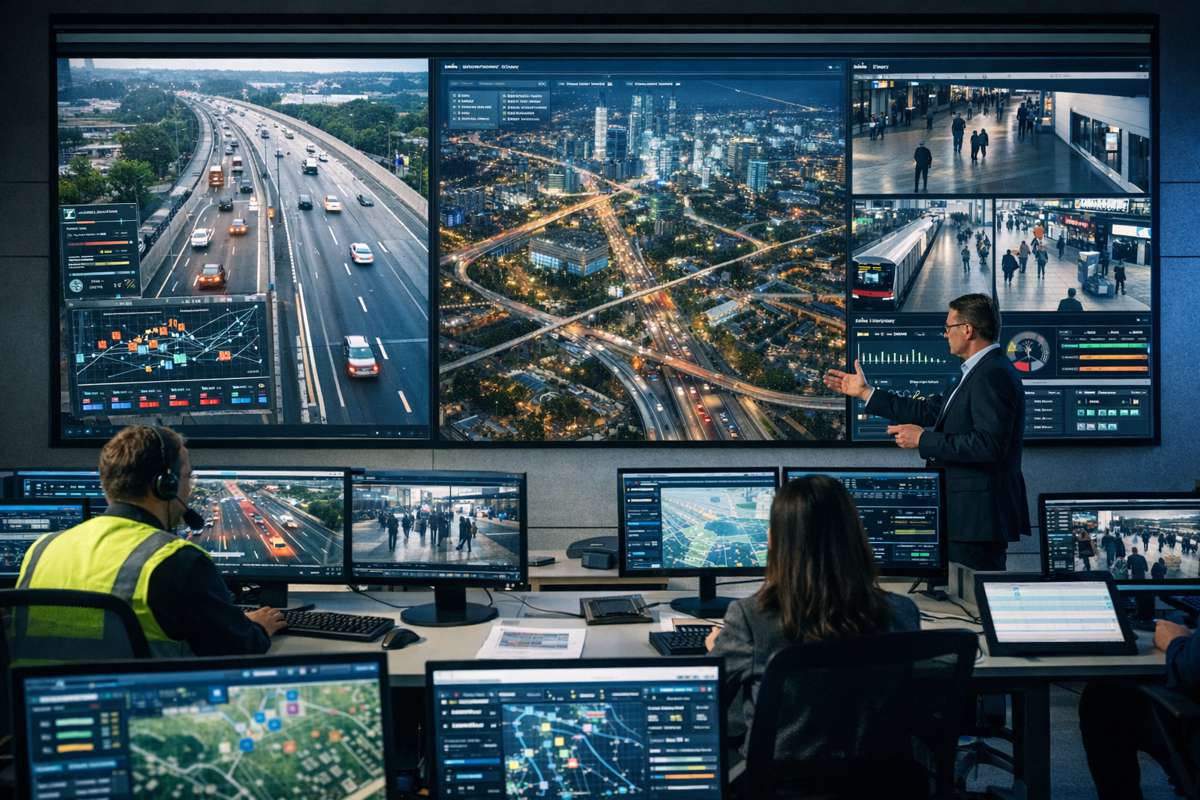
Under the MOU, H2O.ai’s sovereign and predictive AI platform will be combined with Certis’ Mozart AI orchestration platform. The goal is to deliver real-time situational awareness, risk anticipation and operational planning while coordinating people, processes and autonomous systems across complex environments.
That wording matters. Many AI tools can generate insights, but far fewer can reliably translate those insights into coordinated operational activity. Orchestration platforms are designed to bring structure to fast-moving situations, linking signals from across systems and helping teams act consistently. When orchestration is paired with predictive capability, AI stops being a separate “analysis tool” and becomes part of the operational rhythm, supporting both foresight and follow-through.
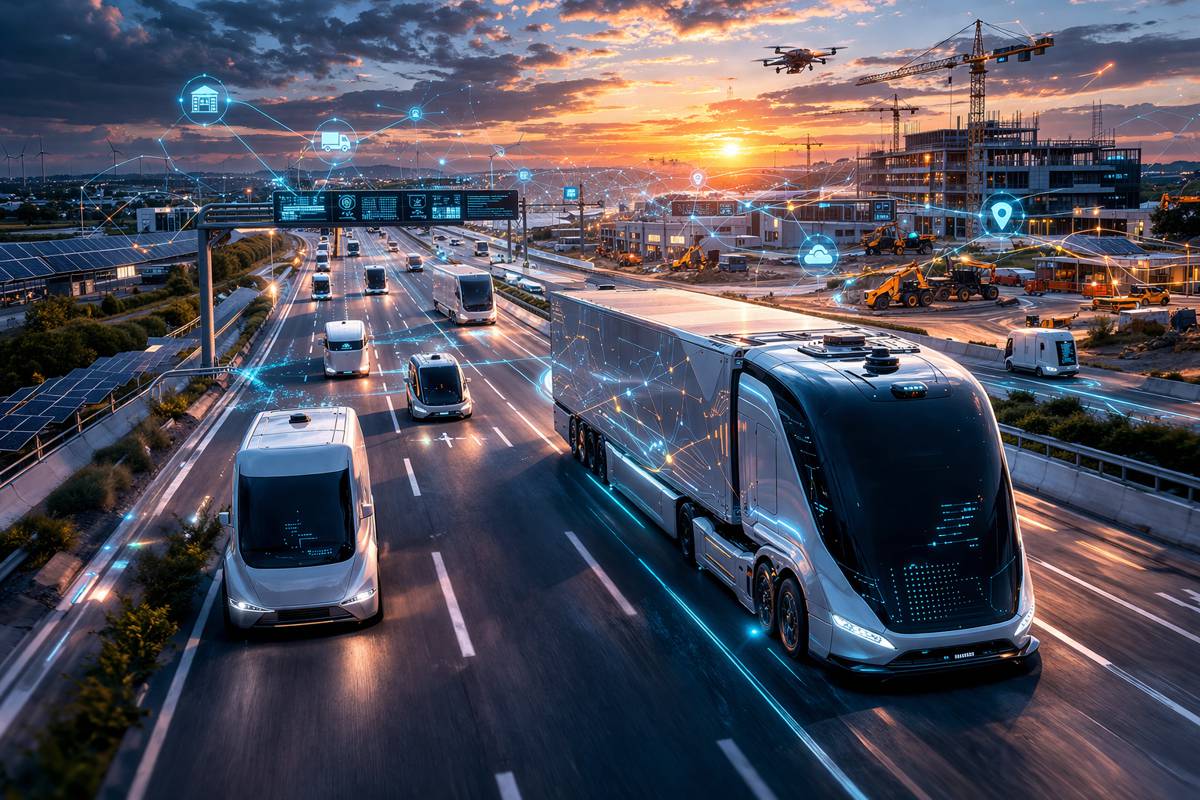
This is where the bigger story sits for construction and infrastructure stakeholders. The built environment is increasingly operated like a digital system, not just an asset portfolio. Roads, rail, airports, public venues and critical sites are being managed through interconnected platforms with growing expectations around resilience, safety and continuity. AI only becomes strategically valuable when it can be deployed as part of that operational backbone.
There’s also a practical angle: the infrastructure sector doesn’t have the luxury of constant reconfiguration. Operations require repeatability. Any AI system intended for security, transport or critical facilities must be stable, auditable, and aligned with governance frameworks. Otherwise, it doesn’t get adopted, no matter how clever the algorithms are.
Sovereign AI and the Reality of Trust, Compliance and Control>
AI is often sold as if the hard part is building the model. In operational environments, the hard part is deploying it responsibly. Data sensitivity, regulatory obligations, and public trust are not side notes. They’re deal-breakers.
H2O.ai positions itself as a pioneer in sovereign AI, with a focus on secure, compliant and infrastructure-flexible deployments. That emphasis is particularly relevant for public-facing infrastructure and security operations, where organisations need control over how data is processed, where it is stored, and how AI decisions can be explained. For the organisations responsible for safety and continuity, sovereignty isn’t a political slogan. It’s operational risk management.
The phrase “sovereign AI” has gained traction in recent years as governments and critical industries grapple with the implications of dependency on external cloud platforms and opaque models. In sectors such as transport and infrastructure, operators increasingly want AI systems that can run within specific environments, on private data, with clearly understood governance. That does not mean rejecting cloud, but it does mean avoiding one-size-fits-all deployments that ignore jurisdiction, compliance and security constraints.
By leaning into sovereignty and predictive AI, the partnership signals a move toward industrial-grade AI systems designed for regulated or high-accountability environments. That’s the kind of AI that infrastructure owners, city authorities, and concession operators can actually use without opening a new risk front.
Industrialising AI in Operations Is an Organisational Challenge, Not Just a Technical One
One of the most revealing parts of this announcement is not the technology itself, but the language used to describe Certis’ focus. Certis President and Group CEO Ng Tian Beng framed the challenge as moving beyond experimentation and toward standardisation and governance across operations.
Ng Tian Beng, President & Group CEO of Certis: “At Certis, we operate in environments where decisions have real consequences, especially on safety, continuity, and public trust.”
That’s a plainspoken reality check. Infrastructure and urban operations don’t tolerate guesswork. The challenge isn’t whether AI can be made to work in a controlled environment. It’s whether it can be made to work reliably, repeatedly, and responsibly across multiple operational settings.
Ng Tian Beng, President & Group CEO of Certis: “As we scale our use of AI, the challenge is no longer experimentation, but how to standardise, govern, and industrialise AI reliably across operations. Partnering with H2O.ai strengthens our ability to do this responsibly, combining operational depth with robust AI capabilities.”
That “industrialise AI” phrasing is the key takeaway for industry watchers. Infrastructure AI is moving into its production era. If the first wave was proof-of-concept, and the second wave was pilot proliferation, the third wave is standardised deployment with governance, repeatable performance and measurable operational value.
From a construction and engineering perspective, this mirrors what digital delivery teams have experienced with BIM, digital twins and automation tooling. The technology itself can be impressive, but scaling it across programmes and portfolios depends on process, people and governance. AI is no different. Possibly even more so, because the tolerance for failure is often lower.
Agentic AI in the Real World Comes with Guardrails, Not Hype
The announcement describes H2O.ai as a leading “agentic and predictive AI” company, and the partnership specifically aims to deploy agentic capability in operational environments. Agentic AI is one of the most discussed frontiers in enterprise AI, because it implies systems that can do more than respond. They can act, initiate tasks, and carry out workflows with a degree of autonomy.
In critical infrastructure and transport operations, that autonomy must be handled with care. Nobody wants an automated system making high-impact choices without accountability, audit trails and oversight. The opportunity is to use agentic systems to support structured action, not replace operational judgement. That means embedding guardrails, approval steps and transparent logic so that teams can trust the system’s recommendations and interventions.
Sri Ambati, Founder & CEO of H2O.ai: “We are excited to collaborate with Certis, Singapore’s pioneering advanced integrated solutions provider. By combining H2O.ai’s sovereign and predictive AI capabilities with Certis’, we can democratize AI for good, enabling more efficient and responsible AI deployments that address real-world challenges in safety and sustainability.”
The phrase “responsible AI deployments” is doing a lot of work here, and it needs to. In infrastructure operations, responsible AI is not about abstract ethics statements. It’s about ensuring models don’t introduce bias into enforcement decisions, don’t produce unreliable predictions that erode trust, and don’t create single points of failure.
For project owners, operators and policymakers, the most promising deployments are likely to be those that combine predictive analysis with controlled operational workflows. Think early warning systems for risk, prioritisation engines for response, and situational intelligence tools that give teams a clearer decision picture, without handing full autonomy to an opaque black box.
Robotics, Predictive Applications and the Blending of Physical and Digital Operations
The MOU outlines three areas of joint exploration: co-developing AI models for orchestration and decision support, deploying and validating AI-enhanced systems including robotics and predictive applications in operational settings, and upskilling workforces through workshops covering AI literacy and ethical AI practices.
That second point deserves attention. Robotics is no longer confined to warehouses and manufacturing. In infrastructure environments, robotics may include autonomous patrol units, inspection tools, surveillance platforms and sensor-enabled systems that reduce risk to personnel while expanding coverage. When paired with predictive AI, the result can be a more proactive operational posture, where teams can anticipate risk rather than simply respond to incidents.
In transport and public infrastructure, that could translate into better management of high-density environments, improved incident response planning, and smarter allocation of resources across shifts and sites. In critical infrastructure, it can support more consistent surveillance and anomaly detection. Across the board, it’s about connecting the physical world to a decision engine that can recognise patterns earlier and guide actions more effectively.
Importantly, validation in operational settings is where many AI ambitions succeed or fail. The difference between a promising model and a useful operational system is often the ability to perform under imperfect conditions, changing contexts and human constraints. Deploying, validating and refining AI in the real world is not glamourous, but it’s where the value is created.
Singapore’s Smart Nation Ambitions and the Global Relevance for Infrastructure Operators
The partnership is positioned as aligned with Singapore’s Smart Nation vision, supporting broader ambitions around strengthening AI infrastructure and democratising AI. Singapore has long been seen as a testbed for integrated urban innovation, with a comparatively strong track record of deploying technology across mobility, public services and the built environment.
For global infrastructure stakeholders, what matters is not the branding of “Smart Nation” itself, but what it represents: a model where infrastructure is operated as a system, technology is embedded into workflows, and public-facing outcomes are prioritised alongside efficiency. If AI can be standardised and governed in high-accountability urban environments, it becomes more transferable to other global cities and infrastructure operators facing similar challenges.
The partnership also sits within a wider market shift: infrastructure owners and operators are increasingly expected to demonstrate resilience, service reliability and safety performance, not just deliver capital projects. This is one reason AI is moving from “innovation” teams into core operations. It’s becoming part of how infrastructure is run, and ultimately, how it is financed and regulated.
Investors, in particular, are paying closer attention to operational performance and risk exposure, especially for long-term concessions, PPPs and assets where reliability drives revenue. AI that strengthens operational resilience can become part of a wider value story, reducing disruption costs and improving continuity.
Building AI Readiness Across the Workforce Without Losing the Human Edge
Alongside the technology, the MOU commits to organisational readiness through knowledge-sharing workshops that aim to upskill workforces in AI literacy and ethical AI practices. That’s not a small footnote. It’s one of the most practical indicators that both organisations recognise the human factor.
AI in operational environments can fail for reasons that have nothing to do with model accuracy. It fails when teams don’t trust it, don’t understand it, or don’t know how to use it under pressure. It fails when workflows aren’t redesigned to incorporate AI outputs. And it fails when governance structures aren’t clear, creating confusion about responsibility when something goes wrong.
Workforce readiness also has a safety dimension. In high-stakes environments, teams need clarity on what AI is advising, why it’s advising it, and what should happen next. This is where training becomes a form of risk control. AI literacy is no longer a “nice to have” for digital teams. It’s a frontline operational capability.
For the construction and infrastructure ecosystem, this reinforces a growing truth: digital transformation isn’t about replacing people, it’s about making human judgement more effective. The organisations that succeed will be those that bring AI into operations in a structured way, keep accountability clear, and build confidence through competence rather than hype.
A Practical Step Toward AI That Can Run the City, Not Just Talk About It
There’s a reason many infrastructure AI stories feel disconnected from reality: they focus on potential rather than operational proof. This partnership points toward something more grounded, with a focus on deploying, validating and industrialising AI in real operational environments across security, transportation and critical infrastructure.
For Certis, it’s about scaling AI reliably across operations while protecting safety, continuity and public trust. For H2O.ai, it’s about proving that sovereign, predictive and agentic AI can be deployed responsibly where the stakes are high and governance matters. And for the wider infrastructure sector, it offers a clear signal that the next chapter of AI adoption will be written in operational control rooms, field deployments and coordinated response workflows.
In a world where disruption has become routine, resilience isn’t a buzzword. It’s a competitive advantage. And AI, deployed with discipline, is increasingly becoming part of the infrastructure toolkit that helps cities and critical services stay one step ahead.