adesso SE and Hitachi Expand Application Reliability for Asset-Heavy Industries
In energy, utilities, and other asset-heavy industries, digital transformation doesn’t fail with a bang. It fails quietly. A control room dashboard loads slowly. A forecasting model drifts out of tolerance. A patch gets delayed because the operational risk feels too high. Then, one day, the business-critical system that “usually works” becomes the system that doesn’t and the consequences cascade across customers, regulators, supply chains, and physical operations.
The expanded collaboration between adesso SE and Hitachi Digital Services is designed to help organisations run critical applications with greater reliability, security, and compliance across complex hybrid and multi-cloud environments. The partnership combines adesso’s cloud transformation and integration expertise with Hitachi’s Application Reliability Centers (HARC), a global operations model built on Site Reliability Engineering (SRE) principles that aims to maintain application availability around the clock, while controlling costs and meeting governance expectations.
Rather than being a standard systems integration announcement, the deeper significance lies in how the alliance speaks directly to a hard truth in modern infrastructure: digital ambition only becomes operational value when the underlying applications can run continuously, safely, and predictably. For energy operators and other capital-intensive sectors, “reliable” isn’t a nice-to-have. It’s the baseline for performance, safety, customer trust, and regulatory confidence.
Why Reliability Engineering Has Become Infrastructure Critical
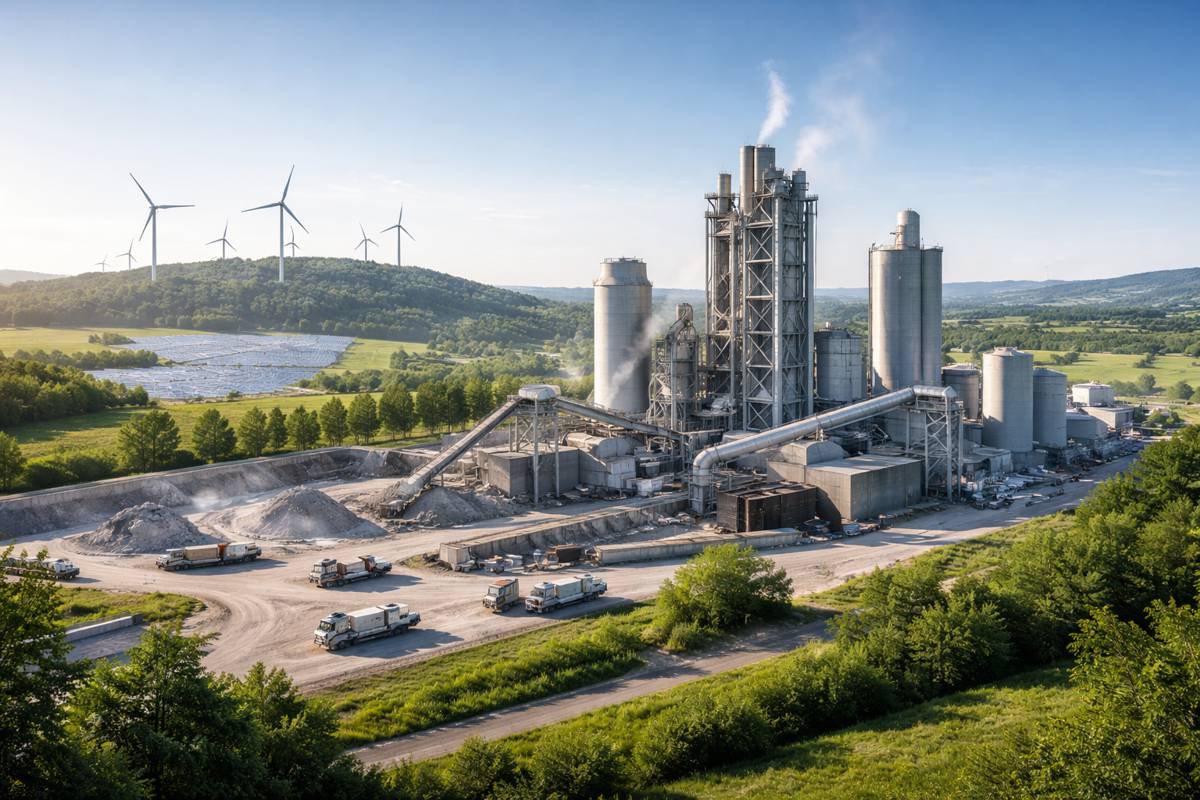
Industrial organisations have spent years investing in cloud migrations, data platforms, and connected operations. Yet many are still held back by a familiar constraint: the applications that keep the lights on, move the fuel, manage the network, and track the assets were never designed for today’s pace of change. They’re expected to integrate with modern analytics, support remote users, scale up during peaks, and deliver consistent performance, all while remaining compliant and secure.
Energy and utilities, in particular, operate in a world where downtime is not merely inconvenient. Service interruptions can impact public safety, grid stability, revenue assurance, and even national resilience. Those organisations can’t afford digital fragility, and they can’t rely on small teams firefighting around the clock either. They need operational models built for permanence, not heroics.
This is where reliability engineering has stepped up from being a niche discipline to a mainstream requirement. SRE principles, continuous monitoring, automation, and structured incident response aren’t just “tech best practice” anymore. In asset-intensive environments, they are increasingly the mechanism that keeps transformation programmes from unravelling once they hit real operational pressure.
HARC and the Move Towards 24/7 Global Application Operations
At the centre of the expanded partnership is Hitachi’s Application Reliability Centers (HARC), described as a global framework designed to optimise the performance, availability, and cost of business-critical applications running in hybrid and multi-cloud environments. The model is based on Site Reliability Engineering (SRE), which blends software engineering discipline with operational accountability, helping organisations scale reliability without scaling chaos.
HARC operates continuously from global hubs in Hyderabad (India) and Dallas (USA), a delivery structure that matters for one reason above all: coverage. Asset-heavy organisations don’t operate on office hours, and neither can the systems that support them. A global model enables response, monitoring, and support at any time, which is particularly important when applications support critical workloads and high-stakes operational decisions.
The framework combines continuous monitoring, automation, and AI-powered surveillance to keep mission-critical workloads secure and performing as expected. That’s a key shift from older operational models, where performance monitoring might be periodic, and incidents are often detected by users first. In a modern reliability model, detection should happen before disruption becomes visible.
Importantly, HARC is positioned not only as a technical operations capability but as a governance-driven one. Compliance and governance requirements are described as being embedded “at every level” of application management. In heavily regulated industries, that alignment isn’t a footnote. It is often the factor that determines whether a transformation can move from pilot to production at scale.
Architecture and Operations Finally Working as One
Reliability doesn’t start when an application goes live. It starts at design. Too many companies have learned the hard way that putting a fragile application into a more modern hosting environment doesn’t magically make it resilient. If the architecture isn’t built for scale, security, and observability, it simply becomes a more expensive version of the same operational headache.
The enhanced partnership aims to bridge that gap by pairing HARC’s operational framework with adesso’s strengths in IT strategy, migration, sovereign cloud operations, AI DevOps, and cloud-native application development. This division of roles is revealing. HARC focuses on running and stabilising applications at scale, while adesso focuses on ensuring the underlying design and transformation work supports that stability from day one.
That combined approach addresses a critical reality in asset-heavy industries: the most expensive failures are rarely “cloud failures” in isolation. They happen where architecture, operations, and governance don’t meet in the middle. A successful international delivery model needs to ensure that modernisation decisions made during migration continue to hold up during 24/7 operations, under real-world load and real-world risk.
As Hitachi Digital Services describes it, the expansion builds on an existing foundation of delivery and trust. Santhosh Sreemushta, President & Chief Business Officer at Hitachi Digital Services, said: “This expansion is built on years of trust and collaborative implementation. By combining adesso’s deep cloud and IT transformation expertise with HARC’s proven operational reliability, we deliver tailored solutions for the critical needs of asset-intensive industries – with minimal disruption and maximum performance.”
The emphasis on “minimal disruption” is not just a comforting phrase. For energy and utilities, disruption can be operationally expensive and politically sensitive. Modernisation programmes often need to be executed while still maintaining service continuity and regulatory compliance, which places unusual demands on migration planning, testing, and rollout discipline.
From Cloud Transformation to Operational Confidence
Much of the global conversation around cloud has been dominated by speed, scalability, and new digital capabilities. Yet for asset-heavy industries, the next phase is increasingly about operational confidence. It’s about knowing that the systems will continue to function predictably when the weather changes, demand spikes, supply constraints bite, or emergency procedures are triggered.
In practical terms, operational confidence is built through repeatable processes: observability, incident management, automation, performance tuning, cost governance, and security controls that work under pressure. This is where an SRE-oriented model can make transformation less brittle and more sustainable.
Another often overlooked element is cost predictability. The press material notes that HARC delivers measurable results, including “significant cost reductions” in cloud operations. While every organisation’s results will differ, the underlying logic is sound: cloud cost overruns are frequently caused by unmanaged complexity, over-provisioning, lack of monitoring discipline, and inefficient operational patterns. Reliable operations tend to be more efficient operations, because reliability forces visibility, and visibility forces decisions.
This matters for investors and policymakers too. Energy infrastructure upgrades and digital modernisation aren’t pursued purely for innovation’s sake. They are increasingly tied to resilience, competitiveness, and long-term affordability. A delivery model that can demonstrate reliability and cost discipline has a better chance of scaling across regions and stakeholders.
Enabling Digital Twins, Predictive Maintenance, and IT/OT Control Centres
The partnership also points towards the kinds of advanced capabilities that asset-heavy sectors are actively building or evaluating. The joint approach is expected to support solutions including digital twins, predictive maintenance, and integrated IT/OT control centres.
These aren’t buzzwords in this context. Digital twins, for example, rely on continuously updated data flows, consistent application performance, and secure integration across multiple systems. Predictive maintenance requires reliable data collection, stable analytics pipelines, and operational trust in the model outputs. Integrated IT/OT control centres depend on secure connectivity between enterprise systems and operational environments, and those connections must be maintained without creating unacceptable risk.
This is precisely where reliable application operations become the foundation layer for industrial innovation. If the systems are unstable, the “smart” layer becomes noise. If the systems are secure and resilient, innovation becomes repeatable, scalable, and governable.
Mark Lohweber, CEO of adesso SE, framed the expanded partnership as a practical link between modernisation strategy and real-world operations: “Many of our customers operate in highly demanding environments where resilience and innovation must go hand in hand. By deepening our collaboration with Hitachi, we are strengthening our international delivery model and combining architectural expertise with a global operational framework. This opens up a secure path to modernizing critical systems—from the initial migration to 24/7 operation. While HARC ensures reliable operations, adesso delivers the architecture. Together, we are redefining what IT transformation means for asset-intensive companies.”
That “path” is arguably the most important message in the announcement. Many organisations can execute a migration. Far fewer can modernise critical systems in a way that remains stable six months later, when the operational edge cases appear and the novelty wears off.
Why Energy and Utilities Are the Logical Starting Point
The two companies will begin with joint pilot programmes in the energy and utilities sector, supported by HARC Labs in Hyderabad and Dallas. Starting here is commercially logical and strategically telling. Energy and utilities sit at the intersection of regulation, critical infrastructure, public expectation, and accelerating digital demand.
These pilots are intended to validate reliability models tailored to industry-specific requirements, test cloud-native control room concepts, and demonstrate measurable impacts before moving into live rollout. That approach suggests a strong focus on proving outcomes before scaling, which is important in sectors where operational teams have little appetite for disruption and limited tolerance for “experimental” delivery styles.
In energy, pilots are often less about “trying something new” and more about “proving it won’t break”. That typically means demonstrating performance under load, security controls that satisfy governance requirements, and operational processes that are clear, auditable, and repeatable. Using labs as centres of excellence reinforces that intent and provides a structured bridge between concept and production.
The Bigger Signal for Global Infrastructure Technology
Stepping back, the expanded adesso and Hitachi collaboration reflects a wider shift underway across industrial technology. The market is maturing. Organisations are no longer impressed by transformation roadmaps alone. They’re demanding operational proof. They want modernised systems that can be run continuously, can be secured without slowing the business down, and can scale across multiple geographies and cloud platforms.
The alliance also highlights how infrastructure digitalisation is increasingly delivered as an integrated lifecycle: strategy, migration, cloud-native design, and 24/7 operations operating as one. That lifecycle view is critical for asset-heavy sectors because “project delivery” doesn’t end at go-live. In many cases, it’s only just beginning.
For construction professionals, investors, and policymakers looking at the trajectory of infrastructure modernisation, the message is clear enough: the future won’t be decided by who builds the most digital tools, but by who can run them reliably, securely, and at scale. Digital infrastructure only becomes real infrastructure when it stays available on the days that matter most.