New Ice Detection Technology Could Transform Transport Safety
Ice remains one of the most persistent and underestimated threats across global transport systems. From regional aircraft flying through marginal weather to motorists encountering black ice on unlit roads, freezing conditions continue to expose critical vulnerabilities in safety systems designed for movement, not molecular change. A newly developed dual-sensor technology from the University of Michigan is now offering a credible path toward earlier detection, smarter warnings and, potentially, a significant reduction in weather-related accidents across aviation and road transport alike.
Unlike conventional ice-detection approaches, which often respond only after ice has already accumulated, the Michigan system focuses on anticipation as much as confirmation. By combining a surface-embedded microwave sensor with an optical laser-based cloud and precipitation detector, the technology aims to identify icing conditions before they become critical. For an industry facing growing traffic volumes, tighter schedules and mounting climate variability, that distinction matters.
Across aviation and surface transport, icing incidents continue to carry disproportionate consequences. According to international accident databases, ice on roads contributes to roughly one fifth of all weather-related vehicle crashes each year, while ice accretion on aircraft remains a contributing factor in a notable share of fatal air incidents. Against that backdrop, the emergence of a sensing platform capable of supporting pilots, drivers and automated safety systems represents more than an incremental technical upgrade. It signals a shift toward predictive environmental awareness embedded directly into vehicles and infrastructure.
Why Ice Detection Remains a Global Safety Challenge
The danger posed by ice lies not just in its presence, but in how suddenly it can form and how invisibly it can persist. In aviation, ice disrupts airflow over wings, alters control response and interferes with sensor probes that aircraft rely on for speed and altitude data. In surface transport, black ice often forms without visual cues, catching even experienced drivers off guard until traction is already lost.
These risks are compounded by broader structural trends. Global air travel continues to rise year on year, placing increasing pressure on airlines to operate across wider weather envelopes. At the same time, climate volatility is producing more frequent freeze-thaw cycles, particularly in mid-latitude regions where temperatures hover near zero. These marginal conditions are especially conducive to freezing rain and supercooled water droplets, the most hazardous icing agents for aircraft.
Historical accidents underscore the stakes. Investigations cited by the Aviation Safety Network show that failures in ice detection and mitigation have played a role in multiple fatal crashes over the past two decades. In such cases, pilots often had limited situational awareness of icing severity until control was already compromised. The lesson has been consistent. Earlier, more precise information saves lives.
A Dual-Sensor Approach to Anticipating Ice
The Michigan system departs from traditional single-probe solutions by pairing two complementary sensing methods. One sensor is embedded flush with the vehicle surface and uses microwaves to detect the formation of ice or liquid water directly on that surface. Because it does not protrude into the airflow, it avoids the limitations of conventional icing probes, which measure conditions away from the skin of the aircraft rather than on it.
The principle is deceptively simple. The microwave signal emitted by the sensor changes frequency depending on whether it is exposed to air, liquid water or ice. That shift provides a direct, real-time indication of surface conditions. Crucially, it allows pilots or onboard systems to distinguish between benign moisture and hazardous ice accumulation, enabling more informed responses.
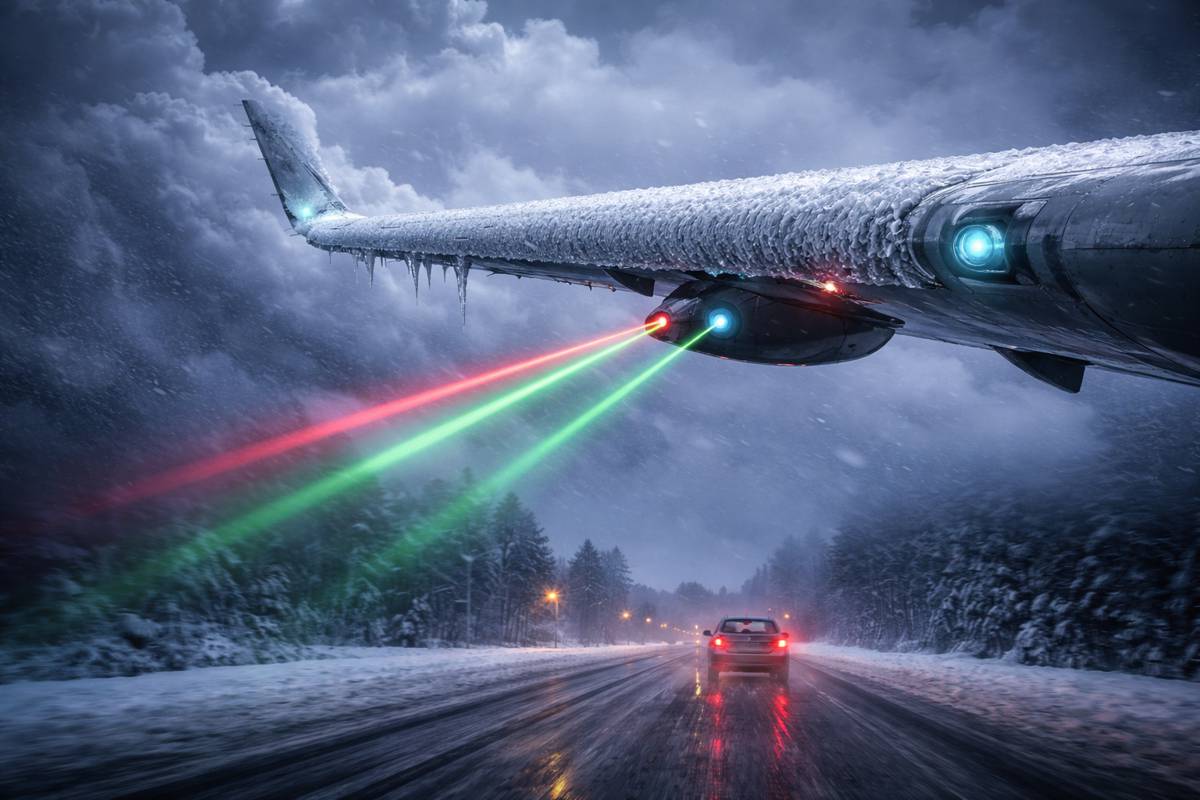
Complementing this is an optical sensor that looks outward rather than inward. Using three infrared laser beams at different wavelengths, the device analyses clouds and precipitation ahead of the aircraft. Two of the lasers interact differently with water droplets and ice particles, allowing the system to determine whether a cloud contains supercooled liquid water, solid ice crystals or a mixture of both. This distinction matters because ice particles tend to bounce harmlessly off aircraft surfaces, while supercooled droplets freeze on impact.
The third laser adds another layer of insight by estimating droplet size and concentration. Larger droplets pose a greater threat, as they are more likely to strike aircraft surfaces instead of being carried around them by airflow. Together, these measurements allow the system to identify not just the presence of icing conditions, but their severity and immediacy.
From Space Science to Transport Safety
The origins of the microwave sensor lie far from commercial aviation. Its development traces back to planetary science research following NASA’s Phoenix Mars lander mission, which provided evidence of water ice on the Martian surface. Researchers sought methods to distinguish between liquid water and ice within soil using compact, robust sensors capable of operating in extreme environments.
That scientific lineage proved unexpectedly relevant closer to home. The project’s lead researcher, an atmospheric scientist and licensed pilot, recognised parallels between Martian soil analysis and the challenge of detecting ice on aircraft surfaces. The insight was pragmatic rather than theoretical, shaped by personal experience of discovering an aircraft rendered unflyable by winter ice.
That combination of operational familiarity and scientific expertise shaped the system’s development. Rather than designing a laboratory instrument, the team focused on sensors that could integrate cleanly into existing vehicle architectures. Flight testing followed, involving both a single-engine aircraft and a light business jet equipped with reference instrumentation.
Results from those trials were later published in the journal Nature Scientific Reports, validating the sensors’ ability to detect both surface ice and hazardous atmospheric conditions.
Implications for Aviation Operations
For aviation, the most immediate value of the technology lies in situational awareness. Current icing detection systems often rely on indirect indicators or pilot interpretation of weather forecasts and visual cues. While effective in many scenarios, these methods can struggle in rapidly changing conditions or in clouds that appear benign but contain supercooled droplets.
By providing direct, localised data, the dual-sensor system could support earlier decision-making. Pilots might choose to alter altitude, divert around a cloud system or disengage automated flight modes before ice accumulation affects handling. For smaller aircraft and regional operators, which may lack advanced weather radar or de-icing capabilities, such information could be particularly valuable.
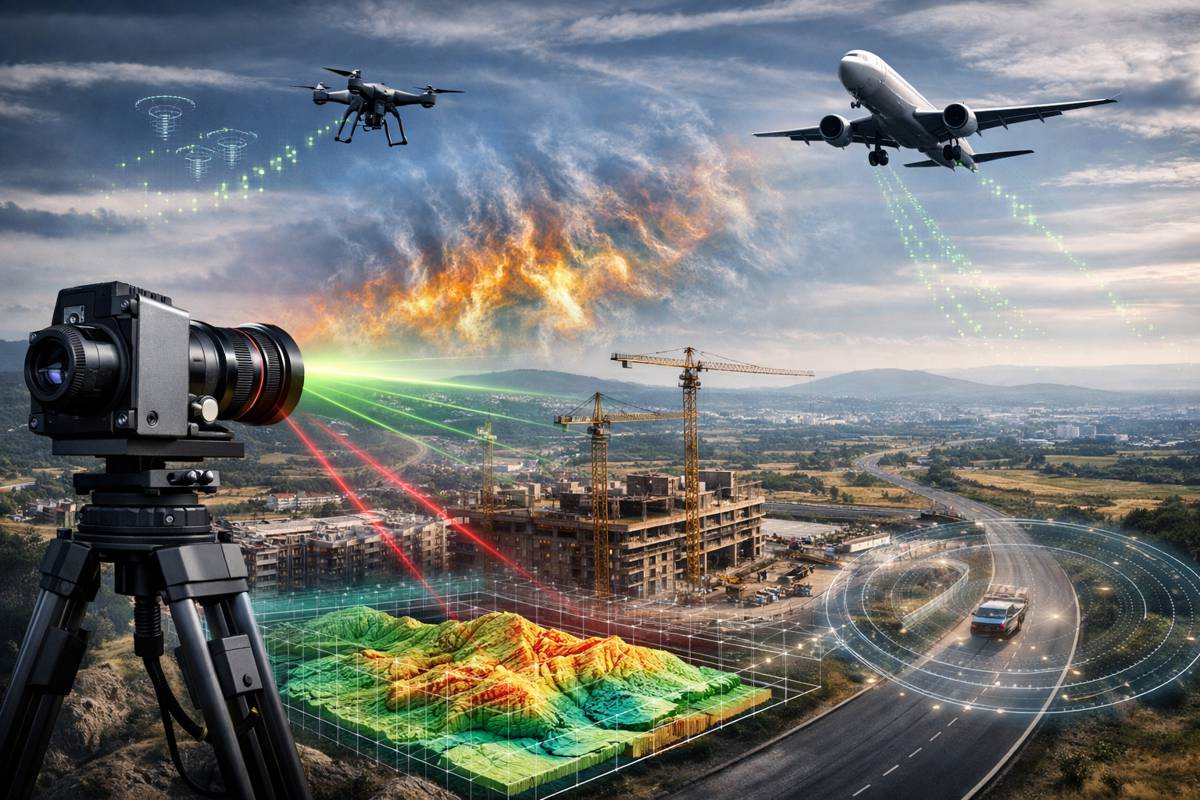
Beyond human pilots, the implications extend to unmanned aerial systems. Drones increasingly support infrastructure inspection, surveying and emergency response, often operating in environments where icing risk is poorly characterised. Compact sensors capable of detecting hazardous conditions could enable autonomous systems to adapt routes or return to base before performance degrades.
Extending Ice Awareness to Road Transport
While aviation provided the initial use case, the optical sensor’s ability to detect freezing rain and water droplets also opens the door to road safety applications. In vehicles, the same principles could be used to identify icy conditions ahead rather than beneath the tyres, offering drivers and automated systems precious seconds to respond.
Research in traffic safety consistently shows that modest reductions in speed have outsized benefits during collisions on slippery surfaces. Slowing by even a few miles per hour can significantly reduce the risk of serious injury. If a vehicle can detect black ice before traction is lost, that deceleration can occur proactively rather than reactively.
As advanced driver-assistance systems and automated braking become more widespread, environmental sensing grows in importance. Cameras and radar excel at detecting obstacles, but they struggle to characterise surface conditions. An optical icing sensor could complement these systems, allowing vehicles to adjust following distances, braking thresholds or stability controls in response to invisible hazards.
Commercialisation and Industry Integration
Development of the optical sensor has progressed through collaboration between university researchers and industry partners. The technology was refined at the University of Michigan’s Space Physics Research Laboratory, while a university-affiliated startup has taken responsibility for commercial development and licensing. Intellectual property support and patenting were facilitated through the university’s innovation office, reflecting a broader trend toward structured pathways from academic research to market deployment.
Such arrangements raise familiar questions about transparency and conflict of interest, which the researchers have disclosed openly. More importantly, they illustrate how transport safety innovation increasingly depends on hybrid ecosystems that bridge academia, startups and established manufacturers.
For widespread adoption, integration will be key. Sensors must meet stringent certification requirements, particularly in aviation, where reliability and redundancy are paramount. They must also demonstrate long-term durability under vibration, temperature extremes and contamination. Early flight tests are a necessary step, but large-scale deployment will depend on further validation across diverse operating environments.
Why This Matters for Global Infrastructure
At a systemic level, the significance of the Michigan sensors lies in how they align with broader shifts in transport and infrastructure management. As vehicles become more connected and automated, the boundary between environment and machine grows thinner. Infrastructure is no longer passive. It is sensed, interpreted and responded to in real time.
Ice detection sits at that intersection. It is a reminder that even as transport systems adopt artificial intelligence and advanced analytics, fundamental physical risks remain. Addressing them requires not only smarter software, but better data about the world those systems operate in.
For policymakers and investors, the technology highlights an area where relatively modest hardware additions could deliver substantial safety gains. Unlike large-scale infrastructure upgrades, sensors can be retrofitted, scaled incrementally and adapted across modes of transport. In regions facing harsh winters or variable climates, that flexibility carries both economic and social value.
Toward Safer Skies and Roads
The promise of the University of Michigan’s dual-sensor system is not that it eliminates ice, but that it reduces uncertainty. By making invisible hazards visible sooner, it allows pilots, drivers and automated systems to act while options remain. In transport safety, timing is often the difference between routine adjustment and irreversible loss.
As climate patterns continue to challenge assumptions about seasonal stability, such technologies are likely to become less optional and more foundational. Ice may always be part of the operating environment. The question is whether vehicles encounter it blindly, or with knowledge sufficient to respond. This research suggests a future firmly oriented toward the latter.