Scaling On-site Energy for the AI Data Centre Boom
The race to build artificial intelligence infrastructure is no longer just about semiconductors and software. It is increasingly about energy, and now INNIO Group has secured a 1.5 gigawatt order from VoltaGrid, marking one of the largest announced behind the meter power agreements linked directly to AI and high performance computing in the United States.
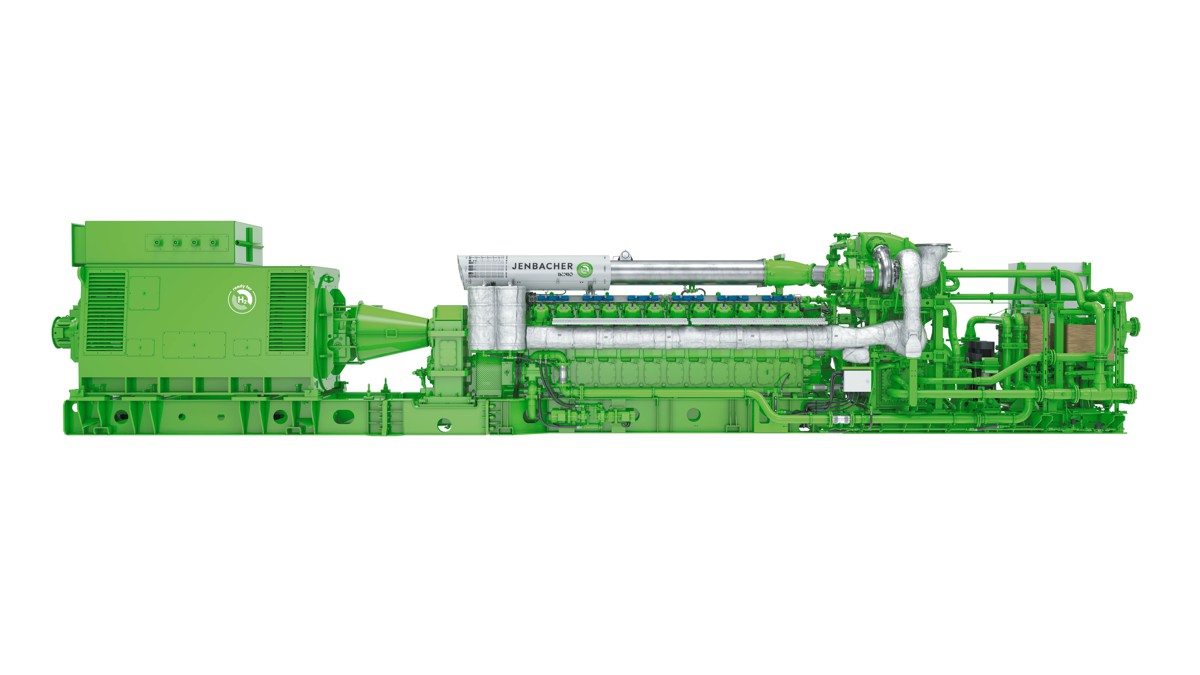
Under the agreement, INNIO expects to supply 300 of its Jenbacher gas engines from the Type J624 and Type J620 series. These units will be deployed as part of VoltaGrid’s QPac platform and delivered by 2028. In practical terms, that equates to packaged 25 megawatt modules capable of rapid deployment at data centre sites where grid capacity is constrained, delayed or simply unavailable.
For construction professionals, infrastructure investors and policymakers, the significance lies not merely in the headline gigawatts. It reflects a structural shift in how digital infrastructure is being powered. As AI workloads accelerate, the traditional grid connection model is being supplemented, and in some cases replaced, by decentralised, on site generation.
AI Workloads Are Rewriting The Energy Rulebook
The surge in generative AI and advanced computing has driven unprecedented demand for power. Research from the International Energy Agency indicates that data centres already account for roughly 1 to 1.5 percent of global electricity consumption, with projections suggesting rapid growth this decade as AI applications scale. In the United States, grid operators in several regions have warned of tightening capacity margins driven in part by hyperscale data centre expansion.
AI specific workloads are particularly energy intensive. Graphics Processing Units, or GPUs, operate at high utilisation levels and exhibit volatile, rapidly shifting load profiles. Unlike conventional enterprise computing, AI training and inference can cause sharp demand spikes that place stress on both local distribution networks and backup systems.
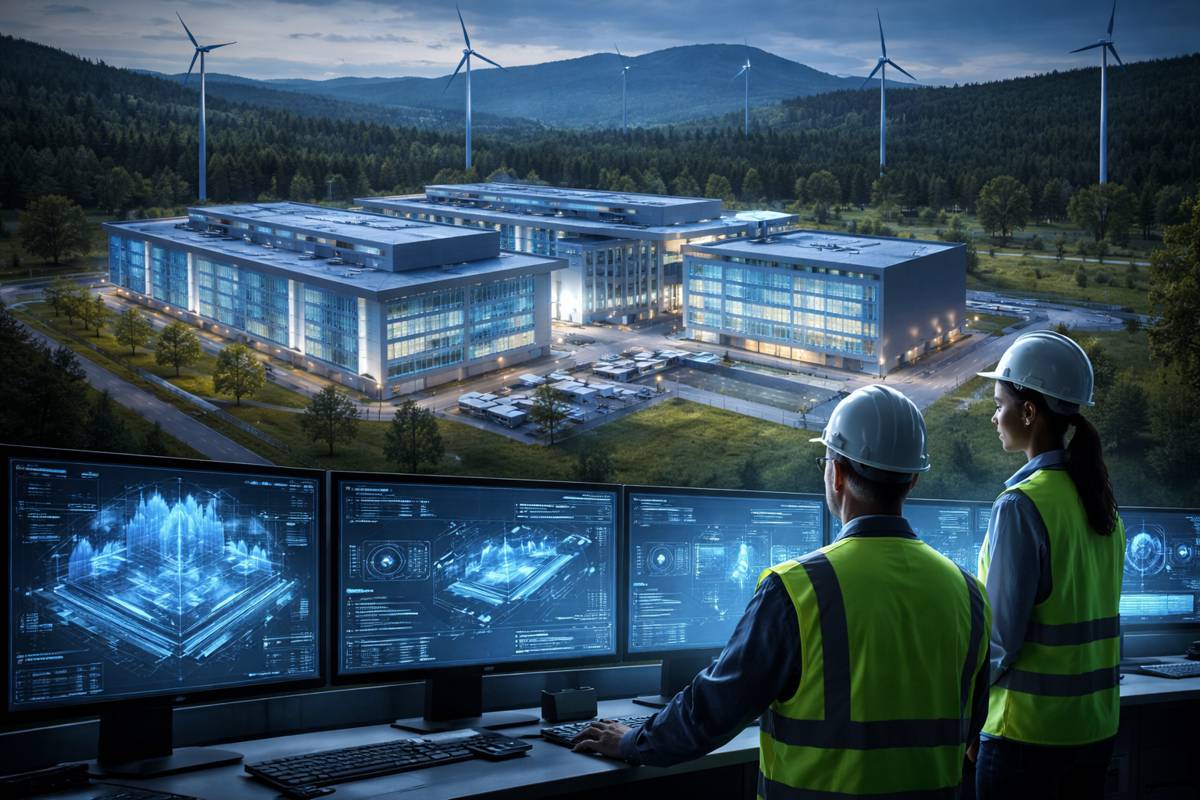
That is where behind the meter generation enters the picture. By installing gas engine plants directly at or adjacent to data centre campuses, operators can secure prime, backup and peaking capacity within a single integrated system. This reduces reliance on lengthy grid interconnection queues and mitigates exposure to curtailment or transmission bottlenecks.
The INNIO and VoltaGrid collaboration is designed precisely for this operating environment. Their jointly developed solution integrates Jenbacher engines into modular 25 MW units that can be deployed rapidly across multiple sites. Delivery is scheduled through to 2028, aligning with the expected build out cycle of next generation AI facilities.
Modular Gas Engines As Grid Grade Infrastructure
INNIO’s Jenbacher Type J624 and J620 engines are large scale gas engines widely used in distributed power generation. In this case, the J624 series is integrated into VoltaGrid’s proprietary QPac platform. Each 25 MW package functions as a building block, allowing data centre developers to scale capacity incrementally as demand grows.
The technical proposition centres on flexibility. According to the companies, the integrated platform can deliver prime, backup and peaking power from a single system. That reduces the need for multiple parallel assets and simplifies site design. The engines are also engineered to maintain full power and efficiency at high ambient temperatures, an important factor for facilities located in hotter regions of the United States where AI campuses are increasingly being built.
Transient performance is another critical parameter. AI workloads are known for highly volatile load fluctuations. Gas engines capable of fast ramp rates and stable operation under changing loads offer an alternative to battery based systems in certain applications. VoltaGrid’s leadership emphasised this capability in its remarks.
Dr. Olaf Berlien, President and CEO of INNIO Group, said: “This landmark order underscores the strength of INNIO’s technology and our commitment to power the growth of AI.” He added: “We are proud to deepen our collaboration with VoltaGrid as we help shape the evolution of energy infrastructure.”
Nathan Ough, CEO of VoltaGrid, described the agreement as foundational for AI era energy systems. He said: “This is a major step forward in building the energy backbone for the AI era.” He continued: “Together with INNIO, we are delivering a scalable, grid-grade solution that offers fast response and eliminates the need for batteries. Our collaboration provides the speed, reliability, and sustainability required to power next-generation data centers.”
Those remarks point to a broader industry debate. While batteries play a growing role in grid balancing and short duration backup, gas engines remain attractive for sustained high output, dispatchable generation. For many developers facing multi year grid interconnection delays, on site gas fired capacity can bridge the gap between immediate demand and longer term transmission upgrades.
Construction And Deployment Implications
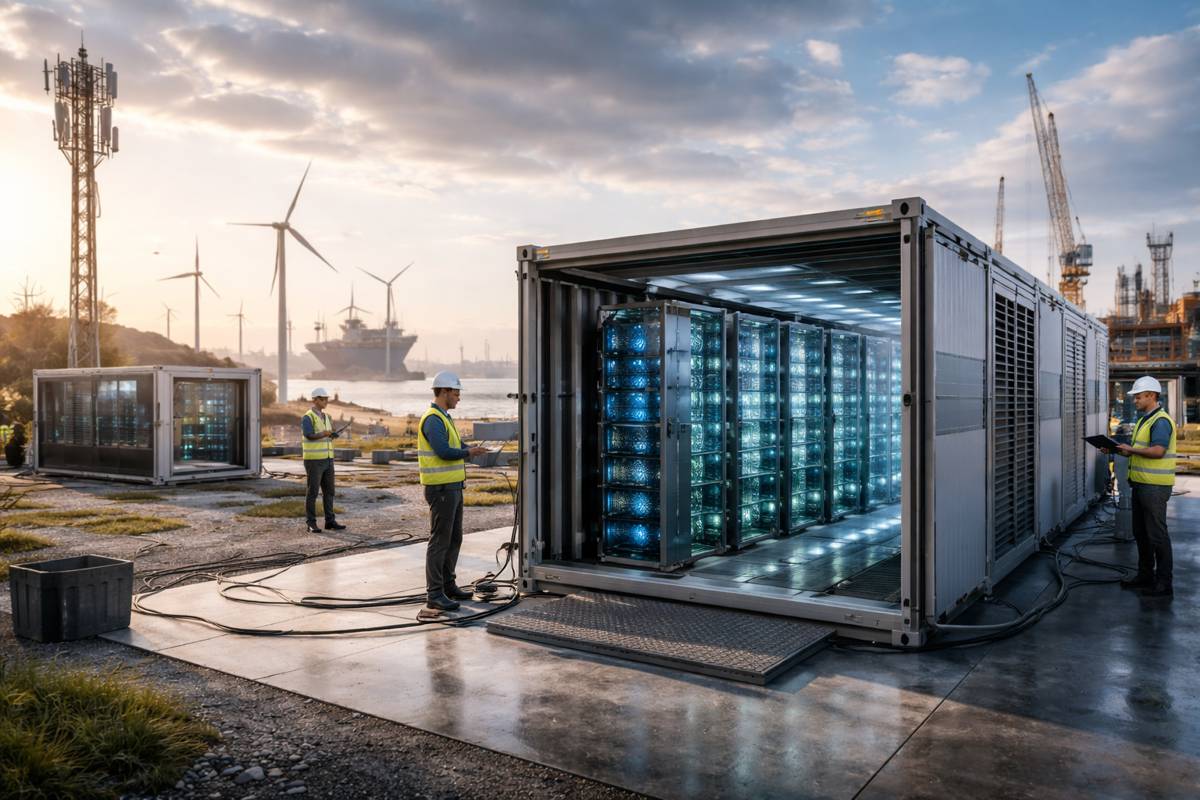
From a construction perspective, modular 25 MW packages alter the way data centre energy infrastructure is delivered. Traditional centralised power plants involve long permitting cycles, complex civil works and extended commissioning timelines. By contrast, containerised or skid mounted engine units can be assembled off site, transported and commissioned relatively quickly.
This approach aligns with the broader industrial trend towards prefabrication and modularisation seen across data centre builds. Electrical rooms, cooling systems and even entire white space modules are increasingly factory built and shipped to site. Integrating modular generation units into that ecosystem shortens project schedules and reduces on site labour intensity.
The integration of VoltaGrid’s power pack units with its large scale portable data centre power systems also suggests a degree of mobility. While permanent installations are likely to dominate hyperscale campuses, the ability to deploy portable generation can support phased expansions or temporary bridging solutions during grid upgrades.
For US regions competing to attract AI investment, speed to power is becoming as important as land availability or tax incentives. States such as Texas, Virginia and Arizona have seen explosive data centre growth, but in several markets utilities are grappling with transmission constraints and transformer shortages. Behind the meter solutions provide developers with an alternative path to energisation while grid infrastructure catches up.
Energy Transition And Fuel Flexibility
Gas engines inevitably raise questions around emissions and long term decarbonisation. However, distributed generation technologies such as Jenbacher units are often designed with fuel flexibility in mind, including the potential to operate on renewable gases such as biomethane or hydrogen blends where available. While the present announcement focuses on AI data centre deployment, the underlying technology sits within a wider transition framework.
INNIO positions itself as a provider of distributed energy solutions that can operate even where the grid is not available. Its portfolio spans data centre power infrastructure, distributed generation and compression applications. In remote or industrial settings, such capabilities can support resilience and energy security alongside decarbonisation strategies.
The debate over how best to power AI is far from settled. Some hyperscalers are exploring nuclear energy, including small modular reactors. Others are accelerating renewable procurement and large scale storage. In the near to medium term, though, dispatchable gas fired generation remains one of the few scalable options capable of delivering gigawatt level capacity within tight timelines.
From a policy standpoint, that creates tension between climate objectives and digital competitiveness. Governments seeking to position themselves as AI leaders must ensure sufficient reliable power. At the same time, they face pressure to reduce carbon intensity. Hybrid models combining renewables, storage and flexible gas generation may prove to be a pragmatic compromise during this transitional phase.
Resilience Beyond The Grid
Another dimension of the INNIO and VoltaGrid partnership is resilience. Extreme weather events, cyber threats and ageing transmission assets have highlighted vulnerabilities in centralised grids. On site generation offers a degree of insulation from broader network disturbances.
For mission critical facilities such as AI data centres, downtime carries enormous financial and reputational risk. Integrating prime, backup and peaking functions within a single system reduces reliance on separate diesel generators and external supply. It also simplifies maintenance regimes and operational planning.
As AI driven applications expand into sectors such as healthcare diagnostics, autonomous transport and industrial automation, the reliability of the underlying compute infrastructure becomes a matter of national economic importance. Power systems capable of managing volatile loads while maintaining stability will be central to that reliability equation.
Powering The Digital Industrial Age
The 1.5 GW order is substantial in scale, but it is also symbolic. It signals that energy infrastructure is now inseparable from digital infrastructure. Gas engines, modular packages and on site plants are becoming as critical to AI deployment as GPUs and fibre networks.
For contractors, engineers and investors active in the energy and data centre sectors, the message is clear. The next wave of infrastructure spending will sit at the intersection of power generation, grid integration and high performance computing. Projects will demand expertise not only in civil works and electrical engineering, but in managing complex load profiles and integrating digital monitoring platforms.
As delivery progresses towards 2028, the collaboration between INNIO and VoltaGrid will serve as a bellwether for how rapidly decentralised generation can scale in response to AI demand. If successful, it may well shape procurement models for data centres across North America and beyond.
In the end, powering the AI revolution is not simply about adding megawatts. It is about rethinking how, where and at what pace energy infrastructure is built. This agreement offers a glimpse of that evolving blueprint, one modular engine at a time.