AI Defect Intelligence for Metal Additive Manufacturing
Metal additive manufacturing has long promised a step change in how critical components are designed and produced. From aerospace brackets to complex heat exchangers and lightweight structural parts, the ability to build intricate geometries layer by layer has transformed engineering imagination into manufacturable reality. Yet for all its potential, one stubborn barrier has continued to hold back widespread industrialisation: internal defects.
Now, a research team led by Korea Institute of Materials Science in collaboration with Max Planck Institute for Iron Research has introduced an artificial intelligence framework that could fundamentally reshape how the sector approaches quality assurance. Rather than treating defects as an afterthought discovered during inspection, the new model predicts their formation and impact at the process design stage itself. For infrastructure, mobility and industrial manufacturing sectors under pressure to deliver performance at scale, that shift matters.
Moving Beyond Porosity as a Crude Metric
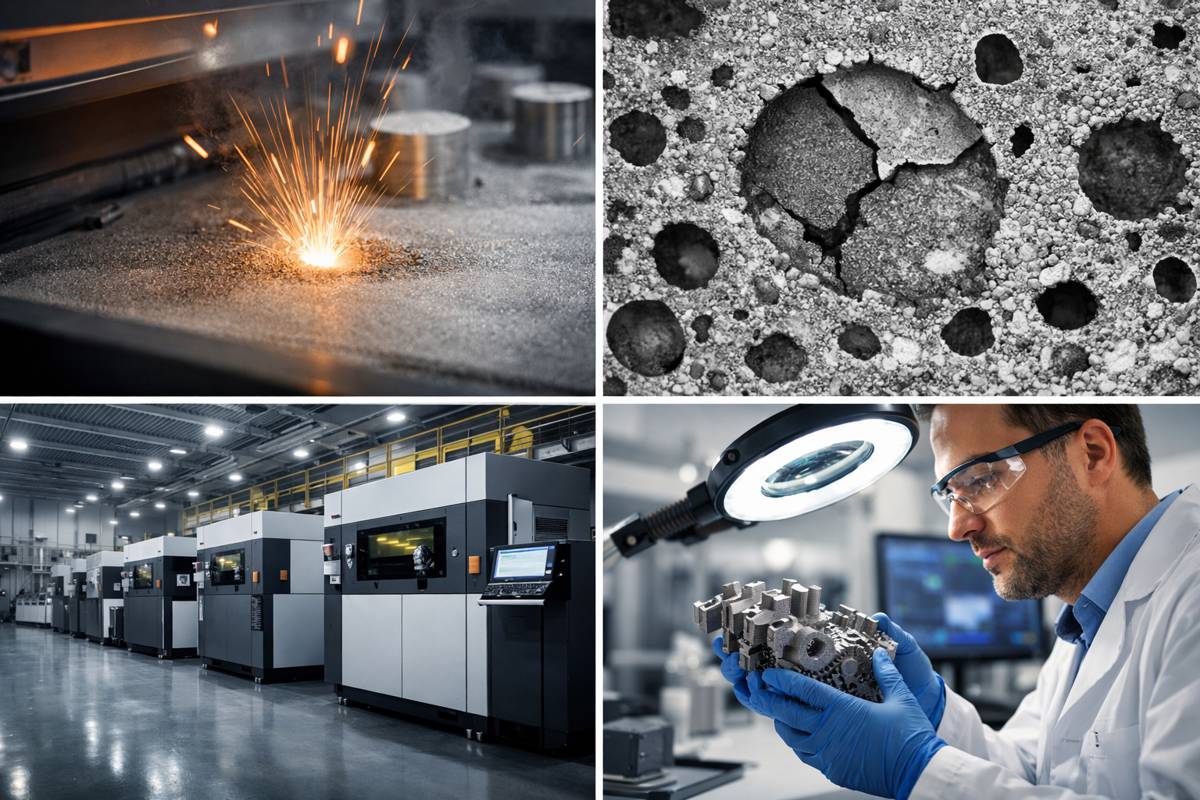
Metal additive manufacturing, particularly laser powder bed fusion, has been scrutinised for its susceptibility to microscopic pores and irregularities formed during rapid melting and solidification. Traditionally, quality control has relied on relatively simple indicators such as overall porosity percentage. While useful, these metrics tell only part of the story.
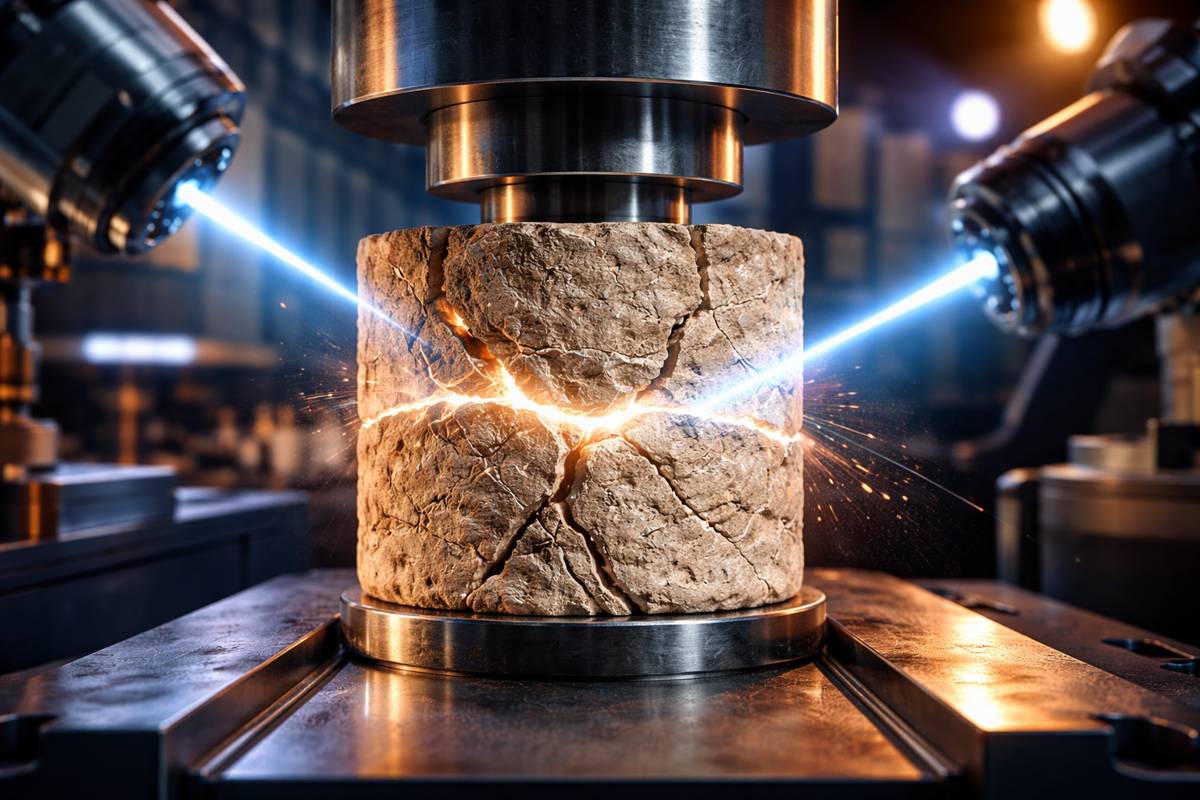
Mechanical performance is rarely dictated by how many pores exist alone. Their size, shape, spatial distribution and interaction with the surrounding microstructure often determine whether a component performs flawlessly or fails prematurely. Irregular, non spherical voids located in high stress zones can be far more damaging than evenly dispersed, smaller pores. In high consequence applications such as aerospace structures or defence components, these distinctions are critical.
The research team recognised that the industry’s dependence on simplified metrics was limiting progress. In sectors where certification standards are unforgiving, uncertainty surrounding defect morphology has curtailed adoption. Without a reliable way to anticipate how process parameters influence defect formation and performance degradation, scaling production becomes a calculated risk rather than a confident step forward.
An Explainable AI Framework for Defect Aware Design
To address this challenge, the team developed an explainable artificial intelligence model capable of systematically analysing the relationship between processing conditions, defect morphology and mechanical properties. This is not a conventional black box algorithm that produces predictions without insight. Instead, it is designed to interpret and quantify why certain process settings generate particular defect characteristics and how those characteristics influence strength and reliability.
By analysing microstructural images, the model automatically extracts morphological features including pore size, non circularity and spatial distribution. These characteristics are then directly correlated with mechanical performance metrics. The result is a quantitative explanation of how specific defects influence actual material behaviour under load.
This transparency is significant. In regulated industries, decision makers need more than a prediction. They need traceability and scientific rationale. By embedding interpretability into the modelling approach, the framework bridges the gap between data science and metallurgical understanding. It transforms AI from a statistical tool into an engineering partner.
Laser Powder Bed Fusion Under the Microscope
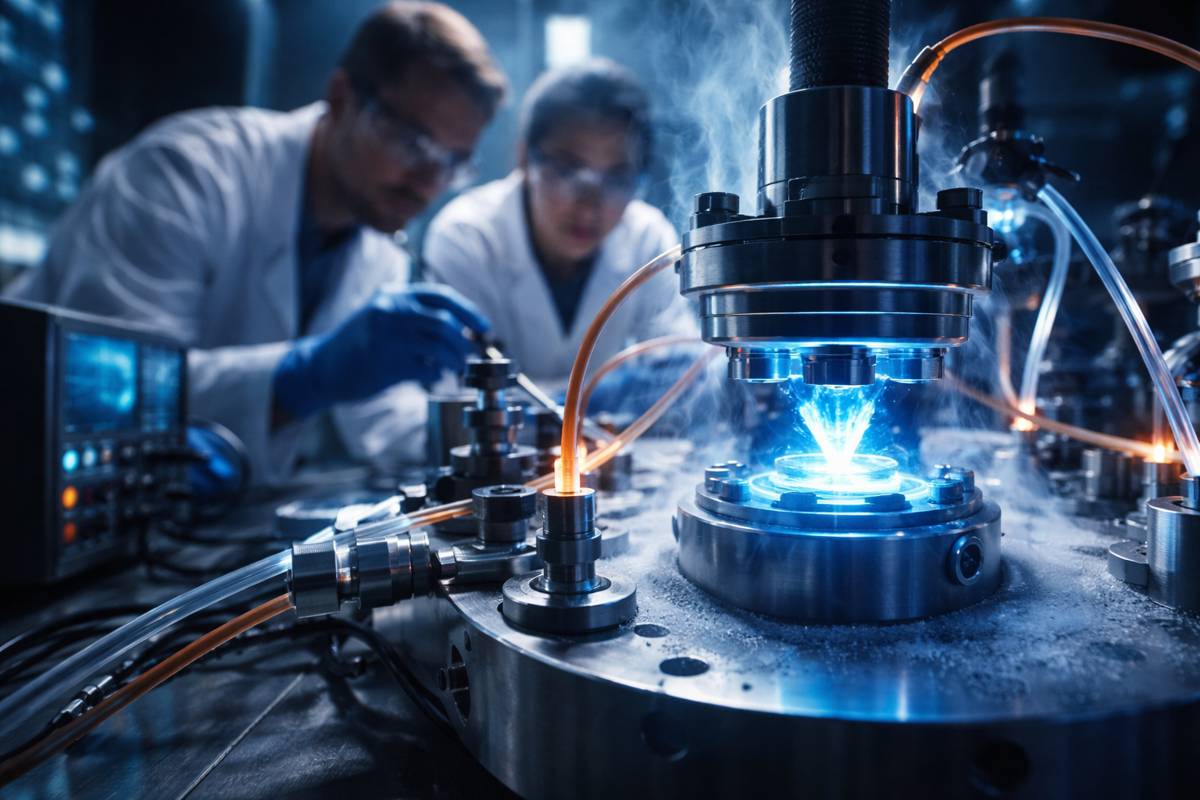
The research focuses in particular on laser powder bed fusion, one of the most widely used metal additive manufacturing processes. LPBF relies on a high energy laser to selectively melt thin layers of metal powder according to a digital design. Variations in laser power, scan speed, hatch spacing and powder characteristics all influence melt pool dynamics and solidification patterns.
Small deviations can lead to incomplete fusion, keyhole formation or gas entrapment, each generating distinct defect morphologies. Historically, identifying optimal parameter windows has required extensive experimental trials. That approach consumes time, material and capital, and still leaves uncertainty about how microstructural anomalies translate into performance risk.
By training the AI model on comprehensive datasets that include process conditions, powder characteristics, defect imagery and mechanical testing data across multiple material systems such as steel, aluminium alloys and titanium alloys, the team established a stepwise predictive framework. It first evaluates how process variables influence defect formation. It then assesses how the resulting defect morphology affects mechanical behaviour.
In effect, the model allows engineers to simulate not just geometry but structural integrity before committing to production. That capability aligns closely with the broader digitalisation of manufacturing, where predictive analytics and virtual validation are increasingly expected.
Infrastructure and Industrial Supply Chains
Additive manufacturing is no longer confined to prototyping laboratories. It is increasingly deployed for functional parts in transport, energy and industrial systems. The global additive manufacturing market has expanded steadily over the past decade, with industrial adoption accelerating as hardware and materials mature. Yet high value infrastructure applications remain cautious.
For construction and infrastructure stakeholders, reliability is non negotiable. Whether producing specialised connectors for offshore wind installations or lightweight structural components for transport systems, performance consistency under real world loads determines lifecycle cost and safety outcomes.
An AI driven defect prediction framework directly addresses these concerns. By reducing uncertainty in mechanical performance, it supports qualification and certification processes. It also has commercial implications. Lower defect rates translate into reduced scrap, less rework and improved yield. In a sector where metal powders and machine time are costly, efficiency gains can be substantial.
Moreover, as governments worldwide invest heavily in advanced manufacturing to strengthen domestic supply chains, tools that enhance quality control support strategic resilience. The ability to industrialise metal additive manufacturing reliably could reduce dependence on complex castings or forgings sourced internationally, particularly for critical infrastructure components.
From Laboratory Insight to Digital Twin Integration
The research has already been published in Acta Materialia, a leading journal in metallurgy, underscoring its scientific credibility. Future work aims to expand the technology into a digital twin based quality management system suitable for industrial settings. Digital twins, virtual representations of physical assets or processes, are gaining traction across construction and manufacturing as a means of monitoring performance and predicting maintenance needs. Integrating defect aware predictive models into such systems would enable real time process optimisation and lifecycle management.
In practical terms, this could allow manufacturers to adjust laser parameters dynamically based on predicted defect formation trends, effectively closing the loop between design, production and inspection. For infrastructure projects operating under tight timelines, the prospect of reducing trial and error cycles is attractive.
Institutional Backing and Strategic Context
The project was supported by multiple national research and innovation programmes, reflecting South Korea’s broader commitment to advanced materials and manufacturing technologies. As a non profit government funded institute under the Ministry of Science and ICT, the Korea Institute of Materials Science plays a central role in materials research and industrial support within the country.
Collaboration with Germany’s Max Planck Institute for Iron Research adds international depth, reinforcing the global relevance of the work. Cross border partnerships of this nature are increasingly common in advanced materials science, where shared datasets and interdisciplinary expertise accelerate breakthroughs.
Dr Jeong Min Park, the lead inventor, summarised the broader significance of the work as follows: “This research goes beyond simply reducing defects in metal 3D-printed components; it establishes a scientific framework that explains how specific types of defects directly influence performance. We expect this work to contribute to the broader industrial adoption of metal additive manufacturing, particularly in high-performance sectors such as aerospace, space, and defense.”
Her statement captures the shift from reactive inspection to proactive design intelligence. In high performance sectors, understanding causality is as important as achieving low defect counts.
A Step Towards Industrial Scale Confidence
The additive manufacturing sector has often been described as being at an inflection point. Hardware capabilities are improving, materials portfolios are expanding and design software is increasingly sophisticated. Yet without robust quality assurance methodologies, scaling to mass production remains constrained.
Explainable AI models that integrate process variables, defect morphology and performance data represent a significant step towards resolving that bottleneck. By embedding defect intelligence into process design, manufacturers can make informed decisions before production begins rather than discovering limitations after components fail testing.
For construction professionals, infrastructure planners and policymakers, this development signals a maturing technology ecosystem. It demonstrates that metal additive manufacturing is evolving beyond experimental novelty towards a data driven, performance assured production platform.
As digitalisation continues to reshape global industry, integrating materials science with transparent artificial intelligence may well define the next chapter of advanced manufacturing. In that sense, the research does more than refine a process. It strengthens the foundation upon which high value, high reliability infrastructure components can be built.