Poland’s Offshore Wind Ambitions Gain Momentum with EIB Finance
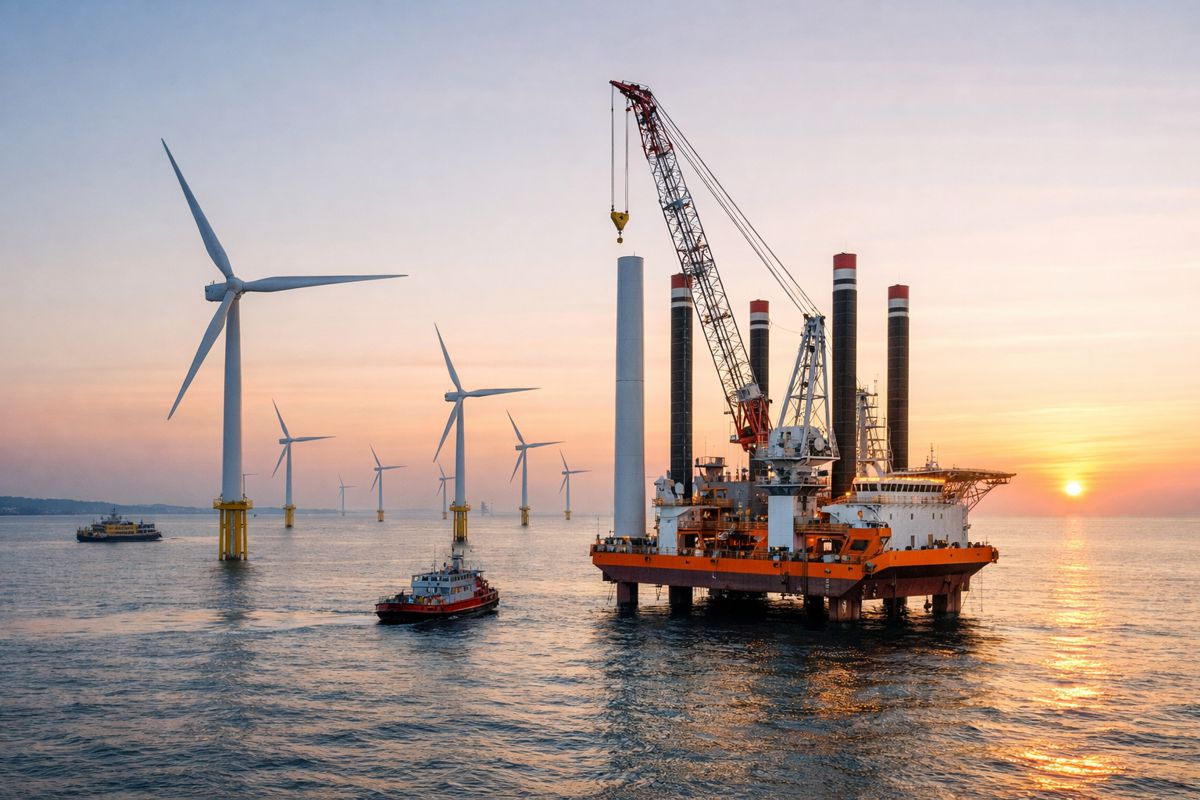
The European Investment Bank will commit €600 million to the construction of BC-Wind, a 390 MW offshore wind farm in the Baltic Sea that is set to become a cornerstone of Poland’s clean energy transition. Once operational, the project is expected to supply electricity to close to half a million Polish households and businesses, underlining both its scale and strategic relevance. The project financing positions the EIB as the single largest lender to the development and reinforces the bank’s role as a driving force behind Europe’s renewable energy build-out.
BC-Wind will be located more than 20 kilometres off Poland’s western coastline, within the country’s exclusive economic zone. Developed by Ocean Winds, a joint venture between ENGIE and EDP Renewables, the project is scheduled to begin producing power in 2028. For Poland, a country historically reliant on coal, the development signals another decisive step towards diversifying its energy mix and strengthening long-term energy security.
Strategic Finance Meets Energy Security
The EIB’s backing is not simply about capital deployment. It reflects a broader policy alignment between European institutions and national energy strategies. Offshore wind has emerged as one of the most scalable and reliable renewable technologies available to coastal nations, and the Baltic Sea is rapidly becoming one of Europe’s most active development zones.
Speaking on the importance of the loan, EIB Vice-President Teresa Czerwińska highlighted the institution’s long-term commitment to Poland’s energy transition and Europe’s strategic autonomy: “The EIB’s persistent commitment to supporting climate, economic competitiveness and Europe’s strategic sovereignty stands behind this beneficial, long-term loan for the construction and operation of BC-Wind, a new offshore wind project in the Polish economic zone in the Baltic Sea. As the climate bank of the European Union, the EIB is a trusted partner of ambitious energy transition in Poland from renewable sources to grid modernisation to energy efficiency and affordability. The latest addition to Poland’s rapidly growing offshore wind industry, BC-Wind will help reduce Poland’s carbon emissions and ensure energy security for people and businesses.”
Her remarks underline the dual nature of the investment, addressing climate objectives while reinforcing economic resilience and regional energy independence.
Project Fundamentals and Construction Readiness
BC-Wind has been structured to move swiftly from financing into delivery. The wind farm will comprise 26 bottom-fixed turbines, each with a maximum capacity of 15 MW. This configuration reflects the rapid evolution of turbine technology, allowing developers to achieve higher output with fewer foundations, reduced seabed disturbance, and improved overall efficiency.
Crucially, Ocean Winds has already secured all necessary permits, removing one of the most common sources of delay for large offshore projects. The project also benefits from a 25-year contract for difference, providing long-term revenue stability and protecting against market volatility. On 1 December, Ocean Winds confirmed the completion of a wider financing package worth approximately €2 billion, involving 15 lenders. With financial close achieved, construction is expected to begin in 2026.
Industry Confidence and National Ambition
For Ocean Winds, BC-Wind represents more than a single asset. It forms part of a broader vision for Poland as a regional offshore wind powerhouse. The country’s coastline, supply chain potential, and growing political support have attracted sustained interest from international developers.
Bautista Rodriguez, Chief Operating Officer at Ocean Winds, emphasised the strategic opportunity: “In Poland, offshore wind energy is a key driver of the country’s energy transition and a real opportunity for the development of a revitalized economic sector. At Ocean Winds, we are convinced that Poland has the potential to become a regional leader in offshore wind, both in terms of clean energy production and industrial capability. Supported by key financial partners such as the European Investment Bank, our BC-Wind project is our contribution to this strategic process and a step toward increasing the share of renewables in the energy mix.”
His comments reflect a growing consensus that offshore wind can serve as both an environmental solution and an industrial catalyst, supporting local manufacturing, port upgrades, and skilled employment.
A Pattern of Collaboration and European Policy Support
The EIB, ENGIE, and EDP Renewables are no strangers to collaboration. The European development bank has previously supported Ocean Winds on innovative projects, including a pilot floating offshore wind installation in France. That experience has helped de-risk newer developments and accelerate deployment across different marine environments.
Financing for BC-Wind is underpinned by guarantees from the European Union’s InvestEU programme, alongside the RePowerEU initiative. RePowerEU was established to reduce the bloc’s dependence on imported fossil fuels by accelerating the roll-out of renewable energy, improving efficiency, and strengthening energy infrastructure. In parallel, the EIB’s support falls under the TechEU programme, which is designed to reinforce Europe’s technological leadership across key sectors, including clean energy.
Together, these frameworks provide more than financial backing. They offer regulatory confidence and policy coherence, both of which are essential for attracting long-term private investment into capital-intensive infrastructure.
Poland’s Expanding Offshore Wind Portfolio
BC-Wind is the fourth major offshore wind project in Poland to receive EIB backing and the third to be signed this year alone. The pace of activity highlights just how quickly the sector is scaling. In 2025, the EIB extended substantial support to the Bałtyk 2 and Bałtyk 3 sister projects, which together account for 1.44 GW of capacity. It also financed Baltica 2, a 1.5 GW development that currently stands as the largest offshore wind project in the European Union.
In total, the EIB invested €1.7 billion in Poland’s offshore wind sector this year. That follows earlier involvement in 2023, when the bank helped finance the country’s first offshore wind installation. Each successive project has benefited from improved market confidence, a maturing supply chain, and clearer regulatory pathways.
The European Investment Bank’s Broader Mandate
As the long-term lending institution of the European Union, the European Investment Bank is owned by its Member States and operates in alignment with EU policy objectives. Its activities are structured around eight core priorities, including climate action, environmental protection, digitalisation, technological innovation, security, cohesion, agriculture and bioeconomy, social infrastructure, and capital markets development.
In 2024, the EIB Group, which also includes the European Investment Fund, signed nearly €89 billion in new financing agreements across more than 900 high-impact projects. These investments were aimed at boosting Europe’s competitiveness, resilience, and security. In Poland alone, the group invested €5.7 billion last year, with almost half directed towards climate and environmental initiatives, including energy transition projects.
Ocean Winds and the Global Offshore Landscape
Ocean Winds was established in 2019 as a 50 50 joint venture between EDP Renewables of Spain and France’s ENGIE. From the outset, the company has positioned offshore wind as a central pillar of the global energy transition. Its business model spans the full project lifecycle, from development and financing through to construction and long-term operation.
As of 2025, Ocean Winds has secured approximately 19 GW of gross offshore wind capacity worldwide, either in operation, under construction, or at advanced stages of development. Headquartered in Madrid, the company maintains a presence in eight countries, reflecting both geographical diversity and technical breadth.
InvestEU and the Role of Risk Sharing
The InvestEU programme plays a critical role in enabling projects like BC-Wind to reach financial close. By leveraging a European Union budget guarantee of €26.2 billion, the programme increases the risk-bearing capacity of its financial partners. This mechanism is designed to mobilise at least €372 billion in additional investment across the EU.
InvestEU brings together multiple financial instruments under a single framework, simplifying access to funding and improving efficiency. Its structure includes the InvestEU Fund, the InvestEU Advisory Hub, and the InvestEU Portal, each addressing different stages of project development and investment readiness.
Building Momentum in the Baltic Sea
The Baltic Sea is fast emerging as a focal point for offshore wind development in Northern Europe. Relatively shallow waters, improving grid connections, and strong political backing have created favourable conditions for growth. Projects such as BC-Wind contribute not only to national targets but also to regional energy integration.
Looking ahead, the combination of EIB financing, EU policy support, and experienced developers suggests that Poland’s offshore wind pipeline will continue to expand. For investors and policymakers alike, BC-Wind stands as a clear example of how coordinated finance and industrial strategy can translate ambition into steel, concrete, and clean electrons.