Megaprojects Month
April at Highways.Today explores the world’s most ambitious infrastructure and construction projects, from multi-billion-dollar transport corridors and smart cities to energy transitions and cross-border megastructures reshaping economies.










Featured Global Megaprojects
Across every continent, a new generation of megaprojects is reshaping trade corridors, urban skylines, energy systems and supply chains at unprecedented scale. These are not simply large construction schemes; they are multi-billion-dollar economic instruments designed to accelerate growth, strengthen geopolitical positioning, secure energy transition pathways and redefine how nations compete. From high-speed rail networks and cross-border tunnels to industrial mining expansions and next-generation smart cities, the projects featured below represent the most commercially and strategically significant infrastructure undertakings currently in motion. Each has been selected not just for its headline value, but for its wider impact on global construction markets, capital flows and long-term infrastructure resilience.
Smart Cities & Urban Development

⭐ Top Project: NEOM (Saudi Arabia)
- Estimated Value: $500+ billion
- Focus: The Line, Oxagon, Trojena
- Significance: The world’s most ambitious phased urban megaproject under Vision 2030, currently undergoing strategic recalibration.
🥈 Runner-Up: Masdar City (UAE)
- Sustainable urban development model
- Renewable energy integration at city scale
🥉 Runner-Up: Songdo International Business District (South Korea)
- Smart infrastructure and embedded IoT systems
- Early model of fully planned digital city
Transport Infrastructure

⭐ Top Project: High Speed 2 (United Kingdom)
- Estimated Value: £100+ billion
- Scope: New high-speed spine between London and Birmingham
- Significance: Europe’s largest infrastructure project currently under construction.
🥈 Runner-Up: California High-Speed Rail (USA)
- Connecting Los Angeles and San Francisco
- Critical for US transport decarbonisation
🥉 Runner-Up: Mumbai–Ahmedabad High-Speed Rail (India)
- Japan-backed Shinkansen technology
- Transformational corridor for India’s western economy
Energy & Power Generation

⭐ Top Project: ITER (France)
- Estimated Value: €20+ billion
- Focus: Commercial-scale nuclear fusion
- Significance: Potential game changer for global clean energy.
🥈 Runner-Up: Hinkley Point C (United Kingdom)
- First new UK nuclear plant in decades
- Anchor of Britain’s low-carbon grid strategy
🥉 Runner-Up: Three Gorges Dam (China)
- Largest hydroelectric power station globally
- Ongoing upgrades and grid integration impact
Roads, Bridges & Tunnels

⭐ Top Project: Fehmarnbelt Fixed Link (Denmark–Germany)
- €7+ billion immersed tunnel
- World’s longest road and rail tunnel of its kind
🥈 Runner-Up: Gordie Howe International Bridge (USA–Canada)
- Major cross-border trade artery
- Strategic North American logistics upgrade
🥉 Runner-Up: Delhi–Mumbai Expressway (India)
- 1,300 km economic corridor
- Transformational freight efficiency project
Water & Climate Resilience

⭐ Top Project: Grand Ethiopian Renaissance Dam (Ethiopia)
- Africa’s largest hydroelectric project
- Geopolitically significant Nile basin development
🥈 Runner-Up: Delta Works (Netherlands)
- World benchmark for flood protection engineering
- Continual reinforcement upgrades
🥉 Runner-Up: Giant Sea Wall Jakarta (Indonesia)
- Climate adaptation at megacity scale
- Multi-decade coastal defence initiative
Mining & Industrial Megaprojects
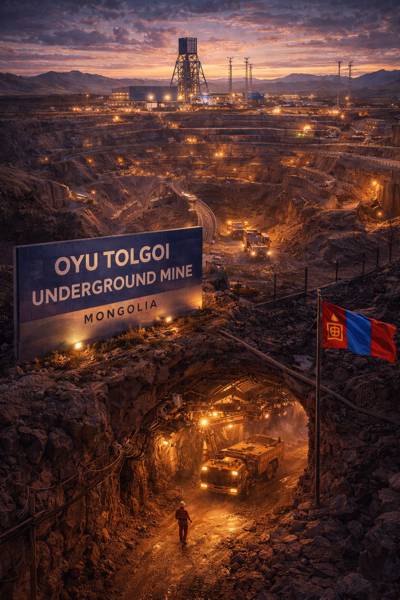
⭐ Top Project: Oyu Tolgoi Underground Mine (Mongolia)
- $7+ billion underground expansion
- Critical copper supply for electrification
🥈 Runner-Up: Simandou Iron Ore Project (Guinea)
- One of the world’s largest untapped iron ore reserves
- Major rail and port integration component
🥉 Runner-Up: LNG Canada (Canada)
- Large-scale liquefied natural gas terminal
- Energy security infrastructure for Asia-Pacific markets
Taken together, these megaprojects illustrate more than engineering ambition; they reveal where capital is flowing, where governments are placing long-term bets, and where supply chains, technology providers and investors will find opportunity over the coming decade. While some will evolve, be re-phased or face inevitable delivery challenges, their collective scale signals a defining era for global infrastructure. For contractors, financiers, equipment manufacturers and policymakers alike, understanding these flagship programmes is not optional. It is essential. As Megaprojects Month unfolds, Highways.Today will continue to track the forces shaping their progress and the industries that will rise alongside them.





































The Money Behind the Megaprojects
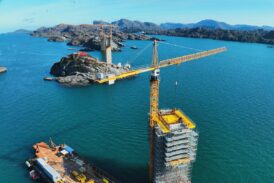
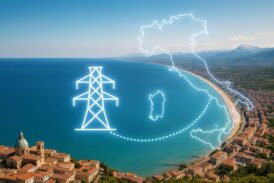
Megaprojects may capture headlines with bold architecture and record-breaking scale, but their true foundation lies in capital structure. Behind every high-speed rail corridor, offshore energy hub or cross-border tunnel sits a complex web of sovereign wealth, institutional investment, development finance and structured debt. In an era defined by fiscal constraint, climate commitments and geopolitical competition, how these projects are funded has become just as important as how they are built. Understanding the money behind the megaprojects reveals where risk is allocated, where opportunity lies, and which markets are poised for sustained infrastructure expansion.

Capital Structures at Trillion-Dollar Scale
The scale of modern megaprojects often exceeds the balance sheet capacity of a single government or private consortium. As a result, blended finance models have become the norm rather than the exception. Public funding may anchor a scheme, but it is increasingly supplemented by institutional investors, pension funds, export credit agencies and infrastructure-focused private equity.
Public-private partnerships continue to evolve, particularly in transport and energy infrastructure. In mature markets, PPP frameworks are now highly structured, allocating construction risk, operational risk and demand risk across multiple stakeholders. In emerging markets, development banks and multilateral institutions frequently play a stabilising role, de-risking early phases to unlock private capital participation.

Sovereign Wealth and Strategic Capital Deployment
Sovereign wealth funds have emerged as pivotal players in global megaproject financing. In the Middle East and parts of Asia, state-backed investment vehicles are deploying capital not only to diversify domestic economies but to secure strategic assets abroad. Infrastructure is no longer viewed purely as a public service obligation; it is increasingly treated as a long-term yield-generating asset class.
This strategic capital deployment is reshaping procurement models. Governments are structuring megaprojects to attract long-duration investors seeking predictable returns aligned with inflation-linked revenues. Toll roads, regulated utilities and energy transmission assets have become particularly attractive because they offer stable cashflow profiles once operational.

Green Finance and the Energy Transition Multiplier
Climate policy has dramatically altered the infrastructure funding landscape. Green bonds, sustainability-linked loans and climate funds are now integral to financing energy, transport and water megaprojects. The energy transition alone is unlocking trillions in capital flows, from offshore wind farms and hydrogen hubs to grid reinforcement and battery storage megasites.
Institutional investors are under increasing pressure to align portfolios with ESG mandates. As a result, megaproject sponsors must now demonstrate measurable environmental performance alongside financial viability. Carbon accounting, resilience planning and lifecycle sustainability metrics are becoming embedded in financial due diligence rather than treated as optional add-ons.

Risk Allocation, Cost Overruns and Financial Discipline
Megaproject history is littered with cost overruns and schedule delays. For financiers, risk modelling has become more sophisticated, incorporating geopolitical exposure, commodity price volatility, labour constraints and supply chain fragility. Fixed-price contracts are increasingly scrutinised, and contingency planning is built into funding structures from the outset.
In parallel, digital technologies are improving financial transparency. Digital twins, real-time construction analytics and integrated project management platforms are allowing funders to monitor progress with unprecedented visibility. This shift is gradually reducing uncertainty premiums and helping to protect long-term investment returns.

Development Banks and Emerging Market Infrastructure
In many emerging economies, megaproject viability depends on multilateral development banks and export credit agencies. These institutions provide guarantees, concessional loans and technical oversight that help crowd in private sector participation. Their involvement often signals confidence in governance frameworks and regulatory stability.
Infrastructure corridors linking ports, railways and energy assets across borders increasingly rely on this layered funding architecture. As trade routes evolve and supply chains regionalise, development finance institutions remain critical catalysts for large-scale infrastructure delivery in growth markets.
Ultimately, megaprojects are financial ecosystems as much as engineering feats. Capital discipline, risk allocation and long-term revenue modelling determine whether ambition translates into durable economic value. As global infrastructure demand accelerates, the sophistication of financing structures will shape which projects succeed, which stall and which redefine entire regions. Throughout Megaprojects Month, Highways.Today will continue examining not just what is being built, but how it is funded, structured and sustained for generations to come.
Technology Powering Megaprojects
If capital provides the foundation for megaprojects, technology determines whether they are delivered on time, on budget and to specification. The sheer complexity of modern infrastructure programmes, often spanning multiple jurisdictions and thousands of subcontractors, has made traditional management methods insufficient. Today’s flagship projects rely on integrated digital ecosystems that connect design, construction, procurement and operations in real time. From advanced modelling and AI-driven analytics to autonomous machinery and smart materials, technology has shifted from a supporting role to a central pillar of megaproject delivery.

Digital Twins and Integrated Design Platforms
At the heart of many contemporary megaprojects sits a digital twin. These dynamic, data-rich models extend beyond conventional Building Information Modelling, integrating geospatial data, environmental simulations, asset performance metrics and operational forecasting into a single digital environment. This allows project teams to visualise clashes, simulate construction sequencing and assess lifecycle costs before physical works progress.
Integrated design platforms are also transforming collaboration. Cloud-based engineering tools enable consultants, contractors and asset owners to work within shared environments, reducing data silos and improving version control. On projects where delays can translate into billions in additional cost exposure, the ability to maintain a single source of truth is no longer optional. It is fundamental to risk mitigation.

Artificial Intelligence and Predictive Analytics
Artificial intelligence is increasingly embedded within project management systems, analysing vast datasets to identify inefficiencies, potential delays and cost overruns before they escalate. Predictive analytics can flag procurement bottlenecks, equipment downtime risks and labour allocation imbalances, allowing managers to intervene early.
AI is also reshaping design optimisation. Algorithms can evaluate thousands of engineering variations in minutes, balancing cost, structural integrity and environmental performance. On megaprojects where incremental savings scale exponentially, optimisation at design stage can translate into substantial financial and carbon reductions over the asset’s lifespan.

Automation, Robotics and Autonomous Equipment
Labour constraints and safety considerations have accelerated the adoption of automation across large construction sites. Autonomous haulage systems in mining megaprojects, robotic tunnel boring operations and drone-based surveying are reducing exposure to hazardous environments while improving productivity.
Prefabrication and modular construction techniques are also gaining traction. By shifting complex assembly tasks into controlled factory settings, project teams can enhance quality control, reduce waste and compress on-site schedules. On transport and energy projects, this approach has already demonstrated measurable gains in both cost certainty and delivery speed.

Connectivity, IoT and Real-Time Monitoring
Megaprojects generate enormous volumes of operational data. Internet of Things sensors embedded within structures, machinery and temporary works provide real-time insight into structural performance, material curing, environmental conditions and equipment utilisation. This continuous data flow supports both construction management and long-term asset resilience.
Advanced connectivity infrastructure ensures that site data integrates seamlessly with central command centres. Remote monitoring reduces downtime, enables predictive maintenance and improves safety compliance. As infrastructure becomes increasingly smart by design, embedding connectivity during construction is emerging as best practice rather than an afterthought.

Sustainability Technology and Low-Carbon Innovation
Environmental performance has become inseparable from megaproject design. Low-carbon concrete formulations, recycled materials, electrified equipment fleets and advanced carbon accounting platforms are now influencing procurement decisions at scale. Technology enables real-time tracking of embodied carbon, allowing project teams to measure environmental impact as construction progresses.
Energy integration technologies, including smart grids, hydrogen infrastructure and large-scale battery storage, are also redefining how megaprojects contribute to national energy systems. The boundary between infrastructure and energy ecosystems is increasingly blurred, and technology is the bridge connecting them.
Ultimately, technology is no longer an efficiency enhancer layered onto megaprojects; it is the operating system that makes their scale manageable. As capital exposure rises and public scrutiny intensifies, digital intelligence, automation and sustainability innovation are becoming decisive competitive advantages. The megaprojects that succeed over the coming decade will not simply be those with the largest budgets, but those that harness technology to deliver transparency, resilience and long-term value. Throughout Megaprojects Month, Highways.Today will continue exploring the tools, platforms and innovations redefining infrastructure at global scale.
Risk, Governance & Delivery Challenges
Megaprojects are as vulnerable as they are visionary. While their scale promises economic transformation and long-term strategic advantage, it also amplifies exposure to financial, political and operational risk. History has shown that even the most carefully planned infrastructure programmes can falter under cost escalation, governance weaknesses or shifting political priorities. In today’s volatile global environment, managing risk and maintaining disciplined oversight are no longer secondary considerations. They are central determinants of success.

Cost Overruns and Schedule Pressure
Cost overruns remain one of the defining characteristics of megaproject delivery. Inflationary pressures, fluctuating commodity prices, supply chain disruptions and labour shortages can compound quickly when budgets stretch into the billions. Even modest percentage increases can translate into significant additional capital requirements, placing strain on public finances and investor confidence.
Schedule delays carry similar consequences. Financing structures are often predicated on defined construction timelines and projected operational revenue dates. When milestones slip, debt servicing schedules and return projections can be affected. Increasingly, project sponsors are embedding stronger contingency planning, phased delivery models and enhanced financial transparency to mitigate exposure.

Political Risk and Policy Volatility
Megaprojects often span electoral cycles and, in some cases, geopolitical fault lines. A change in government, regulatory framework or international relations can materially alter project viability. Trade sanctions, procurement restrictions or revised environmental policies can reshape both timelines and cost structures.
Cross-border infrastructure schemes face additional complexity. Bilateral agreements, funding arrangements and shared regulatory standards must remain stable over extended periods. Where political alignment weakens, project momentum can stall. Robust governance frameworks and legally binding agreements are therefore essential safeguards in long-duration infrastructure programmes.

Procurement Complexity and Contractual Risk Allocation
The procurement architecture of megaprojects has grown increasingly sophisticated. Multi-tiered contracting structures, joint ventures and international consortia are common features, particularly where specialised engineering expertise is required. However, this layered approach can introduce ambiguity in responsibility allocation if not carefully structured.
Risk transfer mechanisms, including fixed-price contracts and performance guarantees, are often designed to protect sponsors. Yet excessive risk transfer can create financial strain among contractors, leading to disputes or delivery stress. Striking a sustainable balance between accountability and commercial viability remains one of the most delicate aspects of megaproject governance.

Community Impact and Social Licence to Operate
Beyond financial and political considerations, megaprojects must navigate social and environmental scrutiny. Large-scale land acquisition, relocation programmes and ecological impact assessments can trigger public opposition if stakeholder engagement is insufficient. In an age of heightened transparency and rapid information dissemination, reputational risk can escalate quickly.
Securing and maintaining a social licence to operate requires continuous communication, environmental stewardship and demonstrable local economic benefit. Community engagement is increasingly integrated into early planning stages rather than treated as a procedural requirement. Projects that fail to build trust often encounter delays that outweigh initial time saved during consultation.

Regulatory Compliance and ESG Accountability
Environmental, social and governance standards have become embedded in funding criteria and procurement frameworks. Investors now require measurable reporting on emissions, biodiversity impact, labour practices and supply chain transparency. Failure to meet ESG commitments can jeopardise financing and undermine long-term operational viability.
Compliance frameworks are becoming more stringent across regions. From carbon disclosure regulations to modern slavery legislation, megaproject sponsors must navigate a complex regulatory landscape. Integrated compliance monitoring systems and digital reporting tools are therefore emerging as essential components of governance architecture.
Ultimately, megaproject delivery is as much about disciplined governance as engineering capability. Ambition without accountability exposes investors, governments and contractors to significant financial and reputational risk. Those projects that endure are typically characterised by transparent oversight, balanced risk allocation and adaptive management structures capable of responding to volatility. As Megaprojects Month continues, Highways.Today will examine not only the scale of global infrastructure ambition, but the governance frameworks and risk strategies that determine whether vision translates into sustainable delivery.
Future Megaproject Trends
If today’s megaprojects reflect current economic priorities, the next generation will be shaped by structural shifts in energy systems, climate adaptation, supply chain resilience and geopolitical realignment. Infrastructure investment is no longer driven solely by growth ambition. It is increasingly a response to systemic pressure, from decarbonisation mandates and urban expansion to water scarcity and regional security concerns. Over the coming decade, megaproject development will move beyond scale alone, focusing instead on resilience, integration and long-term sustainability.

Climate Resilience as Core Design Principle
Future megaprojects will increasingly embed climate adaptation into their fundamental design rather than retrofitting defences later. Coastal protection systems, flood-resilient transport corridors and heat-resistant urban infrastructure are already moving up national investment agendas. As extreme weather events intensify, resilience is becoming a primary investment justification rather than an optional enhancement.
Water management infrastructure will see particular expansion. Large-scale desalination plants, advanced stormwater systems and integrated river basin management schemes are likely to become defining megaproject categories in vulnerable regions. The financial case for resilience is strengthening as insurers, investors and governments recognise the escalating cost of inaction.
Energy Transition and Grid Reinforcement at Scale
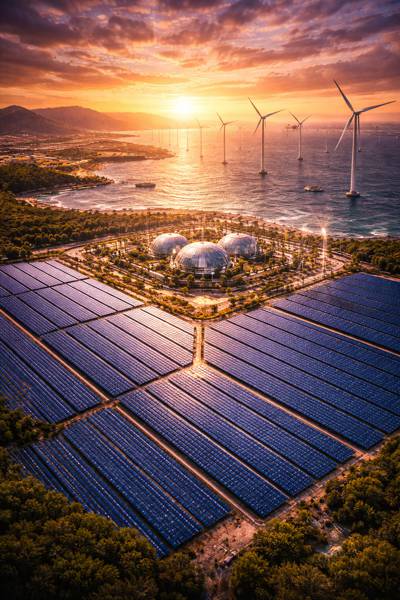
The global shift toward low-carbon energy systems is generating a wave of megaproject activity across generation, storage and transmission. Offshore wind clusters, hydrogen production hubs, gigafactories for battery manufacturing and high-capacity transmission corridors are expanding rapidly. These projects are not isolated developments; they are components of integrated energy ecosystems.
Grid reinforcement will become a defining infrastructure priority. As renewable energy penetration increases, electricity networks require significant expansion and modernisation to handle variability and distributed generation. Interconnector projects linking countries and regions will likely multiply, reshaping energy trade dynamics and enhancing system stability.

Regionalisation of Supply Chains
Geopolitical tension and pandemic-era disruptions have accelerated supply chain diversification. Governments are investing in large-scale industrial corridors, advanced manufacturing zones and logistics hubs to strengthen domestic capability. Port expansions, rail freight corridors and inland distribution centres are therefore expected to feature prominently in future megaproject pipelines.
Strategic materials such as copper, lithium and rare earth elements will drive mining and processing megaprojects. As electrification accelerates, securing reliable access to these resources is becoming a matter of economic and national security. Integrated rail and port infrastructure linked to resource extraction sites will likely follow.

Digital Infrastructure and Data-Centric Assets
Beyond physical infrastructure, large-scale digital assets are emerging as megaproject categories in their own right. Hyperscale data centres, fibre backbone expansions and subsea cable networks underpin modern economies. As artificial intelligence, automation and connected infrastructure expand, demand for resilient digital infrastructure will intensify.
Future urban megaprojects are also expected to incorporate embedded digital systems from inception. Smart mobility networks, real-time energy management platforms and AI-driven urban services will increasingly define how new cities are designed and operated. Infrastructure and digital ecosystems are becoming inseparable.

Modular Construction and Accelerated Delivery Models
Speed of delivery will become a strategic advantage in future megaproject execution. Modular construction, advanced prefabrication and standardised design platforms are likely to reduce construction timelines while improving quality control. These approaches allow scalability without proportionally increasing on-site labour intensity.
In parallel, phased megaprogrammes will replace singular, all-or-nothing delivery models. Breaking ambitious visions into structured stages reduces financial exposure and allows projects to demonstrate early returns. This model is likely to dominate future large-scale urban and industrial developments.

Infrastructure as a Strategic Instrument
Perhaps the most significant trend is the increasing use of infrastructure as a strategic policy instrument. Governments are leveraging megaprojects to strengthen regional influence, secure trade routes and attract foreign investment. Infrastructure diplomacy is no longer abstract; it is visible in cross-border transport corridors, energy interconnections and port developments.
As global competition intensifies, megaprojects will continue to reflect national ambition as much as economic necessity. The interplay between political strategy and infrastructure planning will therefore shape where and how the largest projects emerge.
The next decade of megaproject development will not simply be defined by bigger budgets or taller structures. It will be characterised by resilience, integration and strategic alignment with long-term national priorities. Climate adaptation, energy transformation, supply chain security and digital connectivity will guide capital allocation at unprecedented scale. As Megaprojects Month progresses, Highways.Today will continue tracking the signals that indicate where the next wave of global infrastructure investment is gathering momentum.
Data & Resources Hub
Megaproject decisions are not driven by ambition alone. They are informed by data, market intelligence, regulatory frameworks and long-term economic modelling. Behind every multibillion-dollar infrastructure programme sits an ecosystem of research, forecasting and policy guidance that shapes investment strategy and delivery discipline. The Data & Resources Hub brings together key reference sources, industry benchmarks and analytical tools that underpin informed decision-making across the global construction and infrastructure landscape.
Global Infrastructure Investment Outlooks
Major infrastructure pipelines are influenced by international investment forecasts and funding gap analyses. Multilateral institutions and economic forums regularly publish projections detailing capital requirements across transport, energy, water and digital infrastructure. These reports highlight not only headline funding gaps but also regional growth corridors and sector-specific opportunity clusters.
Such outlooks are critical for contractors, financiers and equipment manufacturers planning long-term market positioning. They provide clarity on where public spending commitments are strengthening, where private capital participation is expanding and which regions are prioritising infrastructure acceleration. For megaproject stakeholders, these insights often shape bidding strategy years before procurement begins.
Key recurring references include:
- World Bank infrastructure reports
- OECD infrastructure outlooks
- International Monetary Fund fiscal monitoring publications
- Global Infrastructure Hub data platforms
Procurement Frameworks and PPP Guidance
Megaproject delivery frequently relies on structured procurement models and public-private partnership frameworks. Access to comparative policy guidance and case studies allows sponsors and bidders to evaluate best practice in risk allocation, concession design and long-term asset governance.
PPP reference libraries and procurement portals provide insight into contract structures, regulatory safeguards and financing templates used across different jurisdictions. For firms entering new markets, understanding these frameworks can significantly reduce transaction friction and improve bid competitiveness.
Many governments now publish detailed infrastructure pipeline dashboards outlining upcoming projects, pre-procurement timelines and tender notices. Monitoring these sources allows stakeholders to anticipate market entry points rather than react to late-stage announcements.
Productivity Benchmarks and Performance Studies
Productivity performance remains a central concern in megaproject delivery. Comparative studies analysing cost overruns, schedule performance and labour efficiency provide valuable lessons for future schemes. Academic research and industry performance audits highlight systemic weaknesses and emerging best practices.
Benchmarking studies often examine factors such as:
- Risk allocation models
- Governance transparency
- Digital adoption rates
- Modular construction integration
- Workforce planning efficiency
By analysing performance trends across multiple projects and jurisdictions, industry leaders can identify structural improvements rather than relying on isolated anecdotal experience.
Sustainability Metrics and ESG Reporting Standards
Environmental and governance accountability has become inseparable from infrastructure finance. Access to recognised reporting standards and carbon accounting frameworks enables project sponsors to align with investor expectations and regulatory compliance requirements.
International sustainability standards now influence procurement scoring, bond issuance and long-term asset management strategy. Reference materials covering carbon disclosure, biodiversity impact assessment and supply chain transparency are increasingly consulted during early project design rather than post-construction reporting.
As ESG-linked financing grows, robust access to sustainability benchmarks becomes not just a compliance necessity but a competitive differentiator in capital markets.
Digital Tools and Analytical Platforms
Beyond institutional reports, digital data platforms are reshaping how infrastructure intelligence is accessed and interpreted. Geospatial mapping tools, project pipeline databases and construction analytics platforms allow professionals to evaluate market conditions in near real time.
These tools assist in identifying emerging megaproject clusters, tracking material demand trends and assessing regional infrastructure gaps. For suppliers and investors alike, access to live infrastructure data supports more precise capital allocation and market expansion strategies.
Reliable data and credible resources form the analytical backbone of successful megaproject strategy. In a sector defined by long timelines and significant capital exposure, informed decision-making reduces uncertainty and strengthens competitive positioning. The Data & Resources Hub is designed to support professionals navigating the global infrastructure ecosystem, offering reference points that illuminate where markets are moving and how opportunity is evolving. As Megaprojects Month continues, Highways.Today will expand this repository with timely insights and actionable intelligence drawn from across the industry.
Education & Career Pathways
Megaprojects are not delivered by capital and technology alone. They are executed by multidisciplinary teams of engineers, financiers, planners, digital specialists and governance professionals operating at the highest levels of coordination. As infrastructure programmes grow in scale and complexity, the demand for specialised expertise continues to intensify. Developing the skills required to design, finance and manage these schemes is now a strategic priority for both institutions and individuals seeking long-term relevance in the global infrastructure sector.

Project Leadership and Programme Management
Large-scale infrastructure delivery requires sophisticated programme governance and leadership capability. Project directors overseeing multibillion-pound developments must balance stakeholder management, financial discipline, risk allocation and operational execution across extended timelines. Formal training in programme management, risk modelling and contract strategy has become increasingly valuable.
Professional certifications in project and programme management are widely recognised across transport, energy and urban development sectors. These frameworks provide structured methodologies for planning, reporting and risk mitigation, equipping professionals to operate confidently within high-exposure environments where performance oversight is continuous and public accountability is high.

Infrastructure Finance and Commercial Structuring
As financing models become more complex, demand for infrastructure finance expertise continues to expand. Professionals with a strong understanding of public-private partnerships, concession design, blended finance and capital markets are essential to structuring viable megaprojects.
Training in financial modelling, infrastructure investment analysis and ESG-linked financing mechanisms enables practitioners to bridge the gap between engineering ambition and commercial reality. For investors and advisory firms, commercial literacy in construction and operational risk is now as important as technical understanding.

Digital Engineering and Data Competency
Digital transformation is reshaping workforce requirements across megaproject environments. Competency in Building Information Modelling, digital twin platforms, geospatial analytics and real-time data integration is increasingly expected rather than optional. Engineers and planners are now required to operate within integrated digital ecosystems from early design through asset handover.
Educational institutions and industry training providers are expanding digital engineering programmes to meet this demand. Courses covering AI integration, automation in construction and advanced analytics are preparing the next generation of infrastructure professionals to operate within increasingly data-centric environments.

Sustainability and Governance Expertise
Environmental accountability and governance oversight are embedded within modern megaproject frameworks. Professionals skilled in carbon accounting, environmental impact assessment and regulatory compliance play a central role in securing financing and maintaining public trust.
Training pathways focused on sustainability management, climate resilience planning and ESG reporting standards are becoming increasingly relevant. As infrastructure investment aligns more closely with decarbonisation targets, expertise in lifecycle emissions modelling and resilience design will likely remain in high demand.

Cross-Disciplinary Collaboration and Global Perspective
Megaproject delivery requires collaboration across legal, financial, technical and policy disciplines. International experience and cultural fluency are often advantageous, particularly on cross-border infrastructure corridors and multinational funding arrangements.
Universities and industry bodies are increasingly offering interdisciplinary programmes combining engineering, economics and public policy. These blended educational models reflect the evolving reality that infrastructure leadership is no longer siloed. It is integrative by necessity.
The next generation of megaprojects will demand professionals who can navigate complexity with confidence and discipline. Technical capability must be matched by commercial awareness, digital fluency and governance literacy. For individuals seeking to contribute to infrastructure at global scale, continuous professional development is not simply advantageous; it is essential. Throughout Megaprojects Month, Highways.Today will highlight educational pathways, certifications and industry initiatives that support the skills shaping tomorrow’s infrastructure leaders.
Building at the Scale of Nations
Megaprojects define eras. They reshape trade routes, redraw urban boundaries, recalibrate energy systems and influence geopolitical balance for decades. While their headlines often focus on engineering spectacle, their deeper significance lies in the long-term economic ecosystems they create. Supply chains expand, regional labour markets evolve, digital infrastructure integrates and capital flows realign around them. In many cases, the full impact of a megaproject is not measured at completion, but years later, when its influence becomes embedded in national productivity and global competitiveness.
Yet ambition alone does not guarantee legacy. The projects that endure are those grounded in disciplined finance, intelligent technology integration, transparent governance and adaptive leadership. As infrastructure demand accelerates in response to climate pressure, urban growth and strategic competition, the scale of investment will continue to rise. Understanding where that capital is deployed, how risk is structured and which technologies underpin delivery will remain essential for contractors, investors and policymakers alike.
Throughout April, Highways.Today will continue examining the projects, capital strategies, innovations and governance frameworks shaping this new era of global infrastructure. Megaprojects Month is not simply a showcase of scale. It is an exploration of how nations build at the scale of their ambition, and how the global construction ecosystem evolves alongside them.