Railway Vision Puts Crete at a Transport Crossroads
Crete has spent decades grappling with a familiar paradox. It is one of Europe’s most strategically located islands, a powerhouse of tourism and regional commerce, yet it remains almost entirely dependent on roads for internal mobility. That long-running imbalance has now been challenged in a meaningful way.
A public statement by Greece’s Minister of Infrastructure and Transport, Christos Dimas, confirming that a fixed-track transport system for Crete is among the government’s priorities, has shifted the debate from speculation to political intent.
For the first time, the prospect of rail or another fixed-guideway solution is no longer framed as a distant aspiration or a local demand struggling for national attention. Instead, it is being discussed as an infrastructure necessity linked directly to Crete’s next major economic transformation: the opening of the new international airport at Kastelli. That link is critical. It places fixed-track mobility firmly within the national infrastructure agenda, rather than treating it as a standalone or optional project.
A Statement That Changes the Parameters of the Debate
The minister’s remarks, made during an interview on Radio Crete, were brief but unambiguous. A fixed-track system is now recognised as a priority, initially to connect Heraklion with the new Kastelli airport and potentially extended to other parts of the island. In policy terms, that acknowledgement matters. Until now, discussions around rail or tram-train solutions in Crete were largely driven by regional authorities, technical bodies and civic committees, often without clear confirmation of political backing at ministerial level.
This shift in tone has immediate implications. It coincides with a high-level Pancretan meeting scheduled at the Region of Crete, bringing together mayors, members of parliament, ministry representatives and key stakeholders. The timing is not incidental. The meeting is designed to apply coordinated pressure for concrete decisions, and the minister’s statement has effectively raised expectations that this pressure will now be met with action rather than deferral.
In infrastructure planning, political signals are often as important as funding commitments in the early stages. They unlock feasibility studies, enable institutional coordination and give technical agencies the confidence to prepare serious proposals rather than conceptual sketches.
Kastelli Airport and the Limits of Road-Only Planning
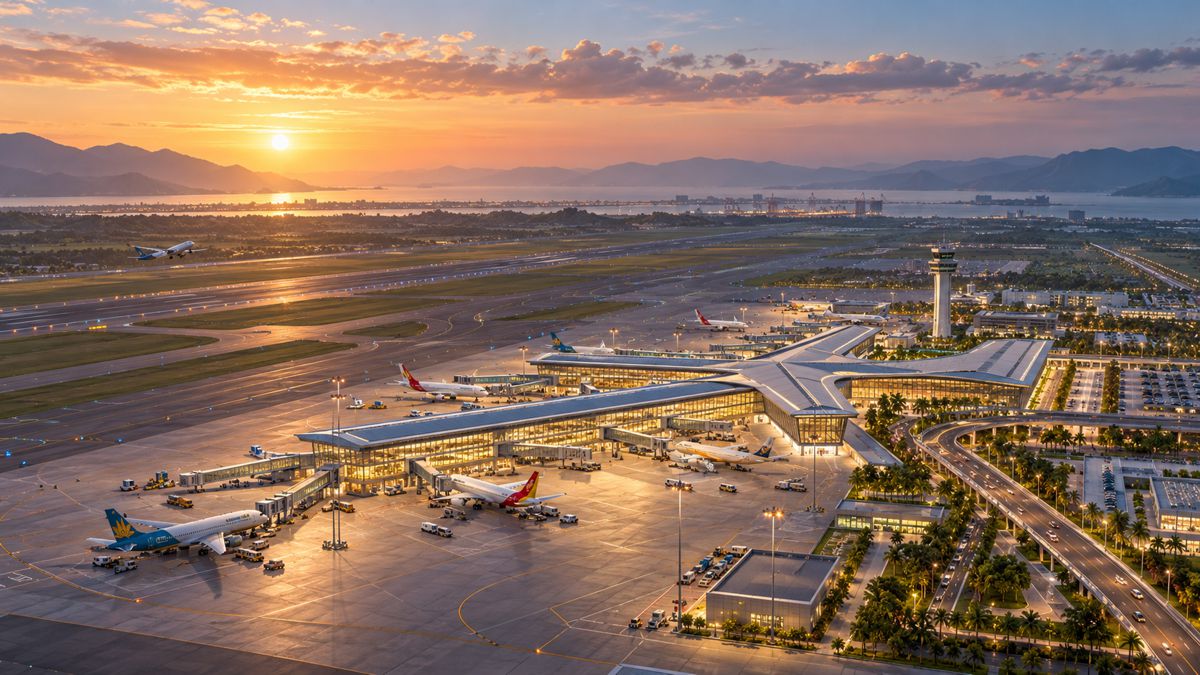
At the centre of this renewed urgency is the new Kastelli International Airport, a project expected to reshape Crete’s transport flows almost overnight. Forecasts suggest that annual passenger numbers could exceed 10 million, with roughly 80 percent of that traffic concentrated between May and October. That kind of seasonal intensity presents challenges that conventional road upgrades struggle to absorb.
The Northern Road Axis of Crete, already under construction in sections, remains a vital project. Yet even its most optimistic capacity scenarios cannot fully address the surge in airport-related movements, particularly during peak tourist months. Private vehicles, hire cars, coaches and service traffic all converge on the same corridors, amplifying congestion, safety risks and emissions.
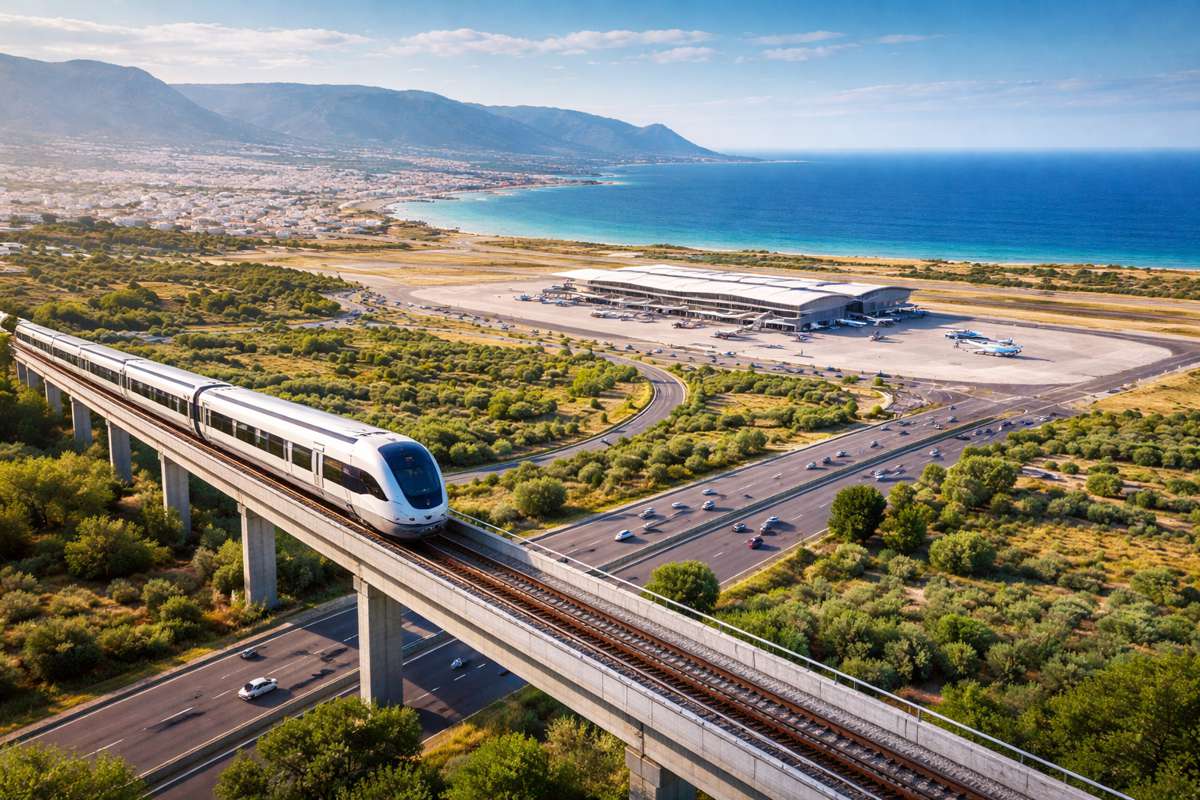
A fixed-track link between Heraklion and Kastelli would not simply offer an alternative. It would change the transport equation entirely by decoupling airport access from road congestion. In doing so, it aligns Crete with international best practice, where high-capacity airports are increasingly supported by rail, metro or tram-train systems to ensure resilience and reliability.
Political Momentum and Parliamentary Pressure
The minister’s comments were quickly welcomed by regional political figures who have spent years pushing the issue onto the national agenda. SYRIZA MP Haris Mamoulakis described the statement as a positive and binding development, noting that it followed multiple parliamentary interventions and sustained advocacy at both local and central levels.
From a governance perspective, this matters because it creates accountability. Once a priority is publicly acknowledged by the responsible minister, it becomes measurable. Stakeholders can reasonably expect to see that priority reflected in procedural steps, whether through budget allocations, tender preparation or the commissioning of studies.
That sense of conditional optimism is widely shared among those involved in the Pancretan Committee, which has coordinated much of the advocacy around fixed-track transport. Its members argue that the debate is no longer about whether Crete needs such a system, but how and when it should be delivered.
Passenger Volumes and the Case for Fixed Track
Estimates presented by committee members underline the scale of the challenge. With passenger numbers potentially exceeding 10 million annually at Kastelli, the island faces a transport profile closer to that of a medium-sized European hub city than a peripheral region. Seasonal concentration intensifies the problem, compressing demand into a six-month window that places extraordinary strain on infrastructure.
In this context, fixed-track transport offers advantages that incremental road widening cannot replicate. High-capacity vehicles, predictable journey times and superior safety performance make rail-based systems particularly well suited to airport connections. They also reduce dependence on private cars, a factor that resonates strongly with European climate and sustainability objectives.
Beyond airport access, proponents argue that a fixed-track spine could strengthen intra-municipal connectivity, linking communities more effectively and supporting regional cohesion. In an island with dispersed settlements and uneven economic activity, that connectivity has social as well as economic value.
Technical Readiness and the Role of Feasibility Studies
From an engineering standpoint, the moment is unusually well aligned. Major road projects on the Northern Road Axis are already underway, providing an opportunity to coordinate corridors, interfaces and land-use planning. The president of the Technical Chamber of Greece’s regional branch has highlighted this alignment as a window that should not be missed.
Feasibility studies are the logical next step. These would examine route options, system types, integration with existing transport networks and long-term operating models. They would also assess capital and lifecycle costs, environmental impacts and funding mechanisms, including potential European support under sustainable mobility and cohesion programmes.
Importantly, such studies do not prejudge the final solution. Fixed track can encompass a range of technologies, from conventional rail to light rail or hybrid systems adapted to regional conditions. What matters at this stage is establishing technical and economic credibility, backed by robust data.
Economic, Social and Environmental Implications
The broader implications of a fixed-track system extend well beyond transport engineering. Reduced car dependency has clear environmental benefits, particularly in terms of emissions and air quality during peak tourist seasons. For residents, improved public transport can translate into safer roads, more predictable travel and better access to employment and services.
There is also a demographic dimension. Enhanced mobility within and between municipalities can help counter population decline in inland areas by making them more accessible and economically viable. In that sense, fixed track is not merely about moving passengers efficiently, but about shaping settlement patterns and regional development.
For investors and policymakers, the message is equally clear. Infrastructure that supports sustainable growth, tourism resilience and social cohesion strengthens Crete’s long-term competitiveness. It signals a willingness to plan beyond short-term fixes and to align local development with national and European priorities.
From Political Signal to Infrastructure Reality
The challenge now is translation. Political intent must be converted into procedural momentum, technical preparation and, ultimately, procurement. The upcoming Pancretan meeting is expected to test that transition, setting out clear expectations for timelines and responsibilities.
Crete has reached a point where its transport future cannot be solved by roads alone. The minister’s statement has acknowledged that reality at the highest level. Whether this moment becomes a turning point will depend on how quickly intent becomes action, and how effectively national and regional actors work together to deliver a solution proportionate to the island’s role in Greece’s economic and transport landscape.