Bobcat Targets European Growth Through Wacker Neuson Acquisition
Compact equipment manufacturer Doosan Bobcat is pursuing one of the most significant acquisitions in its recent history, as part of a long‑term strategy to strengthen its position in Europe. Munich‑based Wacker Neuson SE has confirmed that it is engaged in advanced discussions with Bobcat regarding a controlling stake transaction. According to a company release on 2 December, Bobcat plans to acquire approximately 63 percent of Wacker Neuson’s shares from major shareholders, followed by an all‑cash public takeover offer for remaining shareholders.
Industry analysts estimate that the total value of the deal could exceed 5 trillion won, approximately 3.4 billion United States dollars. Wacker Neuson’s market capitalisation stood at 2.1 billion dollars as of 2 December. The proposed transaction would be Bobcat’s largest corporate acquisition since purchasing the Bobcat brand for 4.9 billion dollars in 2007.
The potential merger has been widely viewed as a strategic calculation aimed at accelerating Bobcat’s global reach. Compact construction equipment is central to both companies’ portfolios, and Europe remains one of the most active markets worldwide for small and mid‑sized machinery.
Complementary Market Strengths
Bobcat holds a commanding position in North America, generating 3.3 billion dollars in sales during the first nine months of 2025. That performance represented 72.9 percent of Bobcat’s total global sales, according to its third‑quarter earnings report published on 30 October.
However, the company still has limited penetration in Europe. Korean and Asian market specialist Douglas Kim noted that Wacker Neuson’s strong footprint in Germany, Austria and northern Europe presents a compelling opportunity for Bobcat: “Doosan Bobcat has a strong market share in North America, while it is relatively weak in Europe. Wacker Neuson, on the other hand, has a significant presence in Germany, Austria and northern Europe, making it a strong fit for Doosan Bobcat’s European expansion strategy.”
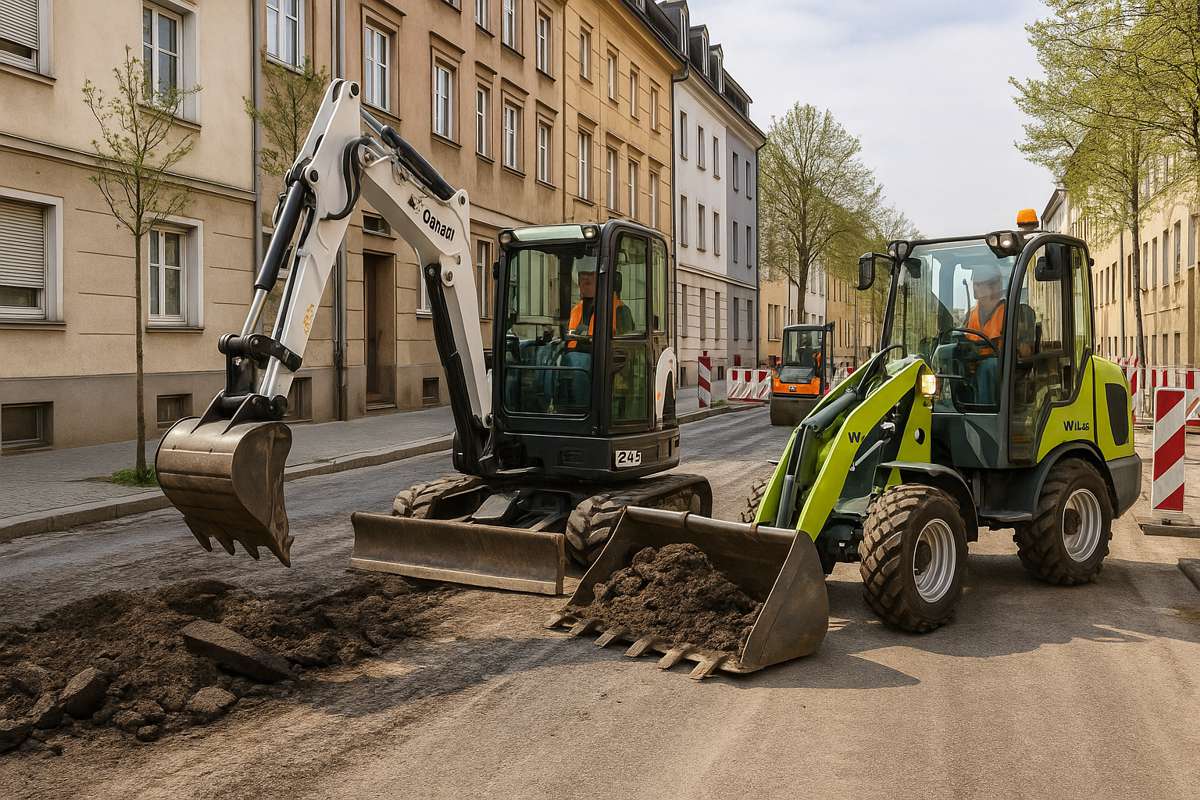
This relationship highlights a natural complementarity. Wacker Neuson is regarded as a core equipment supplier across European municipalities, road construction firms, utility contractors and rental fleets. Many of its products are tailored to regulatory and operational requirements in Germany and neighbouring markets, including electric light equipment, concrete compaction machinery and compact loaders.
Confirmation From Bobcat
In a regulatory filing on 3 December, Bobcat’s Chief Financial Officer and Executive Vice President, Cho Duk‑je, acknowledged the ongoing negotiations: “While the company is considering the acquisition of Wacker Neuson SE, no specific decisions have been made or confirmed at this time. We will update this disclosure when specific details are finalised or within one month.”
Cho’s statement confirmed investor expectations that Bobcat is actively evaluating the deal’s structure and timing, although a final decision had not yet been announced as of early December.
Financial Performance And Sector Dynamics
Both businesses reported year‑on‑year declines during the first nine months of 2025, reflecting a period of slower equipment demand in several regions. Bobcat’s North American sales fell 5.8 percent to 3.3 billion dollars, while its Europe, Middle East and Africa revenue declined 4.8 percent to 711 million dollars.
Wacker Neuson also experienced softer conditions. Its Americas revenue fell 9.6 percent to 376.3 million dollars, while its Europe, Middle East and Africa performance slipped 4.1 percent to 1.5 billion dollars, according to its earnings report issued on 13 November.
These declines correspond to a wider deceleration in global equipment markets during 2024 and 2025. Higher borrowing costs, slower private construction activity, delays in infrastructure procurement and tighter capital conditions have reduced fleet investment across many regions.
Compact construction equipment still accounted for the dominant share of Bobcat’s income, totalling 3.5 billion dollars and representing 77 percent of total revenue. The company’s strong North American base has long been a strategic advantage, supported by resilient demand from landscaping, infrastructure repair, agricultural applications and utility contractors.
European Market Significance
Europe represents one of the most lucrative markets for compact equipment, with estimated annual demand of around 160,000 units. Germany alone accounts for more than one fifth of volume. Local rental markets are mature, regulatory standards are strict and buyers prioritise reliable low‑emission machines with strong lifecycle value.
Douglas Kim highlighted that Germany serves as a springboard for businesses entering central and eastern Europe: “Germany accounts for approximately 22 percent of this demand and is considered a key base for expanding into the Eastern European market.” Rental penetration rates across Europe are among the highest globally, giving manufacturers predictable sales cycles and long‑term fleet renewal opportunities.
European contractors, municipalities and national infrastructure agencies have increasingly looked toward compact machinery capable of handling urban constraints, noise limits and emission standards. Electrification of smaller machines is gathering pace, and Wacker Neuson is widely recognised as one of Europe’s early leaders in battery‑powered light equipment and mini excavators. These capabilities could strengthen Bobcat’s ability to compete with the likes of Volvo Construction Equipment, JCB, Komatsu and Caterpillar within Europe’s environmentally focused procurement environment.
Ukraine Reconstruction Opportunities
Analysts have pointed toward post‑war reconstruction in Ukraine as a potential long‑term growth horizon for compact equipment suppliers. Major international lenders, including the European Investment Bank, the World Bank and multilateral donors, are preparing multi‑year funding strategies for road rehabilitation, municipal rebuilding and rural infrastructure.
Compact machinery is well suited to many of these early‑phase projects. Road patching, utility trenching, rubble removal, municipal landscaping and small foundation works are expected to form a portion of demand once large‑scale reconstruction accelerates.
Douglas Research Advisory notes that the combined Bobcat‑Wacker Neuson portfolio could place the company in a strong position to participate in Ukrainian orders: “The company is also expected to explore opportunities for increased orders related to post‑war reconstruction projects in Ukraine.”
This would align with Bobcat’s ongoing strategy to diversify beyond mature North American segments and secure more public‑sector and infrastructure contracts across Europe and emerging markets.
Competitive Positioning
If successful, the acquisition would create one of Europe’s strongest compact equipment platforms. Wacker Neuson’s manufacturing base, dealer network and product assortment would give Bobcat a ready‑made European presence without the long lead times typically required for localisation, homologation and channel development.
In addition, Bobcat’s global supply chain, telematics technologies, advanced loader platforms and brand equity could support premium pricing and broader market reach. The joined portfolio would compete directly with other major compact specialists, including Kubota, JCB, Yanmar, Caterpillar and Volvo CE.
Some analysts believe the combined business could also strengthen rental partnerships, including integrated telematics, predictive maintenance tools and rental‑optimised machine packages. These solutions are increasingly demanded by major rental houses across Europe, seeking lower ownership costs and improved fleet uptime.
Broader Industry Implications
Vertical integration and consolidation continue to shape the global compact machinery sector. Equipment buyers are seeking standardisation, longer lifecycle support, enhanced electrification offerings and digital fleet tools. Manufacturers with comprehensive dealer coverage and well‑integrated service networks are likely to outperform independent brands.
If Bobcat advances the acquisition, the company would likely focus on:
- Increasing European manufacturing output
- Expanding dealer partnerships and rental channels
- Accelerating electrification of compact platforms
- Enhancing product compliance with European sustainability targets
- Developing specialised machines for municipal and infrastructure work
This trajectory echoes similar moves by Caterpillar, Volvo and JCB as the market shifts toward lower‑emission machines, stronger rental alliances and digital fleet technologies.
Re‑shaping the European Compact Equipment Landscape
Market participants will watch closely for final confirmation of the acquisition structure, pricing and timeline. Regulatory approvals may be required, particularly in Germany and the wider European Union.
Should Bobcat and Wacker Neuson align corporate strategies, the combined organisation has the potential to redefine competition across compact sectors, strengthen electrification offerings and respond more effectively to infrastructure opportunities across Europe and beyond. The deal would carry strategic weight far beyond a traditional manufacturer acquisition, signalling an evolution in how global suppliers configure their portfolios.
The coming months will provide greater clarity on how negotiations unfold, and how the broader industry prepares for a re‑shaped European compact equipment landscape.