Engineering Resilience Across Continents in Modern Mining Operations
From the equatorial heat of West Africa to the frozen reaches of Northern Europe, mining operations continue to push machinery to its limits. Temperature extremes, relentless production schedules and unforgiving terrain combine to create some of the harshest working environments on earth. In these conditions, equipment is not simply expected to perform, it must endure, day after day, without compromise.
For contractors, operators and investors alike, the reliability of heavy machinery has become a defining factor in operational success. Downtime in large-scale mining is costly, safety margins are tight, and productivity targets leave little room for error. It is here, in the margins between efficiency and failure, that engineering quality is truly revealed.
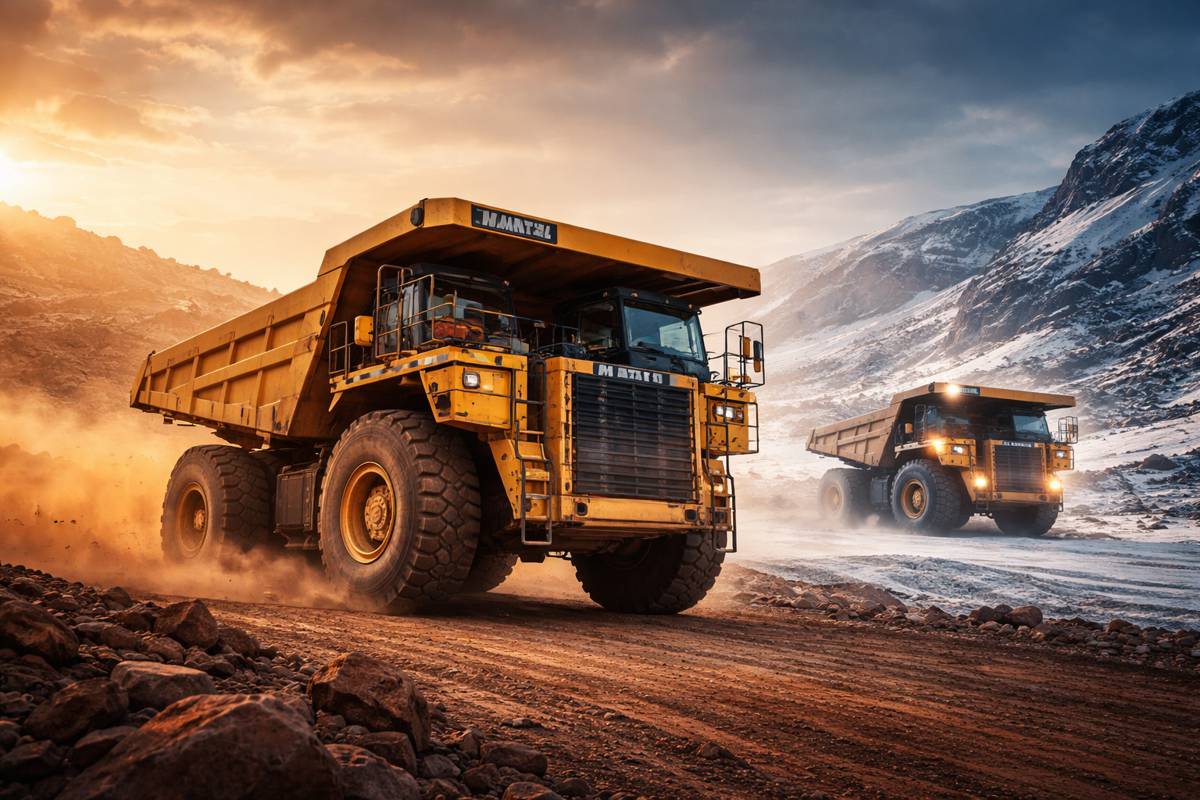
Across two vastly different mining environments, one in Ghana and the other in northern Sweden, a single class of machine offers a useful lens into how modern haulage equipment is evolving to meet these demands. The Komatsu HD785 rigid dump truck, designed for high-capacity mining operations, is currently working under conditions that could not be more different. Yet, despite the contrast in climate, both deployments highlight the same underlying requirement: machines must be adaptable, resilient and built around the realities of the operator.
Briefing
- Extreme mining environments demand equipment capable of operating reliably in both high heat and sub-zero temperatures
- The Komatsu HD785 rigid dump truck demonstrates consistent performance across geographically and climatically diverse sites
- Operator-focused design, including visibility systems and cab comfort, plays a central role in maintaining productivity
- Real-world operator experience highlights the importance of adaptability and workforce diversity in modern mining
- High-capacity haulage remains critical to global mineral supply chains, particularly in copper and gold production
The Role of Haulage in Global Resource Supply
Mining remains a cornerstone of global infrastructure development, supplying essential materials for construction, transport networks and energy systems. Copper, for example, is fundamental to electrification and renewable energy infrastructure, while gold continues to hold economic and industrial value. As demand for these materials grows, so too does the pressure on mining operations to increase output while maintaining safety and efficiency.
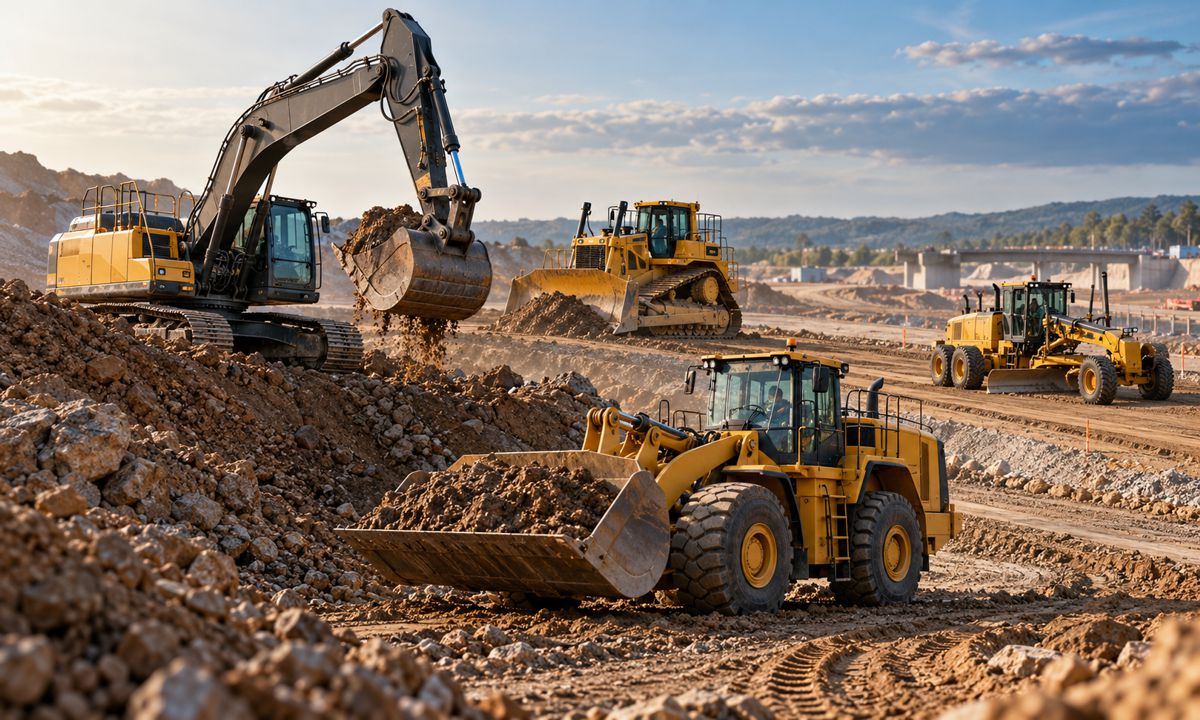
At the heart of these operations lies haulage. Moving vast quantities of material from pit to processing plant requires equipment capable of handling both scale and complexity. Rigid dump trucks such as the HD785 sit at the centre of this process, bridging excavation and processing in a continuous cycle that underpins productivity.
Industry data consistently shows that haulage accounts for a significant portion of operational costs in open-pit mining, often exceeding 50 percent when fuel, maintenance and labour are considered. As a result, even marginal gains in reliability and efficiency can have substantial financial implications. Equipment that performs consistently, regardless of environmental conditions, becomes a strategic asset rather than just a tool.
Endurance Under Equatorial Heat in Ghana
At the Ayanfuri gold mine in Ghana, environmental conditions present a constant challenge. Temperatures frequently reach 33 to 34 degrees Celsius, while airborne dust and continuous vibration place additional strain on both machinery and operators. Long shifts are standard, and operational continuity is essential to meet production targets.
In such an environment, machine design must go beyond mechanical strength. Thermal management, cabin ergonomics and operator assistance systems all contribute to maintaining performance over extended periods. Air-conditioned cabs, integrated camera systems and intuitive controls help reduce fatigue, allowing operators to remain focused even during demanding shifts.
Among those operating the HD785 in Ghana is Ruth Ofori, who works with Rocksure International Limited. Reflecting on her experience, she explains: “Strength, emotional intelligence, discipline and perseverance are the core values needed to succeed in this male-dominated field.
“Venturing into a predominantly male industry was a high-risk decision, but leaving my office job as a Financial Analyst proved to be extremely rewarding. I’m passionate about encouraging other women to consider this industry. No matter where you find yourself, these skills are transferable.”
Her perspective offers more than a personal story. It highlights a broader shift within the mining sector, where workforce diversity is gradually increasing and operational roles are becoming more accessible to a wider talent pool. This shift is not only cultural but practical, as operators with varied backgrounds bring different problem-solving approaches to complex site conditions.
Ofori also points to the importance of machine design in supporting operator performance, noting: “The operator-centric design and air-conditioned cabin of the HD785 provides me with essential comfort while driving the machine. This allows me to concentrate on my work, regardless of the external conditions.”
Arctic Operations and Precision in Northern Sweden
Several thousand kilometres to the north, conditions could hardly be more different. In northern Sweden, mining operations face prolonged winters, with temperatures dropping to minus 20 degrees Celsius and daylight reduced to just a few hours per day. These factors introduce a distinct set of operational challenges, particularly in terms of visibility, traction and equipment reliability.
At one of Europe’s largest copper mining operations, the HD785 operates under these constraints, where consistent performance is essential to maintain output. Cold weather affects everything from engine start-up to hydraulic performance, while snow and ice increase the risk of accidents if visibility is compromised.
Operator Caroline Landström has spent over three years working in these conditions. She notes: “Many think only men can operate these machines, but I’m eager to show that women can do it too. The conditions we work in are vast, but it’s something I’m used to, having lived in Northern Sweden all my life.
“I find my new career path extremely rewarding and am so pleased I made the plunge. I especially enjoy the stark contrast between my previous job, which involved interacting with people and my current role, where the team and I move mountains, highlighting the unique challenges and satisfaction of operating heavy machinery.”
In environments where daylight is limited and terrain can be unpredictable, visibility becomes a critical factor. Systems such as Komatsu’s KomVision, which provides a real-time 360-degree view from the cab, are increasingly seen as essential rather than optional. By reducing blind spots and improving situational awareness, such technologies contribute directly to both safety and productivity.
Engineering for Adaptability and Scale
The HD785-8 is designed with a payload capacity of 92.2 tonnes, positioning it within the high-capacity segment of rigid dump trucks. This class of equipment is typically deployed in large-scale mining and quarry operations, where efficiency gains are measured in tonnes moved per hour rather than incremental improvements.
Beyond raw capacity, adaptability is emerging as a defining feature of modern mining equipment. Machines must operate effectively across a range of climates, altitudes and terrain types, often within the same project lifecycle. This requires a combination of robust mechanical engineering and advanced electronic systems capable of adjusting to changing conditions.
Manoeuvrability also plays a crucial role. In open-pit mines, where space is constrained by bench geometry and haul road design, the ability to position accurately for loading and dumping can influence cycle times and overall efficiency. Equipment that combines power with precise control allows operators to maintain consistent performance even in challenging layouts.
From a broader industry perspective, the evolution of haulage equipment reflects ongoing trends in automation, data integration and operator support. While fully autonomous systems continue to develop, the current generation of machines focuses on enhancing human performance through technology rather than replacing it outright.
Workforce Evolution and Operational Reality
The experiences of operators in Ghana and Sweden point to a wider transformation within the mining workforce. As the industry modernises, there is a growing emphasis on skills, adaptability and safety awareness rather than traditional perceptions of physical capability.
Training programmes, improved cabin environments and digital assistance systems are lowering barriers to entry, enabling a more diverse workforce to participate in heavy equipment operations. This shift has practical benefits, including improved retention rates and a broader talent pool at a time when many regions face skills shortages.
At the same time, the realities of mining remain unchanged. Long hours, remote locations and demanding conditions continue to define the sector. Equipment that supports operators, both physically and cognitively, becomes an essential component of sustainable operations.
Keeping Global Mining Moving Forward
Mining operations will only become more complex as demand for critical minerals increases. Electrification, urbanisation and infrastructure development are driving sustained growth in resource extraction, placing additional pressure on equipment performance and reliability.
In this context, machines that can operate consistently across extreme environments are not simply advantageous, they are necessary. Whether in the heat of Ghana or the cold of northern Sweden, the ability to maintain productivity without compromising safety underpins the entire mining value chain.
The deployment of the HD785 across such contrasting conditions illustrates a broader point about the direction of the industry. Engineering is no longer just about strength and capacity. It is about resilience, adaptability and the integration of technology to support both machine and operator.
As mining continues to expand into new regions and more challenging environments, the expectations placed on equipment will only increase. Those machines that can meet these demands, quietly and consistently, will remain at the core of global resource production.