Intelligent Robot Chassis Redefines Durability and Control in Autonomous Systems
Autonomous robotics has reached a point where software capability is no longer the primary bottleneck. Navigation algorithms, perception systems and AI-driven decision-making have matured rapidly over the past decade. Yet, for industries such as construction, mining and infrastructure inspection, a more fundamental challenge persists: physical resilience. Machines designed to operate in controlled environments often struggle when exposed to the unpredictable realities of job sites, uneven terrain and harsh operating conditions.
Now, GMEX Robotics Corporation is advancing its Intelligent Robot Chassis, a development aimed squarely at addressing the mechanical and structural vulnerabilities that continue to limit widespread adoption of robotics in real-world environments. Rather than focusing solely on software or sensor upgrades, the company is turning attention to the physical foundation of robotics, where durability, stability and protection of internal systems directly influence performance, safety and return on investment.
The move reflects a broader shift across the robotics sector. As autonomous systems move beyond warehouses and into infrastructure, energy and public safety applications, reliability under stress becomes non-negotiable. Machines are no longer operating on smooth floors but on fractured concrete, loose aggregates and debris-strewn environments. In such conditions, the chassis is not merely a structural frame; it becomes a critical system that determines whether the robot can function at all.
Briefing
- GMEX Robotics is advancing an Intelligent Robot Chassis designed to improve resilience, safety and operational uptime in autonomous systems
- The chassis integrates buffering systems, structural monitoring, vibration isolation and environmental management
- Applications span construction, mining, logistics, healthcare and public safety operations
- The development highlights a growing industry focus on physical robustness rather than purely software-led innovation
- Intellectual property filings are underway across key global markets, signalling commercial intent and strategic positioning
Engineering Resilience into the Core of Robotics
At the heart of GMEX’s development lies a recognition that traditional robotic architectures are often too fragile for demanding environments. Sensitive components such as LiDAR sensors, onboard processors and actuators can be compromised by repeated shocks, vibrations and sudden impacts. Over time, even minor stresses accumulate, leading to failures, downtime and costly repairs.
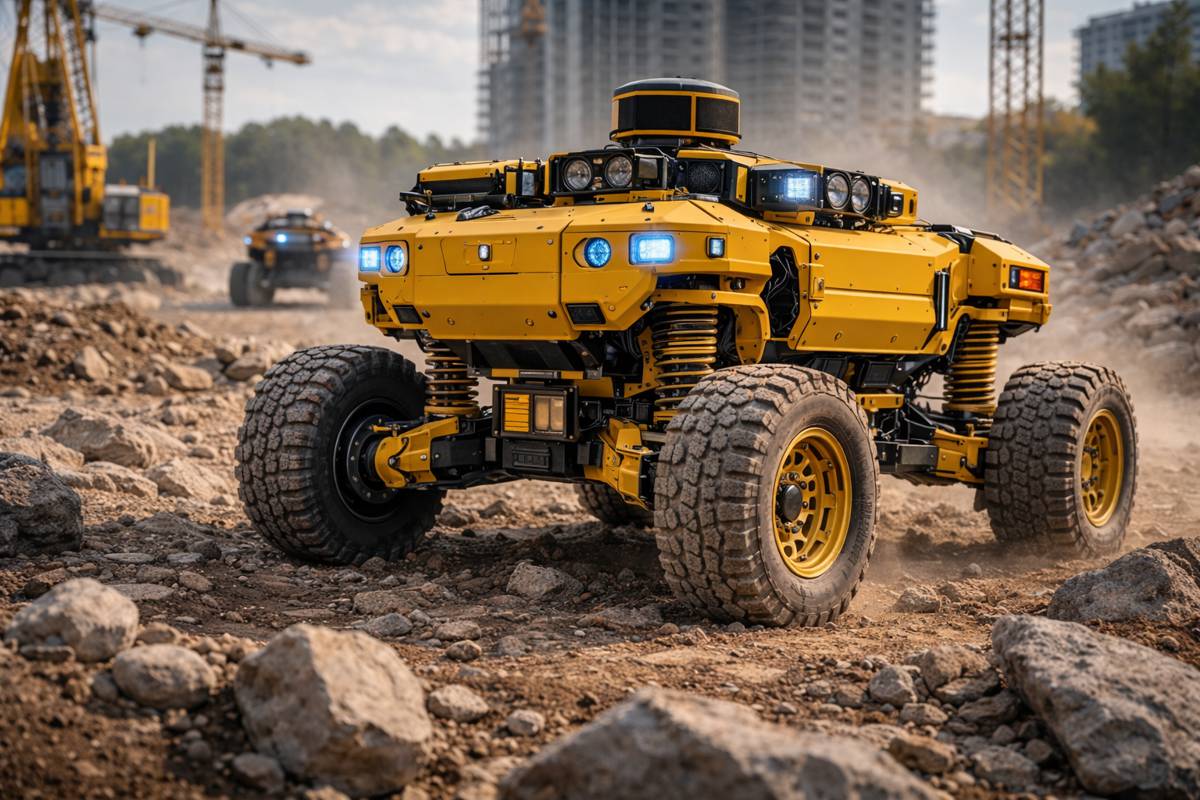
The Intelligent Robot Chassis addresses this challenge through a multi-stage buffering system. By incorporating both primary and secondary buffer members, the design reduces the amplitude of shocks transmitted through the structure. In practical terms, this means that when a robot traverses uneven terrain or encounters obstacles, the energy is absorbed and dissipated before it reaches critical components.
This approach aligns with established engineering practices seen in heavy machinery and automotive suspension systems, where vibration control plays a central role in extending equipment lifespan. However, applying these principles to compact, mobile robotic systems introduces new complexities. Weight constraints, energy efficiency and compact form factors all need to be balanced against durability.
From Passive Frames to Intelligent Structures
What distinguishes the GMEX chassis from conventional designs is the integration of sensing and adaptive response mechanisms. The system incorporates Structural Health Monitoring, a technology widely used in bridges and infrastructure to detect stress, fatigue and potential failure points. By embedding similar capabilities into a robotic platform, the chassis effectively becomes self-aware.
This shift from passive to intelligent structures has significant implications. Rather than waiting for a failure to occur, robots can monitor their own condition in real time, identifying stress patterns and triggering preventative maintenance. For industries operating at scale, such as mining or large infrastructure projects, this predictive capability can reduce unplanned downtime and improve asset utilisation.
In parallel, active vibration and shock isolation systems enable the chassis to respond dynamically to changing conditions. Instead of relying solely on fixed mechanical dampers, the system can adjust its behaviour based on terrain, load and movement patterns. This mirrors developments in advanced vehicle suspension technologies, where adaptive systems continuously optimise ride stability.
Thermal and Environmental Management in Harsh Conditions
Beyond mechanical stress, environmental factors also play a decisive role in robotic performance. Dust, moisture, temperature fluctuations and chemical exposure can degrade sensitive electronics, particularly in sectors such as construction and mining. GMEX’s chassis design incorporates thermal and environmental management systems to mitigate these risks.
Managing heat dissipation is particularly important as robots become more computationally intensive. High-performance processors and AI modules generate significant thermal loads, and without effective cooling, system reliability can deteriorate rapidly. Integrating thermal management into the chassis design ensures that performance is maintained even during extended operations in challenging conditions.
This integrated approach reflects a growing convergence between mechanical engineering and electronics design. Rather than treating the chassis as a separate structural element, it becomes part of a holistic system where mechanical, electrical and computational components are tightly interconnected.
Applications Across Infrastructure and Industry
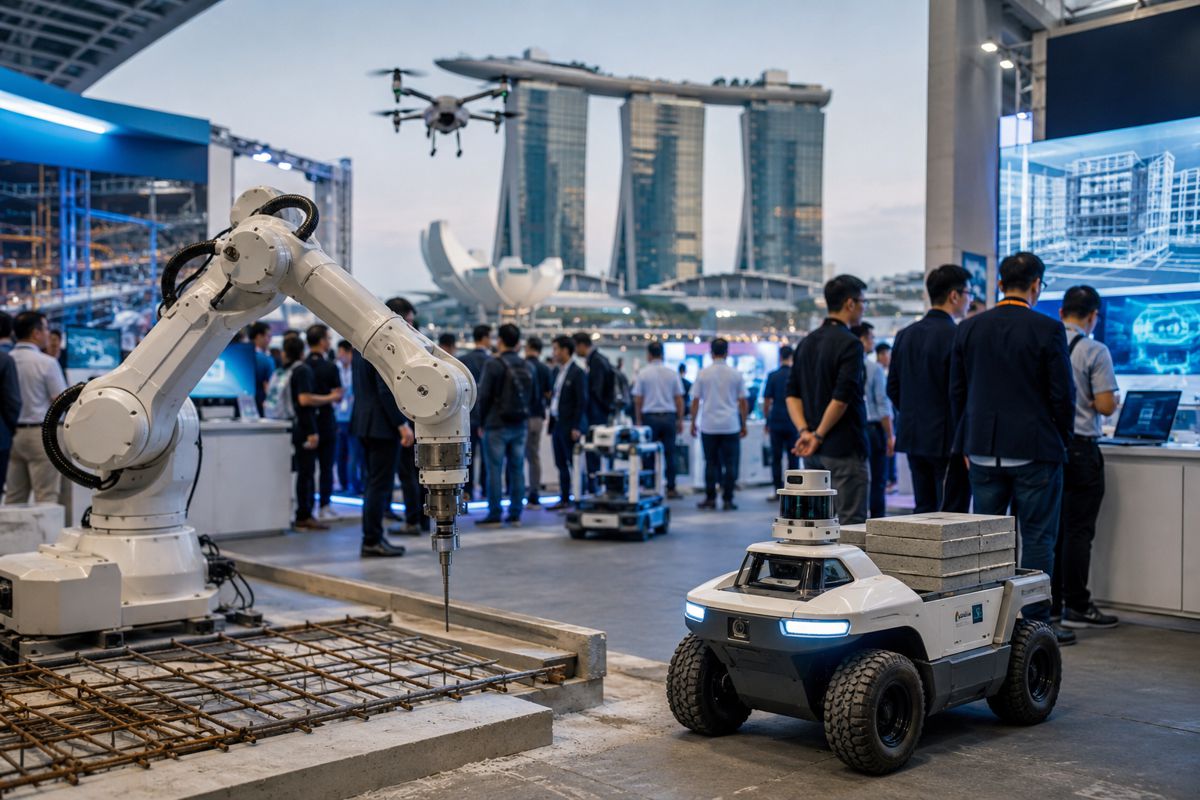
The practical implications of a more resilient robotic chassis extend across multiple sectors, particularly those where human access is difficult, dangerous or inefficient. In construction and infrastructure inspection, robots equipped with robust chassis systems can navigate complex environments without risking damage to expensive sensors or equipment.
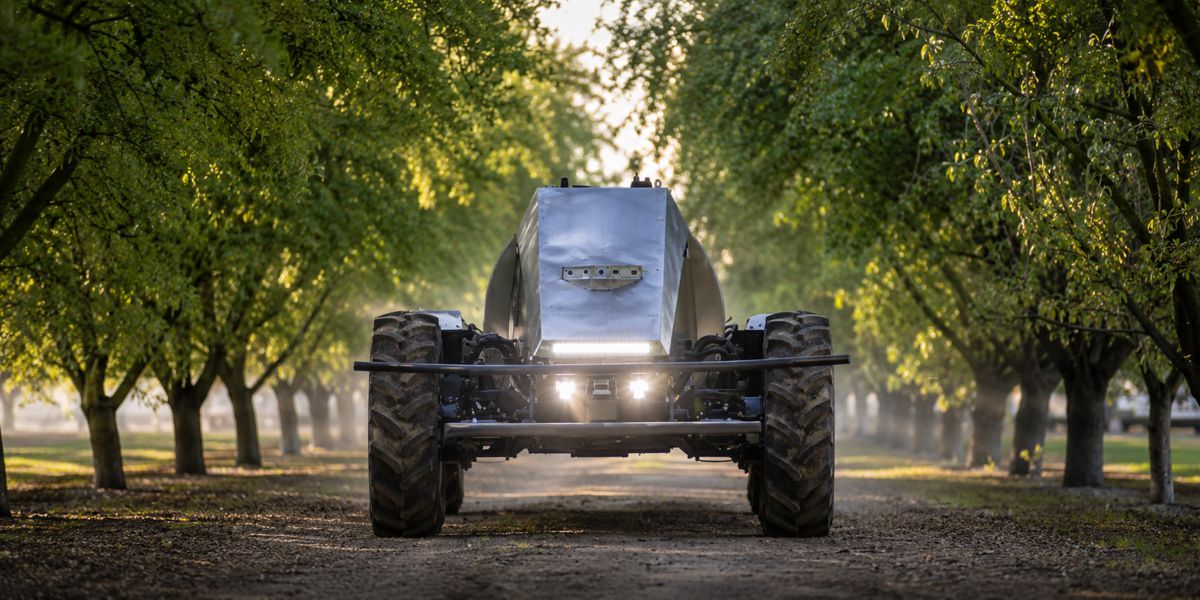
In mining operations, where terrain is inherently unpredictable, shock absorption and structural monitoring can significantly enhance operational continuity. Robots deployed for surveying, inspection or material handling must contend with loose rock, steep gradients and constant vibration. A chassis capable of adapting to these conditions reduces maintenance requirements and extends service life.
Public safety applications present another compelling use case. Robots deployed in disaster zones or hazardous environments, including bomb disposal or nuclear inspection, must operate reliably under extreme conditions. Protecting onboard systems from shock and environmental damage is essential to ensuring mission success and safeguarding human operators.
In logistics and warehousing, the benefits are more subtle but equally important. As automation systems handle heavier loads and operate at higher speeds, managing vibration and structural stress becomes critical to maintaining precision and avoiding equipment degradation. Even in relatively controlled environments, long-term durability can influence total cost of ownership.
Strengthening the Robotics Value Proposition
For investors and industry stakeholders, developments such as the Intelligent Robot Chassis highlight a shift in how value is created within the robotics sector. While much attention has been placed on artificial intelligence and software capabilities, the physical reliability of systems is increasingly recognised as a limiting factor in commercial deployment.
A robot that performs well in laboratory conditions but fails under operational stress offers little practical value. By contrast, systems designed for resilience can operate continuously, reduce maintenance costs and deliver consistent performance. This directly impacts return on investment, particularly in capital-intensive industries.
GMEX Robotics’ broader strategy, including efforts to secure intellectual property across regions such as Southeast Asia, China, Australia and the United States, suggests an intention to position this technology as a foundational component of its product portfolio. Protecting core innovations at the chassis level could provide a competitive advantage, particularly as demand for robust field robotics continues to grow.
Integration Within a Broader Robotics Ecosystem
The development of the Intelligent Robot Chassis does not exist in isolation. It forms part of a wider ecosystem that includes control systems, perception algorithms and electromechanical hardware. Integrating these elements into a cohesive platform is essential for delivering reliable autonomous systems.
“This next-generation chassis represents another milestone in GMEX Robotics’ ongoing commitment to advancing core robotics technologies,” said Sam Lu, CEO of GMEX Robotics. “With our expanding technology portfolio spanning robotic control systems, perception algorithms, and electromechanical hardware, we continue to strengthen our ability to deploy resilient autonomous systems globally while creating long-term value for our shareholders. Integrating this innovative technology into our R&D ecosystem enhances operational performance across multiple sectors.”
This integrated approach reflects a broader industry trend towards vertical integration, where companies develop both hardware and software capabilities in-house. By controlling the full stack, organisations can optimise performance, ensure compatibility and accelerate innovation cycles.
A Structural Shift in Robotics Design Priorities
Looking ahead, the emphasis on chassis design signals a structural shift in how robotics systems are conceived and developed. As deployment environments become more complex, the ability to withstand physical stress will become as important as computational intelligence.
For the construction and infrastructure sectors, this evolution could unlock new use cases for robotics. Tasks that were previously considered too risky or impractical for automation may become viable as machines gain the resilience required to operate in demanding conditions. Inspection, maintenance and material handling could all benefit from more robust platforms.
In many respects, the Intelligent Robot Chassis represents a return to engineering fundamentals. By focusing on durability, stability and system integration, GMEX Robotics is addressing challenges that have long constrained the practical deployment of autonomous systems. As the industry continues to mature, such developments may prove essential in bridging the gap between technological capability and real-world application.