The Rise Of Physical AI To Drive 145 Million Autonomous Machines By 2035
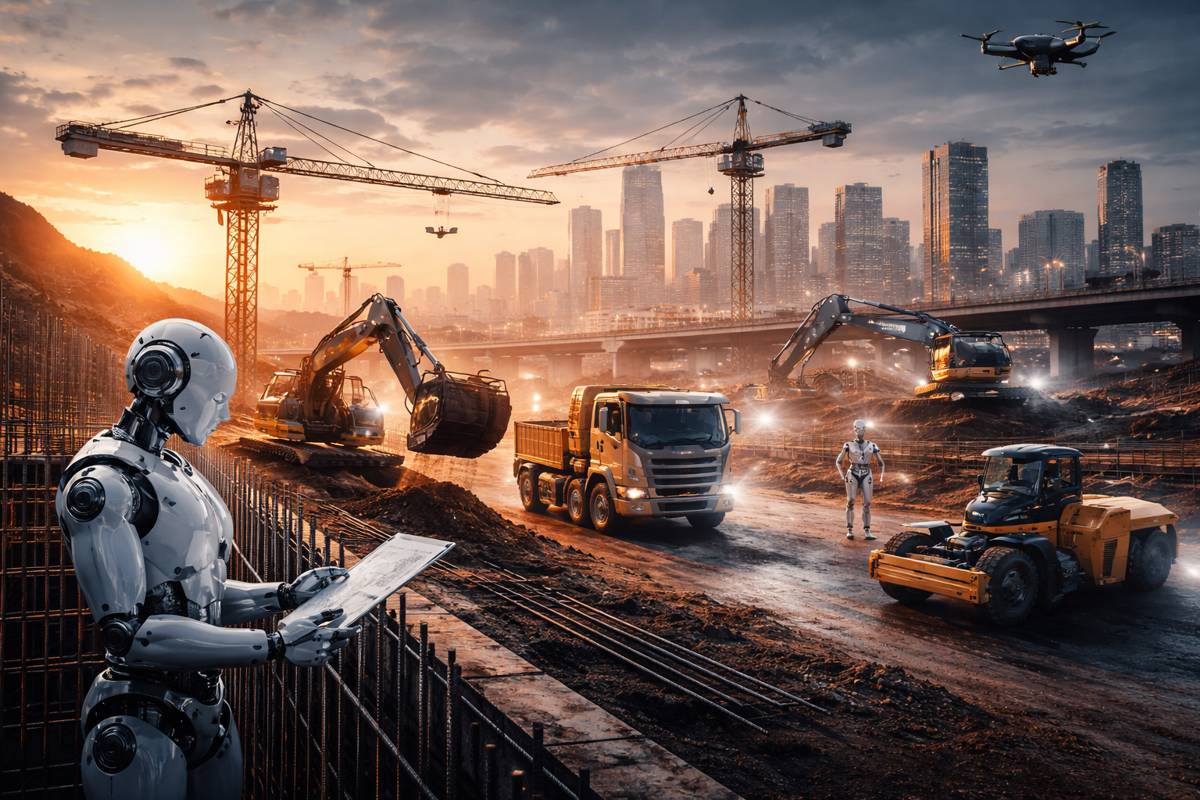
The global construction and infrastructure ecosystem is edging into a new operational reality, where machines no longer simply assist but actively perceive, decide and act. According to the latest findings from Counterpoint Research, cumulative shipments of Physical AI devices are forecast to reach 145 million units between 2025 and 2035. That figure spans autonomous vehicles, robotics and drones, signalling a structural shift in how infrastructure is built, maintained and operated.
This transition reflects more than incremental automation. Physical AI systems combine sensing technologies, edge computing and artificial intelligence models to operate in complex, real-world environments. In construction terms, that means machines capable of navigating unpredictable job sites, adapting to changing conditions and executing tasks with minimal human intervention. The implications stretch from productivity gains to workforce transformation, from safety improvements to entirely new business models emerging across the supply chain.
Briefing
- Global Physical AI device shipments projected to reach 145 million units by 2035
- Autonomous vehicles expected to generate the highest market value across the sector
- Service robots to dominate volume within robotics, while humanoid robots grow fastest
- Commercial drones to drive early large-scale deployment across industries
- Semiconductor demand set to rise sharply as compute becomes the dominant cost driver
A Defining Shift from Digital to Physical Intelligence
The first wave of artificial intelligence largely lived in the digital realm, analysing data, generating content and supporting decision-making. Physical AI moves that capability into the tangible world. Machines now interpret spatial data, respond to physical stimuli and execute actions autonomously, bringing intelligence directly onto construction sites, transport networks and industrial facilities.
Principal Analyst Soumen Mandal of Counterpoint Research described the transition clearly: “Physical AI represents the next major evolution of AI. While the first AI wave focused on digital intelligence – software that understands text, images and data, the next wave brings AI into the physical world, allowing machines to perceive their surroundings and interact autonomously.”
From a construction perspective, this evolution aligns with long-standing industry pressures. Labour shortages, rising project complexity and tighter safety regulations have all exposed the limits of traditional automation. Physical AI offers a pathway to more adaptive systems that can operate with greater independence, reducing reliance on manual oversight while improving consistency and accuracy.
Autonomous Vehicles Anchor the Market
Among the various segments, autonomous vehicles stand out as the cornerstone of Physical AI deployment. While early volumes may grow gradually, their long-term commercial impact is expected to dwarf other categories. Level 4 and higher autonomous systems, capable of operating without human intervention in defined environments, are already being tested across logistics corridors, mining operations and urban mobility networks.
Research Vice President Peter Richardson highlighted their strategic importance: “Autonomous vehicles are the foundational layer for the current Physical AI transition, and there are lots of similarities between today’s humanoid robot development and autonomous vehicles. However, autonomous vehicles will remain the most value-driven segment fuelled by advanced autonomy, computing, AI capabilities and real-time connectivity.”
For infrastructure developers and policymakers, this creates a dual challenge. On one hand, there is the need to invest in enabling infrastructure such as smart roads, high-definition mapping and connectivity networks. On the other, regulatory frameworks must evolve to support safe deployment at scale. The payoff, however, could be transformative, particularly in freight logistics, public transport and last-mile delivery.
Robotics Expands Beyond the Factory Floor
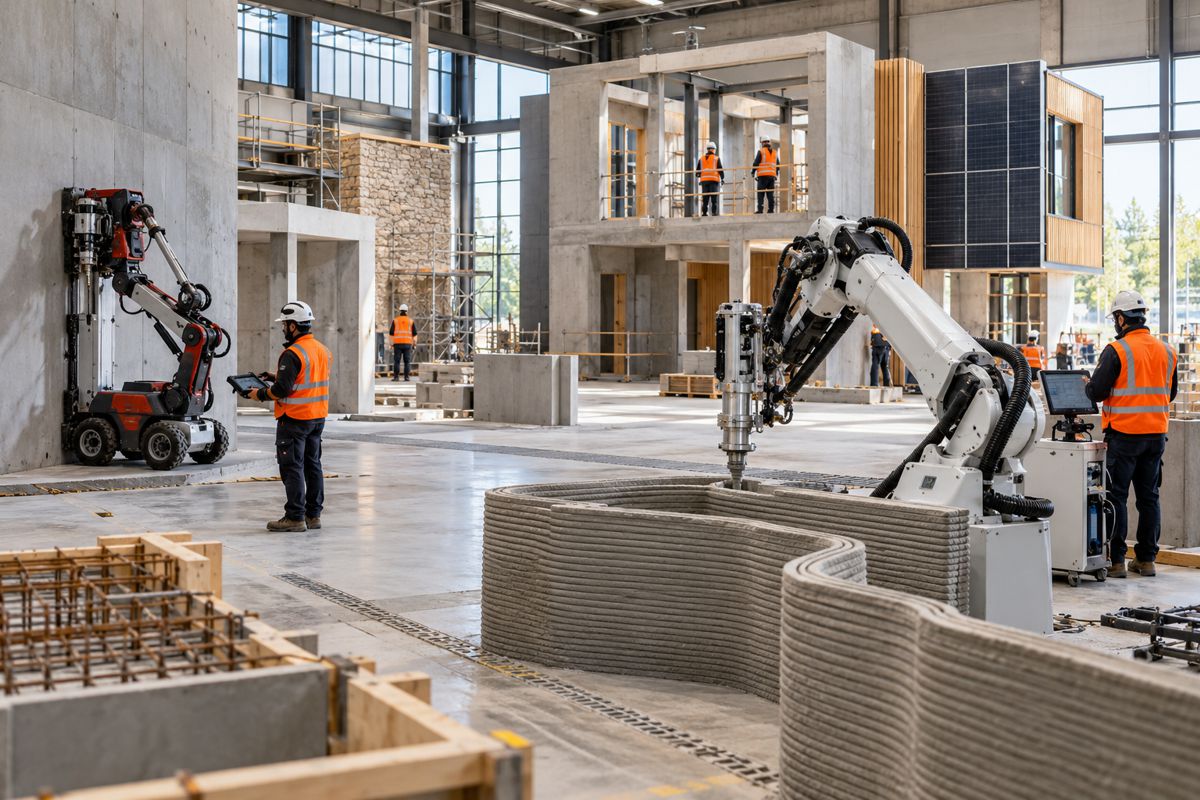
Robotics is expected to account for a significant share of Physical AI shipments, with service robots leading the charge. Unlike traditional industrial robots, which remain largely confined to controlled manufacturing environments, service robots are increasingly deployed in dynamic settings. Warehouses, construction sites, healthcare facilities and agricultural operations are all seeing growing adoption.
This expansion reflects both technological progress and economic necessity. Improved sensor systems, falling hardware costs and more sophisticated AI models are making robots viable in scenarios that were previously too complex or costly. At the same time, businesses are under pressure to improve efficiency while maintaining operational resilience, particularly in sectors vulnerable to labour shortages.
Industrial robots, while still concentrated in sectors such as automotive and electronics manufacturing, are also evolving. As deployment becomes easier and costs continue to decline, broader adoption across infrastructure projects is likely. Tasks such as material handling, inspection and repetitive construction processes are increasingly within reach of robotic systems.
Humanoid Robots Edge Towards Practical Deployment
Perhaps the most closely watched segment is humanoid robotics. Still at an early stage, these systems are being developed to operate in environments designed for humans, making them inherently versatile. While current deployments remain limited, momentum is building as companies refine both hardware and AI capabilities.
Chinese and global players are advancing rapidly, with companies such as Agibot, Unitree Robotics, UBTECH Robotics, Leju Robotics and Tesla leading installations. Cumulative deployments are expected to exceed 100,000 units by 2028, representing a sevenfold increase compared to 2025 levels.
Neil Shah, Research Vice President at Counterpoint Research, noted the long-term potential: “Humanoid robots represent one of the most exciting long-term opportunities within Physical AI. Advances in generative AI, computer vision systems and motion control are bringing us closer to general-purpose robots that can operate in human environments. While there are advancements in the ‘form’, the ‘mind’ is something that is ripe for innovation. The industry has to cross the chasm from AMI (Autonomous Machine Intelligence) to embodied AGI (Artificial General Intelligence).”
He added: “We are closely monitoring the components, whether semiconductors, sensing or software, going into these robots. The rise of Vision-Language Models and Vision-Action Models unifies multimodal perception, language understanding and reasoning, and executable control within a single sequence modelling framework, which will be a critical inflection point. Although commercialization will take time, the long-term impact will be transformational across multiple industries”.
For construction, humanoid robots could eventually handle tasks that require dexterity, mobility and adaptability, from equipment operation to on-site assembly. However, cost, reliability and safety remain key hurdles before widespread adoption becomes viable.
Drones Deliver Early Scale and Practical Impact
While autonomous vehicles and humanoid robots capture much of the attention, commercial drones are quietly becoming the most widely deployed Physical AI systems. Their relatively low cost and increasing regulatory clarity have enabled rapid adoption across industries.
Richardson observed: “Drones are emerging as the earliest large-scale deployment of Physical AI, with rapid adoption across logistics, surveillance and enterprise use cases driving high-volume growth.”
In construction and infrastructure, drones are already used for surveying, inspection, progress monitoring and asset management. Their ability to collect high-resolution data quickly and safely has made them indispensable on large and complex projects. As AI capabilities improve, drones are expected to take on more autonomous roles, including real-time decision-making and coordinated operations.
Compute Power Becomes the New Battleground
As Physical AI systems grow more capable, the balance of cost within these machines is shifting. Mechanical components are becoming cheaper due to scale and maturity, but the demand for advanced computing is rising sharply. High-performance processors, specialised AI chips and edge computing platforms are increasingly central to system design.
This dynamic is creating opportunities for semiconductor companies and technology providers. NVIDIA is pursuing a data centre to edge strategy, leveraging its expertise in AI training and simulation. Meanwhile, Qualcomm is focusing on power-efficient edge AI solutions tailored for connected devices operating in real-world environments.
The implications extend beyond hardware. Telecom operators are set to benefit from increased data traffic and demand for low-latency connectivity, while software and services providers are positioned to capture recurring revenue through analytics, fleet management and cloud-based platforms.
Marc Einstein, Research Director at Counterpoint Research, summarised the broader opportunity: “Physical AI will create opportunities across the broader ecosystem. Beyond device makers, compute players will benefit by powering the ‘brains’ of these systems. Telecom operators will gain from increased data traffic, connectivity and edge services. Meanwhile, software and services providers will see recurring revenue opportunities through data analytics, lifecycle management, fleet services and cloud infrastructure.”
Collaboration Will Shape the Winners
The scale and complexity of Physical AI systems mean no single company can dominate the value chain alone. Success will depend on collaboration across hardware manufacturers, software developers, connectivity providers and infrastructure operators.
For the construction and infrastructure sectors, this collaborative approach is already taking shape. Equipment manufacturers are partnering with AI developers, telecom companies are working with transport authorities and software platforms are integrating data from multiple sources to deliver actionable insights. The result is a more interconnected ecosystem, where value is created not just through individual technologies but through their integration.
At the same time, governments and regulators play a crucial role in enabling deployment. Standards, safety frameworks and investment in digital infrastructure will all influence the pace and scale of adoption. Regions that align policy with technological development are likely to capture a disproportionate share of the economic benefits.
A New Industrial Layer Emerges
Physical AI is not a niche trend confined to robotics labs or pilot projects. It represents the emergence of a new industrial layer, one that sits between digital intelligence and physical infrastructure. As deployment scales, it will reshape how projects are planned, executed and maintained.
Construction professionals, investors and policymakers are already facing decisions about how to engage with this shift. Early adopters may gain efficiency and competitive advantages, but they must also navigate technical complexity and evolving regulatory landscapes. Those who wait risk falling behind as the industry moves towards more autonomous and data-driven operations.
The next decade will likely see Physical AI move from experimentation to standard practice. By the time cumulative shipments approach 145 million units, the distinction between digital and physical systems may become increasingly blurred. What remains clear is that infrastructure will no longer be built and operated solely by human hands.