Rajasthan Accelerates Highway Transformation With World Bank Financing
Rajasthan is setting out to modernise one of India’s most strategically important road networks, with a new $225 million programme backed by the World Bank. The initiative targets a persistent imbalance between rapid economic growth and lagging transport infrastructure, a gap that has increasingly constrained mobility, trade efficiency and regional competitiveness.
As one of India’s largest states, Rajasthan plays a pivotal role in linking domestic markets, acting as a corridor for nearly 40 percent of national trade flows. Despite recording sustained economic expansion over the past decade, its highway network has struggled to keep pace with rising demand from agriculture, mining, industry and tourism. The result has been mounting pressure on logistics performance, safety outcomes and long-term resilience.
The newly approved Rajasthan Highway Modernization Project aims to address these structural challenges through a combination of infrastructure upgrades, institutional reform and financial innovation. More than three million people are expected to benefit, particularly those dependent on reliable access to employment hubs, supply chains and services across the state’s economic corridors.
Briefing
- $225 million programme will upgrade and maintain around 800 km of highways across Rajasthan
- Project introduces India’s first Step-Up Loan to ease early-stage financing pressures
- Private capital mobilisation of nearly $295 million reduces reliance on public funding
- Road conditions expected to improve significantly, with safer and more resilient corridors
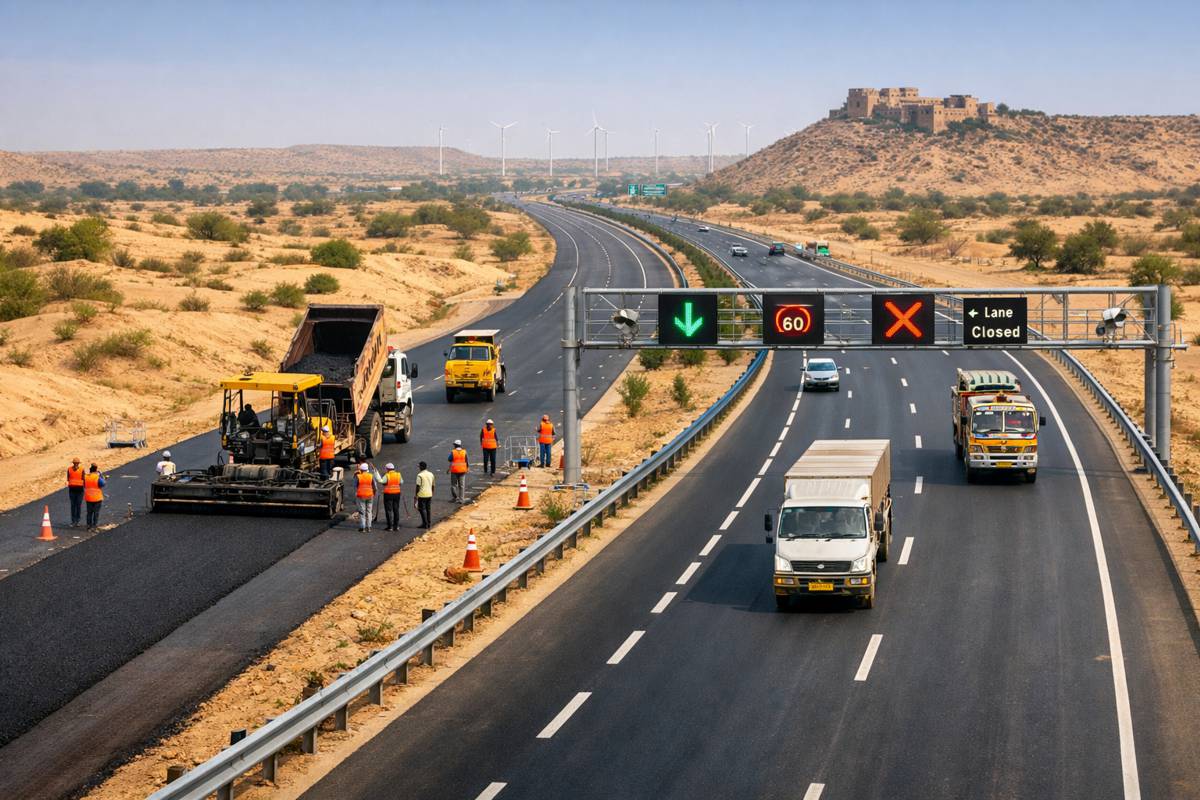
- Digital traffic systems to enhance safety across high-risk routes including major tourist hubs
Reframing Highways as Long-Term Service Infrastructure
A notable shift within the programme lies in how highways are conceived and managed. Rather than treating roads as static assets, the project introduces a “Road as a Service” model, aligning with global trends in performance-based infrastructure delivery. This approach prioritises lifecycle outcomes such as safety, reliability and user experience, rather than focusing solely on construction milestones.
This transition reflects a broader change in infrastructure thinking seen in markets from Europe to Southeast Asia, where governments are increasingly adopting service-oriented contracts to improve asset longevity and cost efficiency. By embedding performance metrics into maintenance and operations, Rajasthan aims to reduce long-term expenditure while delivering consistent service levels.
The project also seeks to modernise the institutional capacity of the state’s highway authority, positioning it as a more agile and data-driven agency. That shift is expected to strengthen procurement practices, improve oversight and enable better integration of digital systems across the network.
Unlocking Private Investment Through Financial Innovation
At the heart of the programme is the introduction of India’s first Step-Up Loan structure, delivered through the International Bank for Reconstruction and Development. This financing mechanism is designed to ease fiscal pressure during the early, higher-risk phase of project delivery by offering lower initial repayment costs, followed by increased pricing once the infrastructure becomes operational and financially stable.
Such models have gained traction globally as governments seek to balance infrastructure expansion with fiscal discipline. By smoothing repayment profiles, Step-Up Loans can make large-scale projects more viable, particularly in emerging markets where upfront capital constraints often delay development.
In Rajasthan’s case, the structure is expected to help mobilise approximately $295 million in additional private investment through public-private partnerships and market borrowing. This blended financing approach reduces dependence on state budgets while expanding the scale and ambition of infrastructure delivery.
The implications extend beyond this single project. If successful, the model could serve as a blueprint for other Indian states looking to attract private capital into transport infrastructure without exposing public finances to excessive risk.
Strengthening Economic Corridors and Regional Competitiveness
Improved highways are not merely a transport upgrade. They underpin economic productivity, shaping how goods, services and labour move across regions. Rajasthan’s economic corridors, which connect agricultural zones, industrial clusters and tourism destinations, rely heavily on efficient road networks to function effectively.
Upgrading approximately 800 kilometres of key corridors is expected to reduce travel times between logistics nodes, lower vehicle operating costs and enhance supply chain reliability. These improvements can translate directly into increased competitiveness for local industries, particularly in sectors such as mining and manufacturing where transport efficiency is critical.
Tourism, another major pillar of Rajasthan’s economy, also stands to benefit. Cities such as Jaipur and Jodhpur attract millions of visitors each year, yet congestion and safety concerns have often undermined accessibility. Enhanced connectivity and smoother travel conditions could strengthen the state’s position as a leading domestic and international tourism destination.
Tackling Road Safety Through Data and Enforcement
India accounts for one of the highest numbers of road fatalities globally, according to data from the World Health Organization. Addressing road safety is therefore central to any infrastructure upgrade, particularly in high-growth regions where traffic volumes are rising rapidly.
The Rajasthan project places strong emphasis on safety interventions, including the deployment of digital traffic management and enforcement systems across 250 kilometres of high-risk corridors. These systems are expected to improve monitoring, enable faster incident response and support more effective enforcement of traffic regulations.
Equally important is the integration of safety considerations into design and maintenance practices. By adopting international standards for road engineering, signage and user protection, the programme aims to reduce accident rates and improve overall travel conditions.
The ambition is not simply to build better roads, but to create safer ones. That distinction is critical in a country where infrastructure expansion has often outpaced safety improvements.
Climate Resilience and Long-Term Performance
Climate resilience is another key component of the project, reflecting growing awareness of the risks posed by extreme weather events. Rajasthan’s highways are exposed to temperature extremes, flooding and other environmental stresses that can degrade road quality and disrupt connectivity.
By incorporating climate-resilient design principles, including improved drainage systems and durable materials, the project aims to ensure that upgraded corridors remain operational under a wider range of conditions. This focus aligns with broader global efforts to future-proof infrastructure against climate-related disruptions.
Long-term performance is also supported through maintenance strategies embedded within the “Road as a Service” framework. By linking payments to performance outcomes, the model encourages contractors to prioritise durability and proactive maintenance, rather than short-term cost savings.
Expanding Access to Jobs and Opportunities
Beyond infrastructure metrics, the project carries significant social implications. Improved connectivity can expand access to employment, education and healthcare, particularly for rural populations that depend on reliable transport links.
The programme explicitly targets better integration of women and young people into economic activity, recognising that mobility barriers often limit participation in the labour market. Enhanced transport networks can reduce travel times, improve safety and open up new opportunities across sectors.
Paul Procee, Acting Country Director for India at the World Bank, highlighted this dimension, stating: “Strong, sector-focused reforms paired with private investment can deliver more and better-paying jobs for people. The project will ensure more women and young people can seamlessly connect to places for jobs in economic corridors, boosting industrial competitiveness and tourism.”
The emphasis on inclusive growth reflects a broader shift in infrastructure planning, where social outcomes are increasingly considered alongside economic returns.
A Blueprint for Modern Highway Development in India
Rajasthan’s highway modernisation effort sits within a wider national push to upgrade India’s transport infrastructure. Initiatives such as Bharatmala Pariyojana and expanding expressway networks have already begun to reshape connectivity across the country.
What sets this project apart is its integrated approach, combining financial innovation, institutional reform, digital technology and safety improvements within a single framework. It is not simply about building roads, but about redefining how they are financed, managed and experienced by users.
Reenu Aneja, Task Team Leader for the project, underscored this shift, stating: “Strengthening road safety and long-term highway performance is central to Rajasthan’s infrastructure transformation. Through a new ‘Road as a Service’ approach, the project shifts the focus beyond construction to a service-delivery model that supports performance-based management, road safety, and user experience over the asset lifecycle.”
With a 35-year maturity and a five-year grace period, the financing structure provides the long-term horizon needed for such systemic change. If the programme delivers on its objectives, it could influence how future infrastructure projects are designed and financed across India and beyond.
In a landscape where demand for transport infrastructure continues to grow, Rajasthan’s approach offers a glimpse of what the next generation of highway development might look like. It blends engineering, finance and policy into a cohesive strategy, aiming to deliver roads that are not only built to last, but designed to serve.