India Accelerates ADAS Adoption with Mobileye and Mahindra
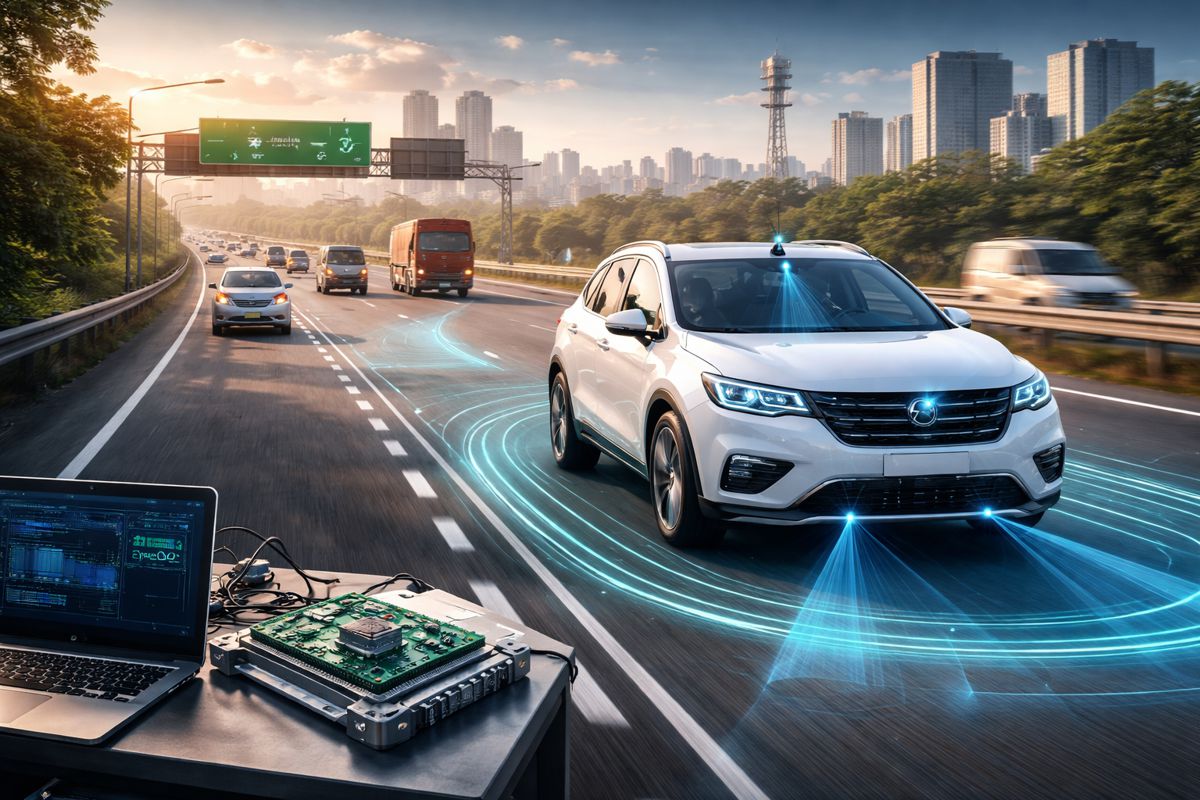
India’s automotive sector is entering a decisive phase in advanced driver assistance systems, and a new collaboration between Mobileye Global Inc. and Mahindra & Mahindra Ltd. signals how rapidly the market is maturing. The two companies have confirmed that Mobileye’s SuperVision and Surround ADAS platforms will be integrated into at least six upcoming Mahindra models, with production slated to begin in 2027.
For infrastructure planners, transport policymakers and automotive investors alike, this development matters far beyond product specification sheets. It reflects a structural shift in India’s third largest global car market, where safety regulation, consumer expectations and export ambitions are converging to accelerate deployment of increasingly sophisticated assisted driving systems.
A Strategic Move In A Fast Growing Automotive Market
India has become the world’s third largest automotive market by annual sales, trailing only China and the United States. According to data from the International Organization of Motor Vehicle Manufacturers, domestic vehicle production and sales have rebounded strongly post pandemic, driven by rising incomes, urbanisation and expanding road networks. Against that backdrop, safety is moving from a secondary concern to a commercial differentiator.
The introduction of the Bharat New Car Assessment Program, widely known as Bharat NCAP, has created a more transparent safety benchmark for consumers. As vehicles are increasingly rated and compared on crash protection and active safety features, manufacturers are under pressure to embed advanced driver assistance systems as standard or widely available options. That regulatory tailwind is shaping procurement decisions across the sector.
By selecting Mobileye’s SuperVision and Surround ADAS solutions for multiple new models, Mahindra is positioning itself to meet that regulatory shift head on. Rather than offering fragmented features across different trims, the strategy centres on scalable, software defined safety architectures capable of supporting hands free, eyes on driving in defined conditions.
Consolidation On A Single ECU Architecture
At the core of the programme is Mobileye’s EyeQ6 High system on chip. Both SuperVision and Surround ADAS will run on the EyeQ6H platform, with perception, Road Experience Management intelligence, driving functions, driver and occupant monitoring systems, and advanced parking features integrated into a single electronic control unit designed by Mobileye.
That consolidation is not trivial. Modern vehicles can contain dozens of ECUs managing everything from braking to infotainment. Each additional module adds cost, weight, wiring complexity and integration risk. By combining multiple advanced functions onto a single high performance compute platform, Mahindra aims to achieve architecture efficiency while retaining feature depth.
From an infrastructure perspective, this shift mirrors trends seen in commercial vehicle fleets and off highway machinery, where centralised computing and software defined architectures are replacing distributed control modules. The automotive sector is following a similar path, and India is now part of that evolution rather than trailing it.
SuperVision And Surround ADAS Defined
Mobileye’s SuperVision system is configured around 11 cameras and optional radar inputs, powered by two EyeQ6H chips. It is designed to enable, in designated areas and conditions, point to point navigate on pilot capabilities, advanced parking and integrated driver monitoring functionality. The emphasis is on hands free but eyes on operation, with clear operational design domains.
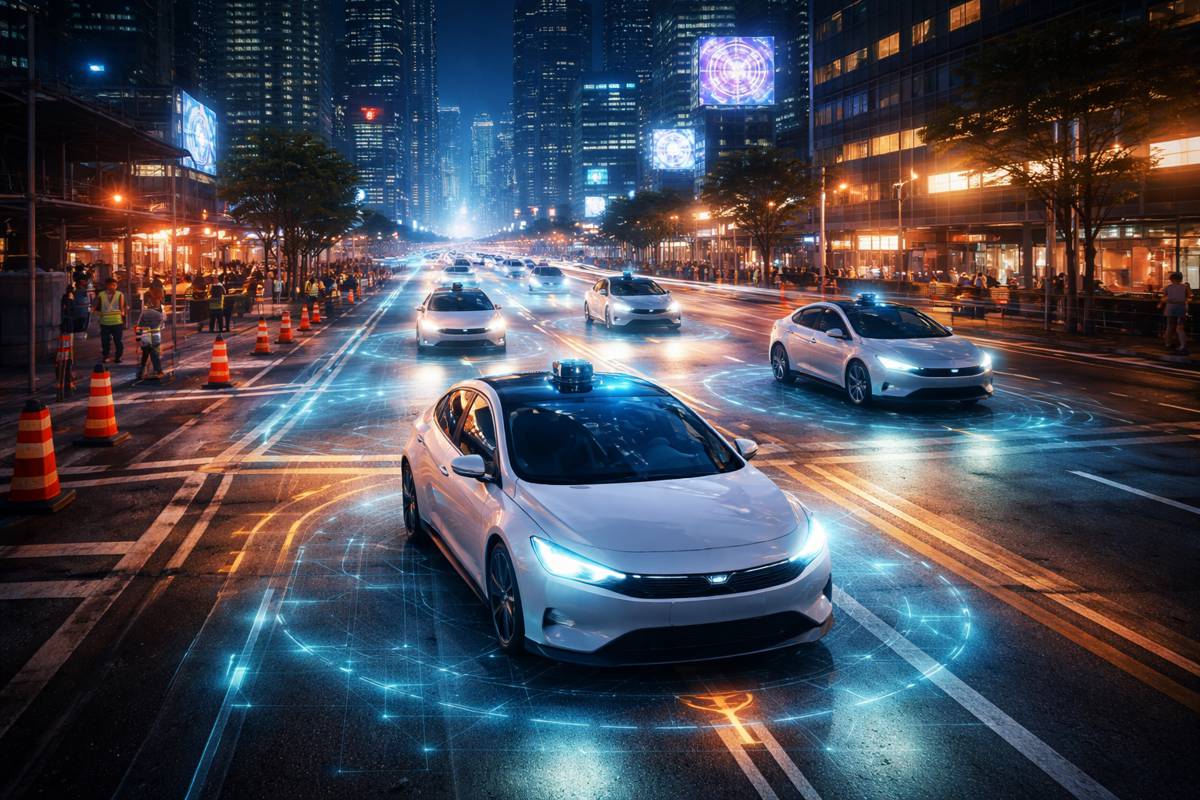
The Surround ADAS platform takes a more streamlined configuration, using five cameras and multiple radars, powered by a single EyeQ6H. It is intended to enable hands off, eyes on highway driving under specified conditions, alongside advanced parking and driver monitoring. In both cases, the architecture supports high levels of perception fidelity and real time decision making within defined safety boundaries.
Crucially, both systems are designed to support what the companies describe as world leading safety features. In editorial terms, that translates into enhanced lane keeping, adaptive cruise control, collision avoidance and situational awareness capabilities built on Mobileye’s computer vision and mapping stack. These are not experimental pilot features but structured, production ready ADAS platforms.
India As A Strategic ADAS Hub
Mobileye’s engagement with Mahindra is not new. Previous programmes included EyeQ4M and EyeQ6L integrations, delivering strong safety ratings in the Indian market. The latest nomination, however, represents a significant escalation in scope and ambition.
India is increasingly viewed as a strategic hub for ADAS localisation and production. With a deep engineering talent pool, cost competitive manufacturing and a fast expanding domestic market, it offers both scale and innovation capacity. For global technology suppliers, embedding advanced compute and perception systems into Indian vehicles is as much about long term platform positioning as it is about near term volumes.
Prof. Amnon Shashua, President and CEO of Mobileye, underscored that strategic dimension: “This nomination demonstrates Mahindra’s commitment to advanced safety technologies and strengthens Mobileye’s long-term investment in India as a strategic hub for ADAS localization and production,” he said. He added: “We see India as a key growth market for ADAS technologies, and this program sets the foundation, now for advanced solutions as well.”
Those remarks reflect a broader industry consensus. As ADAS penetration in Europe, Japan and North America approaches maturity in higher segments, growth markets are increasingly found in Asia. India’s regulatory alignment and consumer appetite for safety and technology are pushing it closer to developed market adoption rates.
Implications For Road Safety And Infrastructure
The significance of this programme extends beyond vehicle showrooms. Advanced driver assistance systems contribute directly to collision mitigation and traffic flow optimisation. Research from the European Commission and the US National Highway Traffic Safety Administration has consistently shown that lane keeping assist, automatic emergency braking and adaptive cruise control can reduce specific categories of crashes.
India faces substantial road safety challenges. According to official government data, road traffic fatalities remain among the highest globally. While infrastructure upgrades, enforcement and driver education are essential, vehicle based safety technologies form a critical pillar of any comprehensive response.
By embedding advanced ADAS platforms across multiple high volume models, Mahindra could accelerate the diffusion of active safety systems across Indian roads. That, in turn, has implications for insurance models, fleet procurement strategies and long term infrastructure planning.
For policymakers, the convergence of Bharat NCAP ratings and technology deployment creates a reinforcing loop. As consumers begin to demand higher star ratings and visible safety features, manufacturers must respond. In time, what is now considered advanced may become baseline.
Commercial And Export Potential
From a commercial standpoint, this collaboration also strengthens Mahindra’s positioning in export markets. Vehicles equipped with scalable ADAS architectures are better aligned with regulatory expectations in Europe, the Middle East and parts of Southeast Asia. As homologation standards tighten, integrated perception and monitoring systems become increasingly important.
Mobileye’s role as Tier 1 supplier across the programmes ensures tighter integration between hardware, software and system validation. That vertical alignment can reduce time to market and improve update pathways as features evolve. Software upgradability, particularly when paired with map based intelligence such as Road Experience Management, supports future feature expansion without wholesale hardware redesign.
For investors and industry observers, the timeline is also noteworthy. With production targeted for 2027, development and validation cycles will unfold over the next two to three years. That aligns with a broader industry transition toward higher compute platforms and more capable assisted driving stacks by the latter half of the decade.
Laying Foundations For Advanced Autonomy
It is important to distinguish hands free, eyes on systems from higher levels of automation. SuperVision and Surround ADAS remain driver supervised technologies, operating within defined conditions. Yet they also serve as stepping stones toward more capable automated driving in the future.
By consolidating perception, mapping, monitoring and control functions onto the EyeQ6H platform, the architecture establishes a scalable base. As regulatory frameworks and consumer acceptance evolve, incremental capability upgrades become feasible within the same hardware family.
In that sense, the Mahindra nomination is not merely about feature lists. It signals India’s integration into the global roadmap of automated mobility development. As infrastructure becomes smarter and vehicles more connected, the interplay between digital mapping, roadside systems and onboard compute will intensify.
India’s Safety Transformation Accelerates
For the global construction and infrastructure community, developments in automotive safety are closely linked to road design, traffic management and urban planning. Vehicles equipped with advanced perception and monitoring systems interact differently with their environment. Over time, that interaction can influence lane marking standards, signage design and data sharing frameworks.
Mahindra’s decision to adopt Mobileye’s SuperVision and Surround ADAS platforms across multiple models underscores how seriously Indian manufacturers are taking this transition. It reflects a market that is no longer content to follow global safety trends but is actively shaping them.
As 2027 approaches, the success of these programmes will hinge on integration discipline, regulatory alignment and consumer trust. What is clear, however, is that India’s automotive safety ecosystem is evolving at pace, and collaborations of this scale are central to that trajectory.