Financing Megaprojects in a High Interest Era
Across the global infrastructure sector, the conversation about megaproject delivery has taken a decisive turn. For years, the central questions revolved around engineering complexity, political support, and environmental approvals. Today, the decisive constraint is more prosaic but far more pervasive. It is the cost of capital.
As of early 2026, interest rates across the world’s major financial centres remain significantly higher than the ultra-low borrowing environment that shaped infrastructure finance throughout the 2010s. The upper limit of the US Federal Reserve’s federal funds target range stands around 3.75 percent, the European Central Bank deposit facility rate sits near 2.00 percent, and the Bank of England’s Bank Rate is also roughly 3.75 percent. Those figures may sound modest compared with historical peaks, yet for infrastructure developers accustomed to a decade of cheap capital, they represent a structural shift.
Higher interest rates increase the cost of debt during construction, reduce financial flexibility in operating years, and sharpen the scrutiny lenders apply to refinancing strategies and risk allocation. In short, money has become more expensive, and capital providers are more selective.
And yet the need for infrastructure has not diminished in the slightest. If anything, the scale of investment required has grown larger than ever.
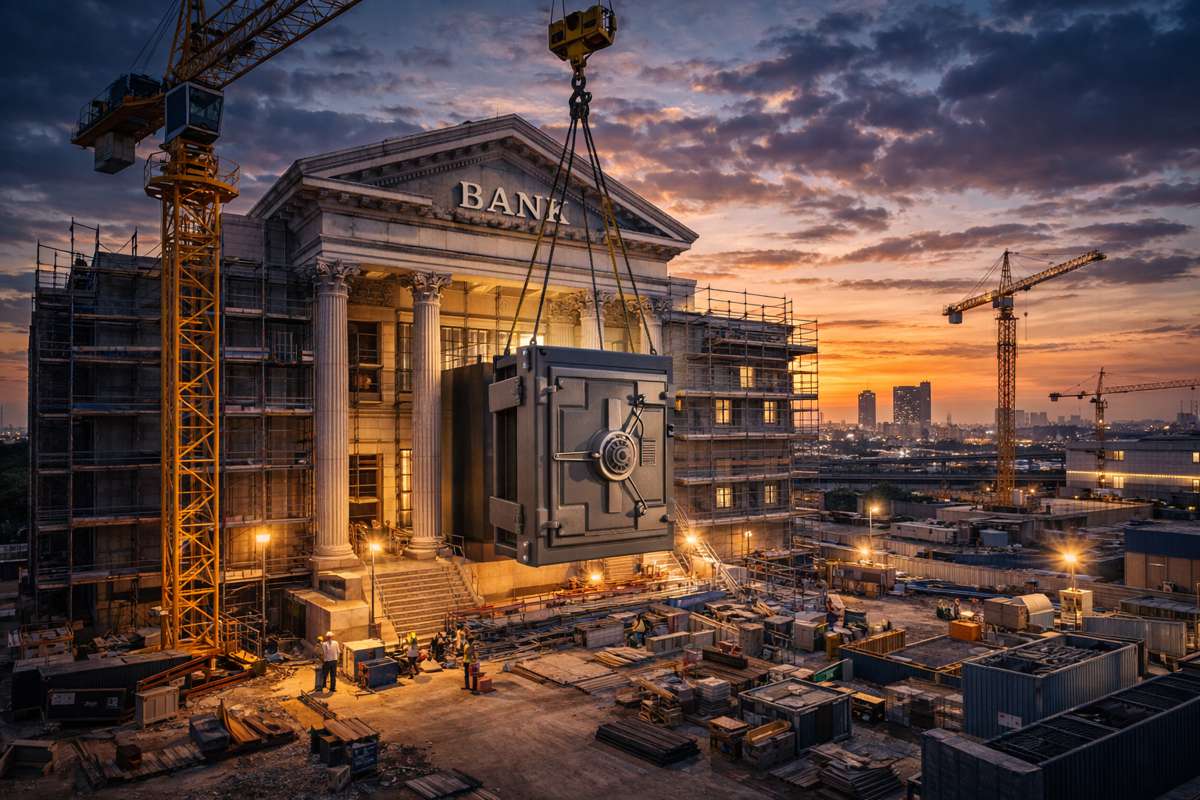
The Trillion Dollar Infrastructure Imperative
Despite tighter financial conditions, global demand for infrastructure investment remains immense. Governments and investors face the twin challenge of upgrading ageing assets while simultaneously building new systems capable of supporting economic growth, climate resilience and digital transformation.
The scale of the requirement is well documented. According to the OECD, achieving sustainable development and climate goals by 2030 requires roughly US$6.9 trillion in annual infrastructure investment worldwide. Meanwhile, long-term modelling associated with the Global Infrastructure Hub and Oxford Economics suggests the world will require around US$94 trillion in infrastructure investment between 2016 and 2040.
The challenge of mobilising capital at the scale required for global infrastructure has been explored previously in financing global infrastructure. That investment spans transport networks, renewable energy systems, urban infrastructure, ports, logistics corridors and digital connectivity. In other words, the pipeline of megaprojects has not shrunk. What has changed is the financial environment in which those projects must be delivered.
Private investment data reinforces the point. The World Bank Group’s Private Participation in Infrastructure (PPI) database shows that global private infrastructure investment reached US$100.7 billion in 2024, up from US$87.1 billion in 2023 and above the five-year average of roughly US$83.7 billion.
Energy projects dominated the investment landscape, while transport lagged behind historic peaks. Transport infrastructure attracted approximately US$20.6 billion across 38 projects, illustrating a broader trend in the current cycle. Capital is still flowing into infrastructure, but it is doing so with tighter pricing, stricter terms and more cautious underwriting.
That tension between urgent infrastructure needs and more expensive capital lies at the heart of today’s megaproject financing challenge.

Debt Structuring in a Higher Interest Environment
Project finance has always been about transforming uncertainty into manageable risk. Infrastructure megaprojects rely on complex contractual frameworks that allocate responsibilities among sponsors, contractors, operators, governments and lenders. Debt providers typically look first to project cashflows, rather than sponsor balance sheets, to assess creditworthiness.
When interest rates rise, that financial architecture does not disappear. Instead, it becomes more disciplined and far less forgiving.
Debt sizing, tenor, amortisation profiles, reserve accounts and covenant headroom all become more sensitive to small changes in financing assumptions. Interest payments consume a larger share of project cashflow, leaving less room for operational underperformance or demand volatility. Project finance structures rely primarily on project cashflows rather than sponsor balance sheets, a framework explored in greater detail in understanding Project Finance.
One of the most immediate pressure points is interest during construction, commonly referred to as IDC. Large infrastructure assets often require several years of construction before they generate any revenue. During that time, interest costs accumulate and must be financed either through additional borrowing or sponsor equity contributions.
In a low-interest environment, IDC assumptions were often treated as technical details buried deep within financial models. In today’s higher-rate environment, they have become a central focus of investment committees and lender due diligence. Even modest delays in construction schedules can significantly increase total financing costs.
Developers are responding with several structural adjustments.
First, sponsors are working harder to secure fixed-rate debt or interest rate swaps, reducing exposure to future rate volatility. Second, lenders increasingly require sculpted amortisation profiles, aligning debt service payments more closely with projected cashflows. Third, projects are carrying larger liquidity reserves and contingency buffers to provide additional protection against early-stage operational risk.
In effect, leverage remains a core feature of project finance. What has changed is the tolerance for leverage that depends on optimistic assumptions.

Financing Structures Are Reshaping Contractor Strategy
These financial shifts do not remain confined to the balance sheets of sponsors and lenders. They quickly cascade through the entire project delivery ecosystem, including EPC contractors and subcontractors.
When lenders tighten financial requirements, project contracts inevitably absorb more risk. Payment schedules, milestone definitions, performance guarantees and claims mechanisms suddenly become part of the financing conversation rather than purely operational matters.
For example, lenders increasingly scrutinise contractor payment profiles and construction milestones because delays directly affect interest during construction and project completion risk. In a high-interest environment, time truly is money.
A more cautious stance among lenders is already evident in broader market analysis. PwC’s 2026 insolvency outlook for the real estate and construction sectors highlights how persistently high financing costs and cautious lending conditions continue to pressure the industry.
Although the report focuses primarily on property markets, the underlying mechanism applies equally to infrastructure. Higher debt costs reduce lenders’ tolerance for project delays, contractual disputes or revenue uncertainty. Projects that might have been financeable five years ago may now struggle to reach financial close.

Refinancing Risk Returns to the Spotlight
For decades, refinancing has been one of the quiet success stories of infrastructure finance. Once a project stabilised operationally, sponsors could refinance construction-era debt with longer-term financing at lower interest rates.
That playbook still exists, but it has become far less predictable.
Global refinancing activity remains strong. Data cited in the Chambers Project Finance 2025 guide, drawing on IJGlobal figures, shows that project finance refinancing volumes reached roughly US$191.45 billion in 2024, representing a 54 percent increase compared with 2023.
Yet rising refinancing volumes do not necessarily indicate comfortable conditions. In fact, they may reflect projects attempting to secure favourable financing before market conditions shift further.
Refinancing risk is now treated as a structural issue rather than a late-stage optimisation. Central banks have warned that rapid increases in interest rates can weaken companies’ ability to service and roll over debt, potentially affecting financial stability.
Infrastructure projects are particularly exposed because they combine long asset lifespans with debt structures that must survive multiple economic cycles.
Three structural features increasingly determine refinancing resilience.
The first is the debt maturity profile. Fully amortising loans reduce refinancing exposure, while bullet maturities create cliff-edge repayment risks.
The second is liquidity support. Many project financings now include liquidity facilities capable of covering 12 months of scheduled debt service, providing time to resolve operational challenges or refinance under pressure.
The third is the robustness of covenants and reserve accounts. These mechanisms provide lenders with early warning signals and borrowers with time to address financial stress before it becomes critical.
In a volatile interest rate environment, the ability to buy time is often the difference between financial stability and distress.
Delayed Final Investment Decisions
Rising financing costs are also altering the timing of investment decisions. Governments are increasingly revisiting concession models and risk allocation frameworks, a trend discussed in Public Private Partnerships Reimagined.
Across sectors ranging from renewable energy to transport infrastructure, developers are reassessing the financial viability of projects whose economics were originally modelled under lower interest rates.
The International Energy Agency has warned that a high cost of capital can hinder investment in renewable energy projects, particularly in emerging markets. Similar dynamics are increasingly visible in transport infrastructure.
When borrowing costs increase, sponsors must either accept lower returns, inject additional equity, or delay investment until financial conditions improve. Governments may also need to step in with guarantees, subsidies or availability-based payment structures to maintain project viability.
The World Bank’s PPI data illustrates the cautious nature of the current investment cycle. Although infrastructure investment surpassed US$100 billion in 2024 for the first time since the pandemic, the distribution of investment shows that capital remains highly selective.
Projects with stable revenue models, strong government support or clear decarbonisation benefits are attracting financing. Others are waiting for more favourable conditions.

Hedging Strategies Become Central to Bankability
Interest rate hedging has long been a standard component of infrastructure finance. Today it has become a cornerstone of bankability.
Project companies typically rely on derivatives such as interest rate swaps, caps and collars to stabilise debt service obligations. Without such instruments, floating-rate debt could expose projects to sudden increases in interest payments that undermine financial viability.
The scale of global derivatives markets illustrates how essential these tools have become. According to the Bank for International Settlements, the notional value of outstanding over-the-counter derivatives reached approximately US$846 trillion in mid-2025, reflecting a 16 percent increase compared with the previous year.
While only a small portion of that total relates to infrastructure finance, the depth of the derivatives market ensures that large projects can access sophisticated risk management tools.
Yet hedging is not simply a financial exercise. It must be carefully integrated into project financing structures.
Swap providers typically require security arrangements that place them on equal footing with lenders. Intercreditor agreements must clearly define their rights and priorities within the financing structure.
As private credit funds become more prominent in infrastructure finance, these legal arrangements have grown more complex. Sponsors increasingly explore deal-contingent hedging, allowing interest rate protection to be arranged before financial close.
In the current environment, hedging strategies are often discussed during the earliest stages of project development rather than being left to treasury departments later in the process.
Infrastructure Bonds Versus Private Debt
Higher interest rates have also reshaped the competitive landscape for infrastructure debt providers. Institutional investors, pension funds and sovereign wealth funds are also reshaping infrastructure finance, a trend examined in Institutional Capital and Digital Finance.
Banks remain the dominant lenders to infrastructure projects, yet capital markets and private debt funds are steadily gaining ground.
According to Principal Asset Management, global infrastructure debt volumes reached approximately US$566 billion, with around 85 percent provided by bank loans and 15 percent through capital markets instruments such as bonds. Although banks still dominate, the share of capital markets financing has been increasing.
Infrastructure bonds offer several advantages for project sponsors. They can provide long-term fixed-rate funding that matches the lifespan of infrastructure assets, reducing refinancing risk and interest rate exposure.
Airports provide a clear example. US airport revenue bond issuance reached roughly US$18.2 billion through October 2024, exceeding the total issuance recorded in the previous year.
Municipal bond markets have historically been a key funding source for large airport capital programmes, allowing operators to finance runways, terminals and expansion projects over multi-decade horizons.
Private debt funds represent another major shift in the infrastructure financing landscape. According to Deloitte, global private debt funds held approximately US$1.7 trillion in assets at the start of 2025, with projections suggesting the market could expand to US$4.5 trillion by 2030.
These funds offer flexible financing structures, faster execution and bespoke negotiation compared with traditional bank syndications. However, they often demand higher returns and tighter covenant protections.
Sponsors therefore face a growing menu of financing options, each with its own trade-offs.

Contractor Cashflow and the Hidden Financing Challenge
While much of the discussion around infrastructure finance focuses on sponsors and lenders, contractors experience the consequences of higher interest rates just as directly.
Working capital pressures within the construction supply chain have become increasingly significant. Delayed payments, extended procurement cycles and rising borrowing costs can strain contractors’ balance sheets long before projects reach completion.
Industry organisations such as the Construction Leadership Council have repeatedly highlighted how fragmented payment practices continue to challenge contractors and subcontractors.
Global data supports this concern. PwC’s working capital analysis shows that Days Sales Outstanding has increased from 47 days in 2015 to roughly 50 days in 2024, meaning companies are waiting longer to receive payment.
When borrowing costs rise, financing these receivables becomes more expensive. Smaller contractors may struggle to maintain liquidity, increasing the risk of insolvency within project supply chains.
Governments are attempting to address the issue through prompt payment policies. In the United Kingdom, public sector procurement rules require payment terms of 30 days throughout the supply chain, and companies must report their payment practices under updated legislation.
Nevertheless, the financial pressures remain real. Contractors increasingly incorporate financing costs and payment uncertainty into their bid pricing, affecting overall project economics.

Transport Megaprojects Feel the Pressure
Transport infrastructure provides a useful lens through which to examine how higher interest rates affect different asset classes.
Toll roads often benefit from inflation-linked tolling frameworks that allow revenue to rise alongside operating costs. However, they remain exposed to traffic volatility, regulatory intervention and refinancing risk.
Credit rating agencies such as Fitch expect moderate traffic growth in the coming years, with toll increases generally tracking inflation. Yet refinancing conditions and political pressures can still influence project credit quality.
Airports face a different financial challenge. They require continuous capital investment to expand capacity and meet safety requirements. Financing these upgrades often requires substantial borrowing.
Rating agency analyses suggest that airports will rely increasingly on higher passenger charges and long-term debt financing to support future investment programmes.
Rail infrastructure typically involves the highest capital costs and the longest development timelines. Projects frequently depend on public sector support through guarantees, concessional loans or availability-based concession models. Many rail and transport schemes rely on availability-based concession structures, similar to those explored in Public Private Partnership Financing.
In the United States, for example, the Railroad Rehabilitation and Improvement Financing programme can fund up to 100 percent of eligible project costs through long-term federal loans.
Across Europe, availability-based rail concessions provide predictable government-backed revenue streams that support private investment.
These models highlight a broader trend. In a higher interest rate environment, projects with stable and predictable revenue structures are far more likely to attract financing.

A New Discipline for Infrastructure Investment
Higher interest rates have not halted infrastructure development, but they have introduced a new financial discipline across the sector.
Sponsors must structure projects more carefully. Lenders demand stronger contractual protections. Contractors face tighter cashflow management requirements. Governments increasingly intervene to maintain investment momentum.
Infrastructure megaprojects have always required a delicate balance between engineering ambition and financial reality. In the current cycle, that balance has shifted decisively toward finance.
Yet the fundamental drivers of infrastructure investment remain intact. Urbanisation, energy transition, trade growth and digital connectivity continue to demand new infrastructure across the world.
If anything, the higher cost of capital is forcing the industry to refine its financing models, improve risk allocation and strengthen project economics.
For developers, lenders and contractors alike, success in the coming decade will depend not just on building infrastructure, but on financing it intelligently in a more demanding financial landscape.