Intertraffic Awards Spotlight Technologies Shaping the Future of Smart Mobility
The winners of the Intertraffic Awards 2026 were unveiled at the opening ceremony of Intertraffic Amsterdam 2026, highlighting a new generation of mobility technologies designed to make transport networks safer, greener and more intelligent.
Presented at the RAI Amsterdam exhibition centre from 10 to 13 March, the awards recognise breakthrough innovations that address real-world challenges in transport infrastructure and traffic management. This year’s honours reflect a noticeable shift toward solutions that combine digital sensing, connected mobility platforms and sustainable urban transport infrastructure.
Five technologies emerged from a shortlist of fifteen finalists, each representing a different dimension of the evolving intelligent transport ecosystem. The top honours went to solutions that improve traffic data visibility, simplify mobility data exchange, support the rapid growth of cycling in cities and enhance road safety under difficult conditions.
According to jury chairman Pieter Litjens, the diversity of entries demonstrated both the technological depth and the human motivation driving innovation in the sector: “It was great to see the combination of innovation, heartfelt presentations, and the inspiring nature of the people who are behind them.
“There are people behind each of these innovations who are inventing and making them. And they’re not only making them to make profit or to sell something. They are making these solutions because they believe in better, safer traffic, or a better world, or a sustainable surrounding. That’s what I like most.”
The winning technologies show how transport infrastructure is evolving from passive physical assets into intelligent, connected systems capable of sensing, communicating and adapting to real-time traffic conditions.
Fibre Optics and Digital Sensing Enter the Road Infrastructure Era
One of the most striking trends emerging from the 2026 awards was the growing role of fibre optic technology in transport infrastructure.
Both the Inspiration Award winner Deltabloc TAM Technology and the ITSUP Startup Award winner Luxene rely on fibre optics, though they apply the technology in very different ways. Together they hint at how next-generation roads could become both data networks and safety systems embedded directly within the pavement.
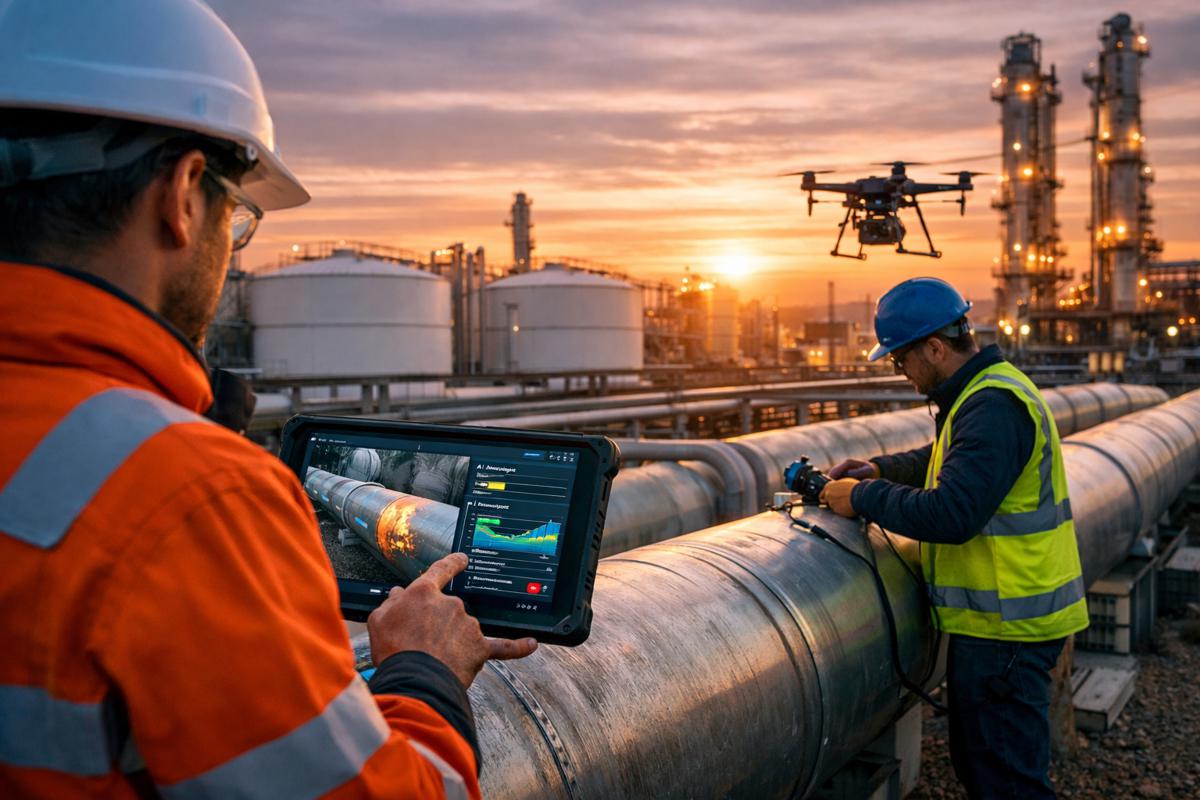
Distributed fibre optic sensing, already used extensively in pipeline monitoring and structural engineering, is now moving into traffic management. The approach uses optical fibres as vibration sensors capable of detecting disturbances along their entire length.
Luxene, meanwhile, applies fibre optics to road safety, embedding illuminated guidance lines directly into road markings. Although the technologies address different challenges, the awards jury noted that they could potentially work together in future smart road deployments.
The development reflects a broader trend in the global infrastructure sector. According to research from the International Transport Forum, the next wave of intelligent transport systems will increasingly rely on continuous sensing infrastructure rather than discrete roadside equipment such as cameras or radar units.
Deltabloc TAM Technology Reinvents Traffic Monitoring
The Inspiration Award went to Deltabloc TAM Technology, developed by Deltabloc International, which uses distributed fibre optic sensing to monitor traffic across long stretches of roadway.
Unlike traditional traffic monitoring systems that depend on gantries, cameras or induction loops embedded in the pavement, TAM relies on a single interrogator device connected to fibre optic cables that can extend up to 50 kilometres along a road corridor.
As vehicles pass nearby, the vibrations they generate travel through the ground and into the fibre cable. These signals are analysed using artificial intelligence and machine learning algorithms to generate a detailed picture of traffic behaviour.
The system can identify:
- Vehicle speed
- Traffic volume and vehicle counts
- Sudden braking events
- Overtaking manoeuvres
- Congestion formation
Such insights are normally obtained through multiple pieces of infrastructure. With fibre optic sensing, the same information can be gathered using a single passive cable network.
Another advantage lies in the system’s simplicity. The fibre cable itself requires no power supply and no roadside electronics, significantly reducing installation complexity and maintenance costs.
Early deployments in Germany, Belgium, Slovenia, Latvia and the United Kingdom have already demonstrated the concept in real traffic conditions. If the technology proves scalable, it could provide road authorities with continuous corridor monitoring across entire highway networks, something that has historically been difficult to achieve.
Monotch Simplifies the Complexity of Connected Mobility
The User Experience Award recognised a challenge that often goes unnoticed in intelligent transport systems: the complexity of data sharing between mobility stakeholders.
Modern connected vehicle ecosystems depend on continuous data exchange between road authorities, infrastructure operators, service providers and vehicle manufacturers. However, setting up these systems often requires significant technical expertise and integration work.
TLEX Interchange, developed by Monotch, aims to simplify that process.
The platform is a cloud-native engine designed to enable real-time mobility data exchange using internationally recognised standards. Built on the AMQP messaging protocol and aligned with C-Roads connected vehicle frameworks, the system provides a guided environment that allows organisations to configure data-sharing services without complex programming.
The platform essentially acts as a translation layer between multiple data sources and services, allowing traffic information, hazard warnings and other connected mobility messages to move seamlessly between systems.
As connected and automated vehicles continue to develop, the ability to share information quickly and reliably will become critical. Solutions such as TLEX Interchange are therefore becoming a foundational component of the emerging mobility ecosystem.
For road authorities and infrastructure operators, the platform offers a more accessible path toward implementing cooperative intelligent transport systems, often referred to as C-ITS.
Cycling Infrastructure Innovation Takes the Green Globe
Urban mobility challenges are not limited to digital technologies. Cities across Europe are experiencing a rapid increase in cycling, driven in part by the widespread adoption of electric bicycles.
The Green Globe Award recognised an infrastructure innovation designed to address an unexpected side effect of this trend.
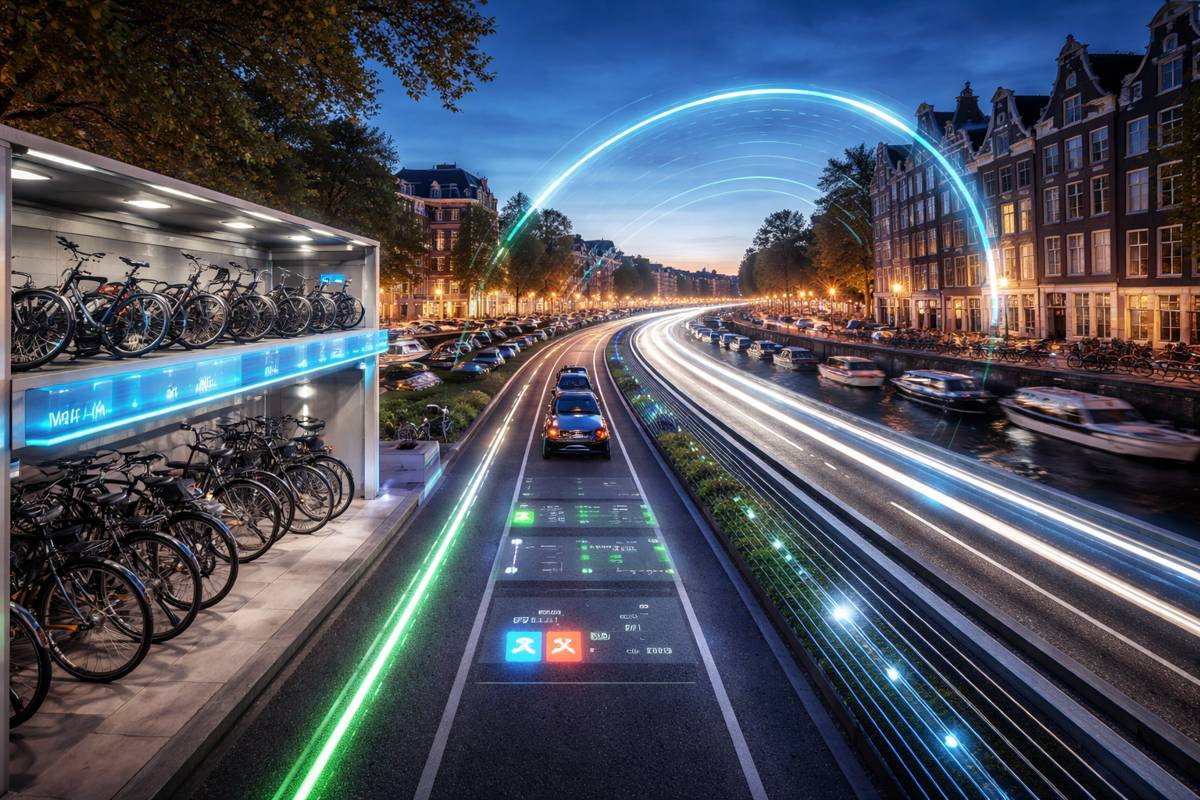
The winner, MB Air, developed by HR Groep Streetcare, tackles the problem of storing heavier e-bikes in traditional two-tier bicycle parking racks.
Conventional double-deck bicycle parking systems were originally designed for lightweight bicycles. With e-bikes often weighing around 30 kilograms, lifting them onto upper racks can be difficult for many users. As a result, upper tiers frequently remain underused, with studies suggesting utilisation rates of as little as 20 percent.
MB Air solves the issue by replacing manual lifting with a compressed-air powered horizontal lifting mechanism. The user simply places the bicycle on the rack and activates the pneumatic system, which gently moves the bike into the upper storage position.
The system recently received CE certification, enabling deployment across European cities. Importantly, the design is modular and requires minimal maintenance, making it attractive for high-density urban locations where space for bicycle parking is limited.
As cycling becomes an increasingly important component of urban transport policy, infrastructure innovations like MB Air could help cities accommodate growing demand without requiring significant additional space.
Luxene Reinvents Road Markings for All Weather Conditions
The ITSUP Startup Award went to Luxene, a young company developing illuminated road markings designed to improve visibility in poor weather.
Traditional road markings rely on reflective paint and embedded glass beads to reflect vehicle headlights. While effective under normal conditions, their performance can deteriorate dramatically during heavy rain, snow or standing water, when the reflective surface becomes obscured.
Luxene’s system addresses this challenge by embedding side-emitting fibre optic cables directly within road markings. These fibres produce a continuous line of light that remains visible even when conventional markings disappear.
The technology uses laser sources housed in roadside cabinets, typically spaced around 400 metres apart. The fibre cables carry the light through the road marking, producing a uniform illuminated guidance line without placing active electronics within the road surface itself.
This approach offers two potential advantages.
First, it enhances safety for human drivers by maintaining lane visibility in adverse conditions. Second, it could also improve the reliability of machine vision systems used by autonomous vehicles, which often struggle to detect road markings when water or snow obscures them.
The company estimates installation costs between €20 and €40 per metre, potentially making it more economical than conventional road lighting systems that require poles, wiring and power infrastructure.
Accessibility Innovation Recognised with Special Jury Mention
The jury also issued a Special Jury Mention to NavTac Temporary Tactile Guidance Films, developed by Brite-Line.
The solution consists of adhesive rubber strips that provide temporary tactile and visual guidance for visually impaired pedestrians navigating construction zones and temporary detours.
The concept emerged from collaboration with a school for blind and visually impaired people in Hanover, Germany, where the absence of temporary tactile guidance had long posed safety challenges during construction work.
Unlike permanent tactile paving installed in sidewalks, NavTac strips can be applied and removed quickly, making them suitable for short-term worksites or temporary pedestrian routes.
Although relatively simple compared with some of the high-tech finalists, the jury noted that the solution demonstrated how practical, low-cost ideas can significantly improve accessibility and safety in urban environments.
Intertraffic Continues to Shape the Mobility Technology Landscape
Now in its latest edition, Intertraffic Amsterdam remains one of the world’s most influential gatherings for traffic technology and mobility innovation.
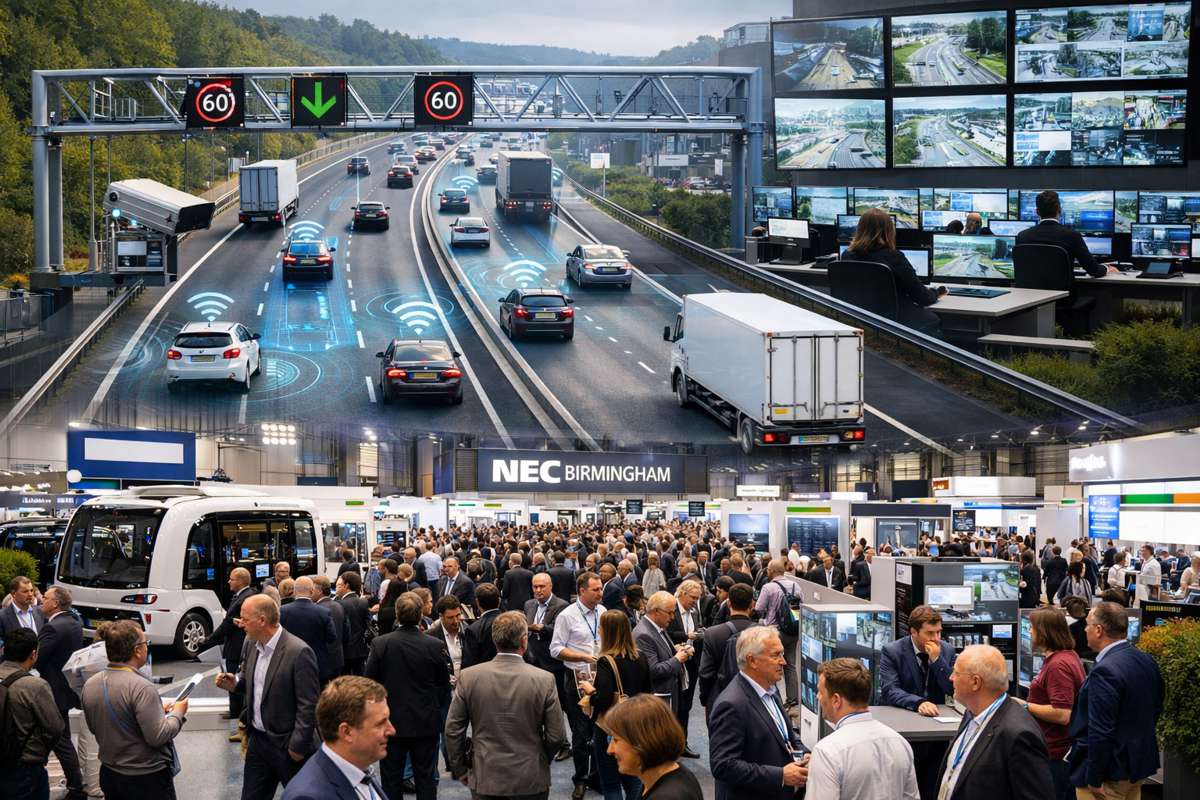
The 2026 event brought together around 30,000 professionals from more than 140 countries, featuring approximately 900 exhibitors across 12 exhibition halls and more than 300 expert-led sessions covering road safety, traffic management, smart mobility and parking technologies.
For infrastructure professionals and policymakers, the awards provide an early glimpse of technologies likely to shape future road networks and urban mobility systems.
From fibre optic sensing to cloud-based mobility data platforms and new forms of sustainable urban infrastructure, the winning innovations highlight the rapid evolution of transport systems into integrated digital ecosystems.
As cities grapple with rising traffic volumes, climate targets and the emergence of automated vehicles, the solutions showcased at Intertraffic suggest that the roads of tomorrow will be smarter, more connected and more inclusive than ever before.