Amman Bridge Project Signals a New Era for Urban Mobility in Jordan
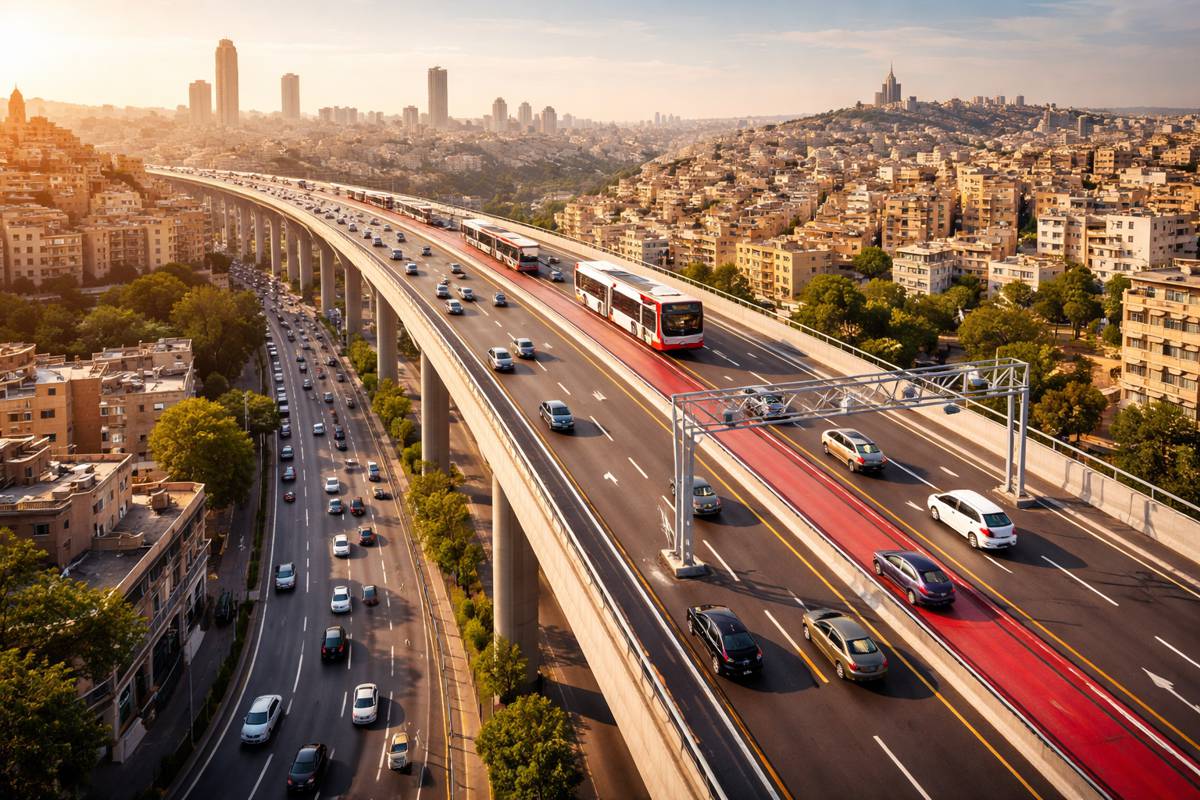
Jordan is stepping into a new phase of infrastructure development, one that blends modern engineering with pragmatic economic strategy. The announcement of the Amman Bridge project, a 15.8 km elevated expressway set to connect Sweileh in the north with Naour in the south, is more than just another road scheme. It represents a deliberate shift towards smarter, revenue-generating transport infrastructure in a region where congestion, urban expansion and fiscal constraints increasingly collide.
At its core, the project reflects a growing global trend. Cities are no longer simply building roads to accommodate traffic. They are investing in integrated mobility corridors designed to optimise movement, support economic productivity and, crucially, attract private capital. In Amman, where topography and urban density have long complicated transport planning, this elevated corridor could reshape how the city functions on a daily basis.
A Strategic Response to Urban Congestion
Amman has faced mounting traffic pressures for years. With a population exceeding four million in the greater metropolitan area and vehicle ownership steadily rising, congestion along key arteries such as King Abdullah II Road has become a daily challenge. Commute times have lengthened, logistics have slowed, and the economic cost of inefficiency has quietly grown.
The Amman Bridge project directly targets one of the city’s busiest corridors. By introducing a grade-separated, elevated route, it effectively removes through-traffic from the existing road network, freeing up surface streets for local movement. This separation of traffic types is a well-established strategy in urban transport engineering, yet it remains underutilised in many emerging markets due to cost and complexity.
Globally, studies from organisations such as the World Bank have consistently highlighted the economic drag caused by congestion, particularly in fast-growing cities. Lost productivity, increased fuel consumption and environmental impacts all compound over time. In this context, the Amman Bridge is less about adding capacity and more about restoring efficiency to a critical urban spine.
Elevating Infrastructure Through PPP Investment
Perhaps the most significant aspect of the project lies not in its physical design, but in how it will be delivered. The Jordanian Ministry of Investment has opened prequalification to international and local companies under a Public Private Partnership framework for the project finance. That decision signals a clear intent to leverage private sector expertise and financing in delivering large-scale infrastructure.
Public Private Partnerships have evolved considerably over the past two decades. Early models often struggled with risk allocation and long-term viability. Today, however, governments are refining these structures to better balance public oversight with private efficiency. For Jordan, a country managing fiscal pressures while pursuing development goals, PPPs offer a viable pathway to accelerate infrastructure delivery without overburdening public finances.
The inclusion of tolling within the Amman Bridge project further strengthens its investment case. Revenue-generating assets are inherently more attractive to private investors, particularly when paired with stable regulatory frameworks. By maintaining King Abdullah II Road as a free alternative, the project also aligns with international best practice, ensuring accessibility while offering a premium, faster route for those willing to pay.
Intelligent Transport Systems at the Core
The Amman Bridge is not simply an elevated roadway. It is being designed as a digitally enabled mobility corridor, incorporating intelligent transportation systems that reflect the broader shift towards smart infrastructure.
Among the most notable features is the adoption of fully electronic free-flow tolling. Unlike traditional toll booths, which can create bottlenecks and increase emissions through idling vehicles, free-flow systems use gantries equipped with sensors and cameras to charge vehicles seamlessly as they pass. This approach is already widely deployed in markets such as Europe and North America, where it has improved traffic flow and reduced operational costs.
In addition, the project will integrate digital payment solutions, enabling users to pay tolls through mobile platforms and automated systems. This aligns with Jordan’s broader digital transformation agenda, which has prioritised fintech and e-government services in recent years.
Energy-efficient lighting is another key component. While often overlooked, lighting accounts for a significant portion of operational costs in transport infrastructure. By adopting modern, low-energy systems, the project not only reduces its environmental footprint but also improves long-term financial sustainability.
Integrating Bus Rapid Transit for Multimodal Mobility
One of the more forward-thinking elements of the Amman Bridge project is its integration with the city’s Bus Rapid Transit network. Rather than treating public transport as an afterthought, the design incorporates a dedicated BRT lane within the elevated corridor.
This decision reflects a broader shift in urban planning. Cities are increasingly recognising that private vehicle infrastructure alone cannot solve congestion. High-capacity, reliable public transport is essential. By embedding BRT into the expressway, the project ensures that buses can operate free from surface-level congestion, improving journey times and service reliability.
The integration goes further still. Plans include bus stops, pedestrian bridges and dedicated acceleration and deceleration lanes for buses. These features may seem technical, yet they are critical in ensuring that public transport operates efficiently within a high-speed corridor.
Globally, cities such as Bogotá and Istanbul have demonstrated the effectiveness of BRT systems when properly integrated into urban infrastructure. In Amman, where public transport has historically faced challenges, this approach could mark a turning point in how residents move across the city.
Balancing Accessibility and User Choice
A key consideration in any toll-based infrastructure project is public acceptance. The decision to retain King Abdullah II Road as a free alternative is therefore significant. It ensures that all users retain access to the corridor, regardless of their ability or willingness to pay.
This dual-system approach, offering both tolled and non-tolled options, has proven effective in other markets. It allows governments to introduce user-funded infrastructure without creating barriers to mobility. At the same time, it provides a mechanism to manage demand, encouraging those who value time savings to opt for the faster route.
From an economic perspective, this balance is essential. It supports inclusivity while enabling the project to generate revenue, creating a sustainable model for future infrastructure investments.
Engineering Challenges and Urban Complexity
Building an elevated expressway through a dense urban environment is no small undertaking. Amman’s terrain, characterised by hills and valleys, adds another layer of complexity. Structural design must account for varying ground conditions, seismic considerations and the need to minimise disruption during construction.
Moreover, integrating the new infrastructure with existing roads, utilities and urban fabric requires meticulous planning. Construction phasing, traffic management and stakeholder coordination will all play critical roles in the project’s success.
International experience suggests that such projects often face delays and cost overruns if not carefully managed. However, the involvement of experienced international consortia through the prequalification process increases the likelihood of successful delivery. It brings access to advanced engineering expertise, project management capabilities and innovative construction techniques.
Economic and Social Impact on Amman
Beyond its technical and financial dimensions, the Amman Bridge project carries significant socio-economic implications. Improved connectivity between Sweileh and Naour is expected to stimulate economic activity, particularly in areas along the corridor.
Reduced travel times can have a profound impact on productivity. Businesses benefit from more reliable logistics, while individuals gain time that would otherwise be spent in traffic. Over time, such improvements can influence urban development patterns, encouraging investment in previously less accessible areas.
There is also a quality-of-life dimension. Congestion is not merely an inconvenience. It affects air quality, stress levels and overall urban livability. By alleviating pressure on existing roads and promoting more efficient transport, the project contributes to a healthier, more sustainable urban environment.
A Blueprint for Future Infrastructure in the Region
The Amman Bridge project is likely to be closely watched across the Middle East and beyond. As cities grapple with similar challenges, the combination of elevated infrastructure, intelligent systems and PPP financing offers a compelling model.
Jordan’s approach reflects a pragmatic understanding of its constraints and opportunities. By opening the project to international participation, it positions itself within the global infrastructure ecosystem, attracting expertise and investment that can drive long-term development.
At the same time, the project underscores the importance of integrated planning. Roads, public transport, digital systems and economic considerations are all interlinked. Successful infrastructure in the 21st century requires a holistic approach, one that looks beyond immediate needs to consider long-term urban evolution.
Building Momentum for Smarter Cities
As Amman continues to grow, the need for efficient, resilient and sustainable transport infrastructure will only intensify. The Amman Bridge project represents a step in that direction, combining engineering ambition with strategic foresight.
It is not without challenges, and its ultimate success will depend on execution as much as design. Yet, if delivered effectively, it could set a new benchmark for urban infrastructure in Jordan and serve as a catalyst for further innovation across the region.
In a world where cities are under increasing pressure to do more with less, projects like this demonstrate that progress is still possible. Not through grand gestures alone, but through carefully considered investments that align infrastructure with the realities of modern urban life.