Bogotá Doubles Down on Underground Mobility with Metro Line 2 Mega Project
Bogotá is pressing ahead with one of Latin America’s most closely watched urban transport projects, reopening the international prequalification process for its second metro line. With an estimated investment of US$9.3 billion, Bogotá Metro Line 2 represents far more than a local infrastructure upgrade. It signals a broader shift in how fast-growing cities across the Global South are tackling congestion, sustainability, and economic competitiveness.
Set against the backdrop of rapid urbanisation and mounting pressure on road networks, the project positions Colombia’s capital at the forefront of a regional transition towards high-capacity, integrated mass transit systems. The stakes are high, not just for Bogotá, but for investors, contractors, and policymakers watching how large-scale metro schemes can be delivered in complex urban environments.
A Strategic Investment in Urban Mobility
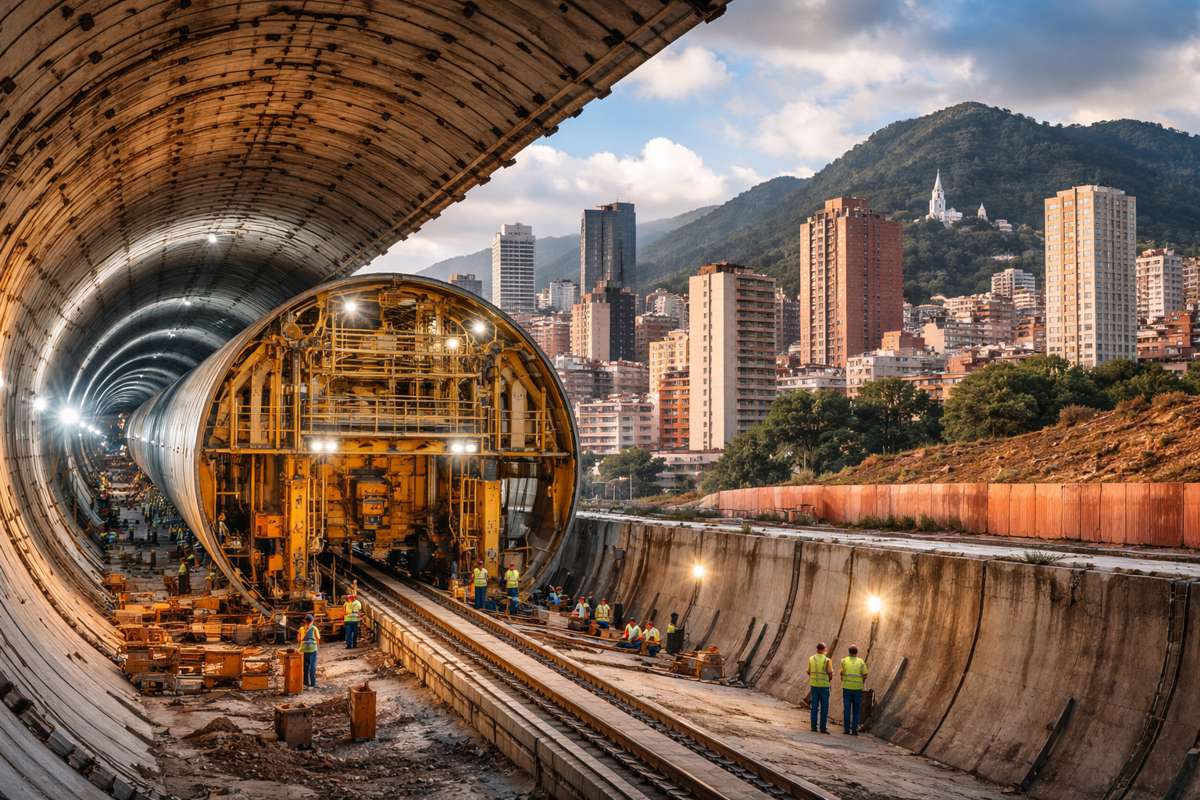
At 15.5 kilometres in length, Bogotá Metro Line 2 will carve a critical east–west underground corridor through some of the city’s most densely populated districts, including Chapinero, Barrios Unidos, Engativá and Suba. The line will feature 10 underground stations and one elevated station, designed to maximise connectivity while minimising surface disruption in already congested urban zones.
This isn’t simply about adding capacity. It’s about reshaping mobility patterns. Bogotá, a city of more than 7 million people, has long relied heavily on its bus rapid transit system, TransMilenio. While widely regarded as a pioneering model when launched, the system now operates under significant strain due to population growth and rising demand.
Metro Line 2 is designed to complement and relieve that pressure. By integrating with five TransMilenio trunk lines and connecting directly with the under-construction Line 1 of the Bogotá Metro, the project will create a multi-modal transport ecosystem capable of moving hundreds of thousands of passengers daily with greater efficiency and reliability.
Global Financing Signals Strong Confidence
One of the most telling aspects of the project is the calibre of financial backing behind it. The scheme has been structured with support from leading multilateral institutions, including the Inter-American Development Bank (IDB), the European Investment Bank (EIB), the International Bank for Reconstruction and Development (IBRD), and the Development Bank of Latin America and the Caribbean (CAF).
This level of international involvement reflects a strong vote of confidence in both the project’s viability and Colombia’s infrastructure governance. It also highlights a growing trend where large-scale urban transport projects are increasingly financed through blended funding models that combine public investment with multilateral and private sector participation.
For contractors and investors, this reduces perceived risk while improving access to long-term financing. For Bogotá, it ensures adherence to international standards in procurement, environmental safeguards, and project execution.
A Complex Engineering Challenge Beneath the City
Unlike Bogotá’s first metro line, which is being constructed as an elevated system, Line 2 will run predominantly underground. That decision introduces a new layer of technical complexity, particularly in a city characterised by varied soil conditions and dense urban development.
Subsurface construction in Bogotá presents challenges ranging from groundwater management to seismic considerations. The Andes foothills add further geological variability, requiring advanced tunnelling techniques and robust risk mitigation strategies.
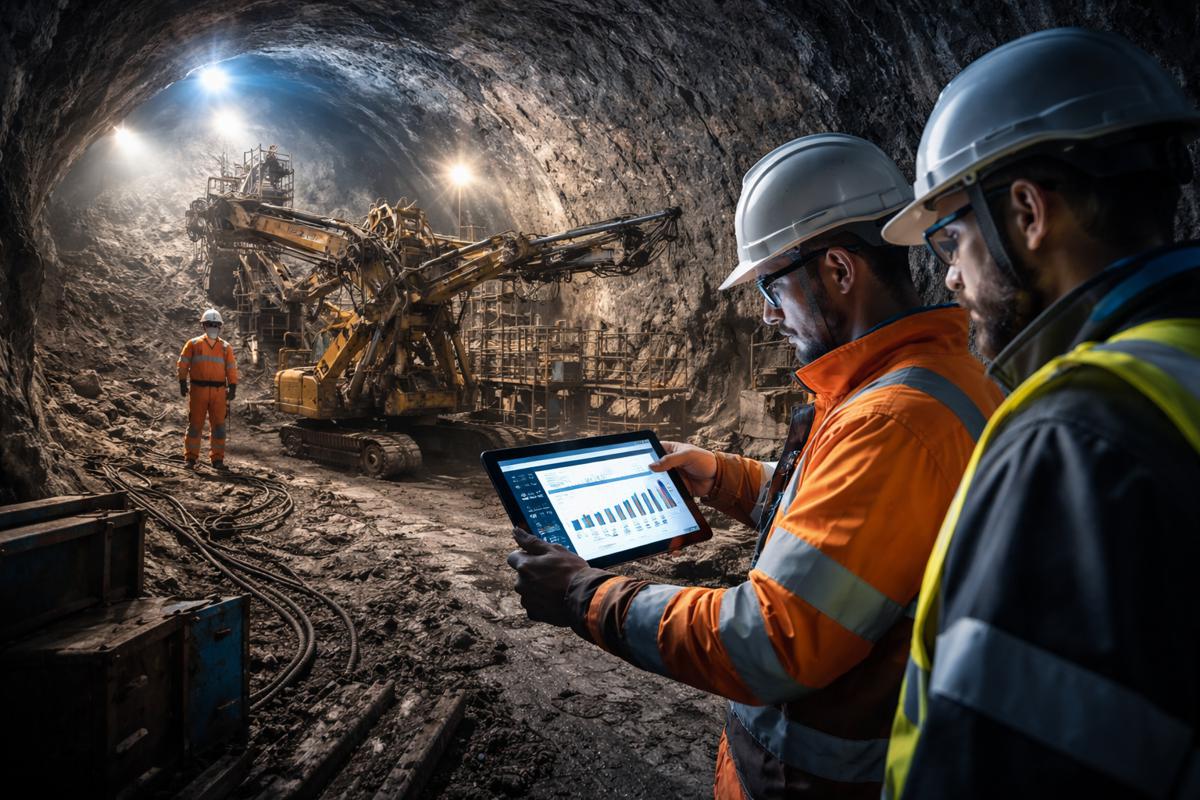
Globally, metro tunnelling has evolved significantly over the past decade, with tunnel boring machines (TBMs) and digital modelling playing a central role in reducing uncertainty and improving safety. Lessons from projects in cities such as Santiago, Lima and São Paulo are likely to inform Bogotá’s approach, particularly in managing urban disruption and maintaining construction timelines.
For engineering firms, the project represents an opportunity to deploy cutting-edge underground construction technologies in one of Latin America’s most demanding urban environments.
Procurement Structure Designed for Long-Term Performance
The Bogotá Metro Company has opted for a comprehensive contract model that bundles construction, operation and maintenance into a single international public tender. This approach is increasingly common in large infrastructure projects, aligning incentives across the project lifecycle.
Under this model, contractors are not only responsible for delivering the infrastructure but also for ensuring its long-term operational performance. That creates a stronger focus on quality, durability and system integration from the outset.
The prequalification process, now open to international bidders until June 5, 2026, will shortlist companies with the technical and financial capacity to deliver such a complex project. Those selected will proceed to the next phase, where detailed bids will be submitted ahead of a planned contract award in the first quarter of 2027.
This structured, multi-stage procurement process reflects global best practice and is designed to attract experienced consortia capable of managing large-scale metro systems from design through to operation.
Economic and Social Impact Across Bogotá
Infrastructure projects of this scale inevitably carry significant economic implications. During construction, Bogotá Metro Line 2 is expected to generate thousands of jobs, stimulate local supply chains, and drive demand for materials, equipment and services.
Beyond the construction phase, the long-term benefits are even more substantial. Improved connectivity between residential and commercial districts can unlock productivity gains, reduce travel times, and enhance access to employment opportunities.
Urban transport investments are also closely linked to land value uplift. Areas surrounding metro stations often experience increased property development and commercial activity, contributing to broader urban regeneration.
For Bogotá, where traffic congestion remains a persistent challenge, the shift towards high-capacity rail transit could translate into measurable reductions in travel times and vehicle emissions, aligning with national and international climate commitments.
A Regional Benchmark for Sustainable Transport
Across Latin America, cities are grappling with similar challenges: rapid population growth, ageing infrastructure, and increasing pressure to decarbonise transport systems. Bogotá’s Metro Line 2 is emerging as a potential benchmark for how these challenges can be addressed through integrated planning and international collaboration.
Metro systems, while capital intensive, offer long-term environmental advantages. Electrified rail networks produce significantly lower emissions per passenger kilometre compared to road-based transport, particularly when powered by cleaner energy sources.
Colombia has already made strides in renewable energy adoption, and the integration of metro systems into the broader transport network supports a transition towards more sustainable urban mobility.
The project also aligns with global development goals, including improved access to safe, affordable and sustainable transport systems, as outlined in the United Nations Sustainable Development Goals.
Competitive Landscape for International Contractors
The reopening of the prequalification process signals Bogotá’s intent to attract a diverse pool of international expertise. Major infrastructure firms from Europe, Asia and the Americas are expected to show interest, particularly those with experience in metro construction and public-private partnership models.
Competition is likely to be intense. Projects of this scale offer not only substantial contract value but also long-term operational revenue streams. For many companies, securing a role in Bogotá Metro Line 2 could strengthen their foothold in the Latin American market.
At the same time, the project presents an opportunity for local firms to partner with international players, fostering knowledge transfer and capacity building within Colombia’s construction sector.
Building Momentum for Bogotá’s Metro Vision
Bogotá Metro Line 2 is not an isolated initiative. It forms part of a broader vision to transform the city’s transport infrastructure and reduce its reliance on road-based systems. With Line 1 already under construction, the addition of a second line marks a significant step towards a fully developed metro network.
Delivering such an ambitious programme will require sustained political commitment, effective project management, and close coordination between multiple stakeholders. Yet, the foundations appear to be in place.
As the prequalification process moves forward, attention will turn to the calibre of bidders and the innovative solutions they bring to the table. For Bogotá, the outcome will shape not only the future of its transport network but also its standing as a model for urban infrastructure development in emerging economies.