The Machine Behind the Megaproject
There is a number that haunts the infrastructure industry, sitting quietly behind every major programme announcement, every project business case and every investor briefing. Bent Flyvbjerg, professor at Oxford’s Saïd Business School and one of the most rigorous chroniclers of megaproject performance in the world, has spent decades documenting it: on average, major transport infrastructure projects run 20 to 45 percent over their original cost estimates, with schedule overruns just as persistent and the problem tending to worsen as projects grow in scale.
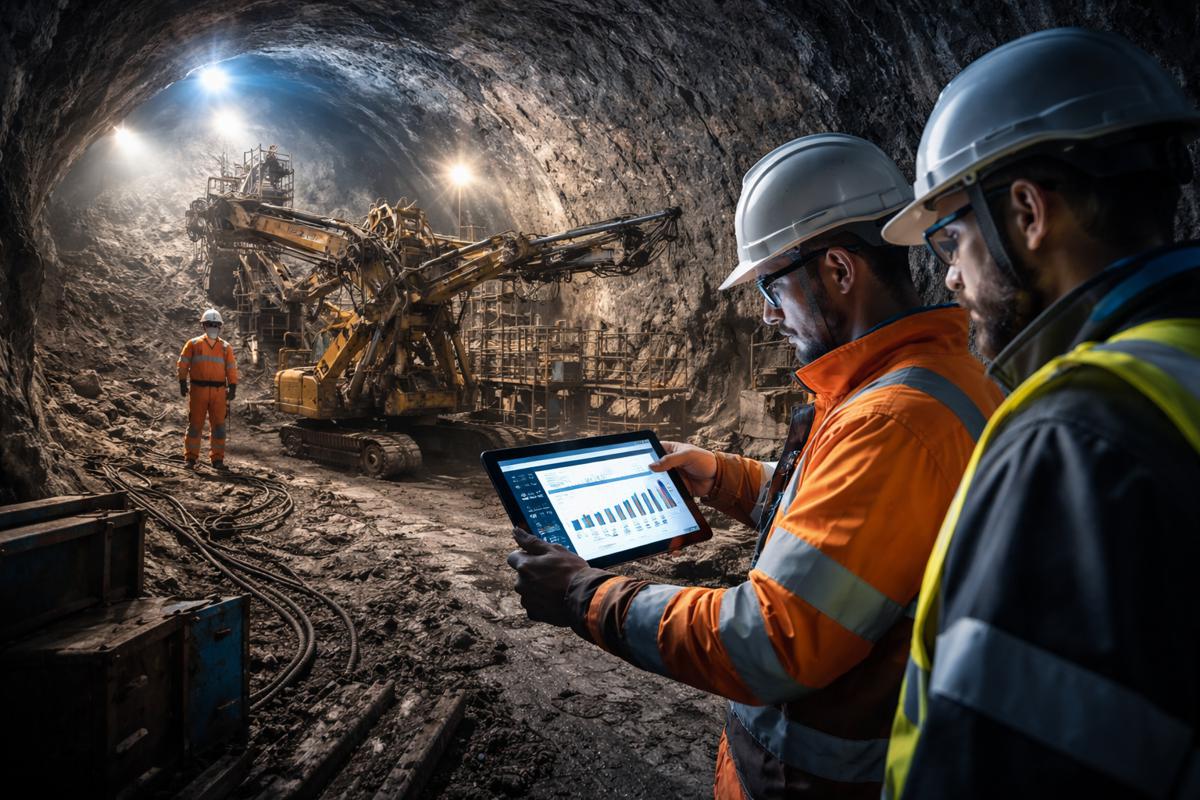
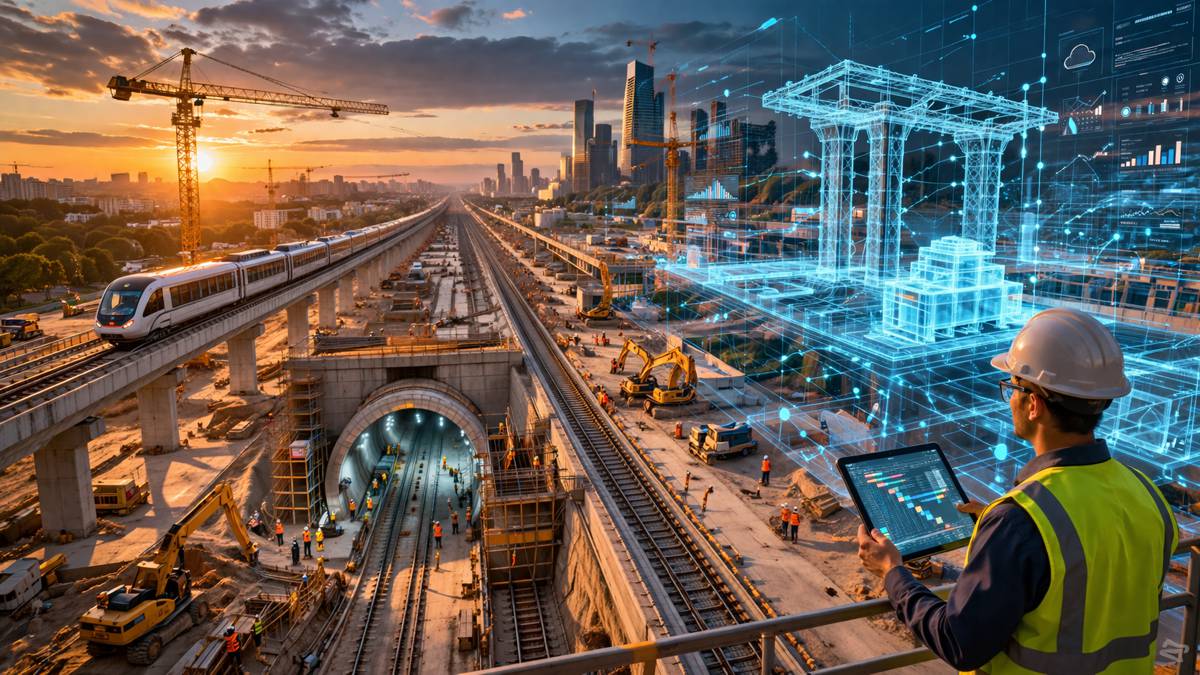
The industry has known this for years, but what is changing now on some of the most complex programmes on the planet, is not the acknowledgement of the problem but the sophistication of the response. The answer gaining real traction is not primarily a procurement answer or a contractual one, though both remain important. It is a systems answer, built around the recognition that the best-performing megaprogrammes today are structured as integrated information systems, with a connected stack of digital tools working in concert to give project teams something they have historically struggled to maintain: a single, reliable, version-controlled picture of what is being built, how it is being built and what that is costing in real time.
The physical infrastructure remains the point, the thing passengers board, freight moves across and communities depend on. But behind every great piece of infrastructure there now sits a delivery architecture that is increasingly determining whether the whole thing actually gets built on time and within budget. Understanding that architecture has become essential for anyone serious about delivering, investing in or commissioning major infrastructure in the years ahead.
Briefing
- Coordination failure, not engineering complexity, is the primary driver of megaproject overruns, typically adding 20 to 45 percent to cost and schedule.
- Integrated digital delivery, spanning CDEs, BIM, 4D planning and 5D cost control, is now delivering measurable gains in productivity, coordination and financial certainty.
- Programmes including Crossrail, HS2, China’s high-speed rail, Southeast Asian metros and Gulf giga-projects show that disciplined information management is now central to performance.
- Closing the construction productivity gap could unlock $1.6 trillion annually, according to McKinsey & Company.
- Value comes from integration. When data, design, time, cost and asset systems operate as one, projects become materially more predictable from delivery through to operation.

Complexity Was Always the Enemy, Not Scale
It is worth being precise about why megaprojects have historically struggled, because the industry still has a habit of blaming sheer ambition for failures that are usually rooted somewhere else. It is easy to say that projects go wrong because they are big, difficult or politically exposed. All of that is true, but it is not the heart of the problem. The real issue is complexity, and specifically the industry’s long-standing inability to manage complexity without information fragmenting under pressure.
A major infrastructure programme typically involves dozens of contracts, hundreds of subcontractors and thousands of individual contributors, all generating, revising and relying on data simultaneously. Designers issue updated geometry, commercial teams revise quantities, planners move sequences, temporary works evolve, utilities are discovered, ground assumptions change, and site teams make decisions based on the information available to them on a given day. Once different parts of that system begin operating from slightly different versions of reality, the consequences are rarely immediate, which is exactly why they are so dangerous. Problems remain invisible for weeks or months, then surface as rework, claims, delay notices, procurement misfires and suddenly expensive “discoveries” that should have been resolved long before anyone reached site.
That pattern is not anecdotal. Studies across major programmes consistently place rework at between 5 and 15 percent of total project cost. On a £5 billion scheme, that represents an exposure of £250 million to £750 million spent correcting work that should have been right first time. At megaproject scale, inefficiency is never a rounding error. It is a strategic threat to margin, programme confidence and investor trust. Once schedule pressure compounds, labour and plant sit waiting, access windows are lost, subcontractors start pricing defensively and the financial damage expands well beyond the original technical problem.
The growing body of research on digital delivery matters because it shows that these losses are not inevitable. A 2025 study published in Discover Materials, drawing on case studies across major infrastructure programmes, found that well-implemented BIM reduced project costs by an average of 15 percent and project timelines by 20 percent, while also reducing design errors by 30 percent and Requests for Information by 25 percent. Those numbers are not interesting because they sound progressive. They matter because they translate directly into less waste, fewer disputes and stronger financial performance on programmes where even a one percent swing in outturn cost can mean tens of millions.
McKinsey’s long-cited analysis in Reinventing Construction Through a Productivity Revolution places the wider problem in even sharper relief. The firm found that labour-productivity growth in construction averaged just 0.4 percent a year over two decades, compared with 2 percent across the total economy and roughly 3 percent in manufacturing. Fewer than a quarter of construction firms in its global sample matched the productivity growth of the economies they served. McKinsey’s conclusion was blunt: if construction productivity merely caught up with the broader economy, the sector could generate an additional $1.6 trillion in annual value. That is not just a productivity story. It is a capital efficiency story, a public value story and a competitiveness story all at once.
The implication is clear. The industry’s real opportunity is not simply to build bigger or faster. It is to control complexity more effectively than it has in the past. That is where the machine behind the megaproject begins.

The Tools and What They Actually Do for People, Projects and Budgets
The conversation around digital construction tends to drift into abstraction far too quickly. Terms such as transformation, innovation and future-readiness get used so casually that they begin to lose meaning, especially for the people actually trying to deliver live work in difficult conditions. For a project director managing forty contracts, three thousand people and a politically sensitive programme in a dense urban corridor, the question is not whether a platform is innovative. The question is whether it makes the project more controllable.
That is why specificity matters. Each of the major tools in the stack has a distinct role, and the gains come not from any single piece of software but from the way the stack functions as a system.
The Common Data Environment
The foundation is the Common Data Environment, often delivered on major infrastructure programmes through Bentley Systems’ ProjectWise. It is important to be clear that a Common Data Environment is not a filing cabinet with a better user interface. It is a governance system. Every drawing, model, report, transmittal and specification is version-controlled. Permissions are managed. Approval workflows are defined and auditable. Nothing is issued casually and nothing should be built from an unofficial copy living in somebody’s inbox or on a local drive.
The practical effect is straightforward but commercially powerful. Designers, contractors, client teams and operators are working from the same approved information. That sounds obvious, yet the absence of precisely that discipline has undermined more major programmes than the industry likes to admit. The CDE reduces the quiet divergence that so often precedes delay and cost growth.
WSP has described the value in practical terms, noting that “ProjectWise provides a proven foundation in WSP’s drive to digital delivery,” and that the shift toward data-centric workflows is helping it “win more business and deliver better projects.” That language is telling. The benefit is not merely operational tidiness. It is commercial competitiveness, better risk control and stronger delivery performance.
For the teams using it day to day, the value is human as much as technical. Less time is wasted searching for current revisions. Fewer arguments arise over who issued what and when. Disputes become easier to resolve because the audit trail is visible. One major programme reported a 25 percent improvement in collaborative efficiency after implementing ProjectWise across its supply chain. In a sector where coordination consumes vast amounts of managerial time, that is not a small improvement.
BIM and Model-Based Design
The modelling tools that sit within or alongside the CDE, including MicroStation, OpenRoads Designer, OpenRail Designer and OpenBuildings Designer, move the industry beyond drawing production into data-rich design. The distinction matters. These tools do not merely produce prettier geometry. They create models in which components carry relationships, attributes and embedded information that can be used across the programme.
That means the model can be queried, not just viewed. Quantities can be extracted directly. Interfaces between disciplines can be checked in three dimensions. Spatial conflicts between civil, structural, architectural, rail systems, MEP and utilities can be identified before they become expensive discoveries onsite. In practical terms, this is where design starts to become constructible in a disciplined way.
Steve Cockerell, formerly Bentley’s marketing director for road and rail, put it clearly in relation to Crossrail. The aim, he said, was to ensure that when designs reached the people responsible for building shafts, portals, track systems and information systems: “it all comes together the first time.” That is the commercial essence of model-based delivery. The issue is not whether the model looks sophisticated on screen. The issue is whether it prevents costly misalignment once people, machinery and access windows are committed in the physical world.
4D Scheduling and Construction Simulation
The next layer is 4D, where the digital model is linked to the construction programme. SYNCHRO 4D is one of the most established tools in this space and its value is easy to understand because it addresses one of construction’s oldest weaknesses: the gap between what the schedule says and what the site can actually support.
Traditional planning tools are powerful, but they are abstract. A Gantt chart can describe logic, duration and dependencies, but it does not naturally show two contractors trying to occupy the same area, a crane path crossing a temporary access route, or a sequence that looks acceptable in Primavera but collapses when you visualise it against the physical geometry of the site. 4D simulation turns planning into something that can be tested.
The productivity implications are significant. One major programme reported that construction staging plans were developed 71.5 percent faster using SYNCHRO than with conventional 2D methods. Laing O’Rourke’s Stephen Corney has said that challenges identified in the 4D model delivered “significant productivity savings for engineers and supervisors,” allowing them to focus more on forward planning and less on reactive mitigation. That shift in working practice is enormously important. Better planning is not just a technical gain. It changes how management time is spent and how much of that time is consumed by firefighting.
5D Cost Integration
If 4D links design to time, 5D links it to money. Platforms such as CostOS use model-derived quantities to drive estimating and cost planning in a more dynamic way than traditional take-off processes allow. This matters because one of the oldest structural weaknesses in project delivery is the lag between design change and cost recognition. By the time estimators have worked through the implications manually, several more design decisions may already have been made on incomplete financial information.
5D reduces that lag. When the model changes, the cost implication becomes visible far sooner. That does not make commercial management effortless, but it does make it much harder for financial reality to drift quietly away from design intent. On major programmes, where design development continues under immense pressure, that is a serious commercial advantage.
Geotechnical Analysis
Ground remains one of the most persistent sources of uncertainty in infrastructure delivery. On tunnelling, deep excavation, marine works and major foundation packages, poor understanding of ground behaviour can distort the entire programme. PLAXIS addresses this by allowing engineers to model geotechnical conditions in three dimensions and assess how soil and rock are likely to perform under different loading and construction scenarios.
Again, the value is not academic. If ground risk is understood earlier, it can be priced earlier, mitigated earlier and managed before it cascades through procurement, temporary works and schedule logic. On long linear infrastructure crossing varied geology, this can be the difference between a manageable risk profile and a programme-wide crisis.
Asset Information Management
Finally, AssetWise and comparable asset information platforms address a part of the infrastructure lifecycle that construction-led cultures have historically neglected: what happens after handover. Major infrastructure assets will often operate for fifty to one hundred years. Over that period, maintenance, inspection, interventions and upgrades will cost far more than the original construction. If the data generated during design and construction is fragmented or unusable by the operator, the long-term value of the digital effort collapses at the point it ought to become most useful.
Crossrail’s approach is particularly important here. Managing around one million assets through a governed environment and providing Transport for London with a coherent digital picture of the Elizabeth line from the first day of operations demonstrated what lifecycle information management can look like at genuine programme scale. Crossrail’s own learning legacy records that GIS integration reduced the time required to locate asset data by at least 75 percent compared with previous methods. That is not simply an operational improvement. Over decades, it becomes a material cost and performance benefit.

Crossrail and the Making of a Digital Railway
Crossrail is still one of the best examples in the world of what it means to build a megaproject as both a physical and digital system. The programme was large enough, complex enough and politically exposed enough to make the costs of poor coordination impossible to hide. More than forty prime contracts and hundreds of subcontracts had to be aligned across stations, tunnels, systems, civils, fit-out and rail integration. Without a disciplined information architecture, the programme would have descended into contradiction.
Bentley’s tools formed a substantial part of that architecture. Around thirty integrated applications were used across the programme, with ProjectWise providing the information backbone and AssetWise managing approximately one million assets. The point of this was not technological elegance. It was to make it possible for thousands of contributors to work inside a coherent environment.
The gains were real. Bentley and Crossrail documented examples where BIM, digital engineering models and construction simulation saved significant time, effort and money. Analysis of the programme’s BIM and CDE approach calculated direct cash benefits in the region of £10 million a year over more than seven years, alongside a further £10 million a year in reduced administration and IT costs over more than five years. Those are serious numbers, especially when they come from governance, workflow and coordination rather than from any single headline-grabbing innovation.
Crossrail also matters because of the cultural decisions it took. Relevant Bentley software was made available across the supply chain, removing licensing as a barrier to collaboration. Information quality metrics were published, making performance visible and forcing behaviour to improve. Teams that were initially using only a fraction of approved documentation on site moved sharply upward once the issue was exposed. That lesson should not be underestimated. In megaprojects, behaviour often improves not because people are told to care more, but because the system makes quality visible and poor practice difficult to hide.
HS2 and the Industrialisation of Digital Engineering
HS2 has taken the logic further by embedding digital engineering into programme structure rather than treating it as a supplementary layer. Dr Sonia Zahiroddiny, one of the leading figures behind the programme’s digital engineering strategy, has described BIM as a key enabler for unlocking cost and time efficiencies, alongside better environmental and safety outcomes. That framing matters because it positions digital engineering not as a nice-to-have, but as part of the core business case for delivery.
ProjectWise provides the CDE backbone across a programme spanning hundreds of live construction locations. Models feed into SYNCHRO for 4D planning. CostOS links quantities to estimating. PLAXIS supports geotechnical analysis across varied and often challenging ground conditions. This is not software for software’s sake. It is a connected system built to reduce uncertainty across one of the largest infrastructure programmes in Europe.
HS2 is also one of the clearest current demonstrations of how digital systems support Design for Manufacture and Assembly. Tunnel segments, viaduct elements and precast components are being fabricated offsite and assembled under conditions where tolerance for mismatch is extremely low. That is only possible when the relationship between design model, manufacturing process and site installation is highly disciplined.
In other words, digital integration is not just helping HS2 draw better. It is allowing the programme to shift risk out of the field and into more controlled environments where it can be managed earlier and more cheaply.
China and Construction at Industrial Scale
China’s major infrastructure programmes offer a different lesson. Where Crossrail and HS2 show how digital systems can improve control in complex, highly scrutinised programmes, China shows what happens when those systems are fused with industrial scale and standardisation.
On high-speed rail projects such as Beijing-Zhangjiakou and Xi’an-Shiyan, ProjectWise, MicroStation, OpenRail Designer, SYNCHRO 4D and associated Bentley tools have been deployed within delivery systems built around repetition, prefabrication and rapid assembly. That matters because it shows what digital integration looks like when the objective is not simply better coordination on a flagship project, but the continuous delivery of infrastructure across an entire national programme.
Documented outcomes from associated programmes make the point well. On one major converter station project, Bentley reported that an integrated digital ecosystem reduced design time by 30 days, shortened the construction period by 40 days and saved approximately $1 million in overall project costs. On its own, that might sound like an isolated case. In the context of a national infrastructure system delivering projects at immense scale, it becomes something more important: evidence that digital coordination can function as a multiplier when paired with industrialised delivery.
China’s lesson is that digital tools do not just make projects more manageable. In the right operating environment, they make programmes repeatable.
Southeast Asia and the Advantage of Starting Fresh
Southeast Asia has produced some of the most instructive examples of how emerging infrastructure markets can adopt advanced digital delivery without the burden of legacy systems. Kuala Lumpur’s Sungai Buloh-Serdang-Putrajaya metro line is a particularly strong case because it implemented a BIM Level 2 framework supported by ProjectWise, AssetWise, ContextCapture, MicroStation, PLAXIS and STAAD.Pro in a way that many older markets were still struggling to institutionalise.
The significance of this is not just technical. It shows that markets without decades of entrenched workflows can sometimes move faster because they are not fighting the inertia of older systems, older contracts and older habits. That leapfrog effect is becoming increasingly relevant. It suggests that digital maturity is not always correlated with market age or historical programme experience. Sometimes it comes from having the freedom to design the delivery architecture properly in the first place.
For the SSP line, that meant better coordination across disciplines, clearer information continuity into operations and stronger lifecycle management from the start. It also meant that digital delivery was not treated as an experiment bolted onto a conventional programme. It was embedded into the programme structure.

India and the Challenge of Distributed Complexity
India is different again, and that is precisely why it matters. The country is not dealing with a single megaproject logic. It is dealing with simultaneous national-scale programmes spread across vast geographies, agencies and delivery cultures. The Dedicated Freight Corridor, the country’s metro expansions and large highway programmes all create a form of complexity that is less concentrated than Crossrail or HS2, but in many ways harder to standardise.
Here, digital tools are less about creating one monolithic digital environment and more about imposing order across fragmentation. Drone surveying, GIS integration, BIM-based coordination and digital project controls are all being used to create consistent visibility across distributed workfronts that cannot be managed effectively through traditional reporting alone.
That is especially important on programmes where a delay in one region or package can ripple through many others. The role of digital systems in India is therefore slightly different. They are not only preventing clashes and improving model quality. They are creating coherence where delivery conditions vary significantly across the same national programme.
That gives the India section of the global story real weight. It shows that digital delivery is not one fixed model. It is a way of imposing structure on complexity, whatever form that complexity takes.
The Middle East and the New Logic of Total Programme Integration
The Gulf programmes, including NEOM and other Saudi giga-projects, represent perhaps the clearest attempt yet to design digital integration into a programme from the very beginning rather than introducing it in response to emerging delivery problems. That distinction is important. In established markets, digital systems are often deployed to improve an existing project structure. In the Gulf, they are increasingly part of the project structure itself.
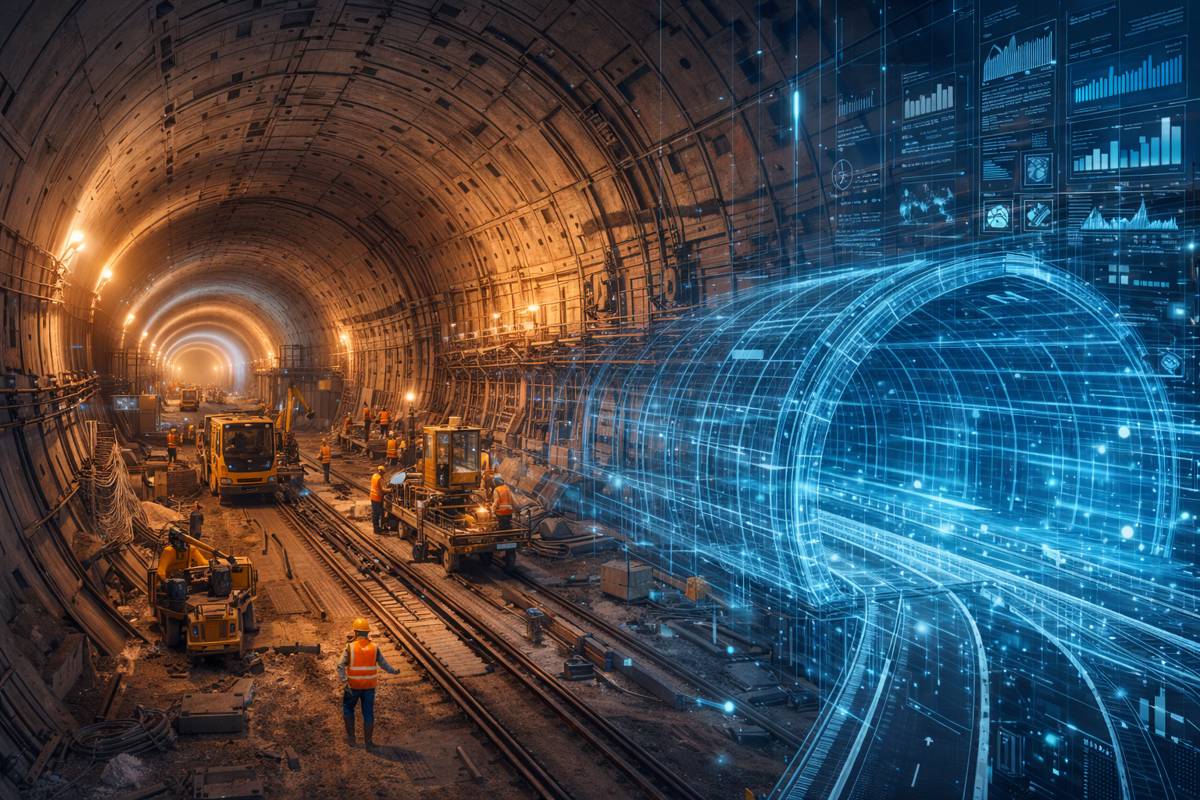
Digital twins, in this context, are not superficial visualisation exercises. At their most useful, they operate as integrated environments linking BIM, GIS, operational data, logistics and scenario testing into a single evolving framework. This allows project teams to test decisions before they become commitments, not just at design stage but across sequencing, logistics and operational planning.
Offsite fabrication is also central to the Gulf model, partly for reasons of efficiency and partly because climate, logistics and labour conditions reward greater control. But offsite only works if the digital definition is robust enough to support it. Once again, the point is not the tool on its own. It is the system.
That said, this is also the part of the global market where caution remains important. The long-term proof will not come from ambition or renderings. It will come from measured delivery performance over time. Still, even at this stage, the Gulf is showing what becomes possible when digital integration is treated as a design requirement rather than a support function.

How These Systems Cut Waste, Rework and Lost Time
The greatest weakness in much of the digital delivery conversation is that it often stops at capability and fails to translate that capability into commercial consequence. Yet that consequence is where the argument becomes strongest.
Rework is a direct financial burden. If rework sits between 5 and 15 percent of project cost, then every clash resolved in the model rather than onsite is a material saving. Every interface coordinated early is money protected. Every sequence tested in 4D before crews and equipment arrive is time preserved.
This is where the stack begins to make financial sense as a unified machine. The CDE keeps everyone on the same approved information. BIM reduces design errors and interface conflicts. 4D planning improves sequencing and resource allocation. 5D integration exposes financial consequences sooner. Geotechnical modelling reduces the risk of being surprised by the ground. Asset information management protects long-term value after handover.
None of these gains need to be theatrical to matter. Megaproject economics are altered by cumulative improvements. A reduction in RFIs, a small improvement in collaborative efficiency, a few avoided clashes, better progress visibility, faster stage planning, earlier cost awareness. On a £5 billion or £10 billion programme, those increments add up quickly.
The Commercial Case and the Return on Better Control
For owners, contractors and investors, the commercial case is not built on hype. It is built on whether these systems materially improve cost, schedule and certainty. The evidence increasingly suggests they do.
Research published in Buildings found BIM delivering cost-benefit ratios above 4.5 to 1 in public sector cases. UK Government analysis has pointed to 8 to 10 percent construction cost reductions on properly BIM-enabled projects. The Discover Materials study cited earlier identified 15 percent average cost savings and 20 percent schedule reductions under well-implemented BIM delivery conditions. None of those figures should be treated lazily or assumed to transfer identically from one project to another, but collectively they point in the same direction. Better information management is not a nice operational improvement. It has measurable economic value.
That value also flows through financing. Schedule slippage does not just delay completion. It increases financing costs, defers operational revenues and often forces contractual and political renegotiation. On concession-backed or availability-based infrastructure, time is literally money. If 4D and 5D systems improve predictability even modestly, the financing implications are real.
McKinsey’s productivity argument makes the wider commercial context impossible to ignore. If the industry can close even part of its productivity gap, the gains are not marginal. They reshape how much infrastructure can be delivered with the same capital base.
Investor Perspective and the Changing Risk Profile of Infrastructure Delivery
From an investor’s point of view, this is where the story becomes especially compelling. Infrastructure is attractive because it promises long-duration, relatively stable returns, but construction risk has always disrupted that promise. Cost overruns, programme delays and uncertain handover conditions distort projected IRRs and undermine confidence in portfolio deployment.
Digital delivery systems do not eliminate these risks, but they make them more visible and more manageable. That matters because capital does not only respond to absolute risk. It responds to measurable risk. When rework risk, interface risk, ground risk and sequencing risk are surfaced earlier and handled inside a more transparent delivery system, financiers and owners gain a better basis for pricing and allocating capital.
There is also a portfolio effect. Delayed projects trap capital. Uncertain projects attract higher contingencies and more conservative financing assumptions. Better-controlled projects free decision-making, improve confidence and support a more efficient pipeline of infrastructure investment. This is especially relevant for pension funds, sovereign wealth funds and long-term infrastructure investors seeking stable, inflation-linked returns without construction volatility overwhelming the investment thesis.
The World Bank’s long-standing emphasis on governance and project preparation fits directly into this conversation. Better-prepared projects with stronger information environments are lower-risk projects. Digital systems do not replace governance, but they can materially strengthen it.
Integration Is Where the Value Actually Lives
It is tempting to focus on whichever tool sounds most impressive at a given moment. Digital twins, AI forecasting, model-based estimating and automation all have their place. But the strongest lesson from the best current programmes is that the value does not live in any single tool. It lives in the integration between them.
That is why the principles advanced by the Centre for Digital Built Britain around trust, interoperability and governance remain so important. A fragmented set of sophisticated tools is still fragmentation. The point is not to assemble a fashionable software ecosystem. The point is to build a governed delivery machine in which design, planning, commercial control, geotechnical understanding, fabrication logic and lifecycle information reinforce one another instead of drifting apart.
When that happens, programmes become more predictable. Not perfectly predictable, because infrastructure will always carry political, physical and commercial uncertainty. But predictably enough to change the economics of delivery in a meaningful way.
The machine behind the megaproject is no longer hidden in the background. It is becoming the decisive factor in whether infrastructure is delivered cleanly, commercially and at scale. For owners, contractors, investors and policymakers alike, that is no longer a technical detail. It is the difference between ambition that survives contact with reality and ambition that does not.