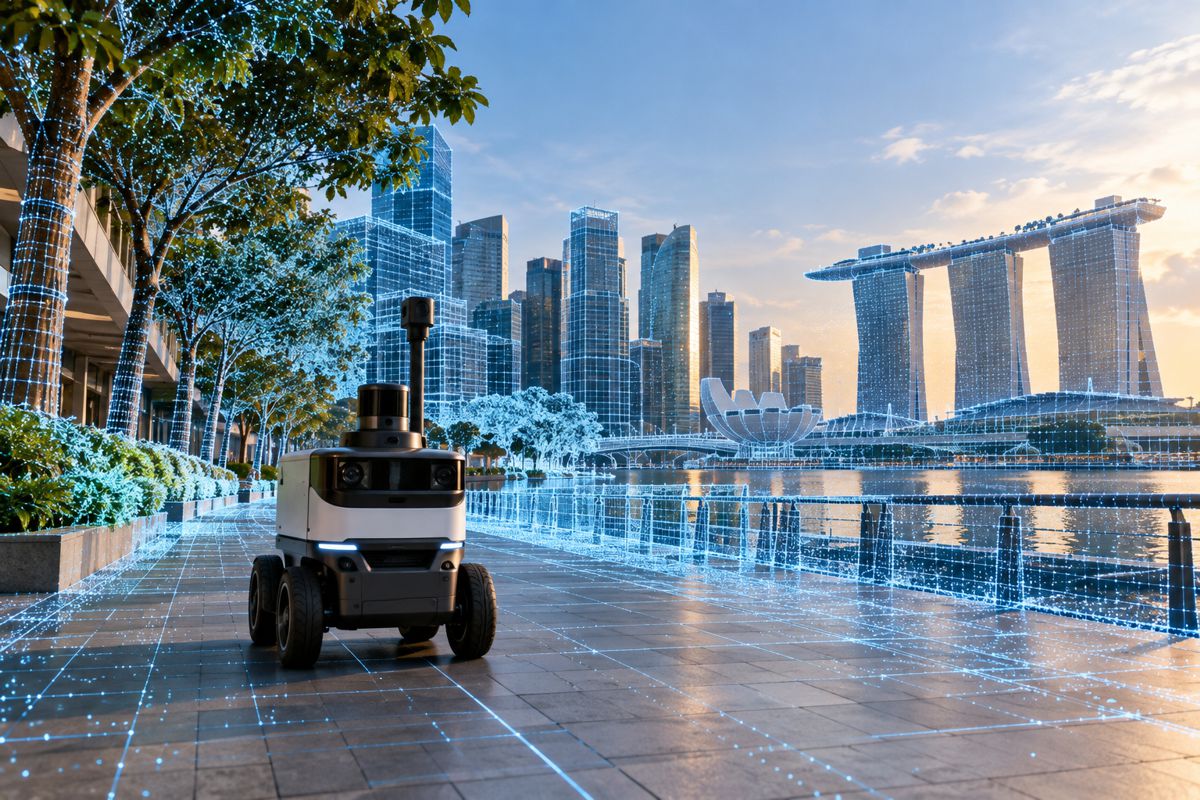
Hitachi Research Reveals the Challenge of Scaling Physical AI in Industry
Only 8% of industrial decision-makers surveyed by Hitachi say their organisations have reached continuous optimisation and innovation with physical AI, despite 97% reporting some level of adoption. The findings, drawn from more than 200 respondents across energy, manufacturing, transport and logistics, reveal a substantial gap between introducing AI applications and integrating them into established industrial operations.
The company’s new report, Beyond the Pilot: Industry’s Physical AI Progression, examines how organisations are deploying artificial intelligence in physical environments, where they are finding value and what prevents successful projects from expanding into broader operational use.
Inspection and predictive maintenance remain among the most established applications, while more sophisticated systems capable of coordinating machinery and industrial processes are attracting investment. The challenge is extending these capabilities across equipment, control systems and operational environments that were rarely designed with AI in mind.
Briefing
- Hitachi surveyed more than 200 decision-makers across mission-critical industrial sectors.
- 97% report some use of physical AI, but only 8% have reached continuous optimisation and innovation.
- 75% report active leadership support for AI, while only 38% consider their organisations adequately resourced.
- Limited AI expertise (43%) and systems integration (31%) are the leading reported adoption barriers.
- Inspection and predictive maintenance dominate current production applications, with investment expanding towards more complex industrial uses.
The Gap Between Adoption and Operational Maturity
The survey indicates considerable enthusiasm for physical AI among industrial decision-makers. Some 87% associate delaying adoption with material risk, while more than two-thirds regard the technology as very or extremely important to achieving organisational objectives.
Yet the reported level of adoption needs careful interpretation. Using AI to identify equipment faults or analyse inspection data is considerably different from operating an integrated system that continuously adjusts industrial processes in response to changing conditions.
The survey’s 97% figure describes participating decision-makers rather than industrial businesses worldwide. The breadth of applications classified as physical AI also affects how the results should be interpreted, particularly where established predictive analytics and more advanced autonomous systems are considered within the same category.
Only 8% of respondents report reaching continuous optimisation and innovation. Within the surveyed organisations, the progression from individual applications to coordinated industrial operations remains difficult.
Industrial Integration and the Skills Shortage
The disparity between executive support and available resources is particularly pronounced. Three-quarters of respondents say their leadership actively supports AI initiatives, but only 38% believe their organisations have sufficient resources to implement them effectively.
Limited AI expertise is cited by 43% of respondents, with 31% identifying systems integration as a leading obstacle. AI and machine learning also represent the largest internal talent gap, identified by 49%.
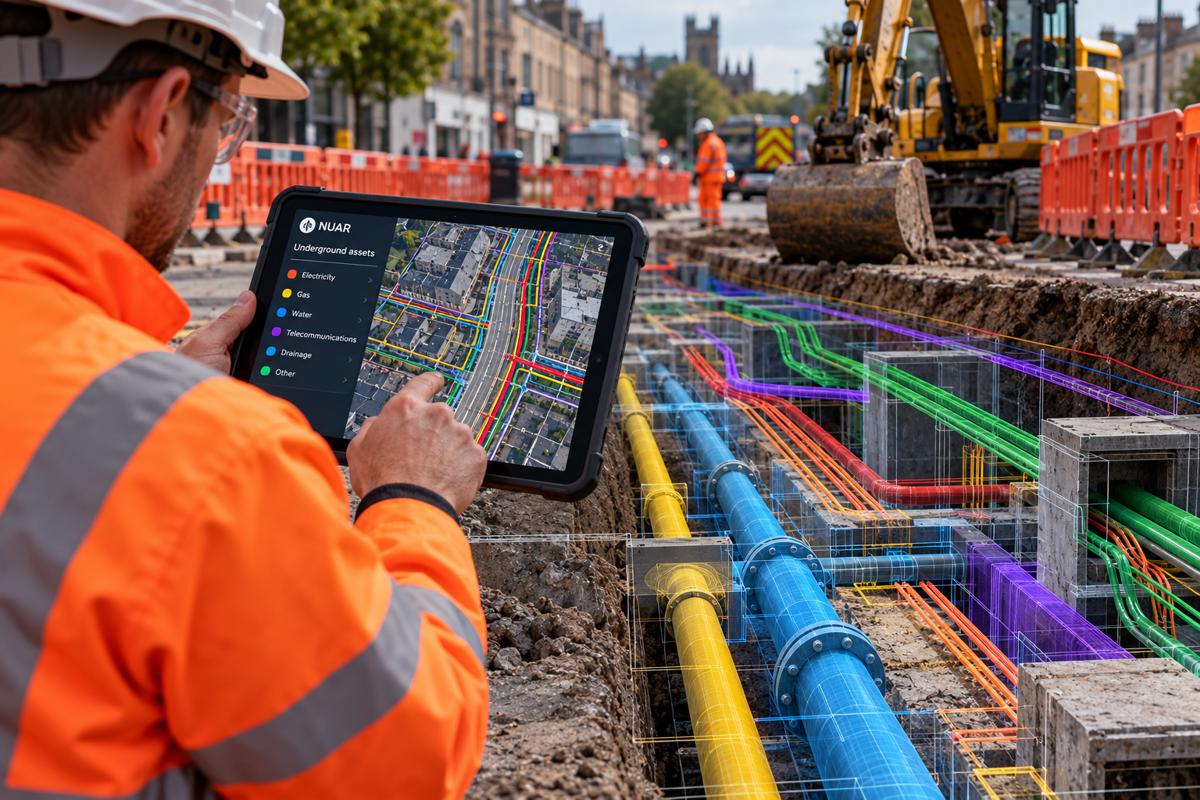
Industrial infrastructure presents challenges that conventional enterprise software projects rarely encounter. Power distribution equipment, manufacturing machinery, railway systems and other operational assets may remain in service for decades. Their control systems, communications protocols and maintenance arrangements were frequently designed long before contemporary AI applications became available.
Connecting those assets to modern analytical systems can require additional instrumentation, secure communications, data preparation and modifications to established operational procedures. Changes affecting equipment behaviour must also be assessed against existing safety and reliability requirements.
These difficulties extend beyond software compatibility. Industrial operators must preserve the reliability of equipment that may already be operating continuously, often within tightly controlled maintenance windows and regulatory frameworks.
The shortage of specialist personnel compounds the problem. Deploying AI in an industrial environment can require expertise spanning machine learning, operational technology, industrial communications, cybersecurity and the engineering characteristics of the equipment involved.
Predictive Maintenance Leads Deployment
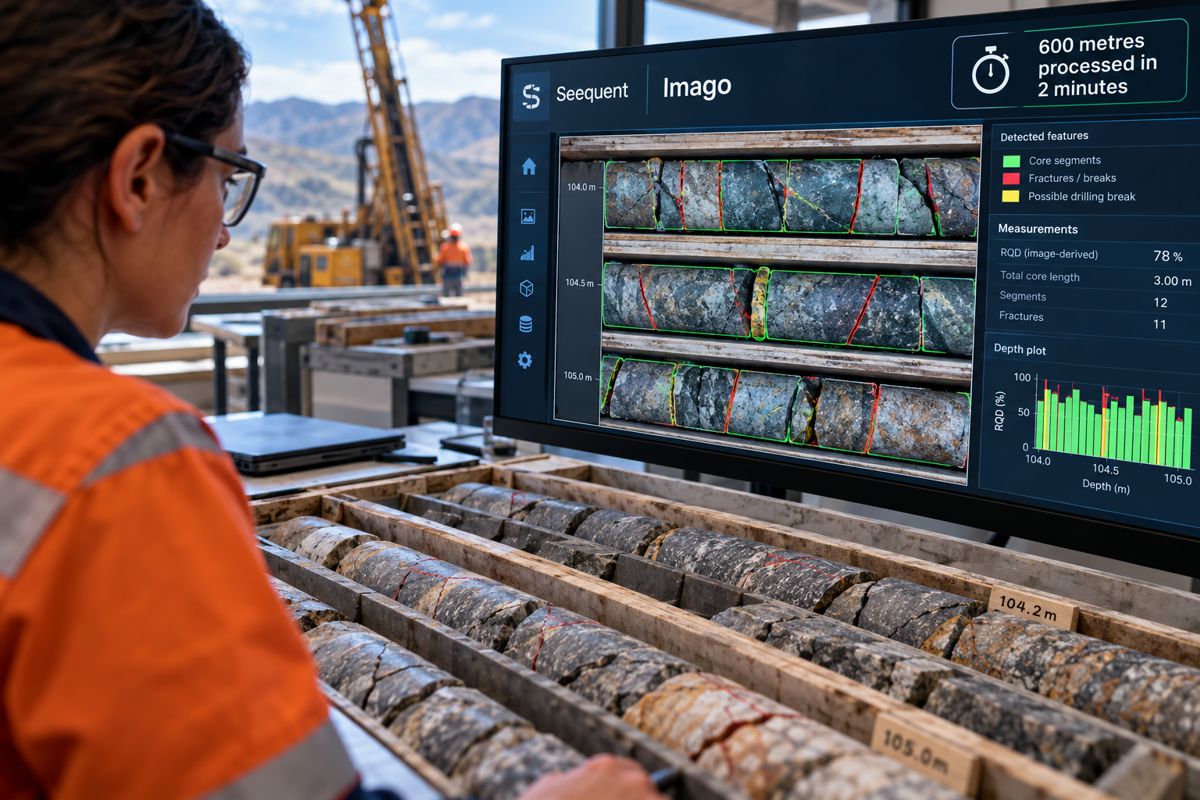
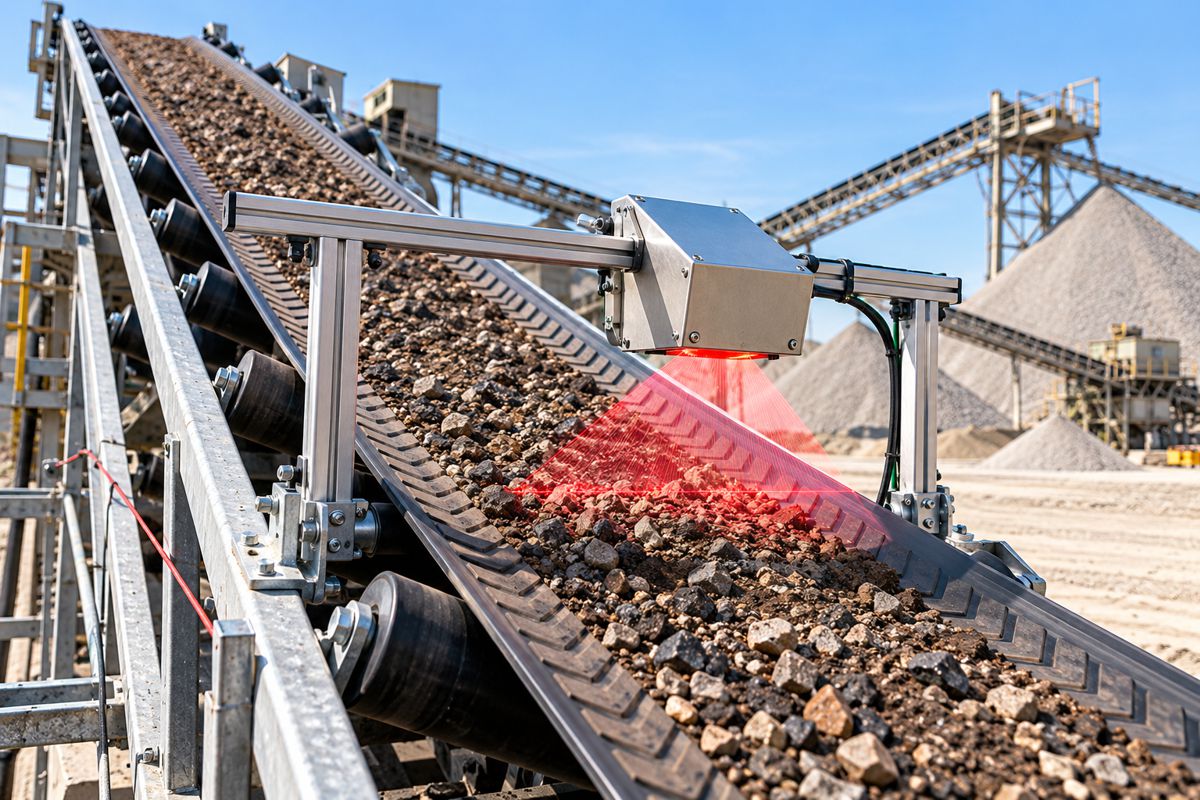
Inspection and predictive maintenance account for much of the physical AI already operating in production environments, according to Hitachi’s research. Process optimisation and supply chain applications are approaching deployment, while investment is moving towards behavioural analysis, intelligent computer numerical control machinery and computer vision for workplace safety.
The company notes that some of these application-specific findings reflect manufacturing respondents rather than the entire cross-industry sample.
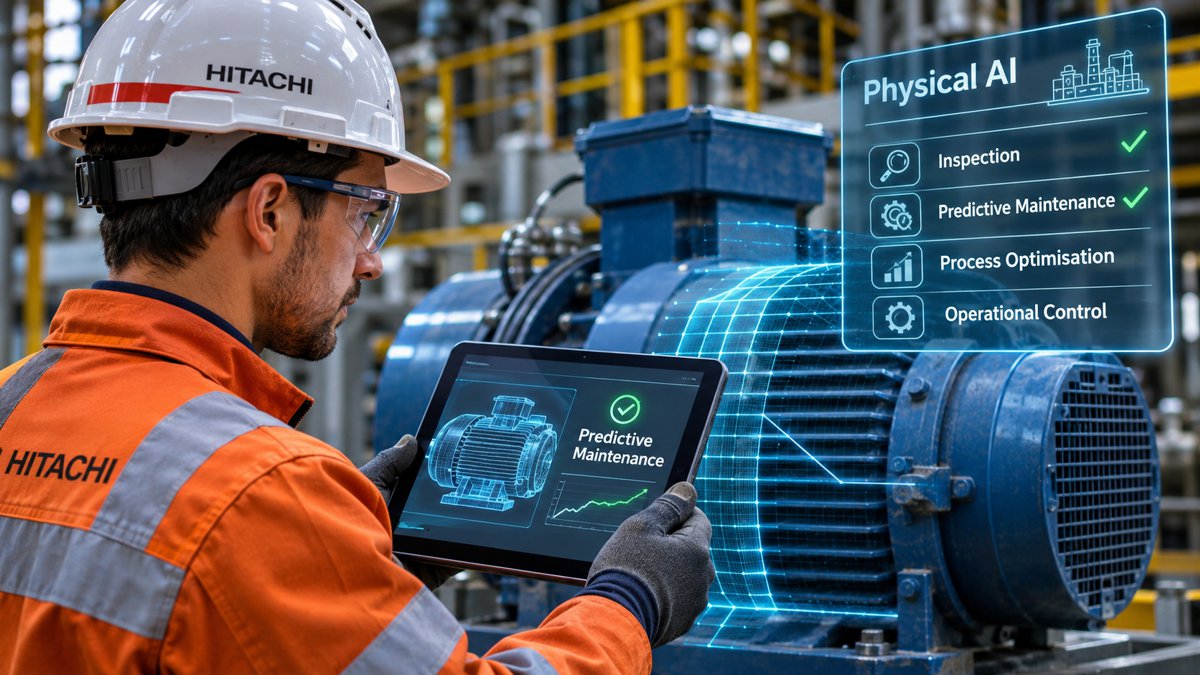
Predictive maintenance is a comparatively accessible application because AI can examine operational data and identify patterns associated with equipment deterioration without necessarily taking direct control of machinery.
An industrial motor, for example, may already produce temperature, vibration and electrical measurements. Analytical models can use these readings to identify deviations from normal operating behaviour, allowing maintenance teams to investigate potential faults before equipment fails.
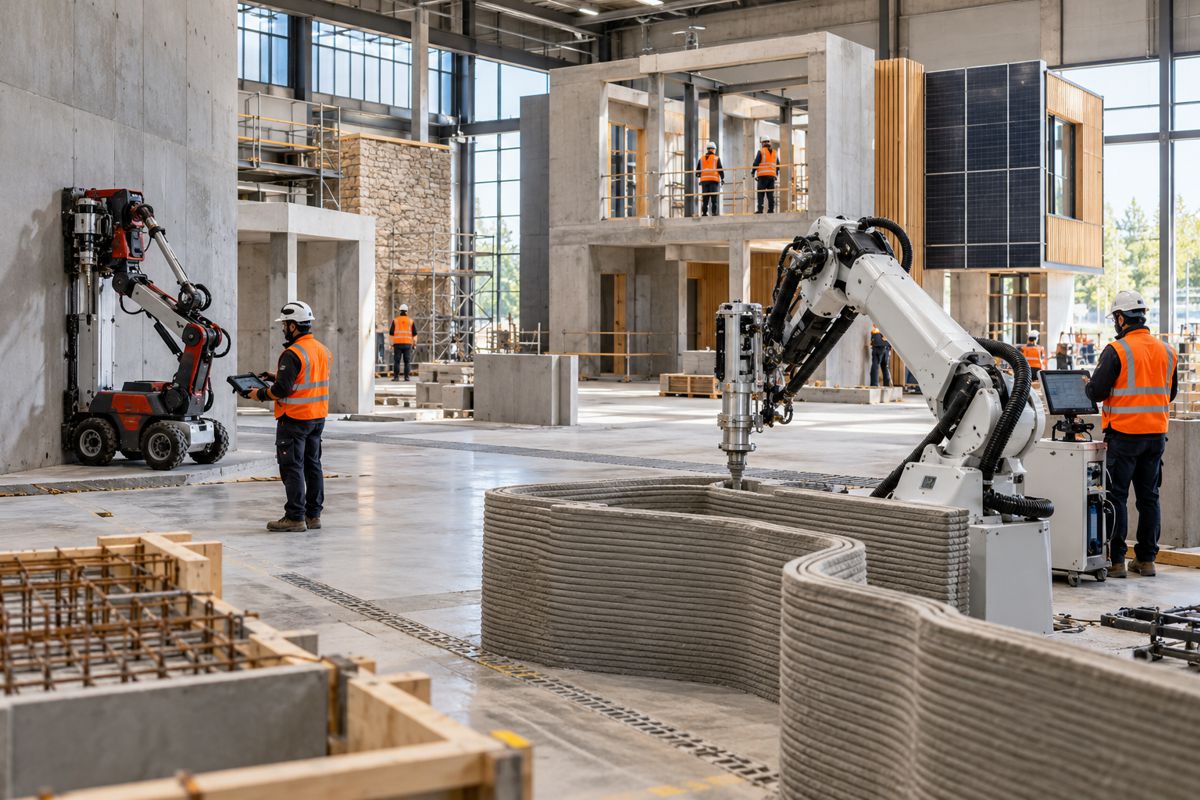
More advanced applications introduce additional complexity. AI systems that adjust machine movements, coordinate industrial equipment or alter production processes must operate within defined physical and safety constraints.
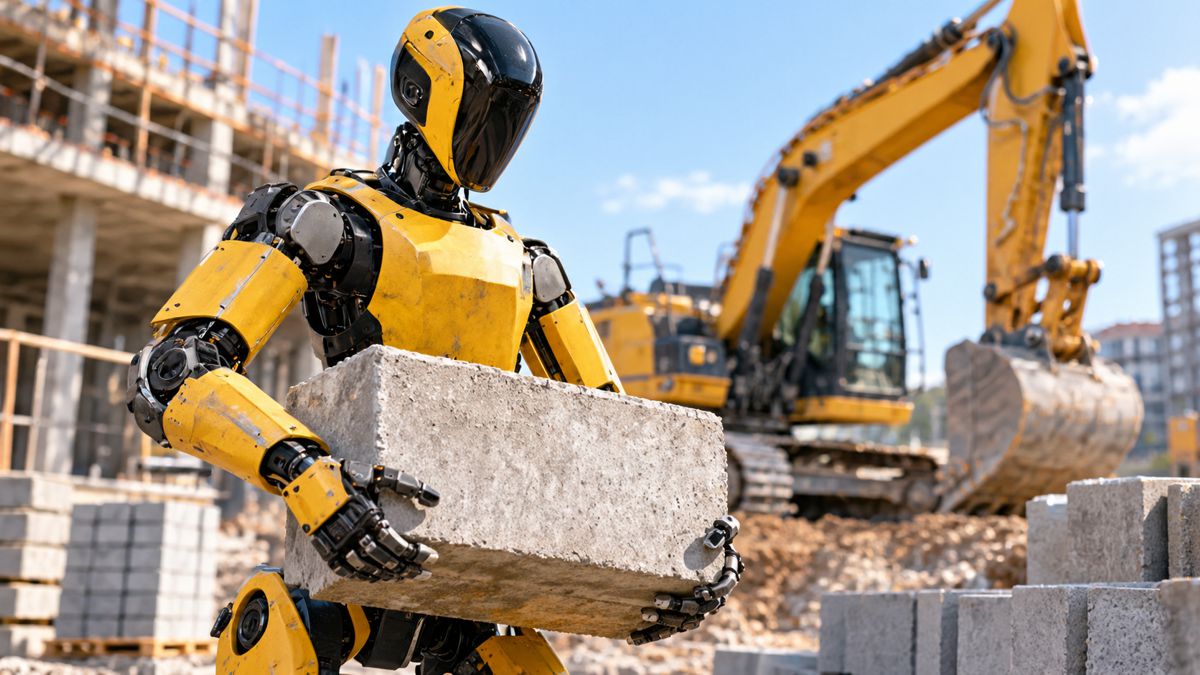
In March 2026, Hitachi announced the development of physical AI technology capable of learning from operational experience and adapting robotic movements on site. The company identified potential applications in manufacturing, equipment maintenance and logistics, including tasks that are difficult to automate using conventional programming.
Such capabilities extend beyond monitoring equipment performance. They require AI to interpret operating conditions and influence physical actions, increasing the importance of validation, supervision and dependable control.
Frontline Workers Remain Underserved
One of the survey’s more revealing findings concerns the people working directly with industrial equipment.
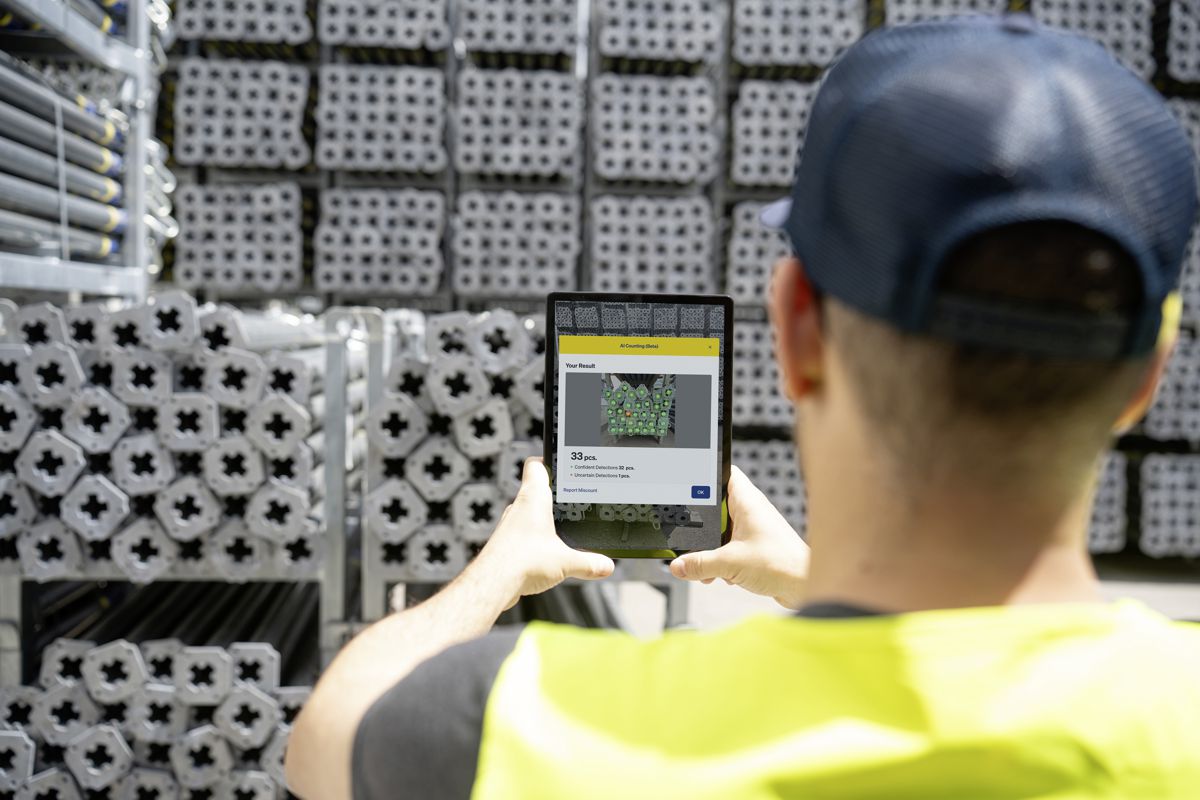
Across the frontline and maintenance-related applications described in the research, an average of only 16% of respondents report significant AI usage. Nearly half indicate that these employees receive limited AI support.
The applications considered include collaborative robots, intelligent personal protective equipment and other technologies intended to assist workers during operational tasks.
This contrasts with the greater emphasis placed on inspection, predictive maintenance and process optimisation. Organisations appear more advanced in applying AI to equipment data than in delivering AI-enabled assistance directly to maintenance technicians and operational personnel.
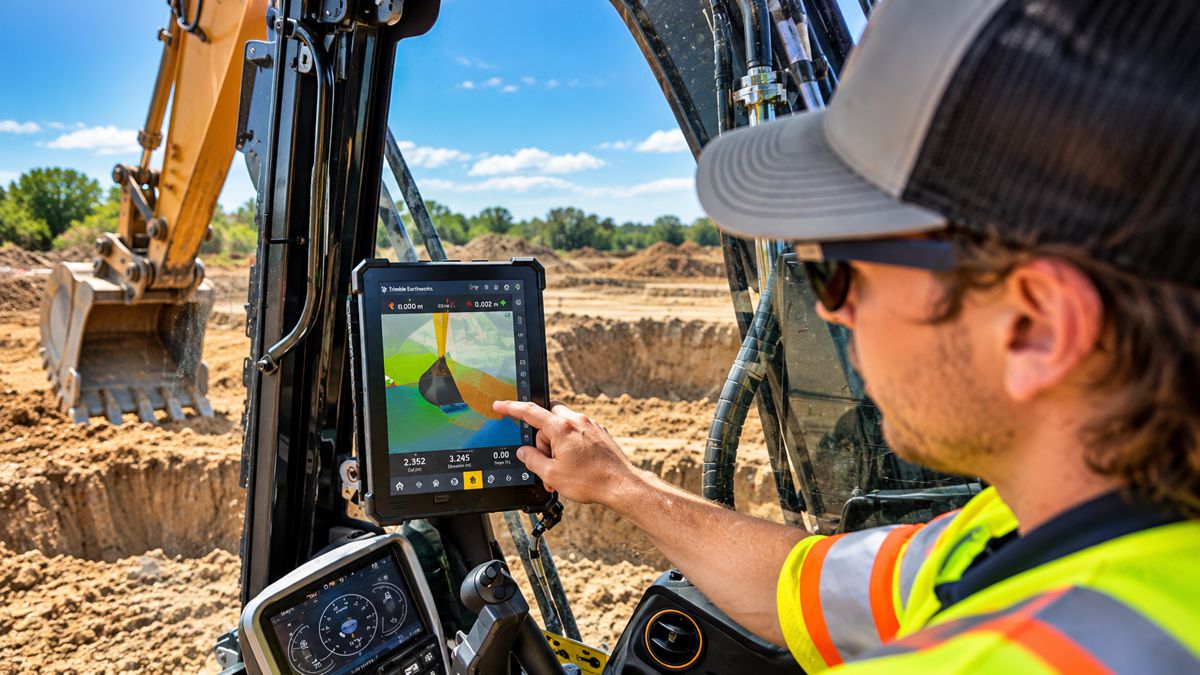
For infrastructure maintenance, construction equipment servicing and industrial repair, frontline applications could include fault diagnosis, access to equipment documentation, guided inspection procedures and assistance with complex maintenance tasks.
Their usefulness depends on practical considerations. Systems must provide reliable information in environments where connectivity may be intermittent, equipment configurations differ and technicians need to understand the basis of a recommendation.
Safety and Control in Mission-Critical Systems
The movement from advisory AI towards systems that influence physical operations raises questions about reliability, accountability and control.
In a conventional analytical application, an incorrect prediction may produce a misleading recommendation. In an industrial control environment, an inappropriate instruction could affect machinery, production continuity or safety-critical equipment.
Industrial AI therefore requires safeguards appropriate to the consequences of failure. These can include operating limits, independent protection systems, validation procedures, monitoring and human oversight. Explainability and auditability are also important where operators must establish why a system reached a particular decision.
In July 2026, Hitachi announced a collaboration with NVIDIA to develop technologies connecting industrial AI with simulation environments and coordinated equipment control.
The programme includes plans to integrate Hitachi’s industrial infrastructure intelligence with NVIDIA’s Cosmos world foundation models, using digital twins to evaluate proposed control behaviour before implementation in operational environments.
The collaboration also envisages systems capable of coordinating equipment from different manufacturers, an important consideration in industrial facilities where machinery and control platforms are rarely supplied by a single company.
Simulation can help identify undesirable behaviour and assess alternative operating conditions, although it cannot eliminate the need for testing and safeguards in the physical environment.
Hitachi’s Commercial Position
The research arrives as Hitachi expands its commercial offering around physical AI through HMAX, its portfolio of AI-enabled solutions for industrial and social infrastructure.
In September 2026, the company extended the HMAX portfolio with additional capabilities covering data centres, cybersecurity, data integration and AI operations. These additions are intended to help industrial organisations connect existing equipment and operational systems with advanced AI applications.
The approach combines Hitachi’s experience in industrial equipment and operational technology with software development, data infrastructure and engineering services.
It also addresses a practical difficulty identified by the survey. Industrial operators may be willing to invest in AI but lack the integration capabilities, specialist expertise and operational infrastructure required to deploy it across complex facilities.
Hitachi is positioning HMAX to address those requirements, although the survey findings should be considered independently of the company’s claims about its own products.
Rio Kurokawa, Hitachi’s Chief Lumada Business Officer and HMAX Strategy Officer, said: “While many organizations have made meaningful progress with physical AI, scaling those capabilities across complex operational environments remains the next challenge. And one that must be solved to realize physical AI’s true benefits. Our research gives organizations a clearer understanding of where they comparatively sit today and where they can focus to achieve greater operational performance, resilience and long-term value,”
Moving Beyond Individual AI Applications
The next phase of industrial AI deployment will depend heavily on connecting individual applications with established operational systems and the people responsible for running them.
Inspection and predictive maintenance offer relatively contained opportunities to demonstrate measurable benefits. Coordinating machinery, production processes and operational decisions across entire facilities is a more demanding undertaking.
Hitachi’s findings suggest that many surveyed organisations have established an initial technological foothold but have yet to develop the expertise and infrastructure needed for more extensive deployment.
The comparatively limited adoption of frontline applications also leaves room for technologies that assist the maintenance and operational personnel responsible for keeping industrial assets working.
For now, the research presents a picture of industrial AI adoption that is broad but uneven, with substantial differences between deploying an individual application and achieving continuous optimisation across a working industrial environment.
Key Industry Questions
- What is physical AI in industrial applications? Physical AI uses artificial intelligence to interpret information from real-world environments and support or control physical operations, including machinery, industrial processes and infrastructure systems.
- How widespread is industrial physical AI adoption? Hitachi reports that 97% of respondents to its survey use physical AI in some capacity. This should not be interpreted as a global industrial adoption rate.
- What prevents industrial AI projects from scaling? The survey identifies shortages of AI expertise, difficulties integrating existing systems and inadequate implementation resources as leading obstacles.
- Which industrial AI applications are most mature? Inspection and predictive maintenance are among the most established production applications reported in Hitachi’s research.
- Why is integrating AI with existing machinery difficult? Industrial equipment often uses established control architectures, proprietary interfaces and long-lived hardware. Integrating AI may require new sensors, communications systems, data infrastructure and safety validation.
- How can physical AI assist maintenance technicians? Potential applications include equipment diagnostics, predictive fault identification, guided inspections and access to technical information during maintenance work.
- Can physical AI operate autonomously in safety-critical environments? Autonomous operation is possible in appropriately engineered applications, but the necessary validation, safeguards, monitoring and oversight depend on the system and the consequences of failure.
- What is Hitachi HMAX? HMAX is Hitachi’s portfolio of AI-enabled solutions for industrial and social infrastructure, combining operational data, AI technology and sector-specific expertise.
Strategic Takeaways
- High reported adoption rates can conceal considerable differences in operational maturity and deployment scope.
- Legacy equipment integration and specialist engineering capabilities remain substantial constraints on industrial AI programmes.
- Predictive maintenance offers a comparatively contained starting point before AI assumes more direct operational responsibilities.
- Frontline applications may offer opportunities where existing AI investment has concentrated primarily on equipment and process data.
- Industrial AI suppliers face an integration challenge as much as a software challenge, particularly where equipment, control systems and operational data have evolved over several decades.