Modernising Mauritania’s Strategic Railway Corridor
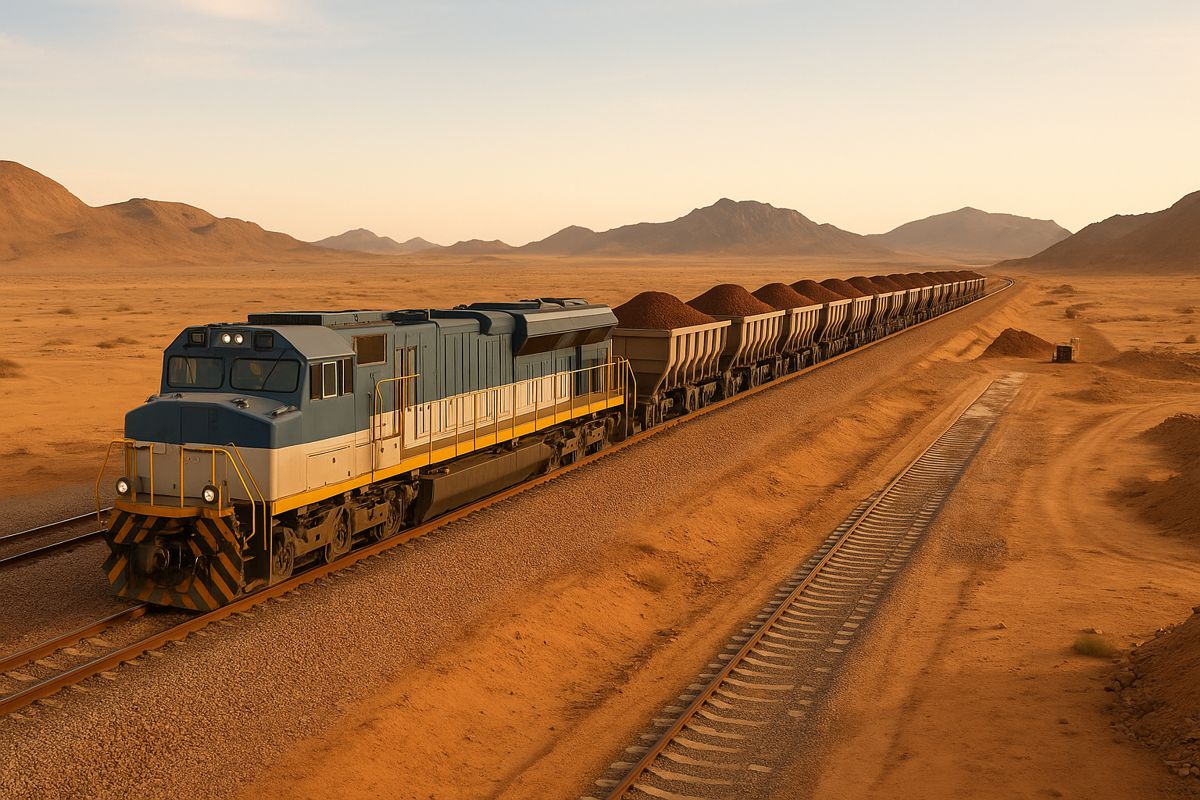
Mauritania’s iron ore industry depends heavily on a single rail artery stretching from the mining hub of Zouerate to the Atlantic port of Nouadhibou. This corridor carries the backbone of the nation’s exports, yet decades of pressure, ageing assets, and expanding industrial ambitions have pushed the system to its limits.
The recently announced US$ 275 million financing package from the African Development Bank (AfDB) and EIB Global, guaranteed by the European Union, marks a turning point in Mauritania’s infrastructure modernisation drive.
The investment package directs US$ 150 million from the AfDB and US$ 125 million from EIB Global to the Société Nationale Industrielle et Minière (SNIM). As a private sector, non-sovereign loan operation, the financing signals growing confidence in Mauritania’s industrial capacity and its ability to compete in global value chains. It aligns squarely with the European Union’s Global Gateway strategy, which supports sustainable infrastructure development and resilient supply chains for critical industrial materials.
Expanding and Rehabilitating the Zouerate–Nouadhibou Railway
At the heart of the project is a comprehensive programme to rehabilitate and expand Mauritania’s most strategic railway. The plan includes upgrading existing track, renewing worn infrastructure, and introducing modern locomotives and wagons. In addition, 42 kilometres of new track will be constructed to connect future mining zones at El Aouj and Atomai, areas expected to play a growing role in Mauritania’s mineral portfolio.
This railway not only transports iron ore but also anchors broader economic activity. Enhancing its reliability will allow SNIM to secure higher annual throughput, reduce fuel consumption, and strengthen operational safety. Such improvements address long-standing logistical challenges that have previously constrained growth and global competitiveness.
Mohamed Vall Mohamed Telmidy, CEO and Board Member of SNIM, emphasised the transformative nature of the investment: “The initiative to improve our logistics chain represents an important pillar of our strategic program. Its development contributes to the realization of our production objectives. We are particularly grateful to our partners EIB Global and AfDB for their unwavering support.”
Catalysing Industrial Growth and Regional Integration
Mauritania occupies a strategic position linking North Africa, the Sahel, and Atlantic trade routes. Strengthening its transport infrastructure amplifies opportunities for regional integration and cooperative industrial development. The Zouerate–Nouadhibou corridor, once modernised, promises to bolster the country’s role in West African supply networks.
The African Development Bank highlighted the significance of the operation as a cornerstone of private sector engagement. President Sidi Ould Tah explained: “This financing marks an important milestone for Mauritania and for the African Development Bank. By supporting SNIM through a corporate, non-sovereign loan, we are demonstrating our determination to scale up private sector investment in strategic value chains. Modernising this railway will unlock new opportunities for industry, strengthen Mauritania’s role in regional trade, and accelerate the country’s transition toward more sustainable and competitive growth.”
Investment in resilient and efficient railway infrastructure also facilitates diversification. While iron ore remains Mauritania’s dominant export, the country is gradually advancing its ambitions in green hydrogen, fisheries, and renewable energy. Improved logistics will serve as a catalyst for attracting new industrial partners and encouraging downstream processing within Mauritania.
A Flagship of the EU’s Global Gateway Strategy
The project stands as a flagship operation under the European Union’s Global Gateway initiative, which prioritises sustainable, resilient, and climate-aligned infrastructure. The programme seeks to reinforce Africa–Europe partnerships through investments that strengthen value chains, enhance connectivity, and support economic sovereignty.
Ambroise Fayolle, Vice-President of the European Investment Bank, underscored the project’s timeliness: “This project will reinforce SNIM’s transport corridor, boost exports, and support the country’s economic development. Just a few days after the successful AU-EU Summit in Luanda, it is a strong example of how the European Union and the EIB, working with African partners, deliver on the Global Gateway strategy.”
Commissioner for International Partnerships Jozef Síkela added perspective on the broader geopolitical importance: “Mauritania was the first country I visited under my mandate, and already then, I saw the potential of our strategic and mutually beneficial partnership. With this major investment in strategic infrastructure, we are unlocking new opportunities for Mauritania and for Europe and deepening our partnership. By connecting the mining region with global markets, this project illustrates what Global Gateway delivers: local growth, new jobs, and sustainable development.”
Supporting Low-Carbon and Climate-Resilient Infrastructure
Climate resilience and environmental sustainability form essential pillars of the project’s development strategy. Mauritania, like many Sahelian countries, faces intensified climate risks, from shifting weather patterns to increased heat stress affecting industrial operations. A modern railway system reduces emissions per tonne of transported ore, lowers operational energy use, and enhances safety.
Solomon Quaynor, AfDB Vice-President for Private Sector, Infrastructure, and Industrialisation, highlighted the dual benefits: “This joint operation illustrates the African Development Bank’s strong partnership with Mauritania and our shared commitment to building resilient, low-carbon infrastructure. By improving the Zouerate–Nouadhibou railway, we are not only enhancing competitiveness and trade, but also laying the groundwork for greener, more inclusive growth across the country.”
The project aligns with global trends encouraging lower-emission freight operations and more efficient logistics networks. Rail offers a far cleaner alternative to road-based transport, especially in energy-intensive industries such as mining.
Enhancing Employment and Local Economic Participation
The modernisation programme is expected to create jobs across engineering, construction, equipment maintenance, and technical services. SNIM, already Mauritania’s largest employer, will further expand opportunities for local communities, particularly in regions where economic prospects are limited.
Enhanced connectivity between mining zones and export terminals will also drive ancillary business growth, from service contractors to small suppliers. Training opportunities associated with new technologies and upgraded systems will help build a more skilled workforce capable of maintaining next-generation industrial assets.
Beyond direct employment, the project strengthens Mauritania’s long-term industrial ambitions. Increased export efficiency promises higher revenues, enabling reinvestment in social development, education, and infrastructure.
Reinforcing Mauritania’s Position in Global Value Chains
As global demand rises for iron ore and critical minerals used in renewable technologies, Mauritania’s strategic value is gaining recognition. Efficient transport is central to meeting international standards for reliability and sustainability, qualities increasingly demanded by global buyers and investors.
The upgraded railway positions Mauritania as a credible partner in supplying iron ore to global markets, including Europe’s decarbonising steel sector. Strengthened logistics also support the country’s aspirations to develop green hydrogen production, for which iron ore export revenues can play a foundational role.
International research from mining and transport sectors highlights that modernised rail corridors often trigger multi-sectoral growth. Countries such as Mozambique and South Africa, for example, have witnessed significant investment inflows following improvements to rail infrastructure serving mining regions. Mauritania now follows a similar trajectory, using infrastructure upgrades to diversify and expand its industrial base.
Delivering Sustainable Growth for Future Generations
The Zouerate–Nouadhibou modernisation project goes far beyond railway engineering. It represents a broader vision for Mauritania’s future, one centred on competitiveness, resilience, and sustainable industrial transformation. By investing in infrastructure that strengthens both economic and environmental outcomes, Mauritania positions itself to benefit from regional integration and global demand for responsibly sourced minerals.
The partnership between the AfDB, EIB Global, the European Union, and SNIM illustrates a shared commitment to delivering long-term value for Mauritania and the wider Sahel region. With improved logistics, increased transport capacity, and a modernised rail fleet, Mauritania stands ready to advance its role as a strategic export hub and a leader in sustainable industrial development.