Cat Battery Electric Haul Trucks Begin Pilbara Testing with Rio Tinto and BHP
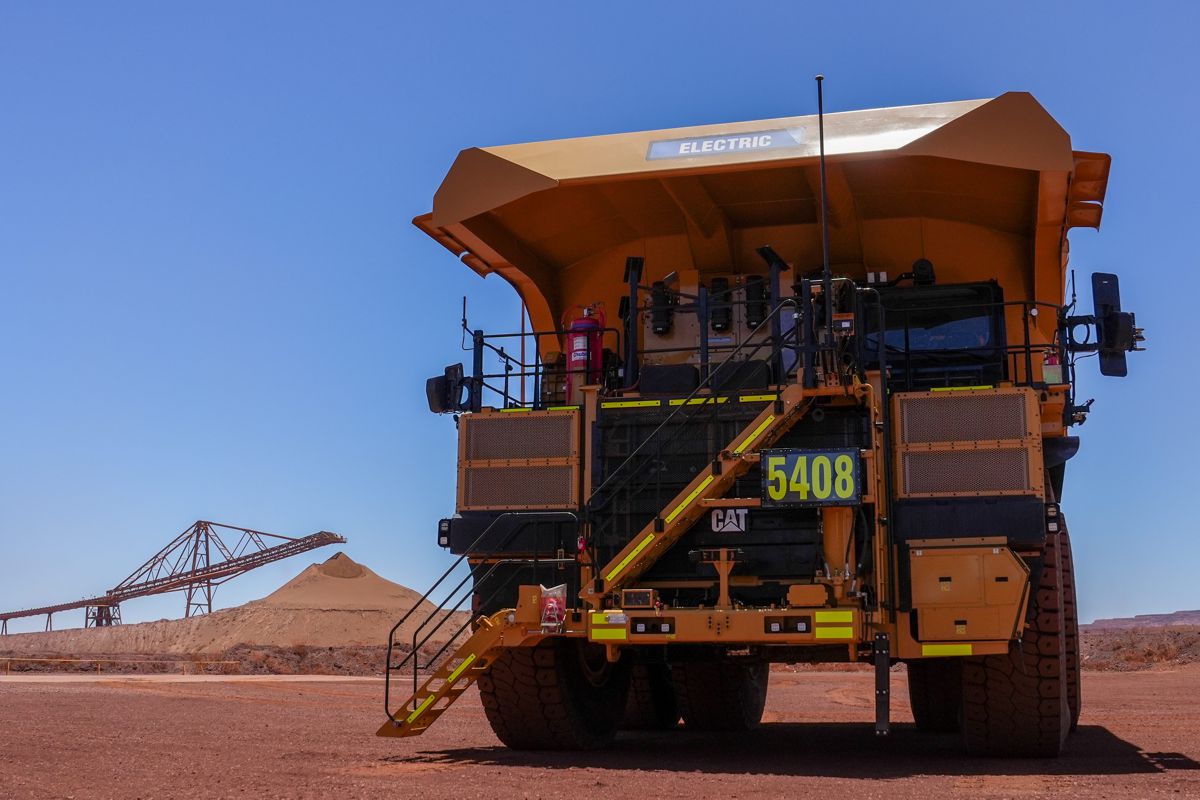
Australia’s mining industry is entering a pivotal era of electrification and fleet decarbonisation, with two Cat 793 XE Early Learner battery-electric haul trucks now commissioned at BHP’s Jimblebar iron ore mine in the Pilbara.
Delivered through an unprecedented collaboration involving BHP, Rio Tinto and Caterpillar, the Early Learner units represent a major early-stage deployment of zero-exhaust mining haulage technology in conditions that power one of the world’s most productive iron ore regions.
The arrival of these trucks marks the beginning of large-scale testing in Pilbara terrain and weather conditions. Heavy haulage is responsible for a significant portion of diesel-related emissions in iron ore mining, making haul truck electrification one of the most strategic pathways toward decarbonising large open-pit operations. BHP, Rio Tinto and Caterpillar will undertake joint testing to understand fleet performance, energy requirements, infrastructure compatibility and operational readiness.
Both miners expect these trials to provide crucial insights into system design, workforce capability, mine layout planning and how charging infrastructure must evolve to meet continuous production requirements.
The Strategic Case for Decarbonised Haulage
Mining companies worldwide face rising shareholder expectations on climate performance, alongside tougher regulatory reporting on emissions and stronger investor preference for environmentally responsible minerals production. Heavy haulage fleets are responsible for a sizable portion of diesel consumption at most iron ore mines, making electrification a high-impact emissions reduction pathway.
For open-pit mining, the Cat 793 XE Early Learner is one of the most advanced battery-electric platforms currently undergoing commercial-scale trials. The hope is to demonstrate that battery-electric haul trucks can maintain the productivity and cycle efficiency traditionally achieved by diesel-powered fleets.
Ongoing research suggests the economics of electrified haulage may strengthen over time. According to the Australian Renewable Energy Agency (ARENA), electrified haul truck operations could dramatically reduce onsite diesel logistics, cut fuel-related price volatility, and improve emissions reporting certainty. Integration with renewable electricity also supports cost predictability and operational resilience in remote mine environments.
Battery haulage additionally presents advantages in noise reduction, thermal management and operational safety. Electric drivetrains require fewer mechanical components, potentially lowering maintenance intensity over vehicle lifespan.
Why Pilbara Testing Matters
The Pilbara region is central to Australia’s iron ore economy, supplying more than a third of global seaborne iron ore. The area is also home to some of the world’s largest integrated mine-rail-port supply chains, meaning any validated technological shift could transform global supply dynamics.
Testing the Cat trucks at Jimblebar exposes the Early Learner system to demanding haul profiles, long duty cycles, steep ramps, abrasive ore body conditions and extreme heat. Successful demonstration here would accelerate the commercial case for adoption across Western Australia and similar major iron ore regions worldwide.
BHP Western Australia Iron Ore Asset President Tim Day said: “Powering up our first battery-electric haul trucks in the Pilbara is an important step forward on the mining industry’s road to decarbonisation.”
He added that the work stretches far beyond replacing diesel with electricity: “Replacing diesel isn’t just about changing energy sources, it’s about reimagining how we operate and creating the technologies, infrastructure and supply chains to transform mining operations. These trials will help us understand how all the pieces of the puzzle fit together: the battery technologies, generation and charging infrastructure, power management, as well as the supply chains to potentially deliver this at scale.”
Tim Day emphasised the importance of collaboration and technical research: “A significant shift like this demands a strong commitment to research and development, coupled with collaboration across the industry. This is going to take time to get right, which is why trials like this one with Rio Tinto and Caterpillar are so critical.”
Collaboration Driving Innovation
The three-way partnership involving BHP, Rio Tinto and Caterpillar is unprecedented in mining electrification. It brings together original equipment manufacturing, operational experience and large-scale mine deployment capability, accelerating learning cycles that would otherwise take much longer.
Rio Tinto’s Iron Ore Pilbara Mines Managing Director Andrew Wilson highlighted the scale of the challenge: “Decarbonising Rio Tinto’s fleet across our 18 Pilbara mines is a significant challenge. By exploring solutions like this to reduce emissions, we hope that, over time, we will be able to move away from diesel.”
Wilson noted that collective industry effort is vital: “No single company can achieve zero emissions haulage on its own. It takes the whole industry working together. That’s why we’re working with BHP and Caterpillar to develop new solutions that will reduce emissions in mining and help us reach our net zero commitments.”
Through the Early Learner trial, the partners intend to characterise battery performance, duty cycle energy requirements, charging optimisation, grid integration and ramp power management.
Caterpillar Inc. Resource Industries Sales Services and Technology Senior Vice President Marc Cameron said: “The arrival of the Early Learner trucks in the Pilbara marks a significant milestone in the journey toward a more sustainable future.”
Cameron reinforced Caterpillar’s collaborative development approach: “By working side by side with our customers, we’re delivering solutions to help them solve their toughest challenges while learning together each step of the way. This collaboration is key to accelerating innovation and shaping the next generation of mining technology, and we’re excited to be on this journey together with our Early Learner customers.”
Charging Infrastructure and Energy Integration
Battery-electric haulage requires new forms of infrastructure planning. One of the most significant challenges for mine electrification is designing charging systems that synchronise with mine schedules without interrupting production.
Pilbara mines already have grid-scale energy projects under consideration, including large-scale solar, battery storage and hydrogen integration. BHP and Rio Tinto are exploring renewable micro-grid solutions that could eventually power electrified fleets. In parallel, Caterpillar is developing fast-charge systems designed for remote mines with constrained utility access.
Industry research highlights several factors that must be validated for haul fleet electrification:
- Peak power and energy requirements under varying duty cycles
- Fast-charging compatibility with steep haul profiles
- Battery thermal management in extreme heat
- Operational safety and fire systems
- Workforce training and digital fleet monitoring
- Mining layout changes to optimise charging zones
Global fleet electrification trends are already visible. Vale, Anglo American, Komatsu and ABB are trialling battery-electric trucks in South America and Southern Africa. Meanwhile, Canadian and Scandinavian mines are advancing trolley-assisted electric haulage with overhead charging systems. The Pilbara work is therefore part of a growing international movement reshaping large-scale mining logistics.
From Joint Testing to Scaled Deployment
Once testing at Jimblebar is complete, BHP and Rio Tinto will each determine commercial pathways for scaled fleet trials at their individual operations. Data from the Pilbara programme will be used to assess capital requirements, mine plan optimisation, power system integration and total emissions reduction potential.
Both companies have publicly committed to pursuing net zero operational greenhouse gas emissions by 2050. Complete haul fleet electrification is expected to play a central role in long-term emissions abatement.
The Early Learner platform is only the first step. Caterpillar, Komatsu and other OEMs are investing billions in electrified haulage research, autonomous software systems, digital fleet optimisation and predictive maintenance for electric drivetrains. As the technology matures, integration with autonomous haulage systems could reshape both productivity and lifecycle cost modelling.
Moving Beyond Theoretical Models
These Pilbara trials show how the mining industry is moving beyond theoretical models toward practical fleet-wide transformation. They reinforce the catalytic power of collaboration between miners, OEMs and infrastructure providers. As grid systems, charging strategies, energy storage and plant electrification advance, battery-electric haulage could become one of the fastest-growing equipment categories in global mining.
What happens in the Pilbara will influence mine electrification strategies worldwide. If Early Learner haulage proves technically robust and commercially viable at large iron ore scale, the transition away from diesel could accelerate across Australia, Canada, Brazil, South Africa and Central Asia.