Large Plant Models and the Future of Autonomous Agriculture
Artificial intelligence has been edging into agriculture for years, yet most breakthroughs have arrived incrementally. Carbon Robotics’ latest announcement marks a different moment, one that carries implications well beyond a single product launch. By introducing what it describes as the world’s first Large Plant Model, the company is signalling a shift in how machines perceive crops, weeds and the complexity of real-world fields. For an industry under pressure to cut costs, reduce chemical inputs and cope with labour shortages, that shift matters.
At its core, the Large Plant Model, or LPM, is designed to do something deceptively simple: recognise plants accurately, anywhere, at any time. In practice, that capability underpins a far wider transformation in autonomous field operations. Plant detection and identification sit at the heart of robotic weeding, navigation and crop management. Improve that foundation and everything built on top of it becomes more reliable, scalable and commercially viable.
For global agriculture, where farms range from highly mechanised operations to labour-intensive specialty growers, the promise of an adaptable, data-driven model changes the conversation. Instead of tailoring machines to fields through lengthy setup and retraining cycles, intelligence moves closer to real time, responding to local conditions as they evolve.
Building a Global Dataset for Real-World Farming
The significance of the LPM begins with the scale and diversity of its training data. According to Carbon Robotics, the model has been trained on 150 million labelled plants, drawn from crops, weeds, soil types, climates and growth stages across multiple regions. In AI terms, that breadth is critical. Models trained on narrow datasets often perform well in controlled conditions but struggle once deployed in unfamiliar environments.
Agriculture rarely offers consistency. Fields differ not just by crop but by soil texture, moisture, residue cover and seasonal variability. Weeds can look dramatically different depending on growth stage or stress. By exposing the LPM to this diversity from the outset, Carbon Robotics is attempting to create a more generalised form of plant intelligence, one that does not require starting from scratch with every new crop or geography.
This approach aligns with wider trends in machine learning, where large foundational models are increasingly favoured over narrowly tuned systems. In construction and infrastructure, similar strategies are emerging in digital twins and asset management platforms, where broad datasets enable tools to adapt across projects rather than being rebuilt each time. Agriculture, it seems, is following a comparable path.
From Recognition to Decision Making in the Field
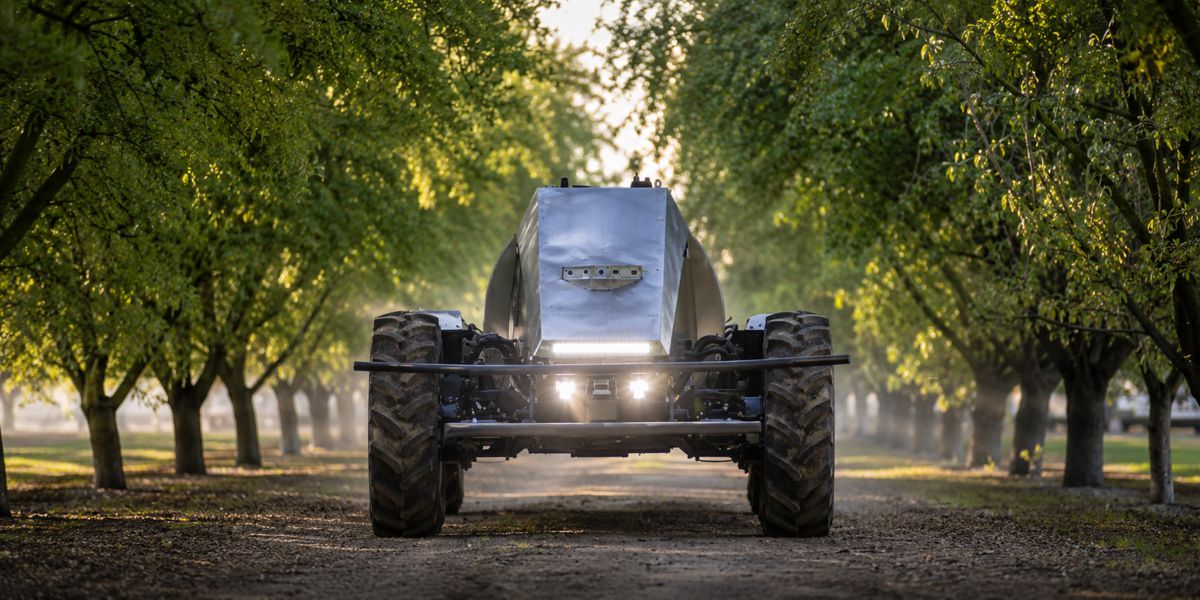
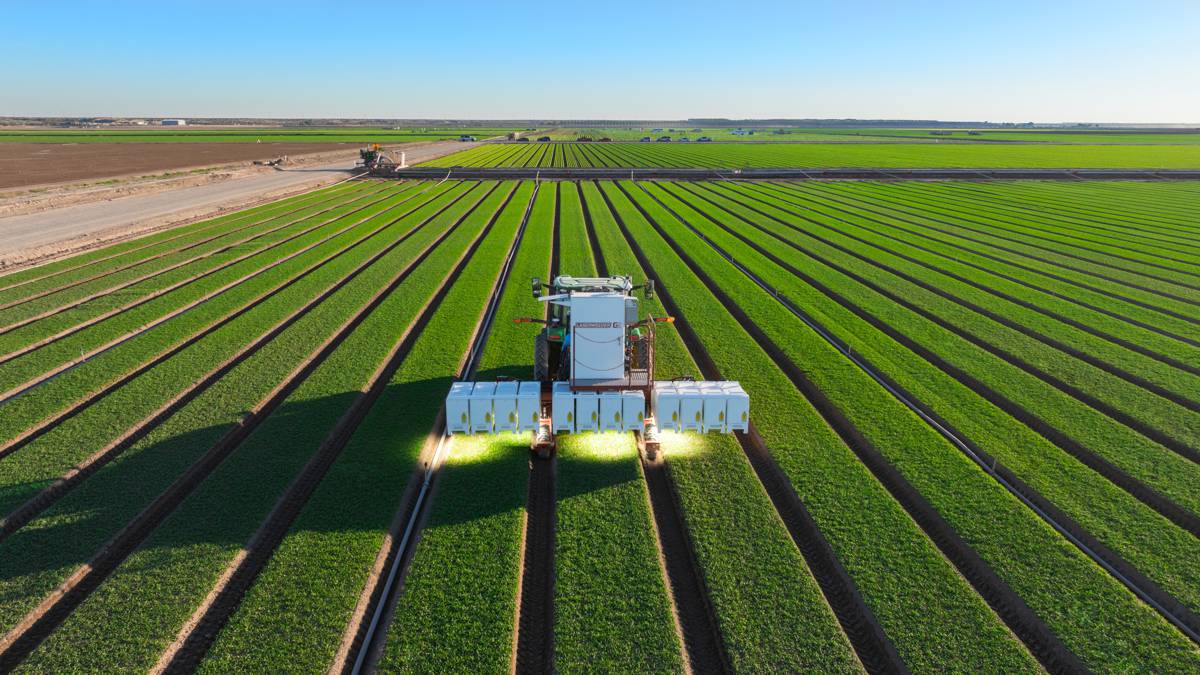
Plant recognition alone does not deliver value unless it feeds directly into action. The LPM functions as the backbone of Carbon AI, the decision-making layer that operates across the company’s robotic platforms. This includes its LaserWeeder systems and the Carbon ATK, an autonomous tractor kit designed for retrofitting existing machinery.
By processing plant and field data in real time, Carbon AI supports tasks ranging from identifying and eliminating weeds to navigating uneven terrain and adjusting behaviour as crops vary across a field. This integrated approach reflects a broader shift in automation, where perception, decision making and actuation are tightly linked rather than treated as separate modules.
For farmers, the commercial relevance lies in consistency. Weed control systems that misidentify crops or miss targets undermine confidence and adoption. A more robust model reduces that risk, making autonomous systems viable across a wider range of use cases, from row crops to high-value vegetables.
The Data Flywheel Effect in Autonomous Agriculture
One of the more strategic elements of the LPM is how it continues to evolve after deployment. As Carbon Robotics’ global LaserWeeder fleet operates daily, it generates new, real-world data that feeds back into the model. This creates what the company describes as a compounding data flywheel, where each machine in the field contributes to improvements across the entire fleet.
This feedback loop mirrors developments seen in other sectors, including autonomous vehicles and smart infrastructure systems, where operational data continuously refines algorithms. In agriculture, such an approach has been harder to achieve due to fragmented operations and seasonal usage. A growing installed base of robotic equipment changes that dynamic, enabling learning at scale.
The implications extend beyond performance gains. A shared model that improves globally can reduce the cost of development and support, helping to make advanced robotics accessible to a broader segment of the market rather than remaining a niche solution for early adopters.
Real-Time Adaptation Through Plant Profiles
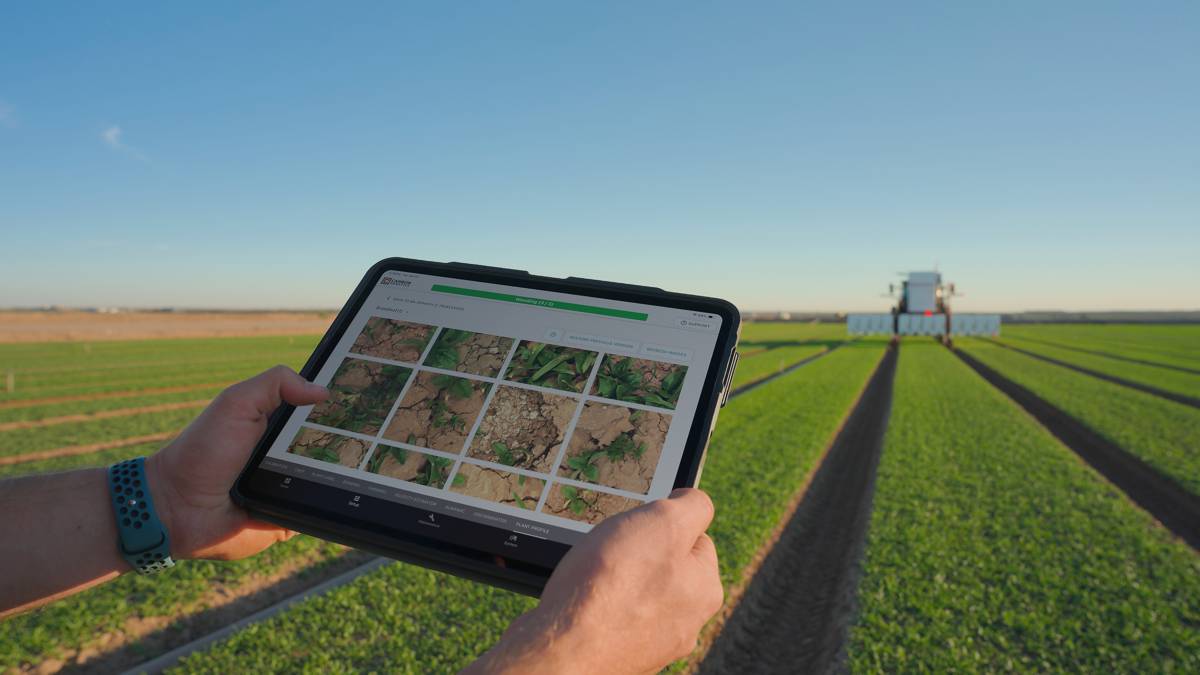
Perhaps the most tangible innovation for operators is the introduction of Plant Profiles. This feature allows farmers to customise the foundational LPM to their specific crops, weeds and field conditions with minimal effort. By selecting just two or three images in the operator interface, users can prompt the system to adapt its behaviour almost immediately.
In practical terms, this reduces one of the biggest barriers to AI adoption in farming: time. Traditional machine learning workflows often require weeks or months to retrain models for new conditions, demanding significant technical input. Plant Profiles compress that process into minutes, aligning better with the realities of seasonal work and rapidly changing field conditions.
The value of this approach is reflected in early user feedback. As one farm manager noted: “We use plant profiles in our Vidalia Onion seed beds, transplants, and direct seeded onions. This has been a game changer for us and the simple, user-friendly platform allows our operators to maximize LaserWeeder performance in real-time in the field.”
Such testimonials point to a broader lesson for agri-tech developers. Ease of use and adaptability can be as important as raw technical capability, particularly in sectors where margins are tight and downtime is costly.
Reducing Inputs While Protecting Yields
The timing of the LPM launch is not accidental. Farmers worldwide are facing rising labour costs, increasing scrutiny of herbicide use and growing pressure to improve sustainability. Mechanical and laser-based weeding offer a pathway to reduce chemical inputs, but only if they can operate with precision and reliability.
By improving plant detection and decision making, the LPM strengthens the case for non-chemical weed control at scale. This aligns with regulatory trends in many regions, where restrictions on certain herbicides are tightening and alternatives are in demand. From an infrastructure perspective, the parallels with construction are striking. Just as automation and digital control systems are reshaping how roads and buildings are delivered with fewer resources, AI-driven tools are redefining agricultural production systems.
Higher yields, improved crop quality and more consistent outcomes are the ultimate metrics. While no single technology can deliver these alone, improved intelligence at the machine level is a critical enabler.
Demonstrating Technology on the Global Stage
Carbon Robotics is showcasing its latest developments at major industry events, including Fruit Logistica in Berlin and the World Ag Expo in Tulare, California. These venues matter, not only for visibility but for validation. International exhibitions bring together growers, equipment manufacturers, policymakers and investors, creating a forum where technology claims are scrutinised against real-world needs.
For policymakers and investors, the emergence of large-scale AI models in agriculture raises important questions around data governance, interoperability and long-term resilience. Models that learn continuously from global datasets must balance innovation with transparency and trust, particularly as autonomous systems take on more critical roles in food production.
Laying the Groundwork for Smarter Autonomous Systems
Beyond immediate applications, the LPM represents a foundation rather than a finished product. Large models, by design, enable future capabilities that may not yet be fully defined. In agriculture, this could extend to disease detection, yield forecasting or integrated crop management systems that combine vision, robotics and predictive analytics.
For the construction and infrastructure community, the relevance lies in the convergence of technologies. Robotics, AI and data-driven decision making are no longer confined to individual sectors. Lessons learned in autonomous farming, particularly around real-time adaptation and large-scale model training, are likely to influence developments in mining, logistics and even smart city operations.
In that sense, Carbon Robotics’ Large Plant Model is less about a single machine and more about a shift in how complex environments are understood and managed by intelligent systems. As industries grapple with similar challenges of efficiency, sustainability and labour availability, such cross-sector insights become increasingly valuable.