Strategic Capital Meets Construction as Topcon Reinforces Its U.S. Retail Network
The decision by Topcon Positioning Systems to make a significant strategic investment in its U.S. retail arm, Topcon Solutions Stores, lands at a moment when the American construction sector is under intense structural pressure. Housing shortages, federally backed infrastructure programmes, and the long tail of underinvestment in public assets are converging with an acute labour squeeze. Productivity, long the industry’s weak spot, is no longer a theoretical concern but a commercial and political one.
This investment is less about internal reorganisation and more about market positioning. By reinforcing its retail network, Topcon is effectively doubling down on a belief that the next wave of construction productivity gains will not come solely from hardware innovation, but from how technology is delivered, supported, and embedded on real job sites. For contractors grappling with compressed schedules and tighter margins, the route from innovation to adoption matters as much as the technology itself.
Why Retail Networks Matter More Than Ever
For years, construction technology has suffered from a familiar paradox. Advanced tools exist, but uptake remains uneven. The reasons are well known: fragmented project teams, skills gaps, and a lingering scepticism towards digital workflows that appear to add complexity rather than remove it. Retail networks like Topcon Solutions Stores sit directly in the middle of that problem.
Unlike pure software vendors or equipment manufacturers operating at arm’s length, specialist retailers provide localised access to training, support, and integration services. They translate abstract concepts such as automation, positioning, and data interoperability into day-to-day operational gains. In a sector where trust and relationships still underpin purchasing decisions, that proximity carries real weight.
The U.S. construction market, valued at trillions of dollars annually, has historically lagged behind manufacturing and logistics in digital maturity. Yet recent data from bodies such as McKinsey and Dodge Construction Network consistently points to rising investment in construction technology, particularly in areas linked to earthworks automation, machine control, and digital project management. Strengthening a retail channel that can accelerate that adoption is therefore a strategic lever, not a support function.
The Strategic Logic Behind the Investment
The investment comes from RPC, Inc., a diversified holding company with deep roots in equipment distribution and industrial services. Its interest reflects a broader recognition that construction technology is moving from optional upgrade to operational necessity.
Speaking on the rationale, David Alban, board member of RPC, Inc. and CEO and President of Ring Power Corporation, framed the move in terms of timing and scale: “We see tremendous opportunity in the U.S. construction sector, particularly as contractors accelerate their projects through digital transformation. Topcon is a global leader in positioning technology, and Topcon Solutions Stores have earned the trust of thousands of end users across the country. By investing in TSS, we are supporting a business that is positioned to modernize a massive, essential industry and deliver real value to the professionals who build America’s infrastructure.”
That emphasis on trust is telling. In construction, technology adoption rarely follows hype cycles. It follows proof, peer validation, and support structures that minimise risk. RPC’s capital is effectively backing a model that lowers the friction between innovation and execution.
Positioning Technology as Core Infrastructure
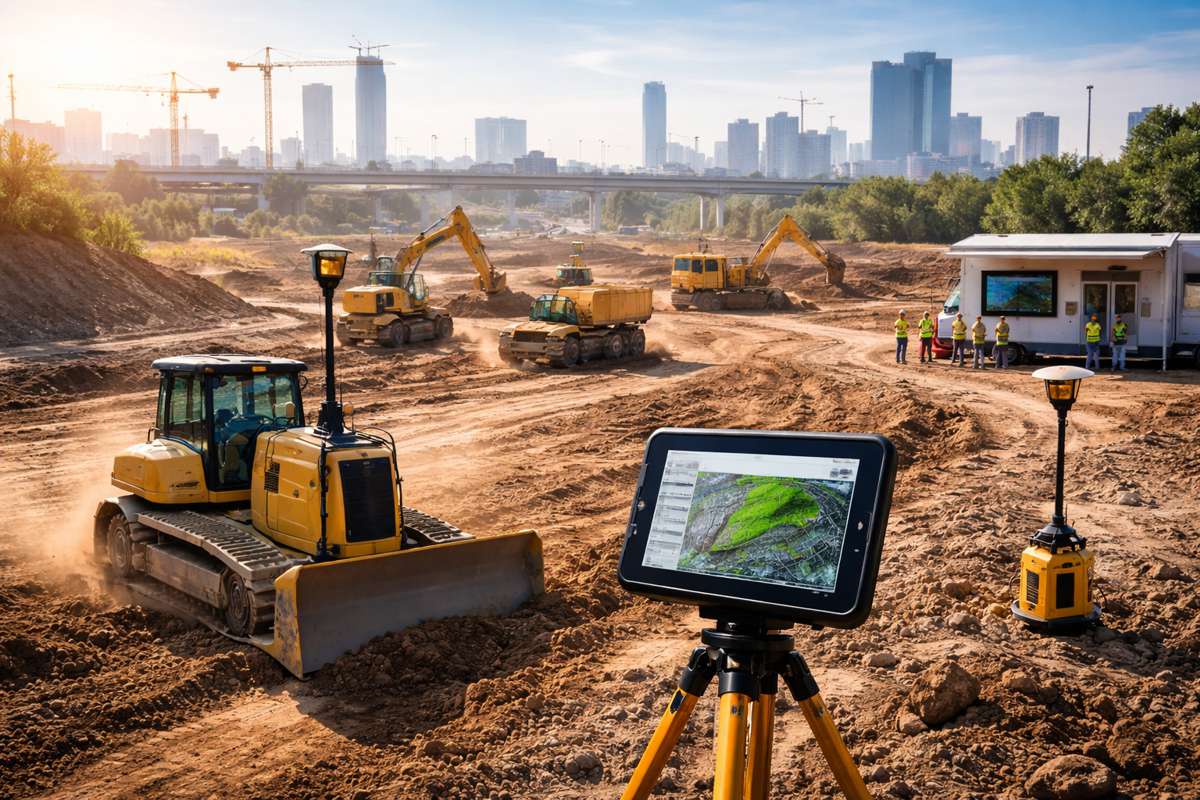
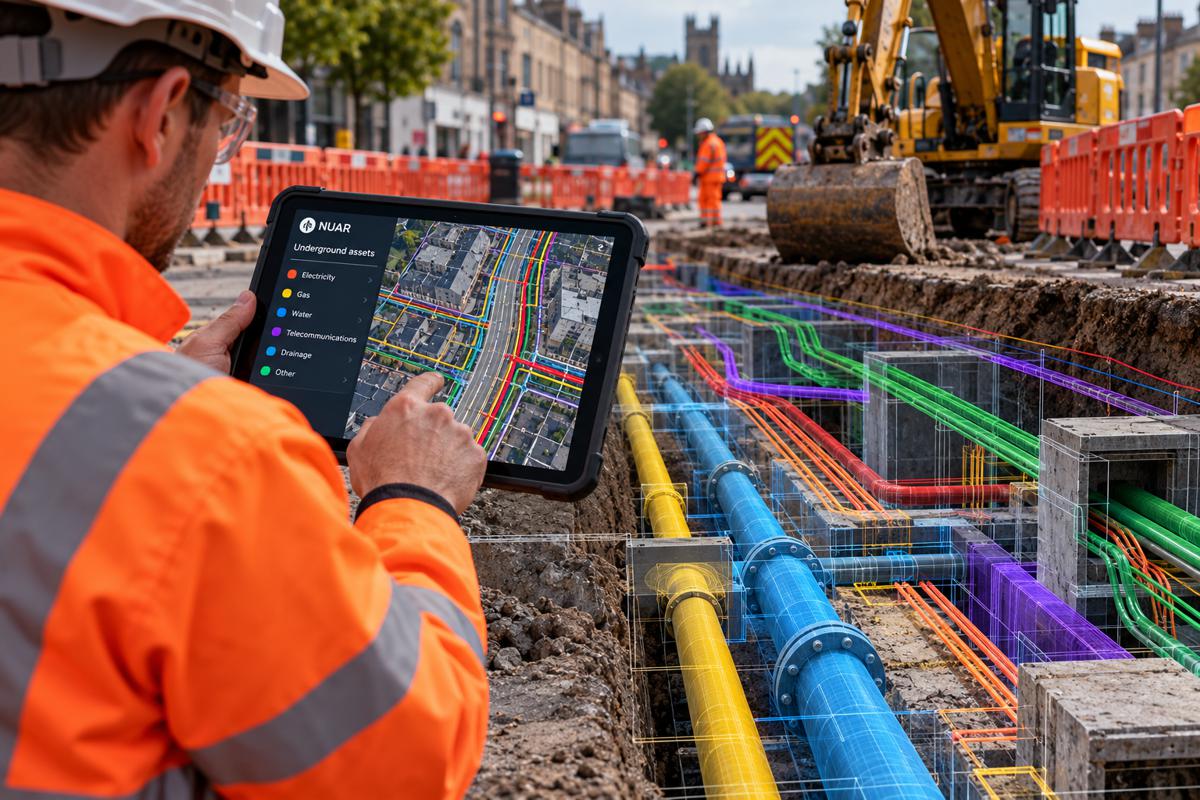
At the heart of Topcon’s strategy lies positioning technology. Once confined to specialist surveying tasks, GNSS, machine control, and site positioning systems are now integral to earthmoving, paving, utilities installation, and even building construction. Their value proposition is no longer incremental accuracy but systemic efficiency.
Ivan Di Federico, president and CEO of Topcon Positioning Systems, underlined this shift: “RPC, Inc.’s investment reflects the growing recognition that positioning technology and job site automation are essential to the future of construction. Topcon Solutions Stores play a critical role in delivering that technology directly to the field, backed by training, service, and trusted local support. RPC, Inc.’s commitment reinforces the long-term potential of the North American market and the value of our retail network.”
This framing aligns with broader industry trends. Infrastructure owners increasingly expect digital deliverables, machine-readable models, and verifiable data trails. Contractors that cannot integrate positioning and automation into their workflows risk being locked out of complex projects or forced to absorb inefficiencies that competitors have already eliminated.
Digital Workflows Move from Concept to Practice
One of the distinguishing features of Topcon Solutions Stores is its ability to bridge hardware and software ecosystems. As a direct distributor of Topcon technologies and a Platinum Partner of Autodesk, the network operates at the intersection of field execution and digital project management.
This integration is not academic. Construction firms increasingly operate hybrid environments where machine control data, design models, and progress reporting must flow seamlessly between office and site. Retailers capable of supporting that end-to-end workflow become strategic partners rather than transactional suppliers.
Murray Lodge, executive vice president of construction for Topcon, pointed to the pace of change: “RPC, Inc.’s investment is a strong endorsement of the work our TSS team does to support contractors as they adopt digital workflows, automation tools, and advanced positioning technologies. The construction industry is changing rapidly, and this investment strengthens the push toward improved productivity and performance.”
External research supports this view. Studies by the World Economic Forum and Boston Consulting Group have highlighted that productivity gains in construction are most durable when technology adoption is paired with training, process redesign, and cultural change. Retail networks embedded in regional markets are well placed to deliver that combination.
Scale, Reach, and Regional Impact
Topcon Solutions Stores currently operates 14 retail locations serving 22 U.S. states. While modest compared to national equipment dealer networks, that footprint is significant in the context of specialist construction technology. It allows the organisation to balance scale with local responsiveness, an increasingly valuable trait as regional infrastructure programmes roll out at different speeds and with different regulatory frameworks.
Mark Contino, vice president of Topcon North American retail distribution, highlighted the growth potential: “Topcon Solutions Stores currently operates in 14 retail locations and serves 22 states. We are a strong organization that will become stronger with the growth potential this investment brings. As a direct Topcon distributor and an Autodesk Platinum Partner, we deliver digital solutions that are unmatched in the industry by integrating advanced positioning technology with the Autodesk construction software portfolio. Through this investment, the benefits we can offer customers will continue to accelerate.”
From a policy perspective, this matters. Federal infrastructure funding in the United States is increasingly tied to delivery certainty, resilience, and lifecycle performance. Contractors equipped with integrated digital tools are better positioned to meet those expectations, while regional support networks help ensure consistency across projects.
Implications for the Wider Construction Technology Market
Beyond Topcon and its retail arm, the investment sends a broader signal to the construction technology ecosystem. Capital is flowing not just into startups and software platforms, but into distribution models that can scale adoption across a traditionally conservative industry.
This shift has implications for manufacturers, software developers, and investors alike. It suggests that competitive advantage may hinge less on standalone innovation and more on ecosystem alignment. Companies able to embed their technologies within trusted retail and support frameworks may see faster and more resilient growth than those relying solely on direct sales or fragmented partnerships.
For contractors, the message is equally clear. The tools required to modernise job sites are no longer experimental or peripheral. They are becoming standard expectations, supported by increasingly sophisticated retail networks capable of guiding firms through the transition without derailing productivity.
A Signal of Long-Term Commitment to U.S. Construction
Viewed in isolation, the investment could be read as a routine corporate development. In context, it reflects a deeper commitment to the long-term transformation of U.S. construction. By reinforcing the channels through which technology reaches the field, Topcon and RPC are betting on sustained demand for digital, automated, and data-driven workflows.
As infrastructure programmes accelerate and private development seeks efficiency gains, that bet appears well timed. The construction sector may still be cautious by nature, but the direction of travel is increasingly clear. Investments that align technology, training, and trusted delivery mechanisms are likely to shape the next decade of industry performance.