Netherlands Moves to Distance Based Truck Tolling Across National Road Network
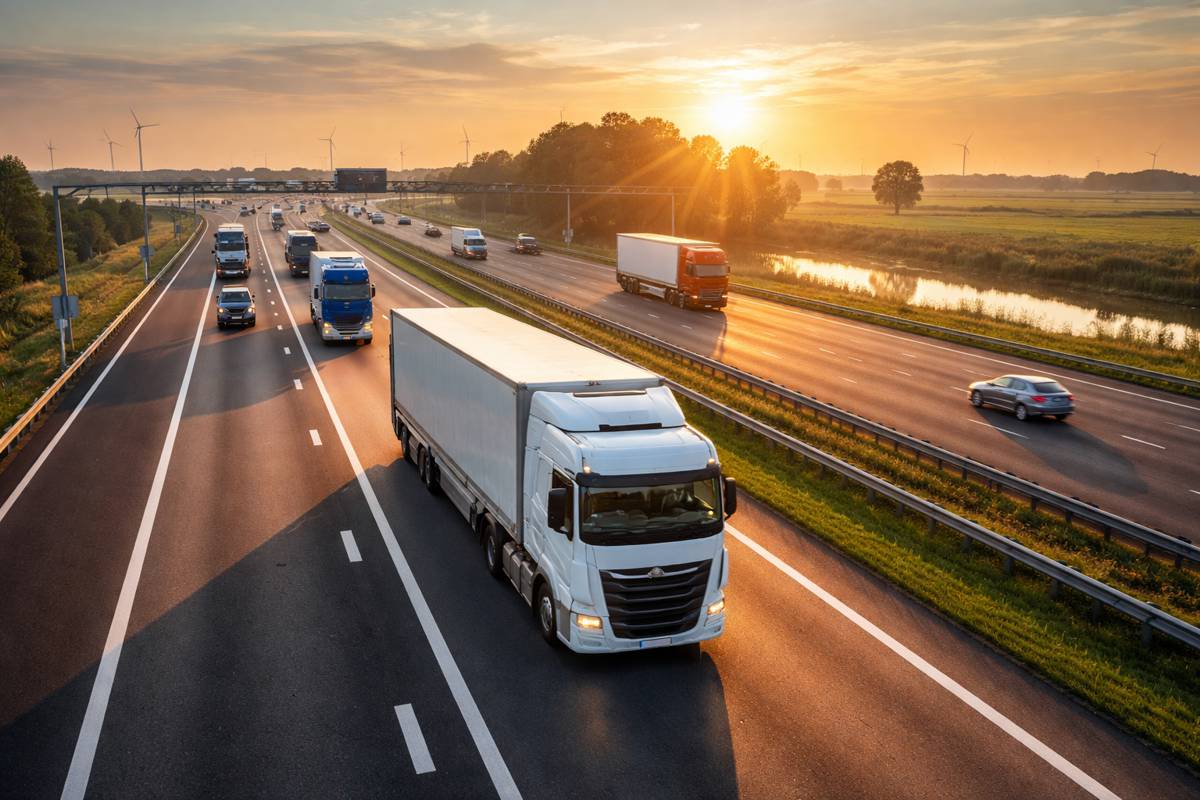
The Netherlands is set to introduce a nationwide distance-based truck toll from 1 July 2026, marking a decisive shift in how freight transport is charged across one of Europe’s most strategically important logistics corridors. From that date, all qualifying heavy goods vehicles will pay per kilometre driven, replacing the long-standing Eurovignette system that has governed access to Dutch roads for decades.
This is not a marginal adjustment. It represents a structural recalibration of road pricing that aligns the Netherlands with systems already in place in countries such as Germany and Belgium, where kilometre-based tolling has been used to manage freight flows, generate infrastructure funding, and influence fleet behaviour. With more than 725,000 foreign trucks estimated to use Dutch roads annually, the implications stretch well beyond national borders, touching supply chains that connect ports, industrial hubs and inland distribution networks across Europe.
At its core, the new system reflects a broader policy trend across the European Union towards user-pays principles and emissions-based charging. Freight operators will no longer pay a flat access fee. Instead, charges will reflect how far vehicles travel, how heavy they are, and how clean their emissions profile is. That shift may sound procedural, but it introduces a commercial reality that operators will need to factor into route planning, fleet investment and cross-border logistics strategies.
Briefing
- Nationwide kilometre-based toll replaces Eurovignette from 1 July 2026
- Applies to all N2 and N3 trucks over 3.5 tonnes, including foreign vehicles
- Requires mandatory onboard units to record distance travelled
- Pricing linked to weight and emissions, encouraging cleaner fleets
- Revenue partly reinvested into sustainability measures for the sector
A Structural Shift in European Freight Charging
The introduction of distance-based tolling in the Netherlands does not exist in isolation. Across Europe, governments have been steadily moving away from time-based charging models towards usage-based systems that better reflect infrastructure wear and environmental impact. Germany’s Toll Collect system and Belgium’s kilometre charging framework have already demonstrated how such models can influence logistics efficiency and fleet composition.
The Dutch model follows a similar logic but introduces its own operational framework. The toll will apply to almost all motorways, as well as selected provincial and municipal roads, creating a near-comprehensive charging network. That breadth is significant. It reduces the likelihood of diversionary traffic onto untolled routes, a common challenge in earlier tolling systems, and ensures a more consistent pricing signal across the network.
For logistics operators, this means that cost calculations will become more granular. Route optimisation, already a core discipline in modern freight operations, will take on greater importance as every kilometre carries a direct financial implication. Over time, this could reshape traffic patterns, particularly for long-haul international freight moving between major European ports and inland markets.
Mandatory Onboard Units and Digital Infrastructure
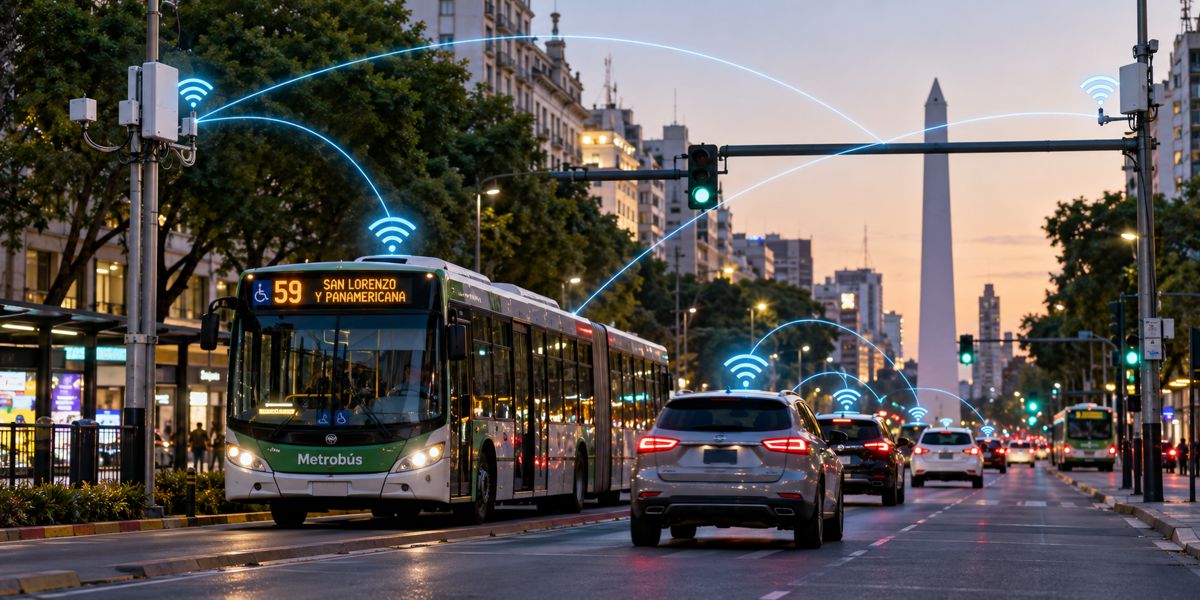
Central to the new system is the requirement for all affected vehicles to be equipped with an onboard unit, or OBU. These devices automatically record the distance travelled on tolled roads, forming the basis for billing. Without a functioning OBU, vehicles will not be compliant, and enforcement measures will be applied from day one.
Truck operators must enter into agreements with approved service providers to obtain and manage these devices. Two types of providers will operate within the system. European Electronic Toll Service providers offer OBUs that function across multiple countries, allowing operators to consolidate tolling under a single contract. This is particularly relevant for international fleets that already operate across several tolled networks.
Alongside these multi-country solutions, a national provider, NedLinq, will supply OBUs specifically for use within the Netherlands. This dual-provider model mirrors arrangements seen elsewhere in Europe and is designed to offer flexibility while maintaining system interoperability.
However, compatibility is not universal. Existing OBUs from national providers such as Toll Collect and Satellic will not function within the Dutch system. For operators, that creates a transitional challenge. Even fleets already equipped for tolling in neighbouring countries will need to ensure their systems are either upgraded or supplemented to remain compliant.
Environmental Signals and Fleet Transformation
One of the defining features of the Dutch truck toll is its link to environmental performance. Charges will vary depending on the maximum authorised mass of the vehicle combination, as well as its CO2 emission class and, in certain cases, its Euro emission classification. In practical terms, cleaner and lighter vehicles will incur lower costs per kilometre.
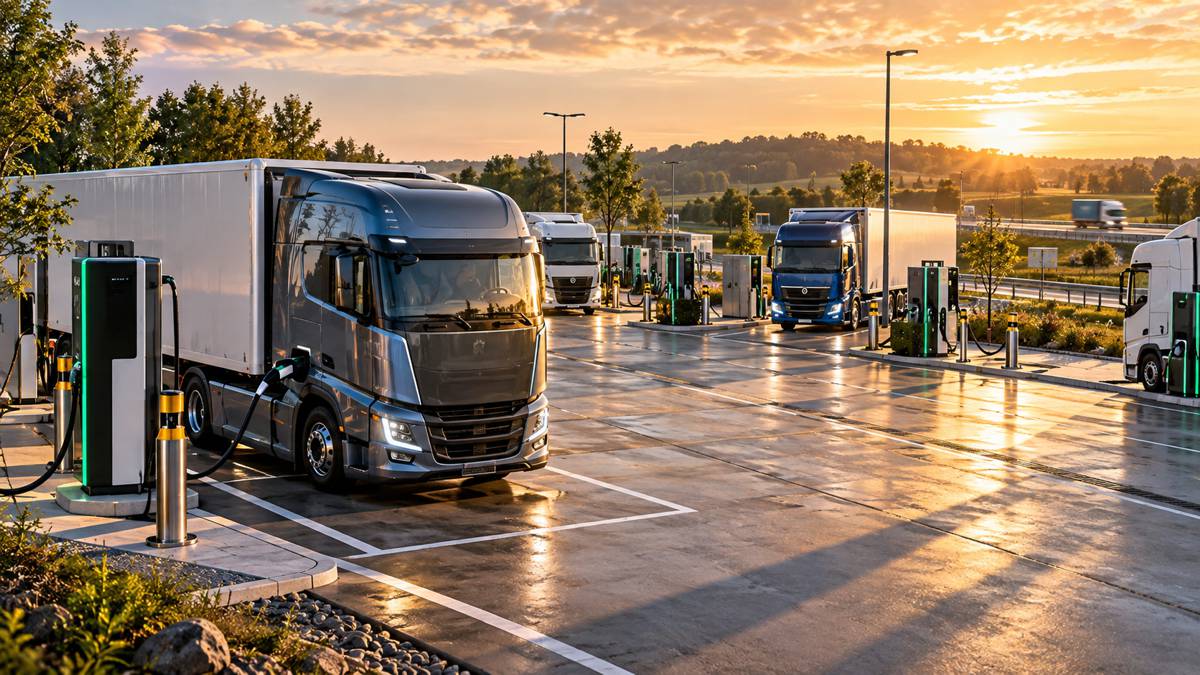
This approach reflects a broader European policy direction that uses pricing mechanisms to accelerate decarbonisation in the transport sector. Road freight remains a significant contributor to greenhouse gas emissions, and while electrification and alternative fuels are advancing, adoption has been uneven. By embedding emissions criteria directly into toll pricing, the Netherlands is introducing a financial incentive that could influence procurement decisions across the industry.
Evidence from other European tolling systems suggests that such incentives can have a measurable impact. In Germany, for example, adjustments to toll rates based on emissions classes have contributed to a gradual shift towards cleaner vehicles within the heavy goods fleet. While the Dutch system will operate within its own market dynamics, similar behavioural effects are anticipated, particularly among operators with large, modern fleets capable of adapting more quickly.
Revenue Recycling and Sector Investment
Beyond pricing signals, the allocation of toll revenues is likely to play a critical role in shaping industry response. A substantial portion of the funds generated will be directed towards subsidies aimed at improving the sustainability of the transport sector. This includes support for cleaner vehicles, efficiency measures and potentially new technologies that reduce emissions or improve operational performance.
Such reinvestment mechanisms are increasingly common in European transport policy. They help to balance the financial burden placed on operators by providing pathways to offset costs through innovation and efficiency gains. For policymakers, this creates a feedback loop in which toll revenues are used to accelerate the very transition that the pricing structure is designed to encourage.
For investors and infrastructure stakeholders, the introduction of a stable, predictable revenue stream tied to road usage also has broader implications. It strengthens the financial case for long-term infrastructure planning and may support future investment in road maintenance, digital systems and mobility innovation.
Enforcement from Day One
The Dutch authorities have made it clear that compliance will be enforced from the outset. Every N2 or N3 vehicle entering the country must be equipped with a functioning OBU from a recognised provider. Failure to meet this requirement may result in fines, with enforcement mechanisms designed to detect non-compliant vehicles across the network.
This immediate enforcement approach contrasts with phased or transitional models seen in some other jurisdictions. It underscores the importance of preparation among operators, particularly those based outside the Netherlands who may be less familiar with the system. Given the high volume of international freight traffic, ensuring widespread awareness and readiness will be essential to avoid disruption.
To support this, an international information campaign has been launched, targeting both domestic and foreign operators. Service providers and fuel card companies are also playing a role in disseminating information and facilitating onboarding. Even so, the scale of the transition suggests that some degree of adjustment period is inevitable as the system beds in.
A New Chapter for European Logistics
The Netherlands occupies a pivotal position in Europe’s logistics landscape, anchored by major ports such as Rotterdam and extensive inland transport connections. Changes to its road pricing framework therefore carry weight far beyond its borders. The introduction of kilometre-based truck tolling is likely to influence routing decisions, cost structures and investment strategies across the continent.
For construction, infrastructure and industrial supply chains, where timing and cost predictability are critical, the new system introduces both challenges and opportunities. Operators will need to refine their logistics models, invest in compliant technologies and potentially accelerate fleet modernisation. At the same time, those able to adapt efficiently may find themselves better positioned in a market that increasingly values sustainability and operational precision.
In the longer term, the Dutch approach may serve as a reference point for other countries considering similar reforms. As Europe continues to align transport policy with climate objectives and infrastructure funding needs, distance-based tolling is likely to become an increasingly central tool. The Netherlands is not leading that trend, but it is reinforcing it in a way that will be closely watched across the industry.