Digitising the Tunnel Face with Real Time Intelligence
Conventional tunnelling remains one of the most complex and risk-sensitive activities in the construction sector, yet much of its day-to-day documentation still relies on handwritten notes, fragmented spreadsheets and delayed reporting cycles. While mechanised tunnelling has steadily embraced digital systems, drill-and-blast and other conventional methods have lagged behind, constrained by site conditions, fragmented workflows and long-standing operational habits.
That gap is becoming increasingly difficult to justify. Infrastructure owners, contractors and regulators now expect greater transparency, traceability and efficiency across major projects. At the same time, sustainability pressures are reshaping how resources, materials and labour are monitored and optimised. In this environment, the absence of structured, real-time data is no longer just inefficient, it’s a commercial and operational risk.
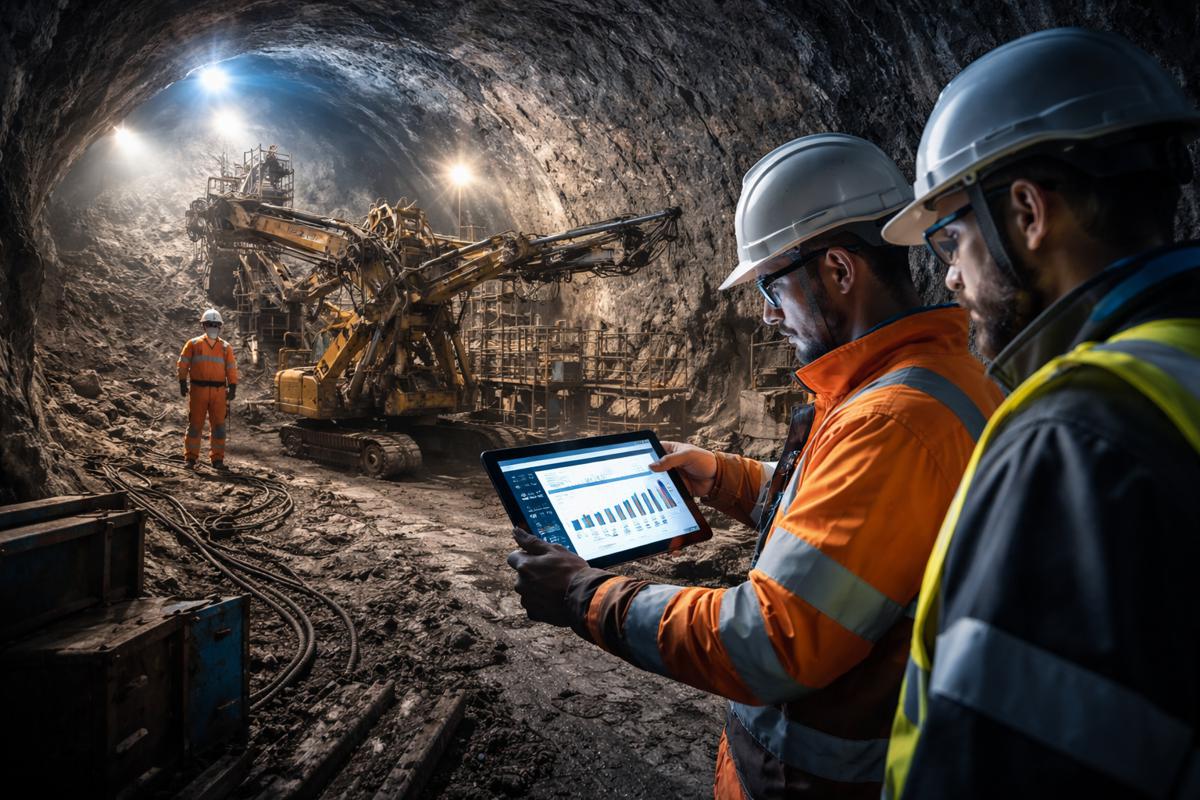
VMT GmbH has now introduced a new software module designed specifically for conventional tunnelling workflows. Known as CT.Connected, the system aims to bring digital data capture, analysis and collaboration directly into the tunnel environment, replacing manual processes with a unified, real-time platform.
Briefing
- CT.Connected digitises conventional tunnelling workflows, replacing manual documentation
- Real-time data capture via mobile devices enables immediate visibility across project teams
- Integration with Herrenknecht Group platforms aligns conventional and TBM data environments
- KPI dashboards and Gantt-based verification improve planning, productivity and accountability
- Archived datasets support claims management, benchmarking and long-term optimisation
Turning fragmented data into a structured asset
At the heart of CT.Connected is a relatively simple but powerful idea: capture data once, at source, and make it immediately usable. Instead of relying on handwritten logs that are later transcribed, often with delays or inconsistencies, site teams can input information directly via smartphones or tablets. No additional hardware is required, which removes a common barrier to adoption on constrained construction sites.
The system records a wide range of operational inputs, including activities, personnel deployment, equipment usage and consumables. It also allows for contextual data such as photographs and comments, creating a richer, more complete record of each work cycle. That level of detail matters. In tunnelling, where conditions can change rapidly and decisions often need to be justified retrospectively, having a reliable and time-stamped dataset can make a significant difference.
All data entries are synchronised via the cloud in real time, enabling multiple stakeholders to access and update information simultaneously. Engineers, project managers and off-site teams can work from the same dataset without waiting for reports to be compiled. The result is a shift from reactive reporting to continuous situational awareness.
Real-time visibility reshaping project management
One of the more immediate impacts of digitisation in conventional tunnelling is the ability to monitor performance as it happens. CT.Connected provides visualisation tools such as Gantt charts to track work cycles and verify processes continuously. These tools allow teams to identify delays, inefficiencies or deviations from plan without waiting for end-of-shift summaries.
Alongside this, intuitive dashboards present key performance indicators in a format that can be understood quickly by both technical and non-technical stakeholders. Benchmarks based on best-practice KPIs offer a reference point for evaluating performance, helping teams understand not just what is happening, but how it compares to expected standards.
This kind of visibility has broader implications for project governance. Infrastructure projects are increasingly subject to scrutiny from clients, financiers and regulatory bodies. Transparent, data-driven reporting supports accountability and reduces disputes, particularly when it comes to programme delays or resource allocation.
Building a digital foundation for sustainability
Sustainability in tunnelling is often discussed in terms of materials and energy use, but data plays an equally important role. Without accurate, granular information, it is difficult to optimise resource consumption or demonstrate compliance with environmental targets.
By capturing detailed data on consumables, equipment usage and work cycles, CT.Connected enables a more precise understanding of how resources are used within the tunnel. This, in turn, supports efforts to reduce waste, improve efficiency and align operations with broader sustainability objectives.
Moreover, the ability to archive complete project datasets creates opportunities for continuous improvement. Lessons learned from one project can be applied to the next, supported by empirical evidence rather than anecdotal experience. Over time, this contributes to a more mature and data-driven approach to conventional tunnelling.
Aligning conventional and mechanised tunnelling workflows
A notable aspect of CT.Connected is its integration within the broader Herrenknecht.Connected platform. This is significant because it brings conventional tunnelling data into the same environment as tunnel boring machine data, which has long benefited from advanced monitoring and analytics.
The convergence of these data streams reflects a wider trend in the industry. Projects often involve a combination of mechanised and conventional methods, particularly in complex geological conditions. Having a unified data platform allows for more consistent reporting and analysis across different construction techniques.
It also lays the groundwork for future developments in automation and decision support. As datasets become more comprehensive and standardised, there is greater potential to apply advanced analytics, predictive modelling and even elements of artificial intelligence to improve performance and reduce risk.
Practical implications for contractors and clients
For contractors, the introduction of a system like CT.Connected has immediate operational implications. Reduced reliance on manual data entry can save time and minimise errors, while real-time visibility supports more effective planning and resource allocation. Over the course of a project, these efficiencies can translate into measurable cost savings.
Clients and project owners stand to benefit as well. Access to transparent, up-to-date information enhances confidence in project delivery and supports more informed decision-making. In the context of large infrastructure investments, where delays and cost overruns can have significant financial consequences, this level of insight is increasingly valuable.
There is also a legal dimension to consider. Detailed, time-stamped records provide a robust foundation for claims management and dispute resolution. In an industry where contractual disagreements are not uncommon, having a reliable digital record can help clarify responsibilities and reduce the scope for conflict.
A gradual but inevitable shift
The digitisation of conventional tunnelling is unlikely to happen overnight. Site conditions, workforce training and integration with existing processes all present challenges that need to be addressed. However, the direction of travel is clear. As projects become more complex and expectations around transparency and efficiency continue to rise, analogue workflows will become increasingly difficult to sustain.
VMT’s approach reflects a pragmatic understanding of these challenges. By leveraging widely available mobile devices and integrating with established platforms, CT.Connected lowers the barrier to entry and aligns with how construction teams already operate. It does not attempt to reinvent tunnelling, but rather to enhance it with better data.
Strengthening a long-standing expertise base
With more than three decades of experience and involvement in nearly 3,000 tunnel drives, VMT brings a substantial body of knowledge to the development of digital tools. Its work spans navigation, data management, production control and process monitoring, providing a comprehensive perspective on the needs of tunnelling projects.
As part of the Herrenknecht Group, the company operates within a broader ecosystem of tunnelling technologies and expertise. This connection supports the integration of software and hardware solutions, creating opportunities for more cohesive and efficient project delivery.
Beyond tunnelling, VMT’s capabilities in industrial measurement and automation highlight the growing convergence between construction and advanced manufacturing technologies. Precision, data integrity and process control are becoming central themes across both sectors, driven by similar demands for efficiency and reliability.
Setting the stage for data-driven tunnelling
The introduction of CT.Connected signals a broader shift in how conventional tunnelling is approached. By establishing a reliable digital foundation, it opens the door to more advanced applications, from predictive analytics to automated process optimisation.
For an industry that has long relied on experience and manual processes, this represents a significant evolution. Data is no longer just a by-product of construction activity, but a strategic asset that can influence outcomes at every stage of a project.
As infrastructure demands continue to grow globally, and as projects push into more challenging environments, the ability to capture, analyse and act on data will become increasingly critical. Tools like CT.Connected are not simply incremental improvements, they are part of a wider transformation that is reshaping how tunnels are designed, built and managed.