AI Rewires Industrial Inspection as deeplify Targets Ageing Infrastructure Crisis
Across Europe and beyond, critical infrastructure is entering a decisive phase. Pipelines, pressure vessels, storage tanks and industrial assets built decades ago are still doing the heavy lifting for modern economies, yet the systems used to inspect and maintain them often belong to another era entirely. Into this gap steps deeplify, a German startup aiming to overhaul how inspection data is captured, analysed and acted upon across safety-critical industries.
The company has secured €2.0 million in pre-seed funding led by D11Z. Ventures, with participation from Vanagon Ventures, EWOR and a group of strategic business angels. The capital injection arrives at a moment when infrastructure operators face a convergence of ageing assets, workforce shortages and increasing regulatory pressure, all of which are exposing the limitations of legacy inspection workflows.
Rather than layering incremental improvements onto outdated processes, deeplify is attempting something more fundamental. Its platform rethinks the entire inspection lifecycle, linking raw sensor data and imagery directly to AI-driven analysis and auditable reporting. It is, in effect, an effort to bring the same level of digital integration seen in design and construction into the operational phase of infrastructure management.
Briefing
- deeplify raises €2.0 million pre-seed funding to modernise industrial inspection workflows
- Platform connects sensor data, AI defect detection and reporting into a single system
- Early deployments include Open Grid Europe and projects linked to SKF
- Targets sectors including energy, oil and gas, chemicals and transport infrastructure
- Aims to reduce inspection time, improve accuracy and create full digital traceability
A System Under Strain
Industrial inspection sits at the heart of infrastructure reliability, yet it remains one of the least digitised parts of the asset lifecycle. While engineering design has embraced Building Information Modelling and construction increasingly relies on digital twins and automation, inspection processes often still depend on spreadsheets, static reports and fragmented datasets.
This disconnect is becoming harder to ignore. Europe’s chemical sector alone includes around 31,000 companies, many operating facilities that date back several decades. Across oil and gas networks, pipelines and storage systems require continuous monitoring to prevent leaks, failures or environmental incidents. The consequences of missed defects are severe, ranging from costly downtime to safety risks and regulatory breaches.
At the same time, the workforce responsible for these inspections is shrinking. Experienced inspectors are retiring, and the pipeline of new specialists is not keeping pace. As a result, operators are dealing with more data, more complexity and fewer people to interpret it. The industry is, quite literally, stretched thin.
From Fragmented Workflows to Integrated Intelligence
deeplify’s response is to rebuild inspection workflows from the ground up. Its platform integrates multiple stages of the process into a unified environment, covering task management, data capture, defect detection and reporting. Instead of treating inspection as a series of disconnected steps, the system links them into a continuous digital thread.
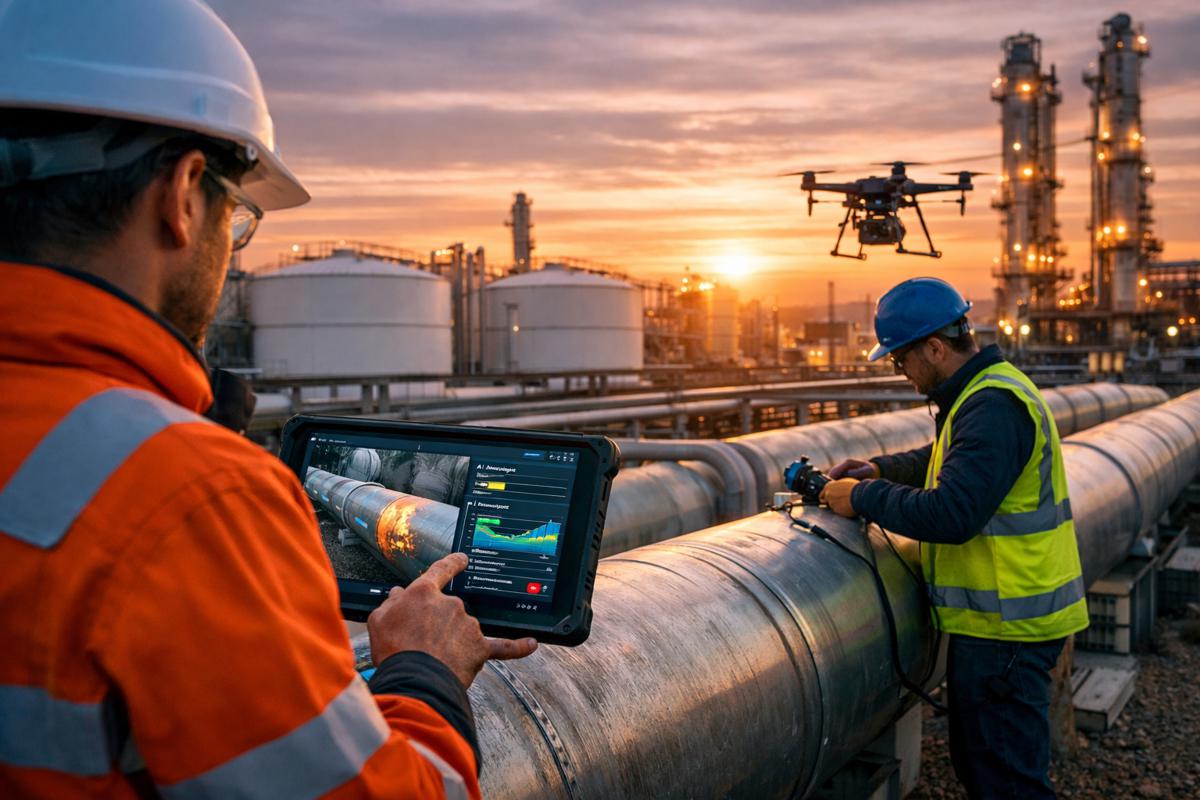
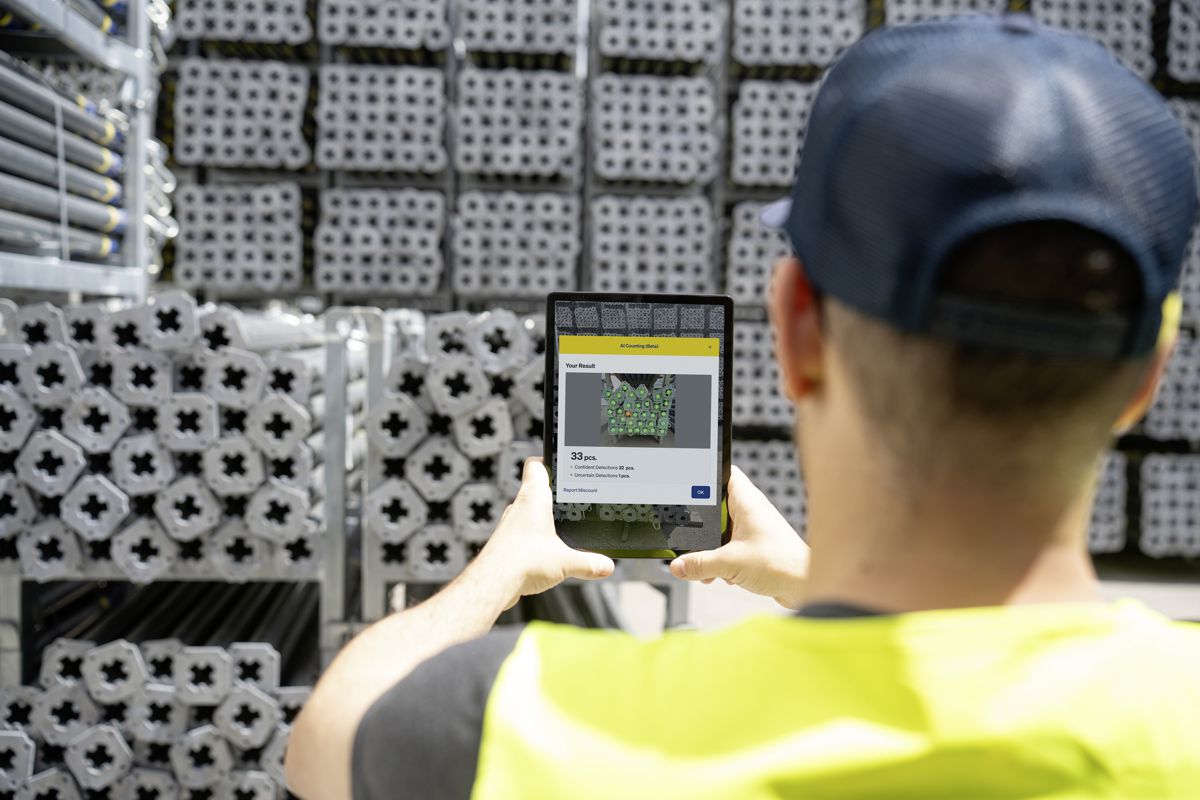
In practical terms, this means inspection data, whether from sensors, drones or manual inputs, can be processed in near real time. AI models analyse imagery and measurements to identify potential defects, flagging issues that might otherwise be overlooked. The results are then compiled into structured, auditable reports, reducing reliance on manual documentation.
The company claims that this approach can cut conventional inspection time by up to 70 percent while reducing reporting errors by around 66 percent. More importantly, it introduces traceability across the entire process. Every data point, analysis step and decision is recorded, creating a transparent audit trail that aligns with regulatory requirements.
Early Deployments in Energy and Industry
The concept has already moved beyond theory. One of deeplify’s early engagements was with Open Grid Europe, Germany’s largest gas transmission operator. The collaboration provided a real-world testing ground for the platform, allowing it to be refined against the operational demands of a major energy network.
“deeplify’s solution helps us to completely change how we do quality management today” says David Pawlik, Digitalisation Manager at Open Grid Europe.
Further pilots followed with SKF, a global player in bearings and industrial technologies. The platform is now also used by inspection firms serving major energy companies, including those working with Shell. These deployments highlight the system’s adaptability across different industrial environments, from pipelines to manufacturing assets.
Engineering AI for Safety Critical Environments
Applying AI in safety-critical contexts is not simply a matter of scaling existing models. Accuracy, reliability and explainability become non-negotiable. A false negative in inspection data could mean a missed defect with serious consequences, while a false positive could trigger unnecessary repairs and operational costs.
deeplify’s technical approach focuses on interpreting inspection data with a level of precision suited to these environments. This involves training models on domain-specific datasets and ensuring that outputs can be verified and audited. The goal is not to replace human inspectors but to augment their capabilities, enabling them to work more efficiently and with greater confidence in the data.
The platform also reflects a broader shift in industrial AI. Rather than focusing on generic productivity tools, it targets the physical economy, where digital decisions have direct real-world impacts. This requires a different mindset, one that balances innovation with operational risk management.
Founders with Industrial Insight
The origins of deeplify lie in hands-on experience rather than abstract market analysis. CEO Jan Löwer, trained as a physicist, previously built AI tools for industrial applications and repeatedly encountered the limitations of existing inspection workflows.
“We have the most advanced software for digital-first workflows,” says Jan, co-founder and CEO of deeplify, “but when it comes to determining if a high-pressure pipeline is safe, the industry is often still stuck in the past.”
COO Christoph Siemer brings over a decade of experience from BP, offering insight into the operational realities of energy infrastructure. Meanwhile, Felix Asanger led the development of the platform’s core AI capabilities, addressing the technical challenge of analysing inspection data at safety-critical levels of accuracy.
From an investor perspective, this combination of domain expertise and technical capability is central to the company’s appeal. “The founders combine exceptional industry expertise with a deep understanding of its customers’ challenges,” says Tom Villinger, CEO of D11Z. Ventures “deeplify has developed proprietary technology for a previously highly under-digitized and safety-critical industrial infrastructure.“
Scaling Across Infrastructure Sectors
With fresh funding secured, deeplify is now focused on expanding its platform and accelerating deployments across multiple sectors. Energy and oil and gas remain key targets, but the technology is equally relevant to chemicals, transportation and other infrastructure domains where asset integrity is critical.
Transport infrastructure, for instance, faces similar challenges. Bridges, tunnels and rail systems require regular inspection, yet the processes often rely on manual assessments and fragmented records. Integrating AI-driven analysis could improve both efficiency and safety, particularly as networks age and traffic volumes increase.
The broader opportunity lies in standardising how inspection data is handled across industries. By creating a consistent digital framework, platforms like deeplify’s could enable better benchmarking, predictive maintenance and long-term asset planning. For investors and policymakers, this translates into more resilient infrastructure and more efficient allocation of resources.
Digital Traceability and Regulatory Alignment
Regulation is another factor driving change. Infrastructure operators are under increasing pressure to demonstrate compliance with safety and environmental standards. Traditional reporting methods can make this difficult, especially when data is scattered across multiple systems.
deeplify’s emphasis on auditable reporting addresses this challenge directly. By capturing and structuring data throughout the inspection process, the platform provides a clear record of what was inspected, how it was analysed and what actions were taken. This level of transparency is becoming essential as regulatory frameworks evolve.
It also opens the door to more proactive maintenance strategies. Instead of reacting to issues after they arise, operators can use data insights to anticipate problems and intervene earlier. Over time, this could reduce both operational risks and lifecycle costs.
A Shift Long Overdue
The digitisation of infrastructure has largely focused on design and construction, leaving operations and maintenance lagging behind. Yet it is during the operational phase that assets deliver value and where failures can have the greatest impact.
deeplify’s approach reflects a growing recognition that this imbalance needs to be addressed. By bringing AI and integrated data workflows into inspection processes, the company is targeting a part of the industry that has remained stubbornly analogue.
As infrastructure networks continue to age and demands on them increase, the pressure to modernise will only intensify. Solutions that can improve efficiency, accuracy and transparency are likely to play a central role in shaping how assets are managed in the years ahead. deeplify’s early traction suggests that the industry is ready to move in that direction.