VINCI Secures Landmark HS2 Contract to Build Birmingham’s Rail Operations Hub
Britain’s ambitious high-speed rail ambitions have received another significant boost as VINCI, through its subsidiary Taylor Woodrow, secured a major infrastructure contract tied to the future HS2 Ltd network. The £856 million contract marks one of the most strategically important operational packages awarded on the HS2 programme to date, combining advanced rail engineering, network operations and long-term economic regeneration in the West Midlands.
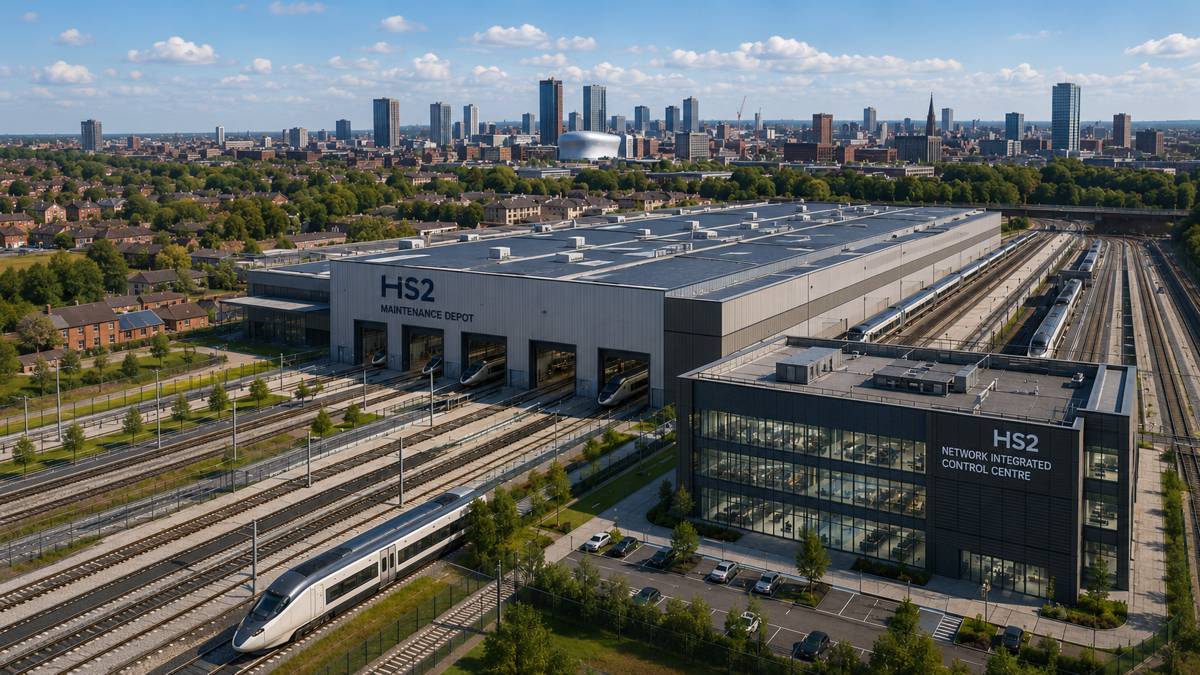
At the heart of the project is the construction of the HS2 rolling stock maintenance depot and the Network Integrated Control Centre in Birmingham. While much public attention surrounding HS2 has focused on tunnels, viaducts and station developments, this contract underpins the operational backbone of the future railway. Without sophisticated maintenance facilities and centralised network management, high-speed rail systems simply cannot operate efficiently, safely or reliably at scale.
The award also reinforces the growing role of private sector engineering specialists in delivering complex transport infrastructure across the United Kingdom. For VINCI Construction, already deeply embedded within several HS2 civil engineering packages, the contract further cements its position as one of the principal industrial players shaping the future of Britain’s rail infrastructure.
Briefing
- VINCI subsidiary Taylor Woodrow has secured an £856 million HS2 infrastructure contract
- The project includes a rolling stock maintenance depot and the HS2 Network Integrated Control Centre
- The development will be located on a 70-hectare brownfield site in Birmingham
- Around 1,000 long-term jobs and nearly 500 construction jobs are expected to be created
- The facility will support the operation, maintenance and reliability of the future HS2 high-speed rail network
Building the Operational Heart of HS2
The newly awarded contract goes far beyond conventional rail depot construction. Taylor Woodrow will oversee the design, construction, testing and commissioning of one of the most technologically advanced rail operations facilities ever developed in the UK.
The Birmingham site will feature a comprehensive suite of infrastructure designed specifically for next-generation high-speed rail operations. This includes a large maintenance building for HS2 train servicing, a train washing facility, automated inspection systems, stabling tracks and a dedicated test track for operational verification and diagnostics.
Perhaps even more critical is the inclusion of the HS2 Network Integrated Control Centre, commonly referred to as the NICC. This facility will effectively function as the digital and operational nerve centre for the entire HS2 railway once services commence. From train movements and infrastructure monitoring to incident response and operational coordination, the centre will oversee the safe and efficient management of Britain’s new high-speed network.
As rail systems become increasingly digitised, infrastructure like the NICC is becoming just as important as the tracks themselves. Modern high-speed railways rely heavily on predictive maintenance, real-time monitoring and integrated operational control systems to maximise efficiency while reducing downtime and operational risk.
Regenerating Brownfield Land at Scale
Beyond the engineering significance, the project represents a major urban regeneration initiative for Birmingham and the wider West Midlands region.
The depot and control centre will be constructed on a 70-hectare former brownfield site, transforming previously underused industrial land into a modern transport and employment hub. Brownfield regeneration has become a central pillar of UK infrastructure policy, particularly in cities seeking to unlock economic growth while limiting urban sprawl and protecting greenbelt land.
Large infrastructure developments often act as catalysts for wider commercial activity, and HS2’s Birmingham operational campus is expected to become exactly that. The long-term employment outlook is particularly notable, with approximately 1,000 permanent jobs expected to be associated with the site over time. During the construction phase alone, nearly 500 jobs are anticipated.
Those opportunities will likely span a broad spectrum of disciplines, including railway engineering, operations management, digital systems integration, facilities maintenance, cybersecurity, asset management and advanced manufacturing support services.
Importantly, parts of the surrounding land released during the development process could later be repurposed for additional commercial investment, mixed-use development and public green spaces. That combination of transport infrastructure and urban renewal is increasingly viewed as essential for modern infrastructure planning.
The HS2 Depot and the Wider Rail Industry
Although depots rarely attract the headlines generated by major stations or high-speed train launches, they remain absolutely essential to railway performance.
High-speed rolling stock operates under extremely demanding technical conditions, requiring precise maintenance scheduling, rapid diagnostics and highly controlled operational environments. Any inefficiency in maintenance operations can ripple across the entire network, affecting punctuality, reliability and operating costs.
The Birmingham facility is expected to incorporate advanced automation and digital inspection technologies, reducing manual intervention while improving predictive maintenance capabilities. Automated vehicle inspection systems, in particular, are becoming increasingly important across modern rail networks, enabling operators to identify faults earlier and reduce service disruptions.
The project also highlights how high-speed rail infrastructure is evolving into a sophisticated ecosystem where civil engineering, digital technology and operational intelligence increasingly intersect. Future rail competitiveness will depend not only on speed but also on reliability, energy efficiency and lifecycle asset management.
For the broader construction sector, contracts like this demonstrate the growing demand for multidisciplinary delivery expertise. Delivering such facilities requires close coordination between rail engineers, digital systems specialists, civil contractors, energy infrastructure teams and operational consultants.
HS2’s Continuing Strategic Importance
Despite years of political debate, budget scrutiny and route revisions, HS2 remains one of Europe’s largest infrastructure programmes and a defining long-term investment in UK transport capacity.
The railway is designed to connect Old Oak Common in West London with Birmingham via a new low-carbon high-speed corridor. While passenger journey times are often emphasised in public discussions, one of the project’s most strategically important benefits lies in freeing up capacity on the existing rail network.
By shifting long-distance high-speed passenger services onto dedicated infrastructure, existing lines can accommodate more freight traffic and local commuter services. That capacity release is considered vital for supporting regional economic growth, reducing road congestion and lowering transport emissions.
Freight operators, in particular, stand to benefit substantially. Additional rail freight capacity could help remove thousands of heavy goods vehicle movements from UK roads annually, supporting broader decarbonisation goals while easing pressure on ageing motorway infrastructure.
The Birmingham depot and control centre therefore represent more than standalone construction projects. They form part of a wider transformation in how Britain manages mobility, logistics and sustainable transport infrastructure.
VINCI Strengthens Its UK Infrastructure Position
For VINCI Construction, the award further strengthens its already significant footprint in the UK infrastructure market. Through Taylor Woodrow and other joint ventures, the company has played a prominent role across multiple major transport and infrastructure schemes throughout Britain.
The HS2 programme, in particular, has provided major international contractors with opportunities to demonstrate capabilities in megaproject delivery, complex logistics and integrated infrastructure management.
Winning operationally critical contracts like the Birmingham depot also signals confidence in VINCI’s ability to deliver highly technical rail infrastructure beyond traditional heavy civil works. As transport networks become smarter and more digitally integrated, construction firms capable of bridging engineering and operational technologies are likely to gain an increasingly competitive advantage.
For Birmingham and the wider UK rail sector, the project marks another concrete step toward bringing HS2 into operational reality. While the political debate around the railway may continue, the infrastructure required to run it is steadily taking shape.
Supporting Britain’s Long-Term Infrastructure Transition
The HS2 maintenance depot and control centre underscore a broader trend reshaping infrastructure investment globally. Governments are increasingly prioritising projects that combine transport efficiency, urban regeneration, digital capability and decarbonisation objectives within a single development framework.
Rail infrastructure sits at the centre of that transition. High-capacity electrified railways are widely viewed as essential components of lower-carbon national transport systems, particularly as countries seek to reduce dependency on road transport and domestic aviation.
Projects like Birmingham’s HS2 operational hub illustrate how modern infrastructure investment is no longer solely about concrete and steel. It is equally about operational resilience, smart asset management, digital connectivity and long-term economic transformation.
For the UK construction industry, the contract also demonstrates the continuing scale of opportunity tied to major national infrastructure programmes. Even as economic conditions fluctuate, demand for advanced transport infrastructure remains a critical driver for engineering, construction and technology firms operating across the global mobility sector.