Intel and McLaren Shift Formula 1 into the AI Driven Computing Era
Formula 1 has always been a technological arms race disguised as a motorsport championship. Beneath the glamour, sponsorships and global television spectacle lies one of the most data-intensive engineering environments on the planet. Every corner, tyre temperature fluctuation, airflow adjustment and pit stop decision is measured, simulated and analysed in real time.
Now, with artificial intelligence and high-performance computing becoming increasingly central to motorsport competitiveness, semiconductor giant Intel Corporation has entered a deeper strategic alliance with McLaren Racing to strengthen the digital backbone behind the team’s global racing operations.
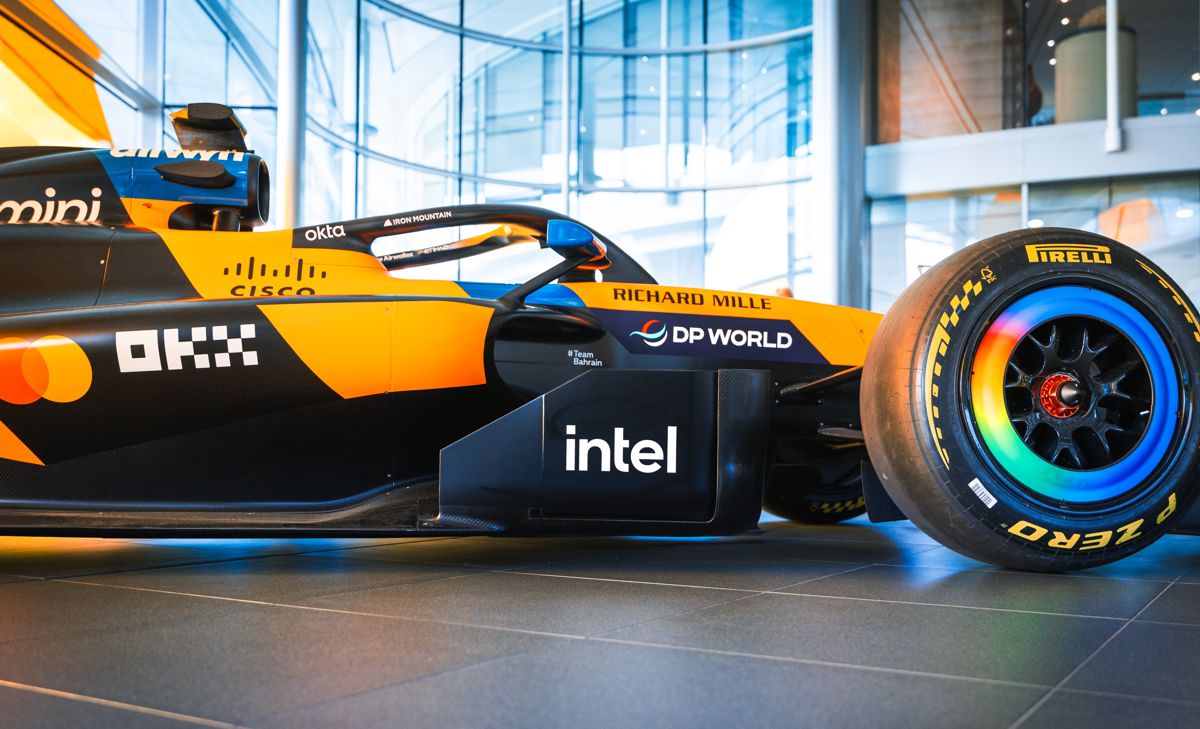
The newly announced multi-year partnership names Intel as the Official Compute Partner of the McLaren Mastercard Formula 1 Team, Arrow McLaren IndyCar Team and McLaren F1 Sim Racing Team. While branding on race cars naturally attracts headlines, the real significance lies elsewhere. The agreement highlights how advanced compute infrastructure, AI acceleration and edge processing are becoming just as important to modern motorsport as aerodynamic design and engine performance.
For construction professionals, infrastructure planners and industrial technology investors, the partnership reflects a much broader industrial shift. Formula 1 increasingly operates as a live proving ground for technologies that later migrate into sectors such as autonomous systems, predictive maintenance, digital twins, smart manufacturing and real-time operational analytics. The same computational frameworks used to shave milliseconds off lap times are rapidly finding applications across construction fleets, transport networks, logistics operations and critical infrastructure systems.
Briefing
- Intel Corporation becomes Official Compute Partner for McLaren Racing across Formula 1, IndyCar and sim racing operations
- Intel Xeon and Core Ultra processors will support simulation, AI workloads, race analytics and edge computing
- The partnership reflects the growing role of AI and high-performance computing in motorsport engineering
- Formula 1 increasingly serves as a testing environment for technologies later adopted in infrastructure and industrial sectors
- Intel branding will appear on McLaren race cars beginning with the Montreal Formula 1 race weekend
Formula 1 Has Become a Real Time Data Industry
Modern Formula 1 cars generate enormous volumes of telemetry during every race weekend. According to industry estimates, a single F1 car can produce well over a terabyte of data during a Grand Prix weekend once simulation, CFD modelling, wind tunnel testing and live race telemetry are combined. Teams no longer rely solely on driver instinct or mechanical refinement. Competitive advantage increasingly comes from how quickly data can be processed and converted into decisions.
That’s where Intel’s role becomes commercially significant. Under the partnership agreement, Intel Xeon and Intel Core Ultra processors will support McLaren’s performance-critical workloads. These include computational fluid dynamics simulations, aerodynamic analysis, digital twin environments, vehicle-dynamics modelling and real-time race strategy systems connecting the McLaren Technology Centre in Woking with race operations around the world.
The scale of computing involved is staggering. Formula 1 teams routinely perform billions of simulation calculations between race weekends, balancing aerodynamic efficiency, tyre degradation, fuel consumption, weather variables and track evolution. Race engineers must often make strategic calls within seconds, particularly during safety car deployments or rapidly changing weather conditions.
Lip-Bu Tan, CEO of Intel, said: “Formula 1 racing and IndyCar are some of the ultimate proving grounds for high-performance computing. Intel is proud to be McLaren Racing’s compute partner, and to be part of a team that thrives on precision, speed, and innovation.”
He added: “Together, Intel and McLaren will push the boundaries of what’s possible, transforming data into competitive advantage at every turn.”
Edge Computing Moves From Industry Into Motorsport
One of the more revealing aspects of the agreement involves trackside edge computing. In industrial sectors, edge computing allows data processing to occur close to the source rather than relying entirely on distant cloud infrastructure. That reduces latency and improves response times in mission-critical operations. The same principle now applies directly to Formula 1.
During races, teams cannot afford transmission delays when analysing telemetry or responding to live track conditions. Intel’s computing architecture will help McLaren process data closer to the action, enabling faster analytics and more responsive race-day decisions. The system effectively creates a high-speed digital bridge between the garage, remote engineering teams and the McLaren Technology Centre.
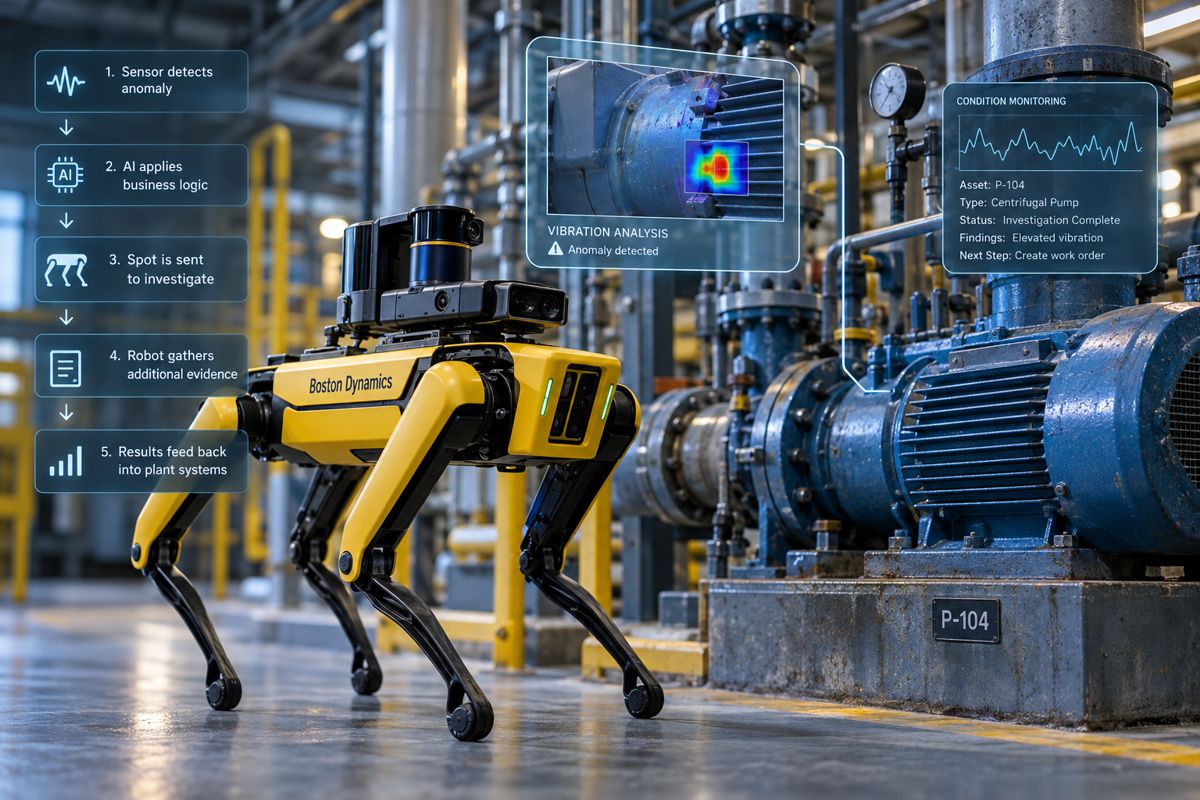
That approach mirrors developments occurring across infrastructure industries. Construction companies increasingly use edge computing on heavy equipment fleets, autonomous vehicles and connected worksites to improve safety, efficiency and predictive maintenance. Rail operators are deploying similar technologies to monitor signalling systems and rolling stock performance in real time. Ports, airports and logistics hubs are also investing heavily in edge-enabled operational systems.
Motorsport, in that respect, has become a compressed version of the wider industrial technology ecosystem.
Zak Brown, CEO of McLaren Racing, said: “Performance in IndyCar and Formula 1 racing is driven by technology, and partnering with Intel strengthens our ability to innovate at scale.”
He continued: “Intel has already been an important part of our technology ecosystem, and their leadership in computing will play a critical role in how we design, build, and race our cars. We’re excited to deepen this relationship even further.”
AI and Digital Twins Are Reshaping Vehicle Development
The collaboration also highlights the growing importance of AI-assisted engineering and digital twin environments within motorsport development programmes.
Digital twins allow teams to create highly detailed virtual representations of race cars and operational systems. Engineers can then simulate countless variables before any physical components are manufactured or deployed. AI systems further accelerate this process by identifying performance patterns, predicting component behaviour and optimising design pathways far faster than traditional engineering cycles.
For Formula 1 teams operating under strict cost caps and aerodynamic testing restrictions, computational efficiency has become essential. Teams must extract more value from fewer physical development opportunities. AI-driven modelling allows organisations such as McLaren to accelerate design validation while reducing reliance on expensive physical testing.
Those same technologies are already transforming infrastructure and construction sectors. Digital twins are now used on major transport projects, tunnels, bridges and smart city programmes worldwide. Contractors and asset owners use virtual modelling environments to predict structural performance, reduce maintenance costs and improve operational resilience throughout an asset’s lifecycle.
According to research from McKinsey & Company, AI applications across engineering and industrial operations could generate trillions of dollars in economic value globally over the coming decade. Motorsport offers a uniquely demanding environment to stress-test many of these technologies under extreme operational pressure.
Semiconductor Competition Is Becoming Strategically Important
Intel’s partnership with McLaren also arrives during a highly competitive period for the global semiconductor industry. Advanced computing capacity has become strategically important not only for consumer electronics and AI development, but also for manufacturing, mobility, defence and infrastructure systems.
The motorsport sector has increasingly attracted technology companies seeking both commercial visibility and high-performance development environments. Rival Formula 1 teams already maintain deep relationships with major cloud, software and data companies. The competition now extends well beyond engine suppliers and automotive manufacturers.
For Intel, the McLaren partnership provides a globally visible demonstration platform for its high-performance compute capabilities at a time when demand for AI processing infrastructure continues to surge. The collaboration also reinforces Intel’s ambitions within edge computing and enterprise AI workloads, areas expected to experience substantial industrial growth over the next several years.
Meanwhile, McLaren gains access to additional compute capabilities that could strengthen operational efficiency across Formula 1, IndyCar and simulation racing activities. Motorsport’s increasing reliance on software-defined performance means computing infrastructure is becoming inseparable from competitive engineering.
Sustainability Pressures Are Changing Motorsport Technology
Although outright speed remains central to Formula 1, sustainability targets are reshaping how teams approach engineering and operations. McLaren’s commitment to achieving net zero by 2040 aligns with wider changes occurring across the motorsport industry.
AI-enabled compute infrastructure can contribute to sustainability goals by improving simulation accuracy and reducing unnecessary physical testing. More efficient modelling environments can reduce material waste, energy consumption and manufacturing cycles. Predictive analytics can also improve component longevity and operational efficiency across racing programmes.
That same transition is underway throughout construction and transport industries. Infrastructure owners increasingly seek intelligent systems capable of reducing operational emissions, improving maintenance efficiency and extending asset lifecycles. High-performance computing and AI are becoming central tools in achieving those objectives.
Formula 1 may appear far removed from construction sites or transport corridors, yet the technological overlap continues to grow. Advanced telemetry, predictive maintenance systems, digital twins and AI-assisted decision-making are now shared priorities across motorsport, industrial manufacturing and infrastructure development.
Motorsport Continues To Influence Industrial Innovation
The partnership also underlines Formula 1’s enduring role as an innovation accelerator. Historically, technologies refined in motorsport have often migrated into wider industrial and commercial applications. Disc brakes, lightweight composite materials, hybrid systems and advanced telemetry all followed similar paths. Now, the next frontier revolves around AI-driven compute ecosystems.
Intel technologies deployed within McLaren’s operations will support simulation, race strategy analytics, aerodynamic development and predictive modelling. Those capabilities closely resemble challenges faced by industries managing complex infrastructure systems under time-sensitive operational conditions.
From railway networks and autonomous mining fleets to smart highways and urban mobility platforms, the industrial world increasingly depends on real-time data interpretation and low-latency decision making. Formula 1 simply compresses those challenges into a two-hour race environment where mistakes become immediately visible.
Intel branding will begin appearing on McLaren Formula 1 cars starting at the Montreal Grand Prix weekend, before expanding into IndyCar and sim racing programmes. Yet the logos are arguably the least important part of the agreement.
Far more significant is what the partnership reveals about the future direction of industrial technology. Competitive performance, whether on racetracks or infrastructure networks, increasingly depends on how effectively organisations harness AI, compute power and real-time analytics. The battle for milliseconds in Formula 1 is becoming a preview of the digital transformation reshaping global industry.