Liebherr Power Deals Shift the Battleground From Machine Price to Lifetime Cost
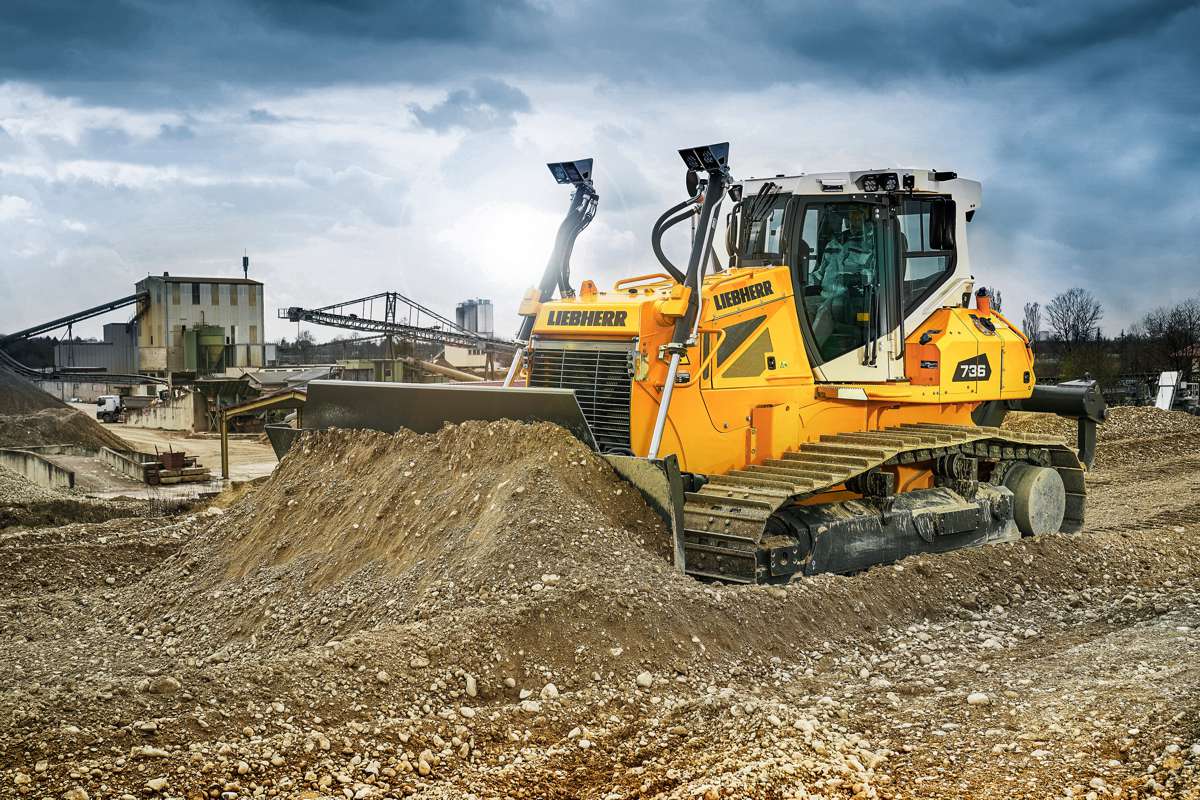
The second round of Liebherr Power Deals, running from July 2026, looks at first glance like a conventional dealer incentive programme. Read the structure rather than the headline, however, and something more deliberate emerges. The centrepiece is not a machine at all; it is a complete track assembly for Generation 8 crawler dozers, offered at a promotional price with a free drive warranty and a free wear assessment attached.
Two machine-side offers sit alongside it, covering medium wheel loaders and the compact and stereoloader range, but the undercarriage deal is the one that runs for a full twelve months and the one that reaches deepest into a contractor’s cost base.
That emphasis reflects where earthmoving margin now sits. Liebherr closed 2025 with Group revenue of €14,772 million, an increase of 1.0 per cent, while revenue in the construction machine and mining sector fell by 5.5 per cent to €9,345 million. The wider European picture has been similar, with CECE reporting that the market halted its downturn in 2025 and returned to moderate growth of 4.6 per cent after a 19 per cent decline in 2024.
In a market recovering from that depth, the reliable earnings are in parts, service and the data that governs both. Caterpillar has been explicit about the same logic for years, lifting services revenue to $24 billion in 2024 against a target of $28 billion by 2026, up from $14 billion in 2016, with services now accounting for 39 per cent of machinery, energy and transportation revenue. Liebherr’s Power Deals are a European family-owned manufacturer’s version of that same repositioning, expressed through a promotional calendar rather than an investor slide.
Briefing
- Liebherr’s second 2026 Power Deals round runs from July, covering a discounted complete dozer track assembly with warranty and wear assessment, two free comfort options on medium wheel loaders, and a fixed-value discount on compact and stereoloaders bought with an attachment.
- The undercarriage offer applies to orders received between 1 July 2026 and 30 June 2027 on standard oil-lubricated (SALT) undercarriages for Generation 8 dozers from PR 716 to PR 766, with warranty cover against leaks and breakage for up to 36 months or 4,000 operating hours.
- Free wear measurements are carried out during regular maintenance and documented in the Wear Log app, converting a parts transaction into a monitored, evidence-based service relationship.
- Medium wheel loader buyers ordering an L 526, L 538 Speeder or L 546 before 31 December 2026 receive Liebherr ride control (LFD) and automatic climate control at no cost, options that bear directly on spillage rates, cycle speed and operator retention.
- Compact and stereoloader discounts are fixed in cash terms at €2,000 net (L 504 Compact to L 508 Compact), €2,500 net (L 507 Stereo to L 509 Stereo, including L 507 E and L 509 Tele) and €3,500 net (L 514 Stereo and L 518 Stereo), conditional on the machine being ordered with an attachment.
The Undercarriage Is Where a Dozer’s Lifetime Cost Actually Lives
Anyone who has run a tracked fleet through an abrasive quarry floor or a wet clay cut knows that the running gear writes the cheques. Industry estimates put the undercarriage at between 45 and 60 per cent of the repair and maintenance costs associated with a dozer over its working life, a share no other system on the machine comes close to matching.
It also represents roughly a fifth of the purchase price, which means the component set a buyer negotiates hardest over at the point of sale is the one that will be bought again, in pieces, several times before the machine leaves the fleet. Promotional attention on the track assembly therefore lands on the single largest controllable line in the ownership model, not on a peripheral consumable.
The scope of what Liebherr is discounting matters as much as the discount itself. The complete assembly covers the track and track pads, the drive sprocket and idler wheel, the carrier rollers and the track rollers in both single-flanged and double-flanged configurations, together with the fasteners required to fit them.
That completeness addresses a familiar and expensive failure mode in fleet maintenance, where a worn sprocket is paired with a new chain because the budget stretched only so far, and the mismatch destroys the new component well before its rated life. By pricing the set rather than the item, Liebherr is nudging operators towards the maintenance discipline that produces the lowest cost per hour, which happens to be the same discipline that produces the highest customer satisfaction and the strongest residual values.
Warranty, Wear Data and the Move Towards Monitored Ownership
The free warranty is the quietly significant part of the package. Cover against leaks and breakage for up to 36 months or 4,000 operating hours converts a volatile cost into a bounded one across a period that spans a substantial slice of expected component life. For contractors bidding fixed-price earthworks, road construction or quarry development packages, that conversion has genuine balance sheet value.
Risk that previously sat as a contingency line, priced with a margin for uncertainty, becomes a known quantity underwritten by the manufacturer, and bid teams can price closer to the bone without exposing the business. The restriction to standard SALT undercarriages on Generation 8 machines from PR 716 to PR 766 is worth noting, since it stops short of the 73-tonne PR 776 at the top of the range, keeping the offer aimed at the construction and quarrying fleet rather than the mining class.
Pairing the warranty with free, documented wear measurement is where the commercial architecture becomes clear. Measurements taken during scheduled maintenance and logged through the Wear Log app give the customer a trend line rather than a snapshot, which is the difference between budgeting a rebuild and being surprised by one. It gives Liebherr something equally valuable, namely a growing body of application-specific wear evidence gathered across soil types, duty cycles and operator behaviours, which sharpens both warranty underwriting and component design.
That exchange sits neatly alongside the recent expansion of the MyLiebherr platform, where MyLiebherr Performance and MyLiebherr Maintenance rolled out in Australia, the UK, Ireland, Canada and the USA with six months of free access, supported by a traffic light status overview, service history, damage reporting through the MyAssistant for Earthmoving app and machine performance data covering utilisation, fuel consumption and idle time. Highways.Today examined that platform expansion in May, and the Power Deals give it a commercial hook. A promotion that puts a technician alongside the machine with a wear gauge and an app is, in practice, a customer acquisition route into the digital service relationship.
Cab Comfort Has Become a Workforce Decision
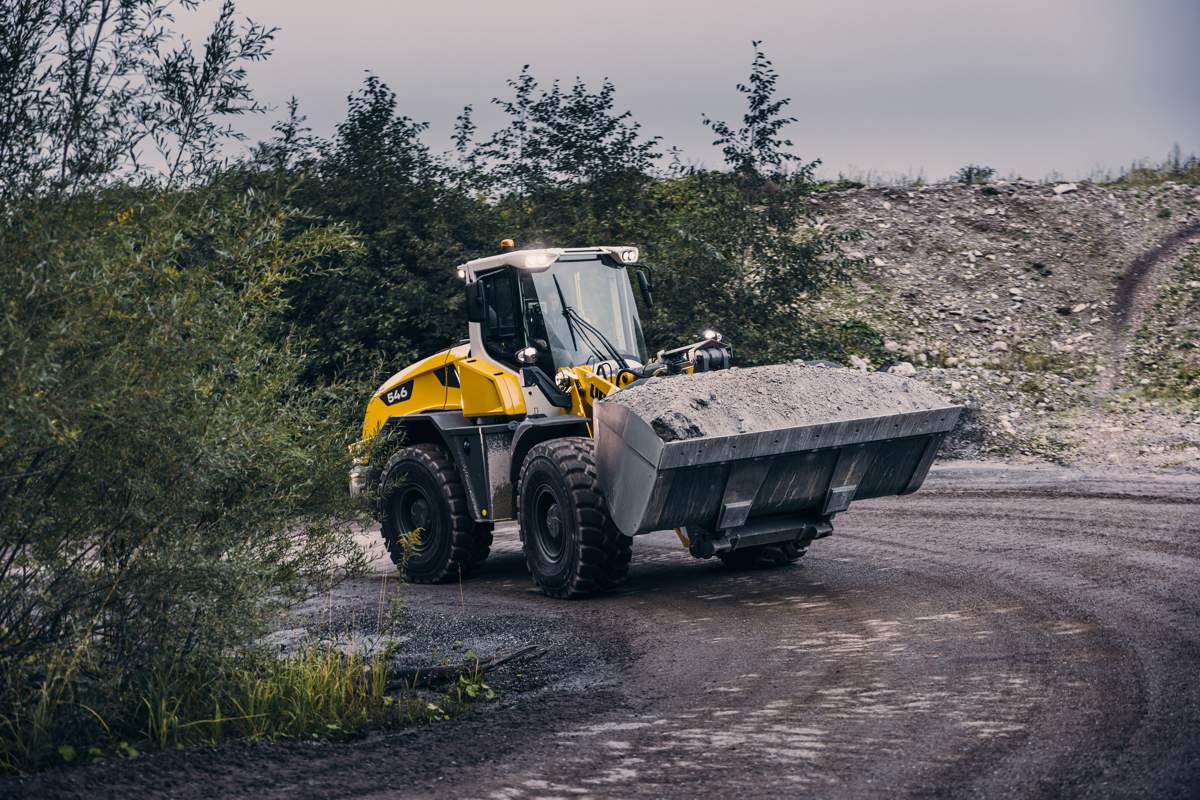
The medium wheel loader offer reads as a comfort promotion and functions as a productivity and retention one. Buyers ordering an L 526, L 538 Speeder or L 546 before the end of December 2026 receive Liebherr ride control (LFD) and automatic climate control without charge. Ride control earns its place on any load-and-carry duty, damping boom oscillation so the machine can travel faster between the face and the hopper while spilling less material along the way. On a quarry haul road or a large muckshift, spillage is a compound cost, since it removes payload from the cycle, adds cleanup labour and degrades the running surface that every other machine on site depends on.
Automatic climate control, with sensors reading cabin temperature and solar load in real time and adjusting through an intuitive touchscreen, belongs to a different argument entirely. Europe’s construction sector is short of people, with FIEC estimating that the EU will need around two million additional construction workers by 2030 to meet demand, and skilled machine operators sit firmly in the contested category.
A cab that stays workable through an August afternoon in Andalusia or a February morning in Silesia is a recruitment and retention instrument, and fleet specifiers have increasingly begun treating it as such. Handing over two options that would otherwise be negotiated line items removes a small but real obstacle from that conversation, and it does so at Bischofshofen, the plant that marked its 100,000th wheel loader with a special L 550 XPower and functions as the Group’s global centre of excellence for the product line.
Attachment Bundling and the Defence of the Compact Segment
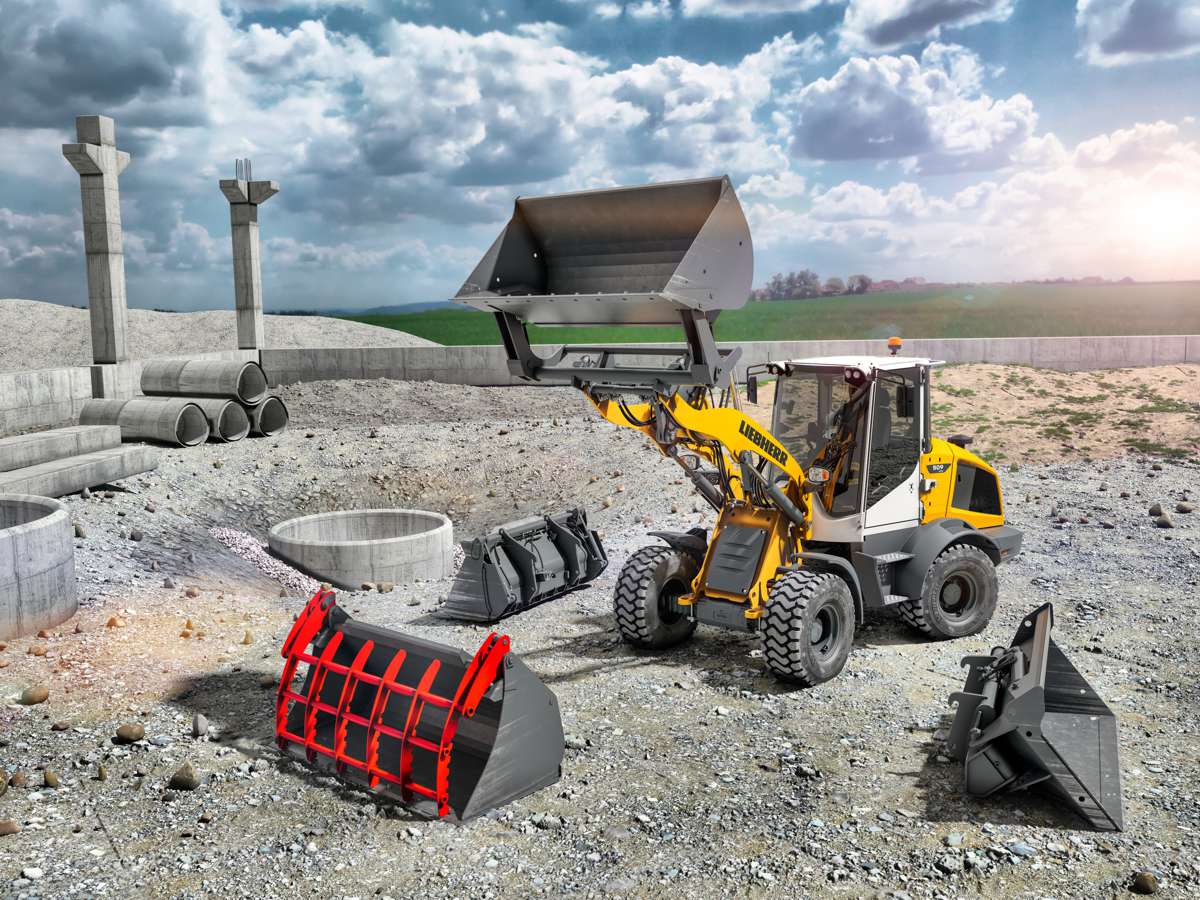
The third offer is the most conventional in form and the most strategically pointed in effect. Compact loaders from the L 504 Compact to the L 508 Compact attract €2,000 net off the machine price, the L 507 Stereo to L 509 Stereo band including the L 507 E and the L 509 Tele attracts €2,500 net, and the larger L 514 Stereo and L 518 Stereo attract €3,500 net. The condition is that the machine is ordered together with an attachment, which places the incentive squarely on attach rate rather than on volume alone. Compact wheel loaders are the segment where third-party attachment suppliers, independent dealers and low-cost imports compete hardest for the customer relationship after the initial sale, and an OEM that captures the bucket, fork or grab at the point of order captures the specification standard for everything that follows.
Liebherr’s stereo steering system, combining articulated steering with a steered rear axle, gives the range a defensible technical position in confined urban work, recycling yards and municipal contracts where turning circle governs productivity. The commercial logic of the bundle is reinforced by the way the range is engineered, since the L 509 Tele shares connection dimensions with the L 506 Compact to L 509 Stereo wheel loaders so that existing work tools can be carried across.
A contractor who buys a Liebherr attachment with a first stereoloader has effectively pre-committed the tooling decision on the second and third machines, and that compounding effect is worth considerably more over a fleet cycle than the headline discount. For smaller plant hire businesses and municipal operators working to tight capital budgets, a fixed cash reduction is also easier to model than a percentage, which makes the offer straightforward to slot into an approval paper.
What the Promotional Calendar Reveals About Order Intake
The differing windows are the most useful piece of market intelligence in the announcement. The undercarriage promotion accepts orders through to 30 June 2027, while both machine offers close on 31 December 2026. Replacement track assemblies are dictated by wear rather than by budget cycles, so a twelve-month window simply catches every machine that reaches its threshold during the period. Machine orders behave differently, and a six-month window pulls decisions forward into the current calendar year, filling the order books at Telfs in Tyrol, where the Generation 8 dozers are built, and at Bischofshofen, where the wheel loaders are assembled, through the quieter winter months.
Read alongside the first 2026 round, which offered a 2 per cent annual financing subsidy over the first two years of financing, an anniversary promotion marking the tenth birthday of XPower wheel loaders and a discount of up to 15 per cent on wheeled excavator tyres, a pattern becomes visible. Liebherr has institutionalised a half-yearly promotional rhythm, with a January round and a July round, and has rotated the emphasis from financing cost in the first half to lifecycle cost in the second.
That predictability is valuable to buyers, who can now time capital decisions against a known cadence rather than waiting for an opportunistic dealer conversation. It also signals confidence rather than distress, since the offers are structured around attachment, warranty and data capture rather than around headline price erosion, which is the pattern manufacturers reach for when they are defending share at any cost.
Where This Leaves Fleet Buyers, Dealers and Investors
For fleet managers, the practical action is to run the numbers on total cost per hour rather than on the promotional value. A discounted complete track set with a 36-month or 4,000-hour warranty and documented wear trending will usually beat a cheaper partial replacement fitted without measurement, and the gap widens on abrasive ground.
The same discipline applies to the wheel loader offers, where ride control has a measurable effect on cycle productivity and material retention that outlasts the promotional period by the whole life of the machine. Buyers with machines approaching their undercarriage threshold in late 2026 or the first half of 2027 have an unusually clear planning window, and the twelve-month order period gives them room to schedule the work around project phasing rather than around a fixed deadline.
For dealers and investors, the composition of the round is the signal worth watching. Liebherr is competing on lifecycle economics, warranty confidence and connected service, which are the areas where European manufacturers hold a structural advantage over lower-cost competition and where CECE’s forecast of moderate 2026 growth of around 2 to 2.5 per cent, driven by housing recovery, energy transition investment and continuing infrastructure programmes, will be converted into earnings.
The Group continues to back that position with capital, investing €708 million in research and development in 2025 and maintaining total investment of €1,059 million. Promotional rounds structured this way are how that investment reaches the customer’s decision, and the industry as a whole benefits when the competitive contest moves from who can shave the most off a list price to who can most credibly guarantee what a machine will cost to run.
Key Industry Questions
- Which machines qualify for the Liebherr undercarriage Power Deal? The offer applies to standard undercarriages with oil-lubricated tracks, designated SALT, fitted to Generation 8 crawler dozers from the PR 716 through to the PR 766. Orders must be received between 1 July 2026 and 30 June 2027 through participating sales and service partners in selected markets. The scope stops short of the largest Generation 8 machine, the 73-tonne PR 776, which keeps the promotion focused on construction, road building and quarrying fleets rather than mining applications. Operators running non-standard or free-turning bushing configurations should confirm eligibility with their service partner before committing, since undercarriage specification varies considerably across underfoot conditions and the promotional terms are tied to the standard SALT arrangement.
- What exactly does the complete track assembly include? The assembly covers the track chain with its track pads, the drive sprocket, the idler wheel, the carrier rollers and the track rollers in both single-flanged and double-flanged forms, together with all necessary screws and nuts. Buying the components as a matched set matters technically as well as commercially, because the undercarriage wears as an interlinked system. A new chain running on a worn sprocket wears out prematurely, and a single neglected roller accelerates deterioration across adjacent components. Pricing the complete set encourages replacement at the system level, which is the approach that delivers the lowest cost per operating hour across the remaining life of the machine.
- How much financial protection does the free warranty actually provide? Cover runs against leaks and breakage for up to 36 months or 4,000 operating hours, whichever is reached first. For a contractor, the practical value lies in converting an unpredictable cost into a bounded one over a period that covers a meaningful share of expected component life. That has direct bidding consequences on fixed-price earthworks and road packages, where undercarriage exposure has traditionally been carried as a contingency priced with a margin for uncertainty. Reducing that contingency allows tighter, more competitive pricing without increasing risk. Fleet owners should still confirm the specific exclusions and the servicing conditions attached to the cover, since warranty validity typically depends on maintenance being carried out to schedule.
- What is the Wear Log app and why does documented measurement matter? Wear Log is the application Liebherr uses to record undercarriage wear measurements taken during scheduled maintenance. Its value comes from trending rather than from any single reading, because a sequence of measurements allows both the customer and the service partner to project when each component will reach its wear limit. That converts an unplanned rebuild into a budgeted, scheduled replacement that can be aligned with project phasing or a seasonal shutdown. For the manufacturer, the accumulated data across different soil types and duty cycles improves component design and warranty pricing. The arrangement works because both parties gain from better information about the same asset.
- Which wheel loaders receive the free comfort options, and what is the operational benefit? The L 526, L 538 Speeder and L 546 qualify when ordered between 1 July and 31 December 2026, and the included options are Liebherr ride control, designated LFD, and automatic climate control. Ride control damps boom oscillation during travel, which allows higher transport speeds with reduced material loss and a smoother ride for the operator. On load-and-carry duties the productivity effect is straightforward, since less spillage means more payload delivered per cycle and less cleanup on haul roads. Automatic climate control uses sensors that read cabin temperature and solar load in real time, adjusting settings without operator intervention through a touchscreen interface.
- How do the compact and stereoloader discounts work? Discounts apply to new orders placed between 1 July and 31 December 2026 for a compact loader or stereoloader purchased in combination with an attachment. The values are fixed in cash terms rather than as percentages, at €2,000 net for the L 504 Compact through to the L 508 Compact, €2,500 net for the L 507 Stereo through to the L 509 Stereo including the L 507 E and the L 509 Tele, and €3,500 net for the L 514 Stereo and the L 518 Stereo. The attachment condition is central to the design, since it directs the incentive towards attach rate and establishes the tooling standard for subsequent machines in the same fleet.
- Why is Liebherr putting promotional weight behind parts and service rather than machine price? Because that is where resilient margin sits when new machine demand is only beginning to recover. Liebherr’s construction machine and mining revenue fell 5.5 per cent to €9,345 million in 2025, while the wider European equipment market returned to modest growth after a severe 2024. Aftermarket parts, service contracts and connected fleet data are less exposed to the equipment cycle and carry stronger customer retention, which is the same reasoning behind Caterpillar’s long-running services revenue ambition. Building promotions around warranty, wear measurement and attachment bundling rather than list price erosion protects both the manufacturer’s margin and the residual values that underpin customer fleet economics.
- What should buyers watch for when evaluating any OEM promotional round? The critical questions are what the offer does to cost per operating hour, what obligations it creates, and how it interacts with existing service arrangements. A promotion that includes warranty cover and condition monitoring generally carries more real value than an equivalent cash discount, because it removes risk and improves maintenance planning rather than simply moving money. Buyers should also confirm market availability, since these offers apply only through participating sales and service partners in selected countries, and check whether promotional packages can be combined. Timing matters too, as machine offers closing in December encourage decisions to be pulled into the current financial year.
Strategic Takeaways
- Promotional emphasis on undercarriage rather than machine price signals where earthmoving profitability now concentrates, and buyers who evaluate offers on cost per operating hour rather than headline discount will consistently extract more value from these rounds.
- Bundling warranty cover with documented wear measurement turns a parts transaction into a risk transfer, which has direct consequences for how contractors price contingency on fixed-price earthworks and road construction packages.
- Free condition monitoring is a two-way exchange that strengthens the customer’s maintenance planning while building the manufacturer’s application-specific wear dataset, and this pattern will spread across the sector as connected fleet platforms mature.
- Attachment-linked discounts on compact and stereoloaders are an attach-rate strategy that sets the tooling standard for subsequent fleet purchases, making the first machine decision considerably more consequential than its price suggests.
- A settled half-yearly promotional cadence allows fleet owners to plan capital expenditure against a predictable rhythm, and the shift from financing subsidies in the first half of 2026 to lifecycle economics in the second indicates a market moving from affordability concerns towards operating efficiency.