Epiroc is Betting on Connected Mining in Mexico
Six weeks after Epiroc elevated its long-running relationship with Ericsson into a global go-to-market alliance for private LTE and 5G, the Swedish equipment group’s Mexican organisation has signed a partnership with Rajant Corporation to deliver Kinetic Mesh wireless networking to mining customers across the country.
Taken individually, each agreement reads as a routine distribution arrangement. Placed side by side, they describe something more consequential: the mine communications network has moved out of the IT department and into the equipment channel, and the original equipment manufacturers are the ones assembling the portfolio.
That matters because connectivity has become the binding constraint on almost every high-value technology being sold into mining today. Autonomous haulage, teleremote drilling, collision avoidance, high-frequency machine telemetry and real-time fleet dispatch all depend on a network that holds up while the pit floor changes shape beneath it.
Epiroc has spent five years buying and partnering its way around that constraint, and the Rajant agreement adds a mesh option to a portfolio that already contains owned connectivity assets and a carrier-grade cellular alliance. For Mexican mine operators facing a freeze on new concessions and rising pressure to extract more tonnes from permitted ground, the timing is unusually favourable.
Briefing
- Rajant Corporation and Epiroc Mexico announced a strategic partnership on 22 July 2026 to supply deployment-ready Kinetic Mesh connectivity to mining customers across Mexico, with scope to extend into Epiroc’s wider global portfolio.
- The agreement lands six weeks after Epiroc and Ericsson expanded their 2018 cooperation into a global alliance under which Epiroc resells and deploys Ericsson LTE and 5G private network technology through its customer centres worldwide.
- Epiroc already owns mine connectivity capability through its 2021 acquisition of Calgary-based 3D-P and its 2022 purchase of Radlink, alongside automation businesses RCT and ASI Mining.
- Mexico remains the world’s largest silver producer with roughly a quarter of global output, but no new mining concessions have been granted under the current administration, concentrating capital on brownfield productivity rather than new ground.
- Rajant reports Kinetic Mesh deployments across more than 300 mines in over 80 countries, and has been broadening its base into defence electronics, long-range S-band radio and edge autonomy alongside its industrial business.
Epiroc Is Building a Technology-Agnostic Connectivity Stack
The strategic logic behind the Rajant agreement is easier to read against Epiroc’s acquisition record than against the announcement itself. The company bought 3D-P in June 2021, a Calgary business of roughly 50 employees with about USD 12 million of 2020 revenue that supplied wireless networks and Intelligent Endpoint hardware to surface mines in North America, Chile, Peru and Australia.
Chief executive Helena Hedblom was explicit at the time that connectivity had become a bottleneck in Epiroc’s own automation deployments, and that owning the competence was preferable to waiting on third parties. Radlink followed in 2022 as part of a four-company buying round that also brought in RCT, Wain-Roy and Geoscan, adding digital radio and off-grid power capability for remote surface and underground sites.
What the Rajant and Ericsson agreements add is optionality rather than duplication. Ericsson supplies the carrier-grade cellular layer, with radio, core and edge elements packaged for underground and surface deployment and Epiroc acting as systems integrator. Rajant supplies a peer-to-peer mesh layer that travels with the fleet and requires no fixed towers or fibre backbone.
Both approaches solve different halves of the same problem, and the mines that run both together are increasingly common. Epiroc has applied the same philosophy to automation, where the RCT and ASI Mining acquisitions gave it an OEM-agnostic platform capable of automating mixed fleets, most visibly at Roy Hill in Western Australia, where 78 Caterpillar and Hitachi haul trucks and more than 200 utility vehicles are being converted to driverless operation.
Extending agnosticism from machines to networks is a consistent move, and it positions Epiroc to sell the communications layer regardless of which technology a given orebody demands.
The Commercial Case for Buying a Network Through the Equipment Channel
Mine operators have historically procured wireless infrastructure through telecoms integrators or in-house IT functions, then discovered that responsibility for automation performance sat awkwardly between the network vendor and the machine supplier. Routing connectivity through the equipment channel collapses that gap.
Epiroc’s Mexican customer centre already carries the drill rigs, loaders and service contracts, holds the site relationships and understands the mine plan, which shortens the design cycle for a network that has to follow blasting sequences and bench advance rather than a static site drawing.
The financial incentive is equally clear. Aftermarket activity accounted for 64 per cent of Epiroc’s revenues in the second quarter of 2026, with service alone at 41 per cent, and management has repeatedly identified the ageing, increasingly technology-laden installed base as one of the group’s largest growth opportunities. Network hardware, endpoint devices, design services and ongoing optimisation all extend that recurring revenue base without requiring new machine sales.
Against group orders of SEK 17.3 billion and an adjusted operating margin of 20.1 per cent in the quarter, a Mexican networking partnership is financially immaterial in isolation, which is precisely why the structural read matters more than the deal size. Epiroc is buying position in a layer of the mine that every competitor’s technology has to pass through.
Mexico’s Concession Freeze Is Pushing Capital Into Brownfield Productivity
Mexico presents a specific and instructive demand picture. The country leads global silver production with around a quarter of world output, ranks among the top fifteen producers in nineteen minerals and supplies twelve of the sixty minerals the United States classifies as critical. CAMIMEX has counted 574 mining projects across 30 states, concentrated in Sonora with 126, Chihuahua with 67 and Durango with 59, of which 225 are in production and 225 in exploration.
Mining investment reached USD 5.063 billion in 2024, a modest 2.1 per cent increase, with industry expectations of a move toward USD 7 billion as permitting accelerates and the Economy Ministry works through the approvals backlog.
The constraint shaping how that money is spent is the freeze on new concessions confirmed by President Claudia Sheinbaum in June 2025, alongside a commitment to review the environmental performance of existing operations. For operators, the practical consequence is that growth has to come from permitted ground. Higher recovery, better fleet utilisation, longer equipment availability and tighter grade control become the levers available, and each of them is a data problem before it is a metallurgical or mechanical one. That is an unusually clean commercial case for connectivity investment, because the payback comes from tonnes moved rather than hectares acquired.
Mexico-focused producers including Pan American Silver, Torex and Endeavour entered 2026 with raised production guidance built on ramp-ups and expansions at existing assets, which is exactly the pattern that rewards network-dependent optimisation. The country also has genuine precedent in this area: Newmont’s Peñasquito operation was among the earliest sites globally to implement private cellular in a mining environment, and Ericsson has cited it alongside Lihir Island as foundational operational experience for the technology.
Why Mesh Architecture Suits a Pit That Will Not Stand Still
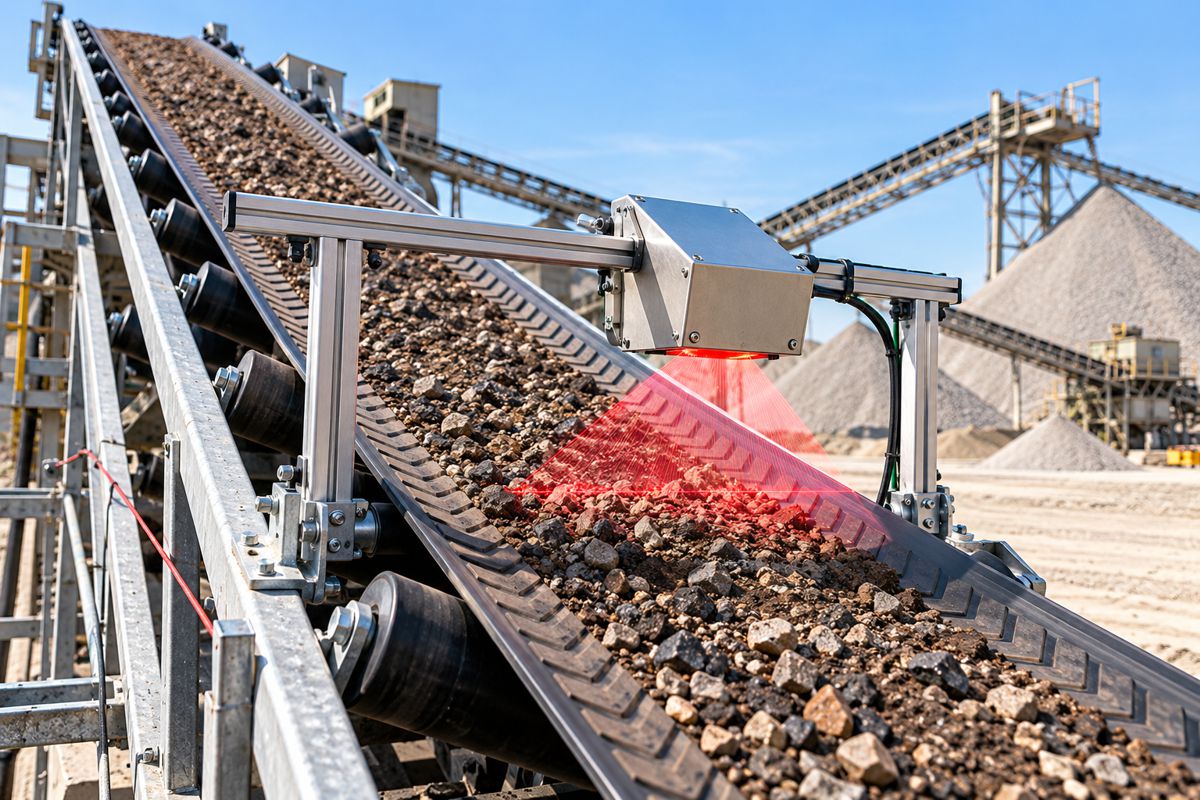
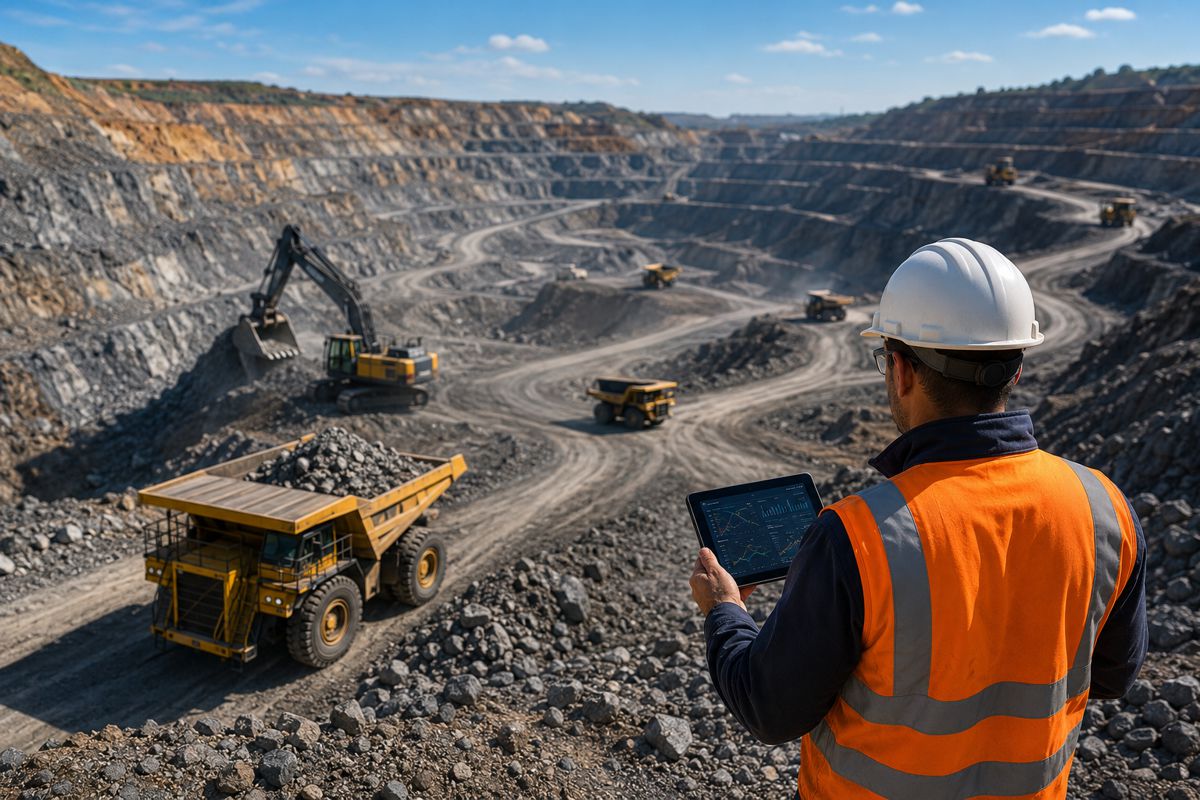
The technical argument for Kinetic Mesh rests on a characteristic of open-pit mining that fixed infrastructure handles badly. The shape, depth and configuration of a surface mine change continuously as extraction proceeds, equipment must be cleared from blast zones on a routine cycle, and coverage has to move with the working faces.
Rajant’s BreadCrumb nodes function as multi-radio, multi-frequency transceivers holding several simultaneous links, with InstaMesh software rerouting traffic through alternative paths when a link degrades. Nodes can be introduced, relocated or removed without taking the network down, which removes the scheduling conflict between network maintenance and production.
The more useful commercial insight is that mesh and private cellular are not competing purchases in most operations. Rajant’s own deployment at Hudbay’s Constancia copper mine in Peru, delivered with Lima-based partner STRACONTech, used Peregrine LTE BreadCrumbs to integrate with the mine’s existing LTE network and lifted measured throughput from a ceiling of 10 Mbps to around 40 Mbps, with the mine treating the investment as a one-time capital cost rather than a recurring licence.
That hybrid pattern explains why Epiroc can hold both an Ericsson alliance and a Rajant partnership without contradiction. Cellular delivers wide-area coverage, deterministic quality of service and a familiar security model; mesh delivers mobility, rapid redeployment and direct machine-to-machine paths at the working face.
Sagar Chandra, Executive Vice President of Global Sales at Rajant Corporation, framed the partnership in those foundational terms, noting that “Reliable communications have become a foundational requirement for modern mining operations,” and that the combination brings Rajant’s platform together with “one of the world’s leading mining technology providers.”
Automation Economics Turn the Network Into a Production Asset
Once autonomous or teleremote equipment is running, the communications network stops being overhead and starts behaving like a production asset with its own availability statistics. A dropped link on a manually operated haul truck is an inconvenience for the dispatcher; the same event on a driverless truck triggers a safe-stop, and a cluster of those events across a shift shows up directly in tonnes.
That asymmetry is what changes the procurement calculation, because operators buying automation are implicitly buying a reliability target for the network underneath it, and few are equipped to specify that target without help from the automation supplier.
Epiroc’s pipeline gives the point weight. The company secured an order from Heidelberg Materials in June 2026 to adapt and implement autonomous solutions for driverless haul trucks at an Australian quarry, extending its LinkOA autonomy platform beyond metal mining into aggregates.
César Rojas, Business Line Manager for Digital Solutions at Epiroc Mexico, connected that trajectory directly to the network layer, observing that “Digital transformation begins with reliable connectivity. Our customers are increasingly adopting automation, machine data, fleet management, and advanced digital solutions that require continuous, resilient communications throughout the mine. Rajant’s technology provides the flexibility and reliability needed to support these initiatives, allowing mining companies to maximize operational efficiency while preparing for the mine of the future.”
For Mexican operators still in the early stages of autonomy, the sequencing implied by that statement is the useful part, since a network specified for today’s telemetry loads will not carry tomorrow’s video and control traffic without rework.
Rajant’s Widening Base Changes the Supplier Risk Calculation
The Rajant now signing agreements with Epiroc is a broader company than the industrial mesh specialist of a few years ago. Founded in Malvern, Pennsylvania in 2001 by Robert Schena and Paul Hellhake, it now describes itself as a full-stack communications technology company built around a Mesh-Over-Everything architecture, and the recent news flow reflects that repositioning.
In May 2026 the company validated reliable connectivity at up to 60 km in Arizona field testing using a new proprietary 2.2 GHz licensed high-power S-band radio delivering up to 39 dBm, with the modular design integrated across its Peregrine, Condor and DX5 Finch platforms. In the same period it announced the Kentucky Defense Manufacturing Innovation Hub expansion at Morehead, scaling an existing 48,000 square foot facility toward roughly 148,000 square feet and 85 to 100 high-skill jobs, and it qualified for Phase 2 of the Defense Innovation Unit’s Drone Dominance Program in June.
Mining buyers should read that diversification as a supply-side positive rather than a distraction. Defence-funded radio development tends to push range, resilience and interference tolerance well beyond commercial requirements, and long-range S-band capability has obvious application across sprawling open-pit properties and haul road corridors where node counts drive cost. Domestic manufacturing scale also addresses a concern that has grown steadily across industrial procurement, since network hardware sits in the same category as control systems for buyers who now scrutinise supply chain provenance.
Björn Tisell, General Manager of Epiroc Mexico, positioned the partnership as a template rather than a one-off, describing it as “another important step in Epiroc Mexico´s commitment to accelerating the digital transformation of the mining industry” and adding that the companies are “excited about the opportunities this collaboration creates, not only in Mexico but also as a model for future growth across the region.”
What Industry Leaders Should Take Into Their Next Network Decision
The pattern now visible across Epiroc’s portfolio has implications well beyond mining. Construction, quarrying, ports and large civil sites share the defining characteristic that makes mine connectivity hard, which is that the working environment is reconfigured continuously while production continues.
Contractors running connected fleets on major infrastructure programmes face the same choice between fixed cellular coverage and mobile mesh, and the same integration question about who carries responsibility when machine performance and network performance blur together. The aggregates order from Heidelberg Materials suggests the automation suppliers have already spotted that adjacency.
For asset owners, the immediate discipline is to treat network specification as a mine planning input rather than an IT procurement exercise. Coverage requirements should be derived from the five-year pit design, the blasting cycle and the automation roadmap, not from a snapshot of current site geometry, and vendor selection should be tested against relocation cost and downtime during reconfiguration rather than headline throughput alone.
Where Latin American operators go next will be worth watching closely, because Chandra has already flagged the potential for broader collaboration across the region, and the Chilean and Peruvian copper belts present a far larger addressable base of autonomous-ready open-pit tonnage than Mexico does. If the Mexican arrangement performs, the model of buying the network from the equipment manufacturer is likely to become the regional default rather than the exception.
Key Industry Questions
- Does the Rajant partnership conflict with Epiroc’s Ericsson alliance? The two agreements address different network layers and different site conditions. Ericsson supplies private LTE and 5G infrastructure with carrier-grade radio, core and edge components, suited to wide-area coverage, deterministic performance and integration with enterprise security models. Rajant supplies peer-to-peer mesh nodes that move with the fleet and require no fixed towers, which suits rapidly changing pit geometry and temporary working areas. Hybrid deployments combining both are already established in the sector, including Rajant’s Peregrine LTE integration at Constancia in Peru. Holding both relationships allows Epiroc to specify against the operational problem rather than defend a single architecture, which is consistent with the technology-agnostic approach it has applied to automation since acquiring RCT and ASI Mining.
- Why is Mexico an attractive market for mine connectivity investment right now? The freeze on new mining concessions has redirected capital toward getting more from permitted ground. When growth cannot come from acquiring new deposits, it has to come from higher fleet utilisation, better grade control, improved equipment availability and reduced unplanned downtime, all of which depend on continuous data flow from mobile equipment. Mexico retains a substantial installed base, with CAMIMEX counting 574 projects across 30 states and 225 of those in production, concentrated in Sonora, Chihuahua and Durango. Producers including Pan American Silver raised 2026 guidance on the back of ramp-ups and expansions at existing assets, which is exactly the operating profile where network-enabled optimisation delivers measurable returns.
- What makes mesh networking different from Wi-Fi in an open-pit environment? Conventional Wi-Fi assumes a relatively static relationship between access points and clients, with traffic routed through fixed infrastructure back to a controller. Mesh architecture distributes routing intelligence across the nodes themselves, so each device maintains multiple simultaneous links and traffic reroutes automatically when a path degrades. In practice this means network infrastructure can be introduced, relocated or removed as benches advance and blast zones are cleared, without scheduling a network outage against production. It also supports direct machine-to-machine communication rather than forcing all traffic through a central point, which reduces latency for applications such as collision avoidance and proximity detection where response time carries safety consequences.
- How should a mine operator specify network reliability for autonomous equipment? Reliability targets should be derived from the consequence of a dropped link rather than from generic uptime percentages. Autonomous haulage systems typically execute a safe-stop when communications are lost, so link availability translates directly into fleet utilisation and tonnes moved. Specifications should cover coverage against the planned pit geometry over the automation roadmap horizon, not current site conditions, and should test relocation time and cost as the working area changes. Throughput requirements should account for future video and control traffic rather than current telemetry loads, since retrofitting bandwidth into a deployed network is considerably more expensive than specifying headroom initially. Automation suppliers are generally better placed than IT integrators to define these parameters.
- What does the shift toward OEM-supplied networks mean for independent integrators? Specialist integrators retain a clear role, particularly in complex brownfield sites, multi-vendor environments and regions where the equipment manufacturers lack local depth. Rajant continues to work through partners such as STRACONTech in Peru and distribution agreements across North America and Asia. What changes is the point of first contact, since operators buying automation increasingly expect the automation supplier to take responsibility for the network it depends on. Integrators that align with an OEM channel, or that specialise in the design, radio-frequency survey and optimisation work that equipment manufacturers do not want to staff internally, are positioned to benefit from a larger overall market rather than a smaller share of it.
- How does Rajant’s expansion into defence affect its industrial customers? Defence programmes typically fund radio development against requirements for range, interference tolerance and resilience that exceed commercial industrial norms, and that engineering flows back into the same product platforms. Rajant’s 2.2 GHz high-power S-band radio, validated at up to 60 km in Arizona field testing during May 2026, is integrated across the Peregrine, Condor and DX5 Finch BreadCrumb platforms used in industrial deployments. Longer range reduces the number of nodes needed to cover large properties and haul corridors, which affects both capital cost and maintenance burden. The expansion of domestic manufacturing capacity in Kentucky also addresses supply chain provenance questions that industrial buyers increasingly apply to network and control hardware.
- Is the technology relevant outside mining? The conditions that make mine connectivity difficult are shared by large construction sites, quarries, ports and linear infrastructure projects, where the working environment is reconfigured continuously while operations proceed. Epiroc’s June 2026 order from Heidelberg Materials to implement driverless haul trucks at an Australian quarry illustrates how automation platforms developed for metal mining are moving into aggregates. Rajant reports deployments across ports, rail, oil and gas, petrochemical plants and municipalities alongside its mining base. For contractors running connected fleets on major civil programmes, the procurement questions are broadly identical, covering coverage during site reconfiguration, responsibility for machine performance, and whether the network is specified against current or future data loads.
- What should investors watch following this announcement? The relevant indicators are adoption evidence rather than announcement volume. Watch whether the Mexican arrangement produces named site deployments and whether Epiroc extends the model to other Latin American customer centres, particularly in Chile and Peru where the addressable base of large open-pit copper operations is substantially greater. On the Epiroc side, growth in digital and automation revenues within the aftermarket line, which represented 64 per cent of group revenues in the second quarter of 2026, indicates whether the connectivity strategy is converting into recurring income. Progress on Mexican permitting, where the Economy Ministry has signalled intent to accelerate approvals, will determine how quickly the wider investment pipeline moves from expectation into committed capital.
Strategic Takeaways
- Connectivity has become a channel business owned by equipment manufacturers rather than telecoms integrators, and operators should expect network design, supply and support to arrive bundled with automation rather than procured separately.
- Mesh and private cellular are complementary purchases in most large surface operations, so specifications framed as a binary choice between architectures are likely to underserve sites with both wide-area and rapidly reconfiguring coverage requirements.
- Mexico’s concession freeze has created an unusually strong commercial case for brownfield productivity technology, since growth must come from tonnes rather than hectares and every remaining lever depends on continuous data from mobile equipment.
- Network availability behaves as a production statistic once autonomous equipment is deployed, and reliability targets should therefore be derived from the tonnage consequence of a dropped link rather than from generic uptime percentages.
- Defence-driven radio development is raising the performance ceiling for industrial wireless, with longer-range platforms reducing node counts across large properties and shifting the capital and maintenance economics of covering an entire mining lease.