Volkswagen Expands Transporter Range with First Plug-in Hybrid Van
Volkswagen Commercial Vehicles opened UK order books on 21 July for the first plug-in hybrid version of the Transporter, priced from £38,155 excluding VAT and offered in Panel Van, Kombi and Shuttle form.
The specification is familiar to anyone who has followed the Ford Pro architecture on which the seventh-generation Transporter is built, pairing a 2.5-litre petrol engine with an electric motor and an 11.8kWh battery for 232PS combined, a claimed 35 miles of electric range and a full charge from a 3.7kW AC supply in four and a half hours. What makes the launch commercially interesting is not the powertrain, which has been in the market under a Ford badge since 2024, but the moment it has chosen to arrive in Britain.
The eHybrid enters a policy landscape that has methodically withdrawn every financial reward for plug-in hybrid vans over the past eighteen months. Plug-in hybrids were removed from Plug-in Van Grant eligibility in January 2026, leaving the scheme restricted to vehicles with zero tailpipe emissions and a minimum 60-mile zero-emission range. They generate no credits under the Zero Emission Vehicle mandate.
They attract the full van benefit charge of £4,170 for 2026/27 where zero-emission vans attract nil, and from 2 January 2026 they pay the full £18 daily London Congestion Charge while electric vans on Auto Pay pay £9. The commercial case for this vehicle therefore rests on something more durable than subsidy, which is whether it does work that battery-electric vans cannot yet do economically. On the evidence of the first half of 2026, a substantial share of the British van parc falls into exactly that category.
Briefing
- The Transporter eHybrid is available to order from £38,155 excluding VAT, or £439 per month on a 36-month, 10,000-mile contract hire agreement with a £2,634 initial rental for orders placed before 30 September 2026.
- The powertrain combines a 2.5-litre petrol engine, an electric motor and an 11.8kWh battery for 232PS through a CVT, delivering up to 35 miles of electric range and 1,132kg payload with 2,300kg towing capacity on the Panel Van.
- Plug-in hybrid vans lost Plug-in Van Grant eligibility in January 2026, meaning the fully electric e-Transporter can undercut the eHybrid on effective list price once the large-van grant is applied.
- UK battery-electric van registrations reached 9.9% share across the first half of 2026 against a mandated 24% for the year, a gap the SMMT calculates would require roughly 40% monthly share for the remainder of 2026 to close.
- Government is reported to be consulting on softening ZEV mandate trajectories, with fleet software specialists and van-sector bodies pressing for the review to address light commercial vehicles rather than concentrate on cars.
The Grant Withdrawal That Reshapes The Purchase Case
The arithmetic facing a fleet buyer this month is less intuitive than it looks. A diesel Transporter Panel Van starts at £30,995 excluding VAT, the eHybrid at £38,155 and the fully electric e-Transporter at £41,965. Apply the £5,000 Plug-in Van Grant available on eligible large vans and the electric model lands at an effective £36,965, roughly £1,190 below the plug-in hybrid it is supposed to be cheaper than. That inversion is the single most consequential fact about this launch for anyone building a replacement-cycle model, and it means the eHybrid cannot be positioned as the affordable stepping stone into electrification. It has to be justified on operational fit alone.
The running-cost picture reinforces the point. Where a van is available for unrestricted private use, the zero-emission van benefit charge remains nil while conventionally fuelled vans carry a £4,170 taxable benefit for 2026/27, plus a £798 van fuel benefit charge where private fuel is provided. For a higher-rate taxpayer that is a difference worth well over £1,600 a year before employer National Insurance. Add central London operation at £18 a day against £9 for an electric van on Auto Pay and a vehicle entering the Congestion Charging zone on 250 working days carries an additional £2,250 annually.
Volkswagen has responded with aggressive contract hire pricing at £439 per month across both Panel Van and Kombi variants, alongside its 5+ Promise covering five services, three MOTs, a five-year warranty capped at 124,000 miles and five years of roadside assistance. That package matters, because the residual and maintenance certainty it provides is doing much of the work that a purchase grant used to do.
Duty Cycles, Payload And The Limits Of A 3.7kW Charger
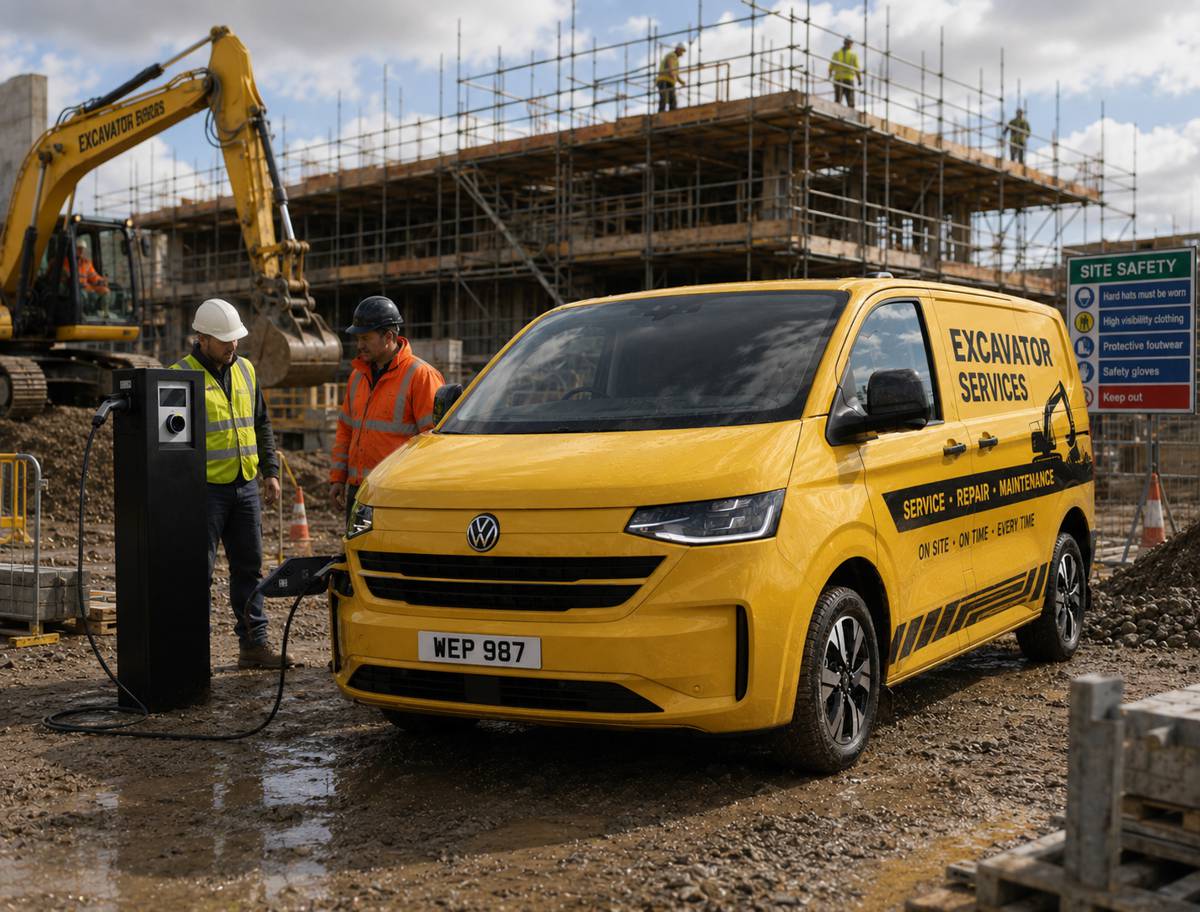
Where the eHybrid does hold clear ground is in the physical work it can absorb without operational compromise. The Panel Van carries 1,132kg and tows 2,300kg, against 911kg to 1,081kg for the e-Transporter Panel Van according to Volkswagen’s own published figures. The towing rating is nominally identical across the two electrified variants, but the practical difference is severe: hauling a plant trailer or a mini-excavator on a BEV collapses real-world range in a way that a petrol range-extender simply does not, because once the 11.8kWh pack is depleted the eHybrid reverts to a conventional hybrid with a full fuel tank behind it. For a groundworks contractor moving a two-tonne trailer between three sites in a day, that distinction determines whether the vehicle is fit for purpose at all.
The charging specification tells its own story about intended deployment. At 3.7kW AC with no DC rapid capability, the eHybrid is designed to be plugged in overnight at a depot, a yard or a driver’s home, and refilled with petrol everywhere else. Four and a half hours from empty is comfortably within a night shift and undemanding of site electrical capacity, which matters when the OZEV Depot Charging Scheme closed to applications on 30 June 2026 and many contractors have neither the grid connection nor the capital allocation to install high-power infrastructure across a dispersed operation.
Thirty-five miles of electric range maps closely onto urban delivery legs, first-fix trades work and the inner-city portions of mixed routes, which is precisely the pattern where tailpipe emissions cause the most regulatory friction. Volkswagen quotes weighted WLTP CO2 below 95g/km for the Shuttle derivative, and as a Euro 6 petrol vehicle the eHybrid is compliant with every operating Clean Air Zone in England and every Scottish Low Emission Zone, where the entry threshold is Euro 4 for petrol and Euro 6 for diesel.
The Mandate Gap That Neither Manufacturers Nor Fleets Can Close Alone
The wider market context explains why a manufacturer would launch a non-qualifying powertrain into a mandated transition at all. SMMT figures for June 2026 show UK light commercial vehicle registrations up 12.2% to 31,602 units, a third consecutive month of growth that lifted the first half 1.7% ahead of last year at 158,648 units. Battery-electric registrations rose 23.2% in June to take 11.5% of the monthly market and 9.9% across the half year, up from 8.6% a year earlier.
Against a 24% van target for 2026 and a penalty of £18,000 per non-compliant vehicle, the SMMT calculates that closing the gap would require electric vans to average around 40% of registrations for the remainder of the year. Mike Hawes, the organisation’s chief executive, noted that <em>”zero emission uptake remains well below ambition”</em> and that regulation, infrastructure and incentives need to work together if operators are to invest with confidence.
That gap has moved from a technical compliance question to an active political one. Ministers are reported to be consulting on lowering ZEV trajectories following sustained pressure from manufacturers and from Unite, whose general secretary Sharon Graham described the prospect of a review as “a huge victory” for the sector. Van specialists have argued the debate is skewed.
Barrie Wilson of FleetCheck observed that “the conversation has almost exclusively been about cars”, a reasonable objection given that electric vans are lagging their target by a considerably wider margin than electric cars are lagging theirs. Until that review concludes, manufacturers face a structural mismatch between what the mandate counts and what customers will actually order, and products like the eHybrid exist to keep operators inside the brand and moving down the emissions curve while the underlying economics of full electrification improve.
Shared Architecture And The Economics Of Ford Otosan
The speed with which Volkswagen has been able to add a third powertrain to a range launched in the UK in 2025 is a direct dividend of the Ford alliance. The current Transporter is a sister vehicle to the second-generation Ford Transit Custom, engineered by Ford and built alongside it at Ford Otosan’s Kocaeli plant in Turkey, where combined output across both brands has exceeded 405,000 units and where a dedicated battery assembly line was commissioned to support electrified derivatives.
Ford Otosan has been producing plug-in hybrid Transit Customs since 2022 and moved the current generation to the 2.5-litre Duratec petrol unit with an 11.8kWh pack, which is the same combination now badged as the Transporter eHybrid. Volkswagen has consequently absorbed none of the development or industrialisation cost of a powertrain it can offer within eighteen months of its partner.
For the wider commercial vehicle sector this is the more instructive story. Margins in light commercials are thin enough that platform sharing has become the default response to a transition requiring parallel investment in diesel, plug-in hybrid and battery-electric variants of the same vehicle. Volkswagen and Ford now co-produce across the Transit Custom and Transporter, the Caddy and Transit Connect, and the Ranger and Amarok, giving both brands access to a breadth of derivatives that neither could economically justify alone.
The practical consequence for buyers is a wider choice of powertrain within a single body, chassis and racking specification, which simplifies fleet standardisation, converter tooling and technician training. It also means that supply resilience for a significant slice of the UK van market now runs through a single Turkish manufacturing complex, a concentration worth understanding when modelling lead times.
Construction Fleets And The Gap Left By The Pickup Collapse
The June data contains a development of direct relevance to construction procurement. Pickup registrations fell 57.6% to 1,167 units and now represent 3.7% of the LCV market against 9.8% a year ago, a decline the SMMT attributes to the reclassification of double-cab pickups for benefit-in-kind and capital allowance purposes. Hawes explicitly identified construction among the sectors affected.
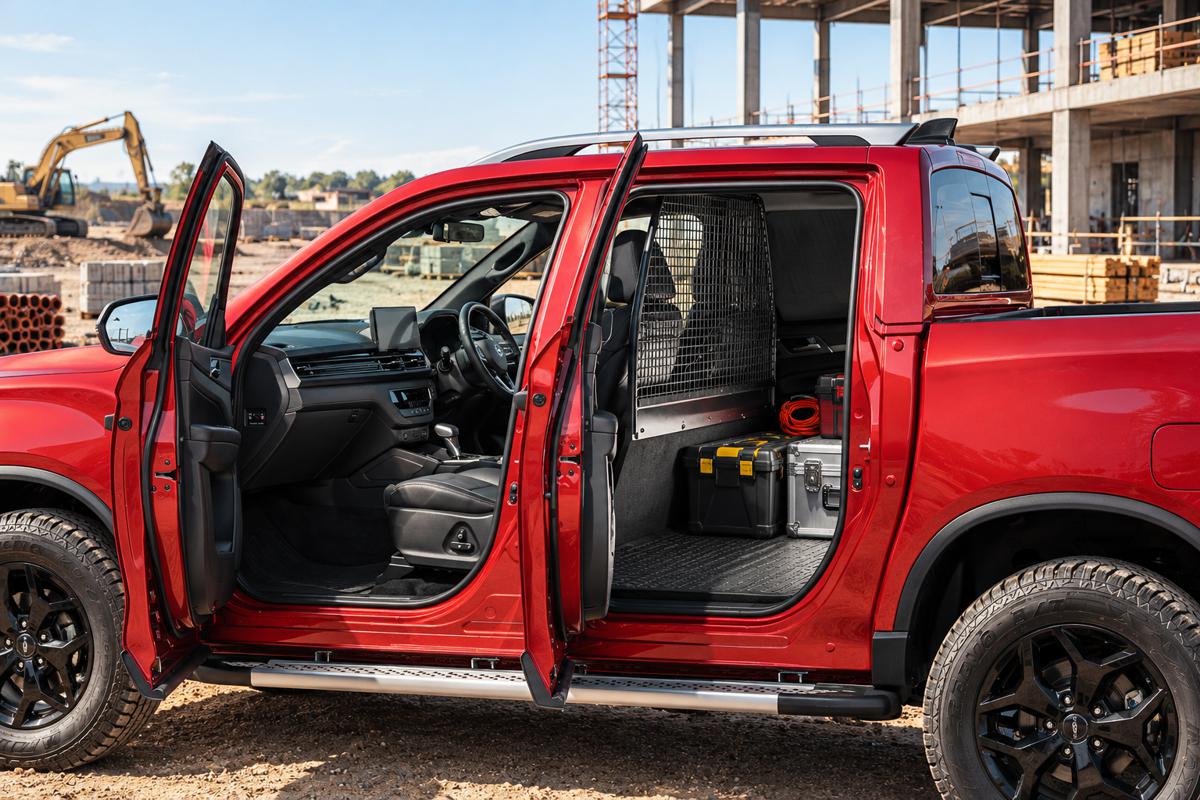
Site supervisors, M&E contractors and utilities crews who previously ran double cabs on favourable tax treatment are now looking for a vehicle that carries a team, tows a trailer, accepts a rack conversion and does not create a punitive personal tax liability, and the medium van segment has responded with a 62.1% increase in June registrations to 6,795 units.
The Transporter Kombi and Shuttle derivatives sit squarely in that space, and the eHybrid version arrives with a credible answer for crews working across urban and rural sites in the same week. A contractor operating inside a Clean Air Zone in the morning and towing plant to a rural site in the afternoon has, until now, faced a choice between a diesel that increasingly struggles on urban access economics and a battery-electric van that struggles on towed range.
The plug-in hybrid resolves that specific conflict without requiring depot infrastructure, which is why the powertrain retains commercial logic even without a grant behind it. Fleet managers assessing it should model on duty cycle rather than headline price, because the vehicle rewards operations with genuine daily plug-in discipline and penalises those that treat the battery as optional.
Reading The Regulatory Runway To 2035
The strategic question for anyone specifying vans this year is how long this powertrain remains a viable procurement option. The Government has confirmed an end to new internal combustion car sales in 2030 but retained 2035 for vans, which gives the eHybrid a materially longer runway than an equivalent plug-in hybrid car and comfortably covers two full replacement cycles for most commercial operators.
Euro 7 requirements begin applying to newly type-approved models from late 2026 and to all vehicles on sale by late 2027, which will shape the specification of any successor, but the near-term regulatory risk to a 2026 order sits with local access charging rather than with national phase-out dates. Cities retain the power to tighten Clean Air Zone classes, and London’s Congestion Charge discounts for electric vans are already scheduled to halve from March 2030.
For infrastructure owners and tier-one contractors building fleet strategy, the sensible reading is that plug-in hybrids now occupy a defined and shrinking operational niche rather than a general-purpose bridge. They are the right answer for towing duties, dispersed rural operations and depots without charging capacity, and the wrong answer for high-mileage urban work where the electric van has already won on total cost.
Volkswagen has judged that niche accurately and priced into it with a contract hire offer that does much of the persuading. The more important development to watch is the ZEV mandate review, because a revised van trajectory that recognises the infrastructure reality would do more to accelerate genuine fleet renewal than any single product launch, and the industry has been remarkably united in saying so.
Key Industry Questions
- Does the Transporter eHybrid qualify for the Plug-in Van Grant? No. Plug-in hybrid vans lost eligibility for the Plug-in Van Grant in January 2026, when the criteria were revised to require zero tailpipe emissions alongside a minimum zero-emission WLTP range of 60 miles. The eHybrid produces tailpipe CO2 and offers 35 miles of electric range, so it falls outside the scheme on both counts. The change removed all remaining plug-in hybrid vans from the grant, including Volkswagen’s own Caddy eHybrid and the Ford Transit Connect PHEV. Fully electric vans in the 2.5 to 3.5 tonne bracket remain eligible for up to £5,000. Buyers should confirm current grant levels directly, as the Department for Transport extended the scheme through the 2026/27 financial year without immediately publishing revised rates.
- Does a plug-in hybrid van count towards a manufacturer’s ZEV mandate obligation? It does not. The ZEV mandate counts only battery-electric and hydrogen fuel cell vehicles towards the zero-emission target, which stands at 24% of new van sales for 2026 and rises to 34% in 2027 and 70% by 2030. Plug-in hybrids sit within the non-ZEV portion of a manufacturer’s fleet and are regulated through the separate CO2 provisions of the Vehicle Emissions Trading Scheme. Manufacturers missing their van target face penalties of £18,000 per non-compliant vehicle, subject to banking, borrowing and credit trading flexibilities. A plug-in hybrid launch therefore serves customer demand and CO2 compliance rather than mandate compliance.
- What is the tax position for a company-provided plug-in hybrid van? Vans available for unrestricted private use attract a flat van benefit charge, set at £4,170 for 2026/27, with a further £798 van fuel benefit charge where private fuel is provided. Zero-emission vans attract a nil charge, so the difference for a higher-rate taxpayer exceeds £1,600 a year before employer Class 1A National Insurance. Where private use is genuinely restricted to ordinary commuting and the vehicle is provided primarily for business travel, no benefit charge arises regardless of powertrain. Passenger-carrying derivatives may fall under company car rules instead, where plug-in hybrid bands are tied to electric range, so specification should be confirmed with a tax adviser before ordering.
- Can the eHybrid enter Clean Air Zones and Low Emission Zones without charge? Yes. Clean Air Zones in England and Low Emission Zones in Scotland set their thresholds at Euro 4 for petrol cars and vans and Euro 6 for diesel, so a new petrol plug-in hybrid is compliant across every operating scheme. It is also compliant with the London ULEZ. The exception is the London Congestion Charge, which is a congestion measure rather than an emissions measure and applies at the full £18 daily rate to plug-in hybrids. Electric vans registered for Auto Pay currently pay £9, a discount scheduled to reduce from March 2030. Operators running regularly into central London should model that differential explicitly.
- How does the eHybrid compare with the e-Transporter on payload and range? The eHybrid Panel Van carries 1,132kg and tows 2,300kg, while the e-Transporter Panel Van carries between 911kg and 1,081kg depending on specification, the difference reflecting battery mass. The electric model offers up to 225 miles of WLTP range from its 70kWh battery and supports DC rapid charging, against 35 miles of electric range and AC-only charging at 3.7kW for the plug-in hybrid. In practice the electric van suits high-mileage urban and regional work with depot charging, while the plug-in hybrid suits towing, dispersed rural routes and operations where charging infrastructure is unavailable or where daily distance varies unpredictably.
- Why has Volkswagen launched this powertrain only now? The Transporter shares its architecture with the second-generation Ford Transit Custom under the Ford-Volkswagen alliance, and both are built at Ford Otosan’s Kocaeli plant in Turkey. Ford has offered the plug-in hybrid Transit Custom since the current generation launched, using the same 2.5-litre petrol engine and 11.8kWh battery combination. Volkswagen sequenced its UK rollout with diesel and battery-electric variants first, following the December 2024 pricing announcement, and has added the plug-in hybrid as the third powertrain. The staggered approach reflects production allocation and market positioning rather than any technical constraint, and it allowed Volkswagen to avoid duplicating development cost.
- What should construction fleets take from the collapse in pickup registrations? Pickup registrations fell 57.6% year on year in June to 1,167 units, taking segment share from 9.8% to 3.7%, following the reclassification of double-cab pickups for benefit-in-kind and capital allowance purposes. The SMMT has identified construction as one of the sectors most affected. Crews that relied on double cabs for a combination of passenger capacity, towing and tax efficiency are migrating towards crew vans and medium vans, a shift visible in the 62.1% increase in medium van registrations in June. Fleet managers should reassess whole-life cost across the crew van, Kombi and Shuttle formats rather than assuming a like-for-like pickup replacement remains available.
- Is the ZEV mandate likely to change, and should that alter procurement decisions now? Government is reported to be consulting on reducing ZEV trajectories following pressure from manufacturers and unions, with reports suggesting the 2030 car target could fall from 80% to somewhere between 50% and 70%. Van targets have received less attention despite lagging further behind, and industry bodies have argued the review must address light commercial vehicles specifically. The 2035 date for ending new internal combustion van sales has not been reported as under revision. Fleets should not delay renewal on the expectation of relaxed targets, because the direction of travel on urban access charging, fuel duty and total cost of ownership is largely independent of the mandate itself.
- What charging infrastructure does the eHybrid actually require? Very little by commercial vehicle standards. The 11.8kWh battery charges from empty in four and a half hours on a 3.7kW AC supply, which a standard single-phase workplace or domestic charge point delivers without site electrical upgrades. There is no DC rapid capability, so public rapid charging is not part of the operating model. The practical requirement is overnight access to a charge point at a depot, yard or driver’s home, and a management discipline that ensures drivers actually plug in. Without that discipline the vehicle operates as a conventional petrol hybrid carrying battery weight, and both fuel economy and the emissions case deteriorate substantially.
Strategic Takeaways
- Grant withdrawal has inverted the price relationship between plug-in hybrid and battery-electric vans, so procurement teams should model effective purchase price after incentives rather than comparing published list prices, which now flatter the hybrid.
- Plug-in hybrid vans have become a duty-cycle product rather than a transitional default, justified by towing, dispersed rural operation and absent depot infrastructure rather than by any remaining fiscal advantage.
- The gap between a 24% mandated van target and 9.9% actual uptake is a demand and infrastructure problem rather than a supply problem, and a ZEV review that addresses van charging economics would move fleet renewal further than additional model launches.
- Platform sharing through the Ford-Volkswagen alliance is now the structural answer to funding three parallel powertrains in a thin-margin segment, giving buyers wider derivative choice while concentrating supply risk in fewer manufacturing sites.
- The reclassification of double-cab pickups has permanently redirected construction fleet demand towards crew vans and medium vans, and specifiers should rebuild whole-life cost models around that segment rather than waiting for pickup economics to recover.