Topcon Advances Connected Machine Control and Geomatics at CONEXPO
At a time when contractors are grappling with tighter margins, rising material costs and intensifying sustainability scrutiny, digital integration is no longer a competitive advantage. It is fast becoming a prerequisite. Against that backdrop, Topcon Positioning Systems has introduced a suite of machine control, safety and geomatics innovations at CONEXPO-CON/AGG 2026, signalling a deeper push towards platform-based construction technology.
The announcement spans heavy civil earthmoving, road construction, aggregate handling and interior building layout. Yet the real story lies not in any single product feature, but in how these technologies converge around a centralised ecosystem designed to connect equipment, people and processes. In an industry increasingly defined by data flow and interoperability, that platform approach carries implications well beyond the show floor.
A Platform Strategy for an Industry Under Pressure
Construction productivity growth has historically lagged behind manufacturing and other industrial sectors. According to research from McKinsey and others, global construction productivity has improved only marginally over the past two decades, while project complexity and compliance requirements have grown substantially. Meanwhile, infrastructure clients are demanding greater transparency, digital traceability and carbon accountability.
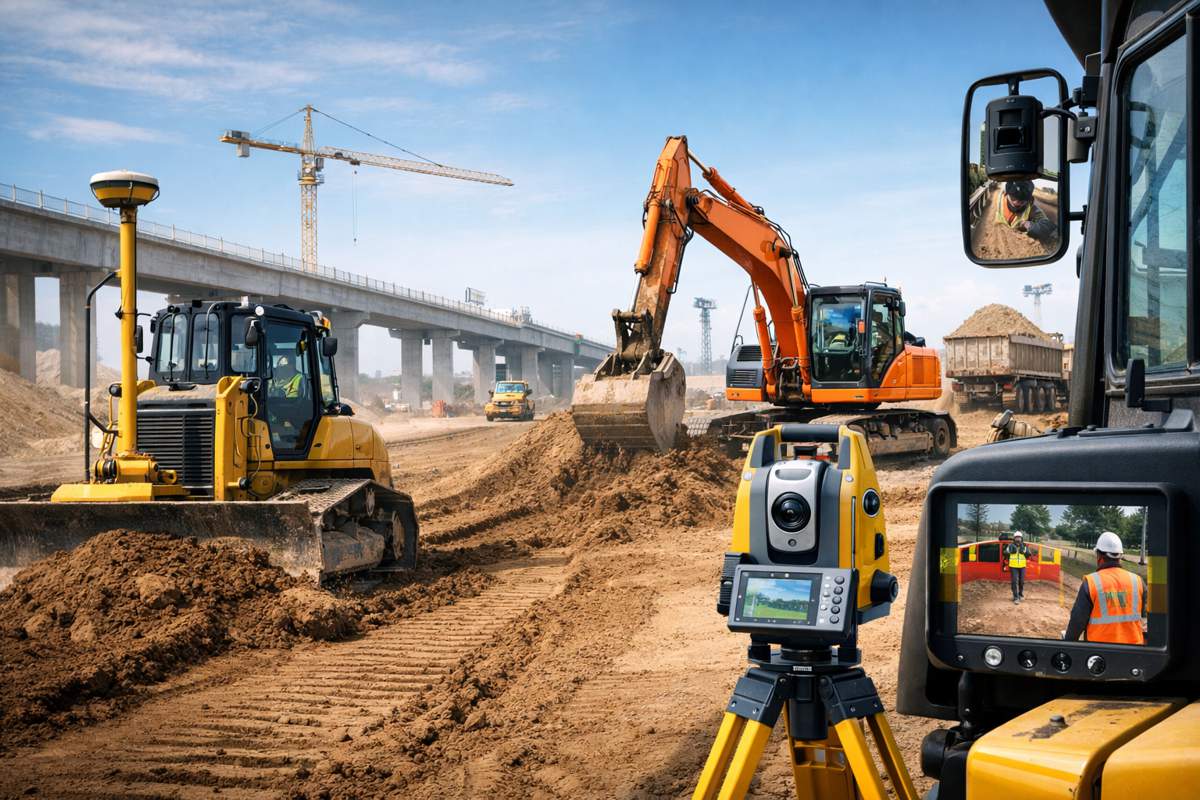
Topcon’s response centres on a unified environment built around its 3D machine control architecture. Rather than treating guidance systems, positioning hardware and cloud management as discrete tools, the company is reinforcing a single digital backbone intended to span excavation, grading, paving, surveying and building layout. In practical terms, that means reducing data silos, minimising site downtime and enabling mixed fleets to operate within one coordinated workflow.
Murray Lodge, executive vice president at Topcon, framed the context clearly. He said: “The industry continues to face shrinking margins, tighter specifications, and heightened sustainability expectations, and needs innovative approaches to complete projects on time, under budget, and with long-lasting results.” He added: “Industry professionals need high-accuracy, scalable solutions easily integrated into mixed fleets and varied workflows. A single-platform approach becomes essential, minimizing downtime, reducing material waste, and maximizing labor efficiencies across the entire project lifecycle. The Topcon innovations introduced at CONEXPO reflect that connected platform approach.”
The emphasis on lifecycle integration is telling. Owners increasingly expect digital deliverables alongside physical assets, and contractors must now demonstrate how design intent, construction execution and as-built data align. Platform consistency simplifies that equation.
Enhancing Precision in Earthmoving and Grading
At the heart of the heavy construction portfolio is the 3D-MC machine control software environment, which provides real-time guidance and control for excavation, grading, paving and milling operations. The latest configuration updates introduce 3D-MC Edge, a feature engineered to focus directly on a machine’s cutting edge.
By referencing the cutting edge itself, rather than relying solely on body geometry assumptions, operators can work closer to design grade without overcutting or overfilling. For contractors operating wheeled tractor scrapers, tow-behind scrapers, box blades or push dozers, that incremental precision can translate into reduced rework and fewer finishing passes. On large infrastructure corridors, even small reductions in material movement compound into significant cost and emissions savings.
Municipalities and smaller contractors stand to benefit in particular. Many operate mixed or partially digital fleets, where full automation may not yet be viable. An economical configuration that improves grading accuracy without requiring wholesale fleet replacement offers a pragmatic pathway towards digital transition.
Excavator Intelligence and Hybrid Positioning
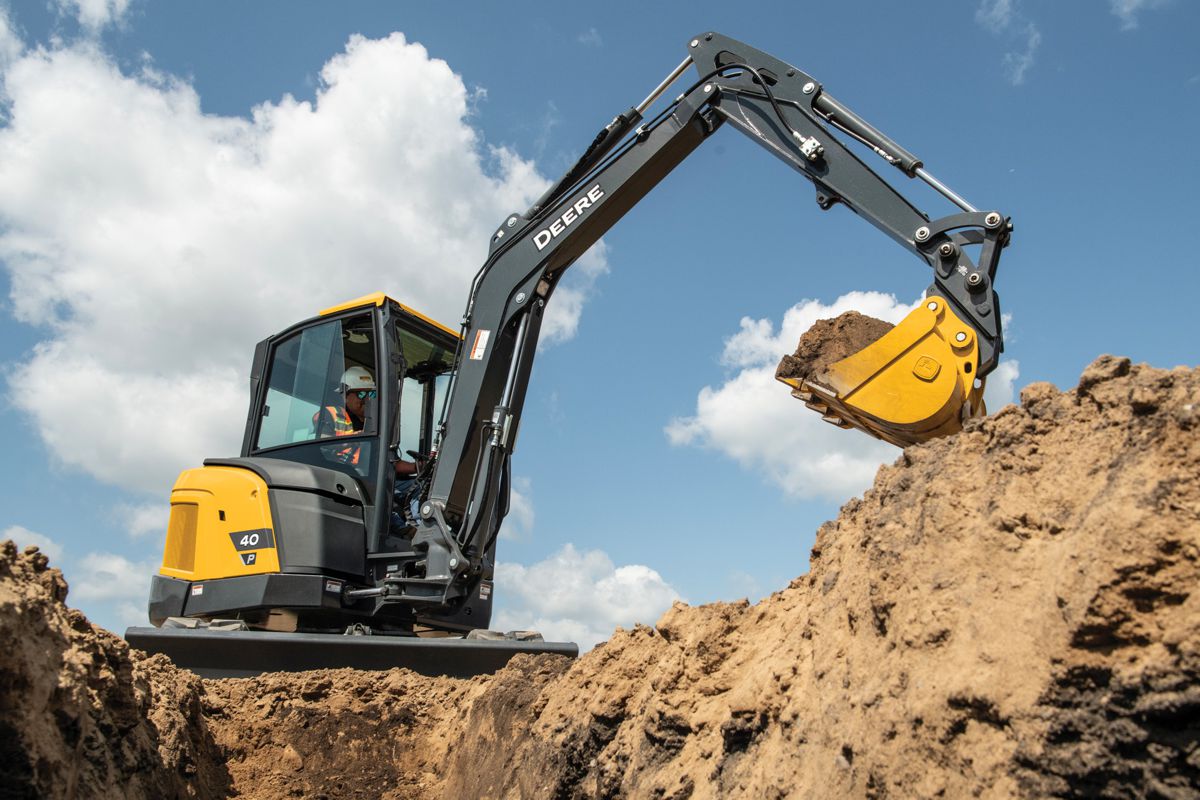
Excavators remain among the most versatile and widely deployed machines on construction sites. Enhancements to Topcon’s excavator-focused functionalities therefore carry broad relevance. New updates concentrate on usability, safety and sustained productivity.
Slope Control introduces automated adjustment of bucket tilt and rotation angles based on the digital surface model. Instead of relying entirely on manual judgement, the system uses the 3D design to guide attachment orientation. This reduces operator fatigue, improves finish accuracy and helps maximise the efficiency of tilt rotators. In practice, fewer corrective passes mean less fuel consumption and reduced wear on attachments.
Hybrid Lock addresses a different but equally common challenge. On active sites, robotic total stations can temporarily lose line of sight to machine-mounted prisms as vehicles or personnel move across the field. Traditionally, that interruption would halt work until tracking is restored. Hybrid Lock automatically switches between local positioning using robotic total stations and satellite-based GNSS tracking to maintain continuity. By bridging LPS and GNSS data streams, the system reduces unplanned downtime without compromising positional accuracy.
This dual-mode resilience is particularly relevant in environments with obstructed sky views, such as urban canyons, tunnels or heavily forested areas. Infrastructure construction is rarely conducted under perfect satellite visibility. Hybrid capability reflects that operational reality.
Weighing, Compliance and Asset Protection
Overloading remains a persistent risk in earthmoving and aggregate transport. Beyond regulatory fines, uneven loading accelerates tyre wear, increases fuel consumption and raises safety concerns. Topcon’s onboard load weighing solutions seek to mitigate these risks by embedding measurement directly into the loading cycle.
For excavators, integrated load weighing enables operators to monitor material distribution in real time. Trucks can be filled to optimal capacity without exceeding legal limits. Even distribution reduces mechanical stress on axles and suspension systems, lowering long-term maintenance costs.
In parallel, the LM-1000 load weighing system for aggregate handlers provides trade-approved measurement for loaders. All loads and stockpile movements are recorded and reported within the connected management environment. This traceability supports accurate accounting and enhances transparency for project stakeholders. In an era where material reconciliation and carbon reporting are under increasing scrutiny, digital weight capture forms part of a broader compliance framework.
Robotic Total Stations and High-Accuracy Road Construction
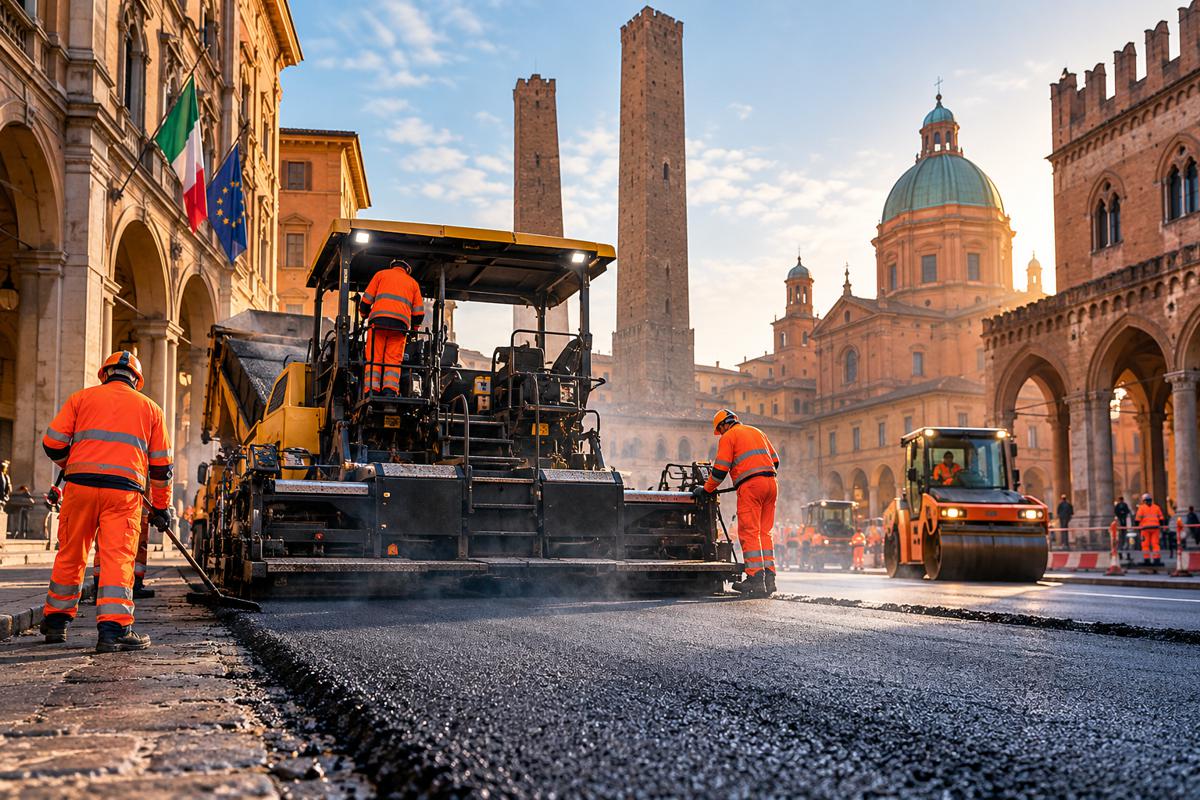
Precision-intensive operations such as fine grading, milling and asphalt paving demand millimetre-level control. The GTS-M1 robotic total station has been introduced as a next-generation instrument for machine control applications relying on local positioning systems.
By tracking a 360-degree prism mounted on heavy equipment, the system supports accurate guidance in conditions where GNSS signals may be unreliable or obstructed. Road construction environments often present exactly those challenges, whether due to tree cover, urban infrastructure or tunnel works. In such contexts, total station tracking ensures continuity and accuracy.
The GTS-M1 also integrates with Hybrid Lock functionality, reinforcing the theme of redundancy and resilience. For contractors delivering high-specification road surfaces, particularly on publicly funded projects with stringent tolerance requirements, such precision tools are increasingly indispensable.
AI-Driven Site Awareness and Risk Reduction
Digital transformation is not confined to productivity metrics. Safety remains a critical frontier. The Topcon Awareness System applies artificial intelligence and digital cameras mounted to construction vehicles to detect movement or obstructions that could result in conflict.
Blind-spot detection alerts are delivered to the operator and logged in a cloud portal. Configurable zones of influence allow site managers to tailor detection parameters to specific operational environments. Beyond immediate hazard avoidance, recorded data can support post-incident analysis and continuous improvement strategies.
Industry-wide, the integration of AI into heavy equipment aligns with broader trends in advanced driver assistance and autonomous systems. As regulatory bodies and insurers place greater emphasis on proactive risk mitigation, embedded awareness tools are likely to become more common across fleets.
Cloud Connectivity and Mixed Fleet Integration
Central to the connected ecosystem is Topcon Site Manager, a cloud-based platform for remote control, data sharing and work order management. The system enables design files to be transmitted to machines, productivity data to be retrieved and granular work orders to be created based on measured output.
Compatibility with ISO 15143-4 supports telematics interoperability across mixed fleets. For contractors operating equipment from multiple manufacturers, this standardisation is vital. It reduces vendor lock-in and simplifies data consolidation. In practical terms, fleet managers can monitor machine performance, material flow and project progress through a unified interface rather than juggling disparate systems.
Digital reporting also strengthens relationships with clients. Transparent, data-backed performance metrics can substantiate progress claims and verify compliance with design specifications. As public infrastructure funding increasingly demands accountability, such digital audit trails carry strategic importance.
Extending Digital Precision Indoors
While heavy civil machinery dominates headlines, building construction is undergoing its own digital shift. Topcon Origo represents an expansion into spatial positioning for interior layout. Designed as a handheld system mounted on a rover pole, it uses localisation and reusable spatial reference maps to determine real-time position without conventional calibration or levelling.
Neil Vancans, head of Topcon’s geomatics unit, described its function succinctly. He said: “Topcon Origo provides a reliable fixed origin for even the most complex interior environments.” He continued: “Using reference-map-based positioning to overcome the line-of-sight limits of optical or laser equipment, Origo delivers a seamless workflow that ensures every point is placed as intended.”
Interior construction frequently suffers from line-of-sight constraints that hinder traditional optical and laser layout methods. By leveraging reference-map-based positioning, Origo aims to maintain spatial accuracy even in complex indoor geometries. As building information modelling workflows demand tighter alignment between digital models and physical execution, reliable interior positioning becomes a foundational capability.
A Connected Future for Construction Delivery
Taken individually, each product enhancement addresses a defined operational challenge. Viewed collectively, they illustrate a broader shift towards connected, data-centric construction. Equipment guidance, load management, safety awareness and cloud analytics are no longer peripheral technologies. They are converging into a unified digital infrastructure underpinning project delivery.
For contractors, the commercial calculus is straightforward. Reduced rework, improved fuel efficiency, fewer compliance breaches and enhanced safety records translate directly into margin protection. For project owners and policymakers, improved traceability and consistent data streams support accountability and lifecycle asset management.
As global infrastructure investment accelerates in response to urbanisation and climate transition imperatives, the ability to execute complex projects with precision and transparency will differentiate industry leaders from laggards. Platform integration, rather than isolated innovation, appears set to define the next phase of construction technology evolution.
In that context, the technologies presented at CONEXPO do more than add incremental features. They reflect a strategic alignment with the industry’s structural challenges. Connecting machines is one thing. Connecting outcomes across the entire project lifecycle is something else entirely. The latter is where long-term value resides.