IPAF Launches Global Push to Improve MEWP Inspection Standards
Working at height remains one of the construction industry’s most tightly regulated and safety-critical activities, yet mechanical failures involving powered access equipment continue to result in fatalities and serious injuries worldwide.
With increasing infrastructure activity, tighter compliance expectations and growing equipment fleets, the International Powered Access Federation (IPAF) has launched its 2026 Global Safety Campaign with a simple but commercially significant message: inspect equipment properly before it goes to work.
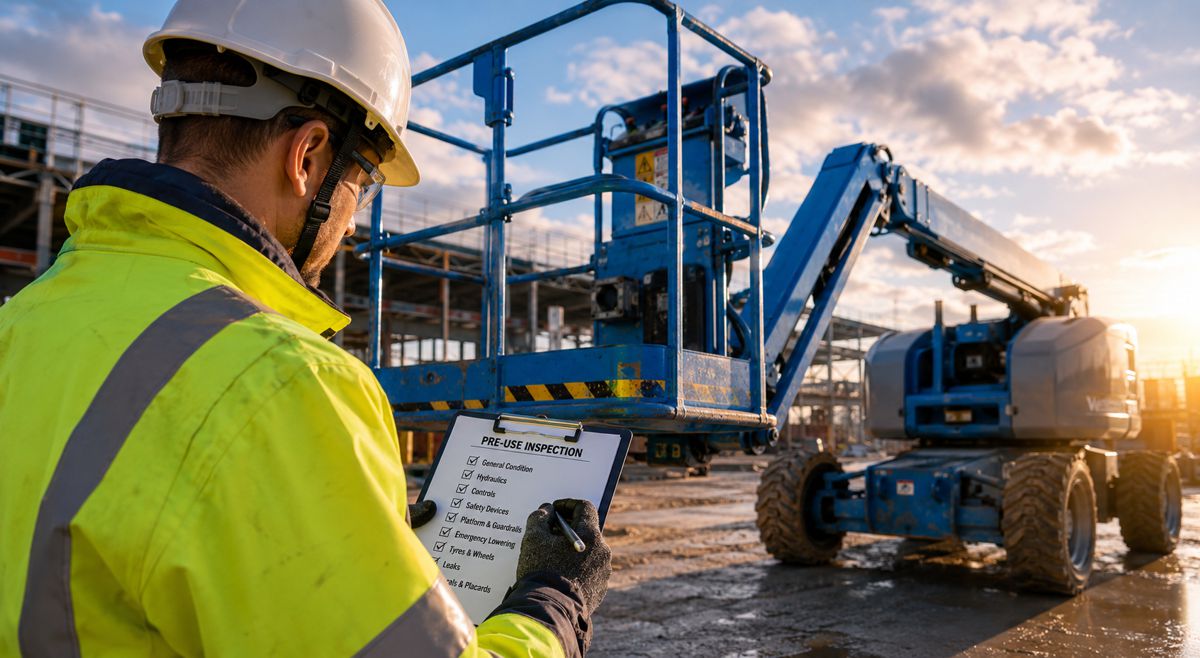
The campaign, titled “Check It!”, places renewed attention on pre-use inspections, maintenance procedures and servicing standards for mobile elevating work platforms (MEWPs) and related powered access equipment. IPAF is urging operators, rental companies, contractors, fleet managers and site supervisors to treat inspection routines as an operational priority rather than an administrative exercise.
The initiative arrives at a time when construction firms across Europe, North America, the Middle East and Asia are increasingly relying on MEWPs to support infrastructure delivery, industrial maintenance, utilities work, logistics operations and urban development projects. As fleets expand and equipment utilisation rates climb, the pressure on maintenance regimes, technician availability and operational oversight has intensified considerably.
Briefing
- IPAF has launched its 2026 Global Safety Campaign titled “Check It!”
- The campaign focuses on MEWP inspections, servicing and maintenance
- IPAF recorded eight major incidents linked to technical or mechanical failure in 2024
- New guidance documents and inspection resources have been released globally
- The campaign reinforces shared responsibility across contractors, rental firms and operators
Growing Dependence on Powered Access Equipment
Powered access equipment has become indispensable across modern construction and infrastructure delivery. MEWPs now support everything from bridge inspections and airport construction to renewable energy projects, telecommunications upgrades and industrial shutdowns. Their efficiency advantages are substantial, particularly in sectors facing labour shortages and growing productivity demands.
According to industry research from IPAF and rental market analysts, global demand for access equipment has continued to rise steadily as contractors seek safer and faster alternatives to traditional scaffolding and ladders. Electrification trends, urban redevelopment and increased investment in infrastructure renewal are also driving broader adoption of access platforms in densely populated environments where safety and space constraints are critical.
Despite those advantages, powered access equipment remains heavily dependent on rigorous inspection and servicing routines. Hydraulic systems, control interfaces, sensors, guardrails, tyres, outriggers and emergency lowering systems all require continual monitoring to ensure safe operation. Failure in any one of those areas can quickly escalate into a catastrophic incident when operators are working several metres above ground level.
IPAF’s latest campaign reflects growing recognition that inspection culture is becoming just as important as operator training in preventing avoidable accidents.
Technical Failures Still Creating Serious Risks
Although the powered access sector maintains comparatively strong safety records when measured against many other forms of work at height, technical failures continue to occur across global fleets. These failures range from structural faults and hydraulic leaks to sensor malfunctions, uncontrolled movement and inadequate servicing histories.
IPAF says it received eight reports during 2024 involving fatal or major injuries linked directly to mechanical or technical failures across powered access equipment categories. Six fatalities were recorded within those incidents.
Brian Parker, Head of Safety & Technical at IPAF, stated: “In 2024, IPAF received eight reports of fatal and major injuries relating to mechanical or technical failures on all types of powered access equipment, with six fatalities reported. Although this data represents a 33% year-on-year decrease in reports and a 45% year-on-year decrease in fatalities, every incident and life lost is one too many.”
He added: “Many incidents involving powered access equipment are avoidable. By ensuring that machines are properly maintained, inspected, and checked before use, we can significantly reduce risks and protect lives.”
Those statistics underline a broader challenge facing equipment-intensive sectors globally. As construction machinery becomes more digitally advanced and electronically integrated, maintenance procedures are becoming more sophisticated and increasingly dependent on properly trained technicians and documented inspection systems.
Inspection Routines Under Greater Scrutiny
The “Check It!” campaign places strong emphasis on shared accountability throughout the equipment lifecycle. Rather than focusing solely on operators, IPAF is encouraging a broader industry-wide approach involving manufacturers, rental companies, fleet owners, maintenance providers and principal contractors.
Pre-use inspections remain one of the most effective frontline safeguards against equipment failure. These checks often include visual inspections for leaks or damage, confirmation of emergency controls, verification of safety systems, tyre and stabiliser assessments, and operational function testing before machines are authorised for work.
However, industry observers have noted that inspection quality can vary considerably depending on operational pressures, project schedules and workforce experience levels. In fast-moving construction environments, there is sometimes a temptation to compress inspection procedures or rely too heavily on assumptions regarding fleet condition.
That operational reality becomes particularly important within rental fleets, where equipment may move between multiple projects and users within short periods. IPAF’s campaign therefore also addresses pre-delivery inspections and handover responsibilities within the rental market.
New Guidance Materials Target Operational Best Practice
As part of the initiative, IPAF has released several new guidance resources aimed at strengthening inspection and maintenance standards across the powered access sector.
The documents include:
- Guidance On Buying a Pre-Owned MEWP
- The Principles of Service, Maintenance & Inspections of Powered Access Equipment
- Toolbox Talk: Pre-Delivery Inspections of MEWPs (Rental)
- Andy Access poster: Pre-Hire Inspections
- Andy Access poster: Check Your MEWP
The inclusion of guidance covering second-hand MEWP purchases is particularly notable. Used equipment markets have expanded significantly in recent years as contractors seek lower capital expenditure options and rental firms rotate fleets more aggressively.
While pre-owned equipment can provide strong commercial value, ageing machinery also introduces additional maintenance complexities if inspection histories, servicing standards or component integrity are poorly documented. IPAF’s focus on this area reflects increasing concern regarding lifecycle management within ageing access fleets worldwide.
The organisation is also reinforcing the importance of reporting near-misses and incidents to improve global safety intelligence and identify emerging risk patterns more effectively.
Digitalisation Is Changing Fleet Management
The campaign also arrives during a broader technological shift within the construction equipment industry. Modern MEWPs increasingly incorporate telematics, remote diagnostics, sensor monitoring and predictive maintenance technologies designed to improve reliability and fleet visibility.
Major equipment manufacturers have expanded investment in connected fleet systems capable of identifying service intervals, fault conditions and abnormal machine behaviour in real time. These technologies are gradually changing how rental companies and contractors manage asset reliability.
However, digital systems are not eliminating the need for physical inspections. Industry specialists frequently warn that overreliance on automated monitoring can create a false sense of security if operators neglect visual checks and practical safety routines.
Human oversight remains essential, particularly in harsh operating environments such as infrastructure projects, industrial plants, ports and mining operations where equipment experiences higher levels of wear and environmental stress.
IPAF’s campaign effectively reinforces the principle that technology should support inspection culture rather than replace it.
Regulatory Pressure Continues to Increase
Work-at-height regulations continue tightening globally as governments and regulators place greater emphasis on contractor accountability and equipment compliance.
In the UK, the Health and Safety Executive (HSE) maintains strict requirements surrounding equipment inspections under PUWER regulations and LOLER obligations. Similar frameworks exist throughout Europe, North America, Australia and parts of the Middle East.
At the same time, major infrastructure clients are imposing increasingly demanding contractor prequalification standards relating to safety management, inspection documentation and maintenance traceability. Access to major public infrastructure contracts now frequently depends on demonstrating robust fleet management systems and compliance procedures.
This commercial reality means inspection standards are no longer simply a health and safety issue. They are increasingly tied directly to contractual eligibility, insurance exposure and corporate reputation.
Rental companies and contractors failing to demonstrate strong inspection cultures may therefore face growing commercial disadvantages alongside heightened operational risk.
Safer Equipment Culture Becoming a Competitive Advantage
The broader powered access industry has undergone significant professionalisation over the past two decades. Operator training standards, certification systems and safety awareness campaigns have all contributed to reducing accident rates across many markets.
Yet the sector’s growing scale means even relatively small percentages of equipment failure can still result in serious incidents globally.
IPAF’s latest campaign reflects a wider industry shift toward preventative risk management rather than reactive compliance. Inspection routines, maintenance discipline and transparent reporting are increasingly viewed as operational fundamentals rather than optional best practice initiatives.
For contractors managing large infrastructure portfolios, logistics hubs, utilities projects and industrial maintenance programmes, equipment reliability now plays a direct role in productivity, programme certainty and workforce retention.
In practical terms, safer fleets also tend to be more commercially efficient fleets. Reduced downtime, fewer incidents, lower insurance costs and stronger client confidence all contribute to long-term operational performance.
Building Safer Work at Height Environments Worldwide
IPAF’s annual safety campaigns have become an increasingly influential part of the global powered access conversation, helping standardise best practices across multiple regions and equipment categories.
The 2026 “Check It!” initiative may appear straightforward on the surface, yet its core message addresses one of the construction sector’s oldest operational truths: small overlooked details often create the biggest risks.
As infrastructure investment accelerates worldwide and access equipment usage continues expanding into new sectors, inspection quality will remain central to safe operations. Maintenance records, pre-use checks and technician competence may not attract the same attention as major project announcements or technological breakthroughs, but they underpin the safe delivery of modern construction and infrastructure work every day.
Quietly, methodically and often unnoticed, those inspection routines continue protecting thousands of workers operating at height across the global built environment.