Cars That Read the Road Could Transform Infrastructure Management
Road infrastructure is entering a new phase where vehicles are no longer simply users of the network but active contributors to how roads are monitored, maintained and managed. A proposed new standard from ASTM International aims to formalise how connected vehicles collect and share infrastructure condition data, potentially reshaping road asset management for decades to come.
The proposed standard, currently under development by ASTM’s Vehicle-Pavement Systems Committee (E17), would establish a consistent framework for extracting road infrastructure data from factory-installed vehicle systems using original equipment manufacturer approved software and sensors.
While connected vehicles already generate huge volumes of operational data, infrastructure agencies have struggled with fragmentation between manufacturers, inconsistent data structures and short-lived aftermarket technologies. The proposed standard, identified as WK97778, seeks to address that challenge by creating a common language between vehicles and road authorities.
The implications stretch far beyond smoother roads. Continuous infrastructure monitoring using vehicles already travelling the network could significantly alter maintenance planning, reduce inspection costs, improve road safety and support wider smart infrastructure strategies now emerging across Europe, North America and Asia.
Briefing
- ASTM International is developing proposed standard WK97778 for road infrastructure data collection using factory-installed vehicle systems
- The initiative focuses on OEM-approved embedded software operating through existing vehicle sensors
- The standard aims to improve long-term consistency and interoperability between connected vehicles and road agencies
- Infrastructure authorities could reduce reliance on dedicated inspection vehicles and manual surveys
- The proposal aligns with UN Sustainable Development Goals covering infrastructure, sustainable cities and climate action
Turning Connected Vehicles Into Infrastructure Sensors
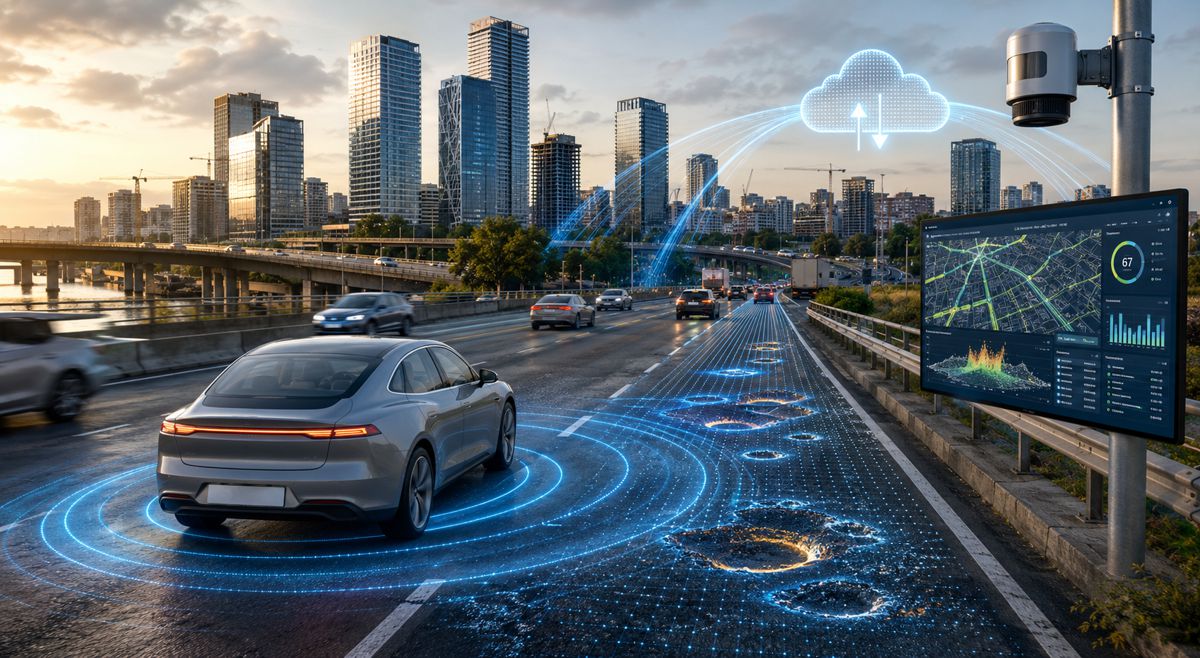
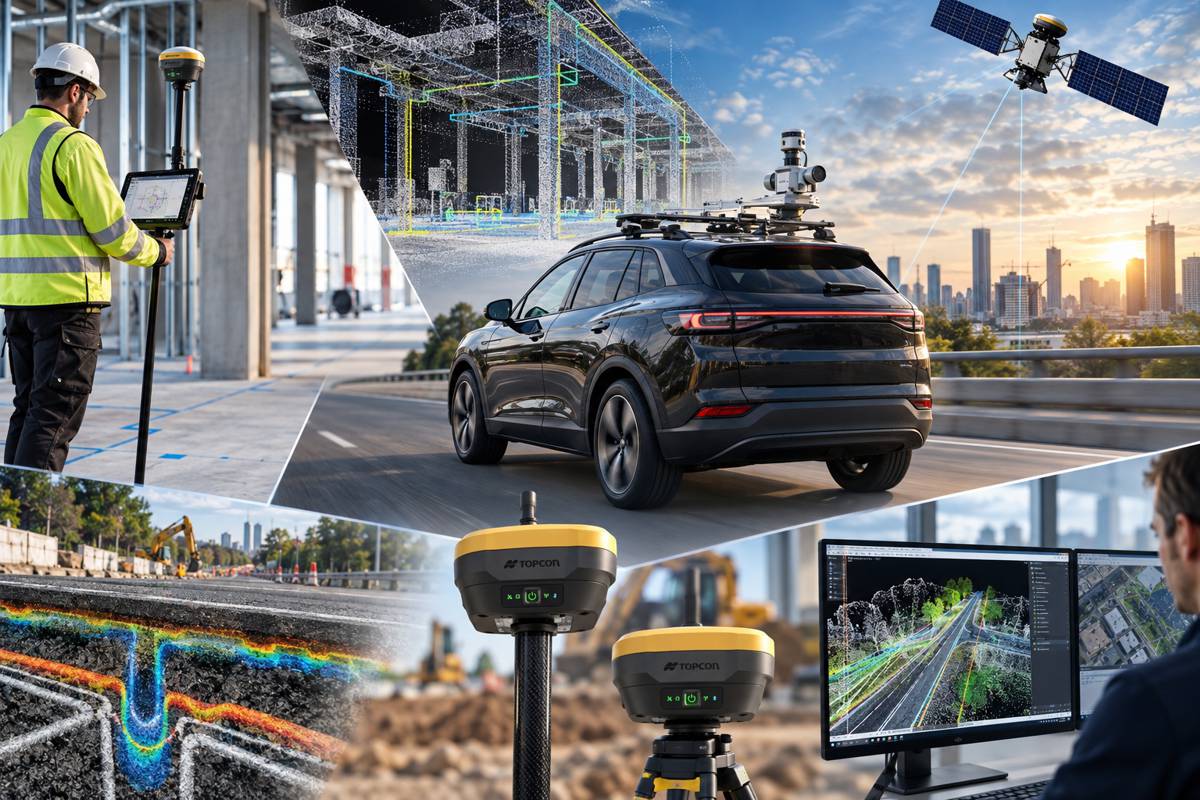
Modern vehicles already carry sophisticated arrays of sensors monitoring wheel movement, acceleration, braking behaviour, traction, steering inputs, suspension activity and environmental conditions. Increasingly, automotive manufacturers are recognising that this data can reveal far more than vehicle performance alone.
Surface deterioration, potholes, ice formation, standing water, rutting and uneven pavement all influence vehicle dynamics. When aggregated across thousands or millions of journeys, connected vehicles effectively become rolling infrastructure sensors capable of mapping road conditions continuously and at scale.
That concept has existed in research circles for years, but deployment has often remained fragmented. Different manufacturers collect data differently, formats vary widely and many solutions rely on aftermarket hardware that lacks long-term viability in an increasingly software-defined automotive sector.
According to ASTM member Björn Zachrisson, the proposed standard seeks to address precisely that problem.
“The goal is long-term consistency and scalability, recognizing that road infrastructure operates on decades-long horizons and that aftermarket solutions are not sustainable as vehicles become increasingly software-defined,” said Zachrisson. “In simple terms, this standard helps cars and road agencies speak the same language.”
That interoperability could prove critical as governments worldwide attempt to modernise ageing infrastructure networks while simultaneously reducing operational costs and improving sustainability outcomes.
Infrastructure Management Is Becoming Data Driven
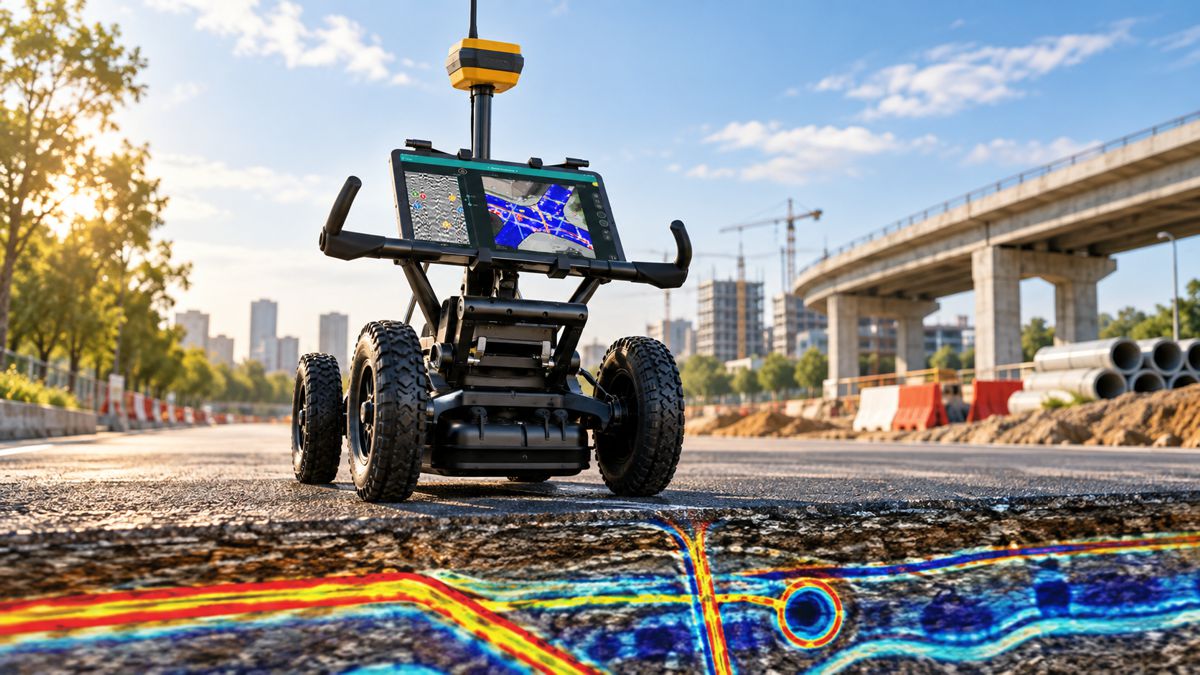
Road authorities have traditionally relied on dedicated survey vehicles, periodic inspections and manual condition assessments to understand network health. Those approaches remain effective, but they are expensive, resource intensive and often infrequent.
In large national road networks, deterioration can emerge between inspection cycles, leaving agencies reacting to failures rather than anticipating them. Connected vehicle data offers a fundamentally different operating model based on continuous monitoring.
Countries including Sweden, Germany, Japan and the United States have already experimented with connected fleet data for winter maintenance, pothole detection and pavement analysis. Some systems use anonymised tyre-slip information to identify icy conditions in real time, while others analyse suspension movement to detect surface irregularities.
The emergence of vehicle-generated infrastructure intelligence aligns closely with broader digital twin strategies now reshaping infrastructure management globally. Increasingly, roads, bridges and utility networks are being modelled as dynamic digital assets updated continuously through live sensor inputs rather than static inspection records.
The ASTM proposal effectively creates one of the foundational building blocks needed for that transition to scale internationally.
Software Defined Vehicles Are Changing Infrastructure Relationships
The timing of the proposed standard reflects a much larger transformation underway inside the automotive industry itself. Vehicles are rapidly becoming software-defined platforms with embedded connectivity, over-the-air updates and integrated sensor ecosystems.
Unlike older vehicles where functionality was tied closely to hardware, newer models continuously generate operational data through centrally managed software architectures. That evolution makes infrastructure monitoring through connected fleets far more practical than it was even a decade ago.
Importantly, ASTM’s proposal focuses specifically on factory-installed systems approved by OEMs rather than aftermarket technologies. That distinction matters because long-term infrastructure management requires stable, scalable and maintainable data collection methods capable of operating consistently across vehicle generations.
As Zachrisson explained: “It makes it easier for OEMs to provide data and enables road authorities to use vehicles already on the road to continuously monitor conditions, reducing the need for manual inspections and adding a time dimension to how roads are understood.”
That “time dimension” could become one of the most valuable aspects of the system. Instead of isolated snapshots collected every few months, agencies may gain access to evolving infrastructure condition trends updated daily or even hourly.
Smart Infrastructure Depends on Standardisation
Infrastructure digitalisation has accelerated dramatically over the past five years, driven by growing urbanisation, climate pressures and expanding demands on transport networks. Yet one persistent obstacle remains interoperability.
Without shared standards, infrastructure systems often operate as disconnected technology silos. Vehicle manufacturers, highway authorities, mapping platforms, contractors and analytics providers frequently use incompatible systems and proprietary data structures.
ASTM’s proposed framework addresses a problem that extends well beyond road maintenance alone. Standardised infrastructure data could support:
- Predictive maintenance strategies
- Autonomous vehicle navigation systems
- Winter road management
- Smart city operations
- Infrastructure resilience modelling
- Traffic safety analysis
- Climate adaptation planning
As autonomous driving technologies mature, the relationship between vehicles and infrastructure will become even more interconnected. Future transport systems will increasingly depend on real-time environmental awareness, accurate surface condition data and continuously updated infrastructure intelligence.
Standardisation therefore becomes less of a technical exercise and more of a strategic necessity.
Sustainability Pressures Are Driving Smarter Maintenance
The proposed ASTM standard also reflects growing pressure on governments and infrastructure agencies to improve sustainability outcomes while managing constrained budgets.
Traditional road inspection programmes involve dedicated survey fleets, repeated site visits and resource-heavy testing operations. Those activities consume fuel, generate emissions and require substantial operational expenditure.
Using connected vehicles already travelling the network offers a far lighter operational footprint. Continuous network-wide screening could help agencies prioritise targeted maintenance interventions instead of conducting blanket inspections across entire regions.
ASTM notes that the proposal aligns with several United Nations Sustainable Development Goals, including SDG 9 on industry and infrastructure, SDG 11 on sustainable cities and communities, and SDG 13 on climate action.
The climate implications are particularly relevant as infrastructure operators face rising pressure to improve asset resilience against extreme weather, flooding and temperature fluctuations. More accurate condition monitoring may allow agencies to intervene earlier before small defects escalate into major failures.
That shift toward predictive infrastructure maintenance is increasingly viewed as essential for both economic efficiency and environmental performance.
Data Governance And Privacy Will Remain Critical
Although the benefits appear substantial, vehicle-generated infrastructure monitoring also raises important questions surrounding privacy, governance and data ownership.
Automotive manufacturers remain cautious about how operational vehicle data is shared, anonymised and commercialised. Governments likewise face growing scrutiny regarding data security and digital infrastructure resilience.
The ASTM proposal focuses specifically on infrastructure data extraction rather than personal driver information, but wider governance frameworks will still be essential as connected vehicle ecosystems expand.
European regulations including GDPR already influence how mobility data can be processed and stored, while cybersecurity concerns continue growing as transport infrastructure becomes increasingly digitised.
Infrastructure agencies adopting connected vehicle monitoring will therefore need robust governance structures ensuring data remains anonymised, secure and interoperable across jurisdictions.
Building The Foundations For Future Roads
The proposed ASTM standard may appear technical on the surface, yet its significance extends into the future architecture of global transport infrastructure.
Roads are steadily evolving from passive physical assets into digitally connected systems capable of communicating with vehicles, operators and maintenance platforms in real time. The success of that transition depends heavily on shared frameworks capable of aligning vehicle manufacturers, infrastructure owners and technology providers.
By focusing on scalable, OEM-approved data collection methods embedded directly within modern vehicles, ASTM’s initiative acknowledges the long operational lifecycles that define infrastructure planning.
The roads themselves may still be made from asphalt, concrete and steel, but the systems managing them are becoming increasingly software driven, data centric and continuously connected.
Quietly, without much public attention, the relationship between vehicles and infrastructure is changing. Cars are beginning to do far more than transport people and goods. Increasingly, they are becoming active participants in understanding, monitoring and shaping the future condition of the networks beneath them.