KfW Backs Britain’s Expanding EV Charging Race
Britain’s electric vehicle charging sector has entered another important phase of maturity as German development finance institution KfW IPEX-Bank joins a £250 million financing package supporting the continued expansion of InstaVolt, one of the UK’s largest rapid charging operators.
The deal reflects a broader shift taking place across Europe’s transport and energy sectors, where charging infrastructure is increasingly being treated as long-term strategic infrastructure rather than speculative technology investment. As governments tighten emissions regulations and automotive manufacturers accelerate the transition away from combustion engines, investors are beginning to view EV charging networks in much the same way as toll roads, utilities and telecoms assets: capital-intensive systems with stable long-term demand.
For the construction, infrastructure and energy sectors, this transition carries enormous implications. Rapid charging infrastructure requires substantial investment not only in charging hardware itself, but also in grid upgrades, land development, logistics, software integration, energy management systems and long-term maintenance operations. The scale of deployment now underway across Europe is steadily reshaping roadside infrastructure and retail environments alike.
Briefing
- KfW IPEX-Bank is participating in a £250 million financing package for InstaVolt
- The funding includes refinancing existing debt and supporting the next phase of network expansion
- InstaVolt currently operates around 2,600 rapid chargers across 900 UK locations, with another 1,100 chargers under construction
- The company has begun expanding into Spain, Portugal, Ireland and Iceland
- Investors increasingly view EV charging infrastructure as a core component of long-term energy transition and transport decarbonisation strategies
Rapid Charging Networks Become Critical Infrastructure
Only a few years ago, EV charging infrastructure remained fragmented and unevenly distributed across Britain. Drivers frequently complained about unreliable chargers, incompatible payment systems, poor maintenance and limited geographic coverage. That picture has changed considerably as large-scale operators consolidate the market and institutional finance moves into the sector.
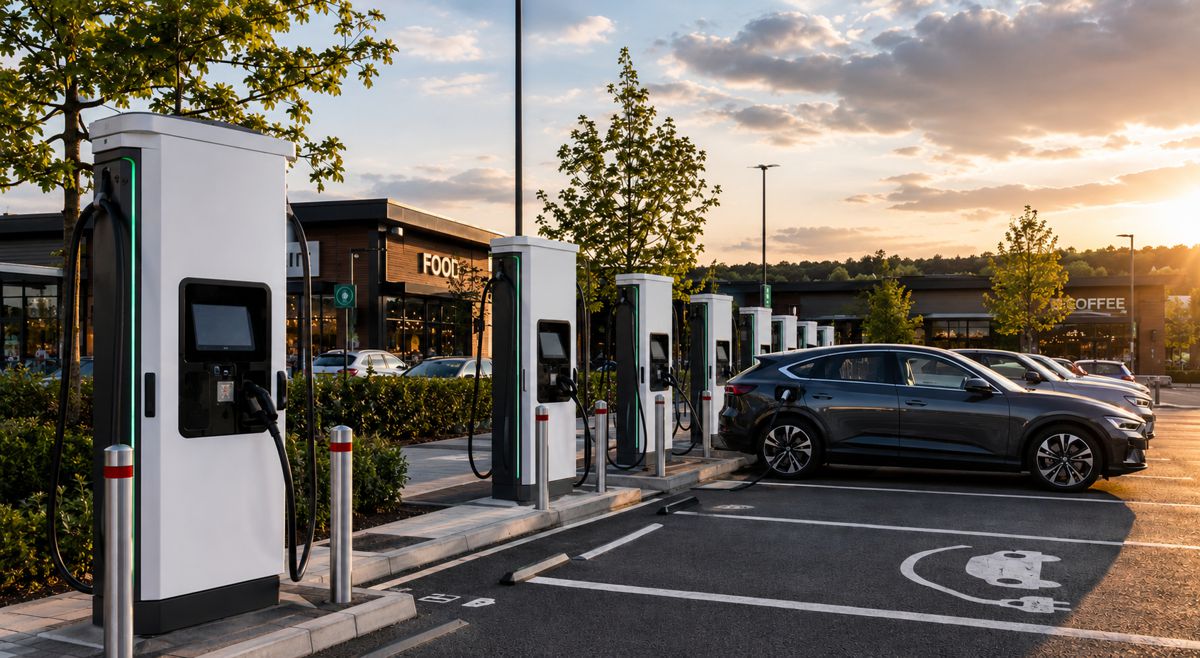
InstaVolt has emerged as one of the more visible operators within the UK market, focusing heavily on rapid and ultra-rapid charging hubs positioned near retail parks, supermarkets and food service destinations. According to the company, its existing network includes approximately 2,600 rapid chargers spread across 900 sites, while another 1,100 chargers are currently under construction.
This matters because ultra-rapid charging is becoming increasingly essential as battery electric vehicles move into the mainstream. Earlier EV infrastructure strategies often relied on slower destination charging, suitable for overnight or workplace charging. However, growing consumer expectations and increasing adoption of electric commercial fleets are driving demand for high-capacity charging corridors capable of reducing charging times significantly.
Britain’s motorway and trunk road networks are already seeing substantial increases in rapid charging deployment. Research from the UK government and industry groups including the Society of Motor Manufacturers and Traders suggests the country will require tens of thousands of additional rapid chargers over the next decade to meet projected EV adoption targets.
Financing Signals Growing Investor Confidence
The involvement of KfW IPEX-Bank is particularly notable because infrastructure lenders tend to move cautiously into emerging sectors until revenue models demonstrate stability. Their participation suggests the EV charging sector is increasingly viewed as commercially resilient infrastructure rather than speculative green technology.
The financing package includes both refinancing of existing facilities and additional funding to support further expansion. This approach is common within infrastructure finance, where operational assets with proven performance are refinanced to unlock capital for future development phases.
Aida Welker, Member of the Management Board of KfW IPEX-Bank, said: “We are glad to have won InstaVolt as a new client. We consider EV charging infrastructure as a core segment in the transition to net zero and the wider energy transition.”
Across Europe, infrastructure investors are increasingly positioning themselves around transport electrification. Funds managed by organisations such as EQT, which owns InstaVolt, are allocating substantial capital toward energy transition assets including charging networks, battery storage systems, renewable energy projects and grid modernisation initiatives.
The shift is partly driven by policy certainty. The European Union’s climate legislation, combined with national net zero commitments, is steadily creating a long-term investment environment that favours electrified transport infrastructure.
Construction Sector Faces Expanding Workload
The growth of rapid charging networks is creating a substantial pipeline of construction and civil engineering work across Britain and Europe. Installing ultra-rapid charging hubs often involves far more complexity than simply placing charging units in car parks.
Grid reinforcement frequently becomes one of the largest challenges. High-capacity charging installations can require significant upgrades to local electricity distribution networks, substations and energy management systems. In many locations, utility coordination and power availability now determine project timelines more than physical construction itself.
Site preparation also plays a major role. Charging hubs increasingly resemble compact energy infrastructure projects incorporating transformer compounds, battery storage systems, drainage upgrades, accessibility features, lighting, security systems and digital connectivity infrastructure.
Contractors specialising in electrical infrastructure, highways engineering and utility coordination are therefore becoming increasingly important participants in the EV ecosystem. In many respects, the sector now sits at the intersection of transport infrastructure and energy infrastructure rather than fitting neatly into either category alone.
Retail Partnerships Reshape Roadside Infrastructure
One of the more interesting elements of InstaVolt’s strategy is its focus on partnerships with retail, food and beverage destinations. This reflects wider behavioural changes occurring within roadside infrastructure planning.
Traditional petrol stations were designed around quick refuelling stops lasting only a few minutes. Rapid EV charging, even at high power levels, typically involves longer dwell times. As a result, charging operators increasingly seek locations where drivers can spend time productively while charging takes place.
Retail parks, supermarkets and roadside hospitality venues are therefore becoming central components of EV charging strategies. This is already beginning to influence land values, commercial leasing arrangements and infrastructure planning decisions.
For developers and commercial property owners, charging infrastructure is increasingly viewed not merely as an amenity but as a traffic generation asset capable of increasing customer dwell time and attracting higher visitor numbers.
Renewable Energy Integration Gains Importance
InstaVolt states that its charging network operates using 100% renewable energy sources. While energy sourcing models vary across the sector, renewable integration is becoming increasingly important both commercially and politically.
As EV adoption expands, questions surrounding electricity generation and grid carbon intensity are attracting greater scrutiny. Operators capable of demonstrating renewable sourcing and lower operational emissions may gain advantages in both public perception and financing access.
Battery storage integration is also emerging as a major trend. Many rapid charging sites are beginning to incorporate onsite energy storage systems designed to smooth electricity demand spikes, reduce grid stress and improve resilience during peak usage periods.
This convergence of transport electrification, renewable generation and energy storage is gradually transforming EV charging facilities into decentralised energy assets rather than simple vehicle charging points.
Europe’s EV Charging Competition Intensifies
Although InstaVolt’s primary market remains the UK, the company has already expanded into Spain, Portugal, Ireland and Iceland. That international growth reflects the increasingly competitive nature of Europe’s charging infrastructure sector.
Governments across Europe are accelerating public and private investment into charging corridors to support both consumer EV adoption and future electric freight transport. Major energy companies, infrastructure funds, oil companies and specialist charging operators are all competing aggressively for strategic locations.
This competition is likely to intensify further as electric heavy vehicles and long-distance freight electrification gather momentum. High-capacity charging corridors suitable for trucks and commercial fleets will require even larger infrastructure investments and more substantial grid capacity.
For infrastructure financiers, however, the sector offers an increasingly attractive combination of policy support, long-term growth potential and predictable demand trends.
The Infrastructure Behind the Energy Transition
Transport electrification is often discussed in terms of vehicle technology, battery innovation and automotive manufacturing. Yet the physical infrastructure enabling the transition may ultimately prove just as important.
Without large-scale deployment of reliable charging networks, EV adoption faces natural limitations regardless of advances in vehicle technology. Infrastructure availability increasingly influences consumer confidence, fleet purchasing decisions and regional transport planning strategies.
The financing backing InstaVolt therefore represents more than a single corporate transaction. It reflects the growing recognition that charging infrastructure has become a foundational element of Europe’s future transport system.
As governments continue pursuing decarbonisation targets and automakers phase out combustion engine production, the race to build resilient, scalable charging infrastructure is likely to become one of the defining infrastructure investment stories of the decade.