Datatag Asset Protection Shortlisted for British Security Awards
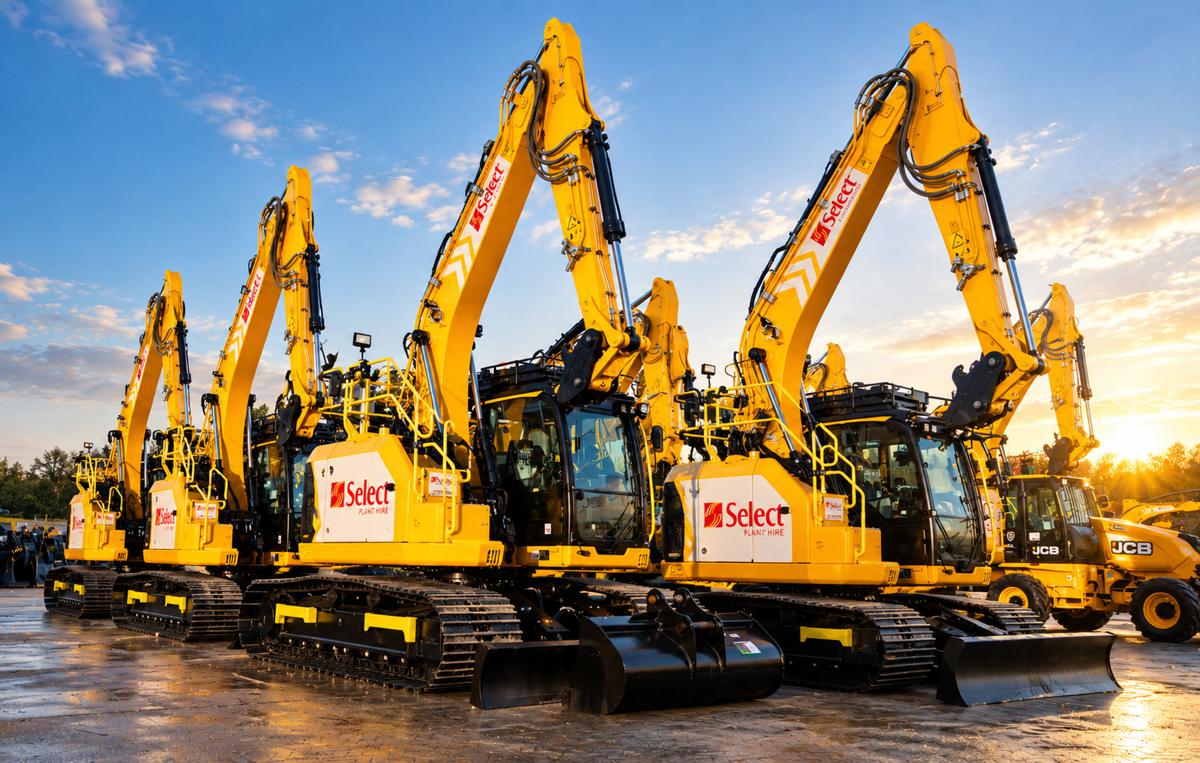
Equipment theft has become one of the most persistent and financially damaging problems facing the construction, agricultural and transport industries across the UK. From excavators disappearing overnight from infrastructure projects to organised criminal networks targeting agricultural machinery and high-value motorcycles, the scale of the issue has pushed both law enforcement agencies and fleet operators to seek faster, more intelligent methods of identifying stolen assets.
UK-based security technology specialist Datatag has been shortlisted in the Technology Project of the Year category at the British Security Awards 2026 for RAPID, a police-focused intelligence platform designed to help officers identify stolen and suspect assets more efficiently.
The recognition reflects a broader shift taking place across infrastructure and industrial sectors where digital identification, connected databases and real-time verification tools are becoming increasingly important in the fight against organised equipment theft. As machinery values rise and supply chains remain under pressure, contractors and equipment owners are under growing pressure to protect operational assets while minimising downtime caused by theft and recovery delays.
Briefing
- RAPID has been shortlisted for Technology Project of the Year at the British Security Awards 2026
- The platform enables police officers to identify stolen or suspect assets using integrated data sources
- RAPID draws information from CESAR, PNC/LEDS and Datatag databases
- The system supports checks on construction plant, agricultural machinery, motorcycles, scooters and trailers
- Equipment theft continues to pose major financial and operational risks across infrastructure sectors
Equipment Theft Continues to Burden Construction and Agriculture
Plant and machinery theft has evolved into a highly organised criminal enterprise across Europe and the UK. Construction equipment, agricultural machinery and transport assets are particularly vulnerable due to their high resale value and the international demand for used machinery. Once stolen, many assets are rapidly moved through ports, dismantled for parts or re-identified using falsified documentation.
According to data from the Construction Equipment Association and the CESAR Scheme, millions of pounds worth of machinery disappear every year across the UK alone. Recovery rates for unprotected equipment remain relatively low, particularly where identification systems are absent or records are fragmented between multiple agencies.
The financial consequences extend far beyond replacement costs. Contractors face project disruption, insurance increases, delayed schedules and operational downtime. Hire companies often absorb significant losses while attempting to maintain customer commitments during ongoing investigations. For smaller operators, the loss of a single machine can severely affect business continuity.
This growing pressure has accelerated investment in asset marking technologies, telematics and digital verification platforms capable of supporting rapid frontline enforcement.
RAPID Brings Multiple Databases into One Operational Tool
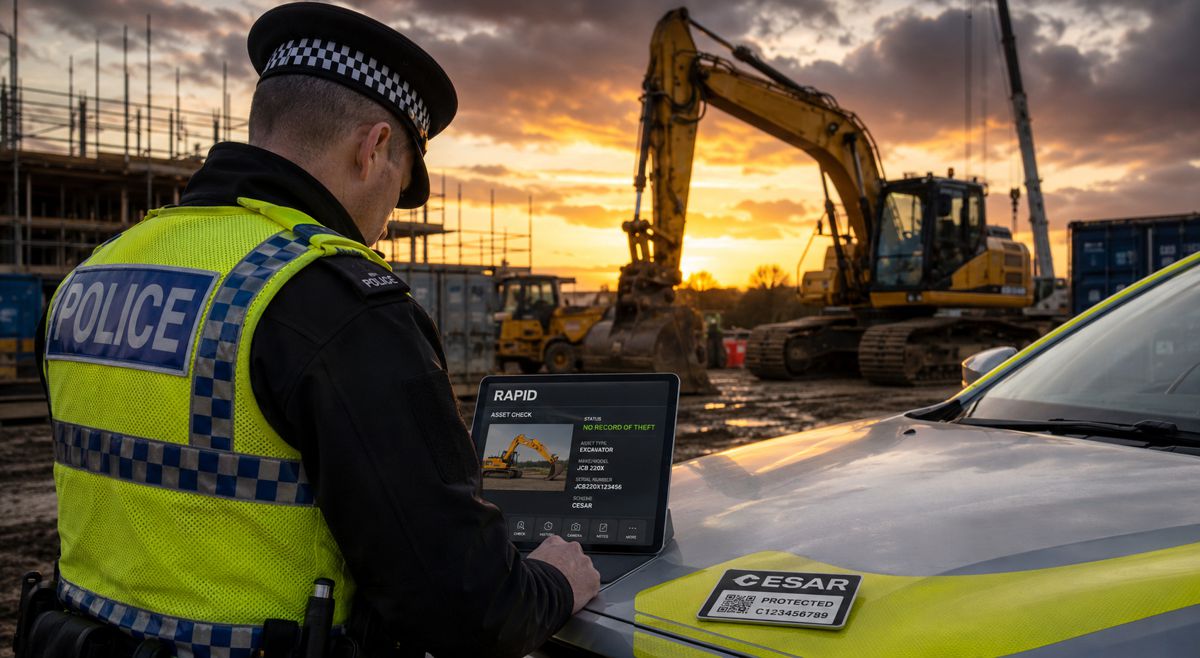
Datatag’s RAPID platform was developed specifically to address the fragmented nature of roadside and site-based equipment checks. Rather than requiring officers to access multiple systems independently, RAPID consolidates information into a single operational interface designed for frontline use.
The platform integrates data from the CESAR database alongside PNC/LEDS and Datatag’s own identification systems. This enables officers to verify whether equipment has been reported stolen, flagged as suspicious or linked to legitimate ownership records in real time.
Importantly, the system focuses on assets that are Datatag or CESAR marked, allowing officers to confirm identities quickly during roadside inspections, construction site visits or targeted enforcement operations. The combination of visible deterrence and rapid database verification is increasingly seen as one of the more effective approaches to reducing machinery theft.
The practical value of the platform lies in speed and accessibility. Frontline officers often operate under time pressure in environments where lengthy manual checks are impractical. By simplifying access to intelligence and ownership records, RAPID aims to reduce delays while increasing the likelihood of identifying stolen assets before they disappear deeper into criminal supply chains.
Practical Policing Experience Shaped the Platform
One notable aspect of the RAPID system is the involvement of active policing expertise during development. Datatag confirmed that the platform was developed by its technical team under Lead Developer Adam Plaskitt, while Police Liaison Officer Vince Lane contributed operational experience from frontline policing activities.
That combination of technical development and field-based policing input reflects an increasingly important trend within security technology. Systems built purely from a software perspective often fail to address the practical realities officers encounter during enforcement activity. Ease of use, clarity of information and operational speed can be just as important as the underlying technology itself.
Construction and agricultural sectors have frequently criticised fragmented reporting systems and administrative complexity when dealing with theft investigations. Platforms that reduce friction for officers while improving data visibility can therefore deliver meaningful operational improvements without requiring major behavioural changes from enforcement teams.
The RAPID platform also highlights how collaboration between private technology providers and law enforcement agencies is becoming more central to asset protection strategies across industrial sectors.
CESAR Continues to Influence Equipment Security Standards
The integration with the CESAR Scheme is particularly significant given the scheme’s growing role within UK equipment security practices. CESAR, which stands for Construction and Agricultural Equipment Security and Registration, has become one of the most widely recognised machinery identification systems in the UK construction and agricultural sectors.
The scheme combines tamper-evident identification technology with a secure registration database, helping police and border authorities verify ownership more effectively. Many manufacturers now install CESAR systems as standard equipment on new machinery sold into the UK market.
Over the past decade, equipment security standards have gradually shifted from reactive theft reporting towards proactive identification and traceability. This mirrors broader developments across logistics, fleet management and connected infrastructure systems where digital asset intelligence increasingly supports operational resilience.
As infrastructure projects become larger and machinery fleets more expensive, asset visibility has become a commercial priority as much as a security issue. Contractors are now more likely to assess theft prevention technologies alongside telematics, maintenance analytics and fleet utilisation systems as part of wider digital asset management strategies.
Digital Verification is Becoming Central to Modern Enforcement
The development of RAPID also reflects a wider transition taking place within policing and infrastructure security. Modern enforcement increasingly depends on the ability to access accurate information quickly across multiple connected systems.
The UK’s evolving Law Enforcement Data Service, commonly referred to as LEDS, forms part of that broader transformation. By consolidating policing intelligence systems and improving access to operational data, platforms such as LEDS aim to improve response times and frontline decision-making capabilities.
For industries reliant on mobile assets and distributed operations, this digital convergence could have long-term implications beyond theft prevention alone. Real-time verification systems may eventually support compliance checks, equipment certification validation and cross-border asset tracking across wider transport and logistics networks.
Construction remains particularly exposed to these challenges because projects frequently involve temporary sites, subcontracted fleets and machinery operating across multiple jurisdictions. Digital identification platforms therefore offer growing value not only for recovery but also for operational accountability and risk management.
Recognition Reflects Growing Security Technology Importance
Datatag’s shortlist placement at the British Security Awards arrives at a time when security technologies are gaining greater visibility across industrial and infrastructure sectors.
Historically, security systems were often treated as secondary operational considerations. Today, however, asset protection has become closely linked to productivity, insurance costs, supply chain resilience and commercial continuity. Construction firms facing tight project schedules can ill afford equipment losses that disrupt critical delivery timelines.
The British Security Awards themselves recognise organisations and projects contributing to higher standards across the professional security industry. This year’s ceremony will take place at the Royal Lancaster London on 16 June 2026.
Datatag Managing Director Kevin Howells commented on the recognition, stating: “We are delighted that RAPID has been shortlisted at the British Security Awards 2026. Theft remains a serious issue across a wide range of sectors, from construction and agriculture to motorcycles, scooters and trailers, and RAPID was developed to give police officers the information they need in one place.”
He added: “By drawing together data from CESAR, PNC/LEDS and Datatag’s own databases, RAPID helps officers make quicker, more informed checks on Datatag and CESAR-marked assets. To be recognised in the Technology Project of the Year category is a real credit to the Datatag team, including Adam Plaskitt, who led the technical development, and Vince Lane, whose policing experience helped shape RAPID into a practical tool for frontline use.”
The Future of Infrastructure Security is Increasingly Data Driven
Security technologies within construction and infrastructure are steadily moving beyond physical deterrence towards integrated digital intelligence ecosystems. Asset marking alone is no longer enough. The industry increasingly requires systems capable of connecting ownership records, policing intelligence, operational databases and real-time field verification into unified workflows.
That shift mirrors broader digitalisation trends already transforming infrastructure management, fleet operations and industrial logistics. The same principles driving smart infrastructure, connected mobility and predictive maintenance are now influencing security operations as well.
For contractors, fleet owners and plant hire companies, the commercial value of rapid recovery and operational continuity is becoming impossible to ignore. The ability to identify stolen assets quickly can reduce downtime, improve insurance outcomes and limit financial exposure during already challenging market conditions.
As organised criminal networks continue adapting their methods, technology platforms like RAPID demonstrate how enforcement agencies and industry partners are increasingly responding with more connected, intelligence-led approaches to asset protection.