Herrenknecht Excavating New Energy Corridor Beneath the Thames
Britain’s electricity network is entering one of the most significant phases of expansion since the post-war era, and much of the work is happening out of public sight. Beneath the River Thames, a major tunnelling operation has now begun as part of National Grid’s wider programme to reinforce the country’s high-voltage transmission infrastructure.
The new 2.2-kilometre cable tunnel linking Gravesend and Tilbury forms part of The Great Grid Upgrade, an investment programme designed to strengthen energy security while preparing the UK for surging electricity demand over the coming decades. Demand is expected to rise sharply as transport, heating, manufacturing and public infrastructure continue shifting toward electrification.
To deliver the tunnel beneath one of Britain’s busiest waterways, Herrenknecht has supplied a highly specialised Mixshield tunnel boring machine alongside Europe’s largest Vertical Shaft Sinking Machine. The scale and technical sophistication of the operation underline how energy infrastructure is increasingly becoming one of the construction sector’s most strategically important markets.
Briefing
- National Grid has begun tunnelling a 2.2 km high-voltage cable tunnel beneath the River Thames
- The project forms part of Britain’s wider Great Grid Upgrade programme
- Herrenknecht supplied a custom-built Mixshield TBM designed for challenging chalk, flint and high-pressure groundwater conditions
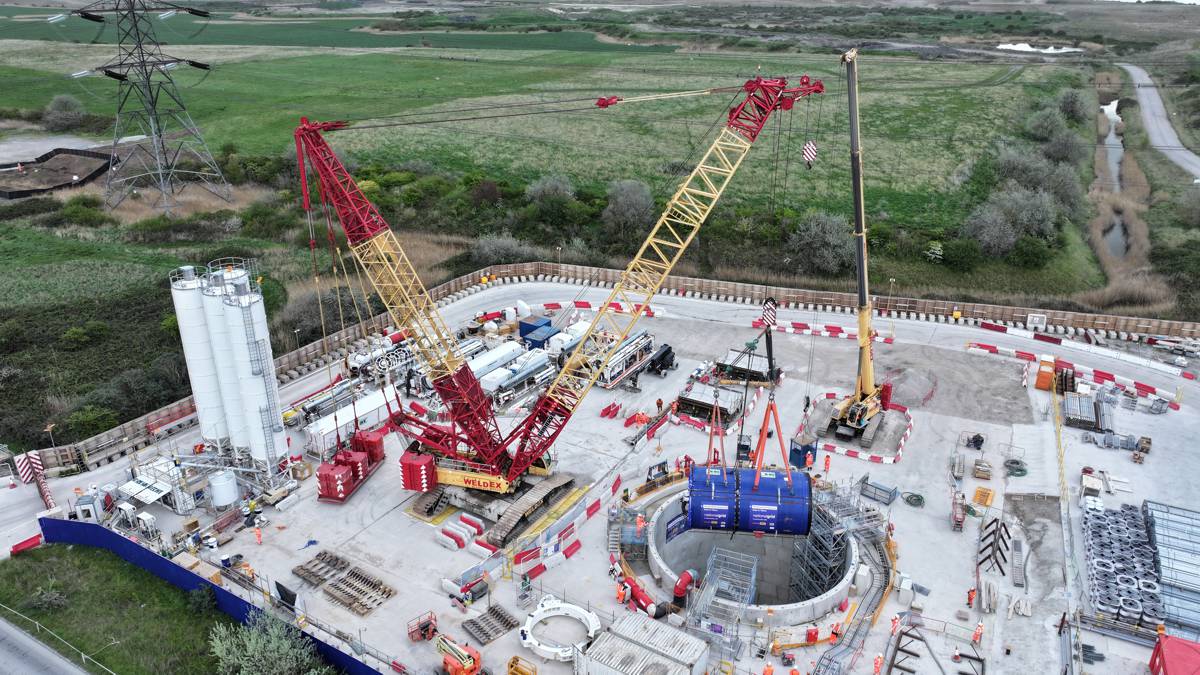
- Europe’s largest Vertical Shaft Sinking Machine was used to construct the launch and reception shafts
- The tunnel supports long-term electrification, energy resilience and integration of renewable power sources
Britain’s Grid Expansion Enters a New Era
For decades, the UK electricity network evolved incrementally, adapting to regional demand growth and periodic infrastructure upgrades. That model is rapidly changing. The transition to electric mobility, renewable generation and low-carbon industry is forcing transmission operators to rethink the scale and resilience of national infrastructure.
According to the UK Government and National Grid’s long-term planning frameworks, electricity consumption could double by 2050 as electric vehicles, heat pumps, battery storage systems and data-intensive industries place new demands on the network. Offshore wind expansion alone is creating unprecedented pressure to move power efficiently between coastal generation hubs and urban demand centres.
The Thames cable tunnel reflects a broader shift underway across Europe. Increasingly, critical energy infrastructure is moving underground, particularly in densely populated or environmentally sensitive regions where overhead transmission routes face planning challenges or land constraints. Underground cable systems offer resilience advantages, reduce visual impact and can improve network reliability in strategic corridors.
Projects of this nature also highlight how tunnelling technology is becoming central to the future of energy delivery. While transport tunnels often dominate public attention, utility tunnelling is emerging as one of the fastest-growing segments of underground construction worldwide.
Engineering a Tunnel Beneath the Thames
Constructing a high-voltage cable tunnel beneath the Thames presents a series of geological and operational complications rarely encountered in standard utility projects.
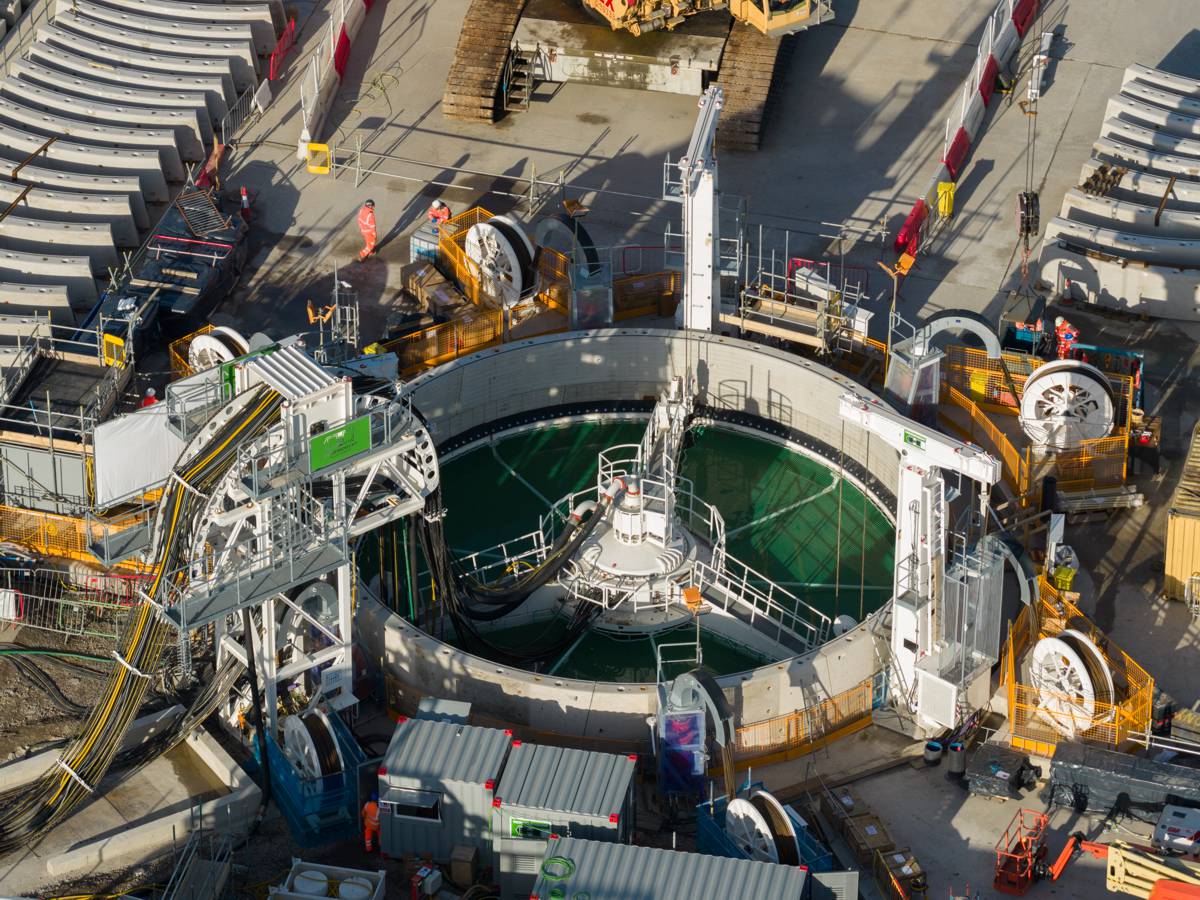
The tunnel boring machine supplied by Herrenknecht was specifically tailored for the conditions expected below the riverbed. The Mixshield TBM has a diameter of 4,730 mm, stretches 108 metres in length and weighs approximately 464 tonnes.
Beneath the Thames estuary, the machine is expected to encounter mixed geological conditions including chalk and highly abrasive flintstones with compressive strengths reaching up to 1000 MPa. At the same time, engineers must contend with significant groundwater pressure generated by both the river itself and tidal fluctuations connected to the North Sea.
To address those challenges, the TBM has been designed to operate under water pressures of up to 4.5 bar. Herrenknecht’s Mixshield technology maintains stable support pressure at the tunnel face while keeping the remainder of the machine at atmospheric conditions. This balance is essential for both safety and excavation control in unstable ground conditions.
The machine is also equipped with a sophisticated multi-sealing system to withstand conditions approximately 41 metres beneath the river. Personnel working on cutterhead maintenance operations use a pressurised airlock system allowing gradual acclimatisation to differing pressure environments, similar in principle to commercial diving procedures.
Complex Ground Conditions Demand Specialist Solutions
Modern tunnel boring machines increasingly resemble mobile underground factories rather than simple excavation equipment, and the Thames project demonstrates how far the technology has evolved.
The Mixshield not only excavates the tunnel but simultaneously installs precast concrete lining segments to create the finished tunnel structure. The completed tunnel will have an internal diameter of four metres and an external diameter of 4.5 metres.
Several customised systems have been integrated into the machine specifically for the Thames crossing. A hydraulic overcutter enables controlled enlargement of the excavation diameter when navigating curves or making alignment corrections. Given the tunnel’s relatively tight 350-metre curve radius, that flexibility becomes operationally important.
Herrenknecht has also incorporated a Mini gripper system and anti-roll fins to stabilise the machine during difficult ground conditions. These features allow engineers to retract the cutterhead safely if required while maintaining machine control in unstable geology.
Perhaps most significant is the increasing role of digital monitoring and predictive inspection technologies. The TBM includes a drilling rig for advance geological probing alongside a telescopic camera system capable of inspecting the tunnel face without requiring hyperbaric personnel intervention. This reduces operational risk while allowing crews to identify obstructions or changing ground conditions before excavation progresses into hazardous zones.
That integration of automation, remote inspection and predictive analysis mirrors broader trends across the tunnelling industry, where safety improvements and operational efficiency are increasingly driven by digital engineering tools rather than brute mechanical force alone.
Europe’s Largest Shaft Sinking Machine
While the tunnel boring operation attracts much of the attention, the shaft construction phase represented a major engineering achievement in its own right.
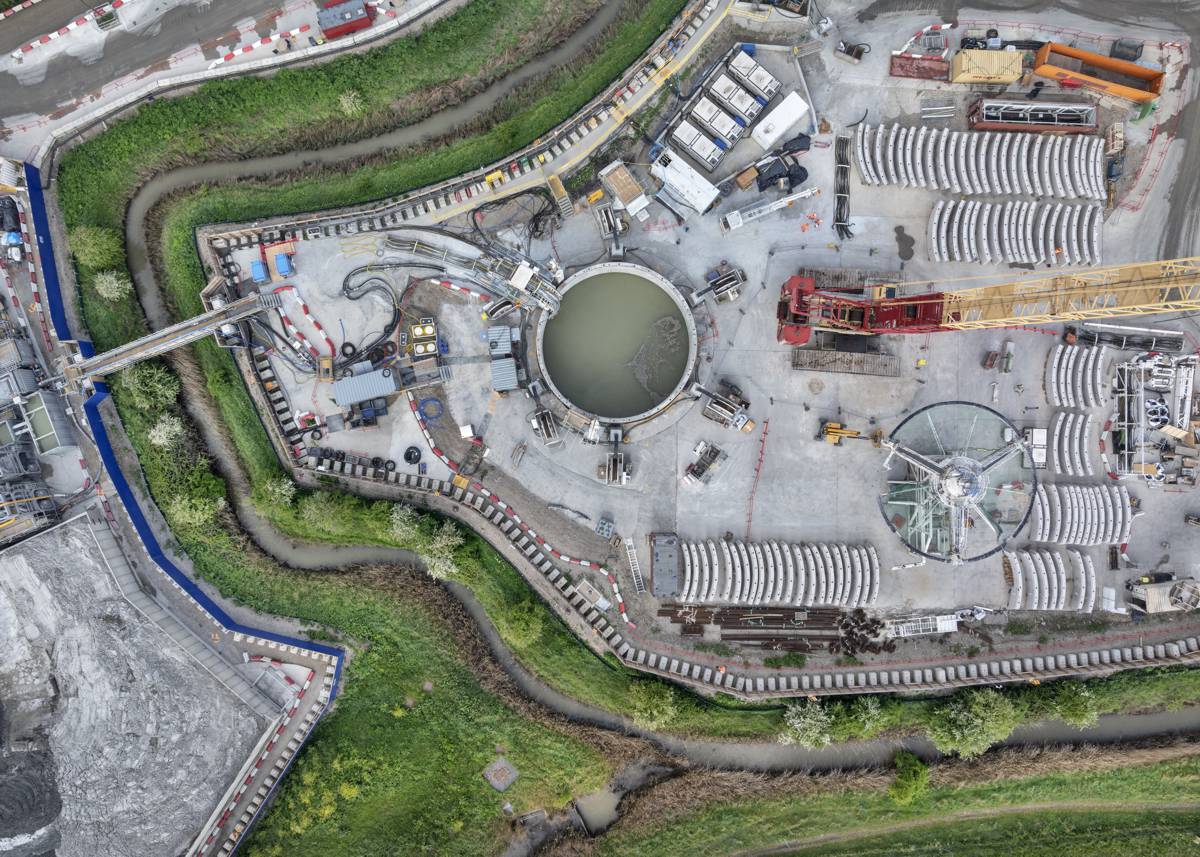
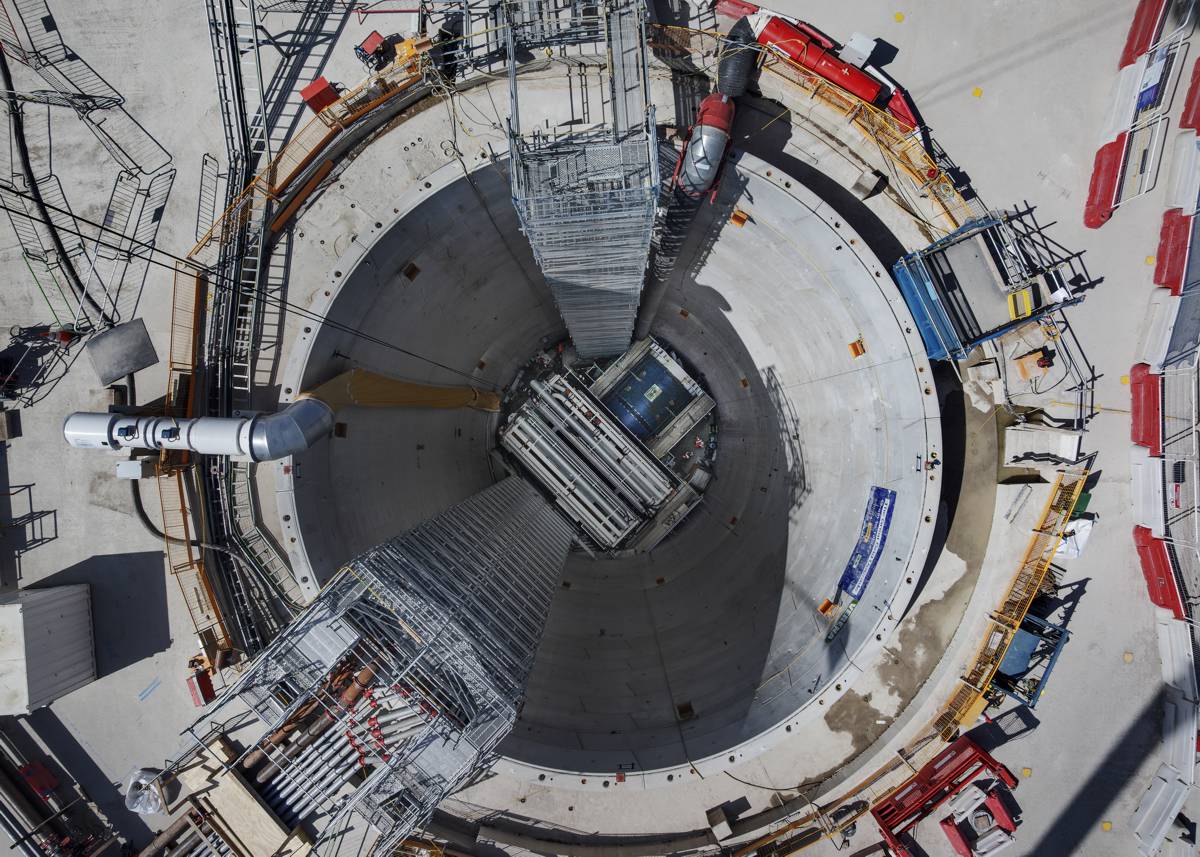
Europe’s largest Vertical Shaft Sinking Machine, measuring 15.9 metres in diameter, was deployed to construct both the launch shaft in Tilbury and the receiving shaft in Gravesend.
The launch shaft on the north bank of the Thames reached a depth of 45 metres and was completed in only four weeks between November and December 2025. Following completion, the VSM was dismantled, transported across the river and recommissioned for construction of the 48-metre-deep reception shaft at Gravesend.
Vertical Shaft Sinking Machine technology has become increasingly attractive for projects involving soft ground and high groundwater conditions because it eliminates the need for extensive dewatering operations. Traditional shaft construction methods often require large-scale groundwater management systems that increase environmental impact, construction complexity and project cost.
The VSM simultaneously excavates and installs shaft lining rings, enabling advance rates of up to 2.7 metres per day. Importantly, the system allows work to be controlled entirely from the surface, reducing the need for personnel to enter deep shafts during excavation.
That shift toward remote-controlled underground construction aligns with broader industry efforts to improve workforce safety while reducing programme risk on technically demanding infrastructure projects.
Utility Tunnelling Gains Strategic Importance
Large-scale utility tunnels rarely receive the same public visibility as bridges, airports or rail megaprojects. Yet they are becoming increasingly important to national infrastructure resilience and long-term economic competitiveness.
Across Europe, transmission operators are facing mounting pressure to modernise ageing networks while simultaneously integrating renewable energy generation, battery storage and decentralised energy systems. Offshore wind growth around the UK coastline is particularly dependent on robust transmission corridors capable of carrying large electricity volumes inland.
Underground transmission tunnels offer several advantages in densely developed environments. They reduce land acquisition requirements, limit visual disruption and provide greater protection from extreme weather events that increasingly threaten overhead transmission infrastructure.
At the same time, the global tunnelling sector is benefiting from sustained investment linked to urbanisation, climate resilience and energy transition programmes. Industry analysts increasingly view utility tunnelling as a long-duration infrastructure market with stable demand extending well beyond traditional transport applications.
The Thames cable tunnel therefore represents more than a single engineering contract. It reflects a structural shift in how advanced economies are rebuilding critical infrastructure for an electrified future.
Quiet Infrastructure Supporting National Resilience
Britain’s energy transition will ultimately depend not only on renewable generation capacity but also on the hidden infrastructure required to distribute electricity reliably across the country.
Projects such as the Thames cable tunnel may lack the public visibility associated with landmark bridges or high-speed rail terminals, yet they are becoming just as strategically significant. Without modern transmission infrastructure, electrification targets, industrial decarbonisation plans and energy security ambitions remain difficult to achieve.
The engineering involved also illustrates how underground construction technology continues advancing rapidly. Machines capable of operating beneath tidal rivers under high groundwater pressure while simultaneously installing permanent tunnel linings would have been considered highly specialised only a generation ago. Increasingly, they are becoming standard tools for delivering resilient utility infrastructure.
As governments accelerate investment in energy systems worldwide, the construction sector is likely to see growing demand for technically complex underground projects that combine heavy civil engineering, digital monitoring and advanced mechanised tunnelling.
Far below the Thames, one of Britain’s next-generation energy corridors is now taking shape metre by metre beneath the riverbed.