Mountain Bike Trail Building Turns to On-Site Material Processing
Mountain bike trails may be built for recreation, but beneath the berms, rollers and carefully shaped corners sits a surprisingly conventional earthworks problem. Material has to be excavated, graded, placed and compacted, while water has to be controlled and the finished surface must withstand repeated loading and erosion.
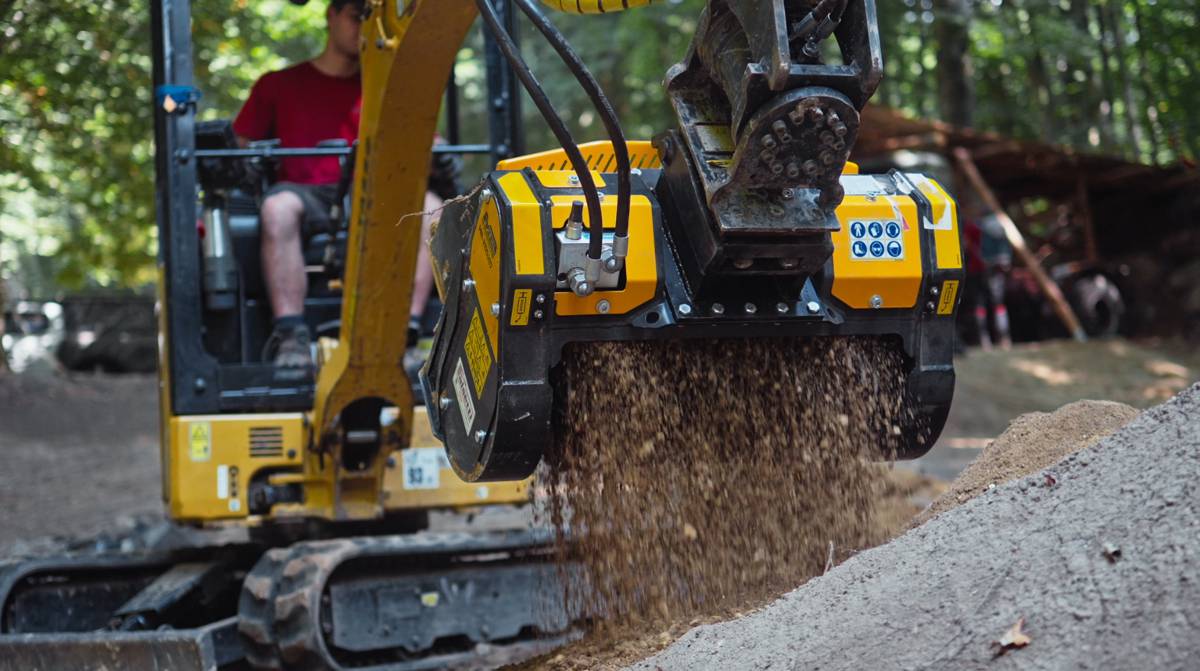
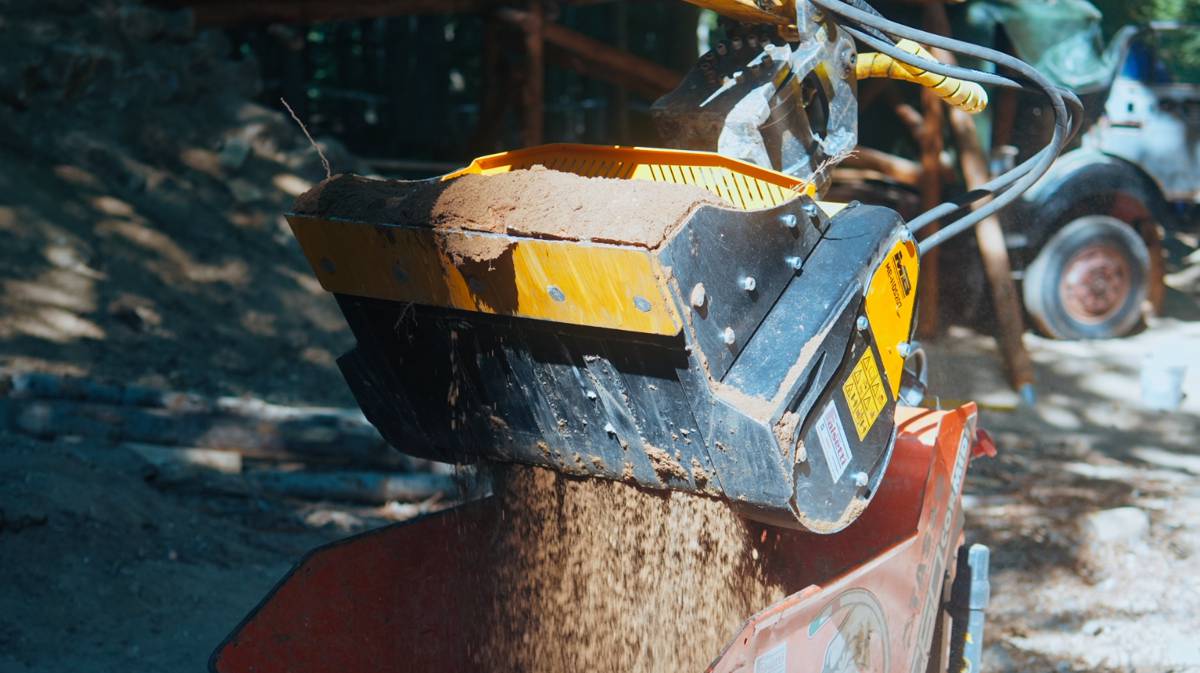
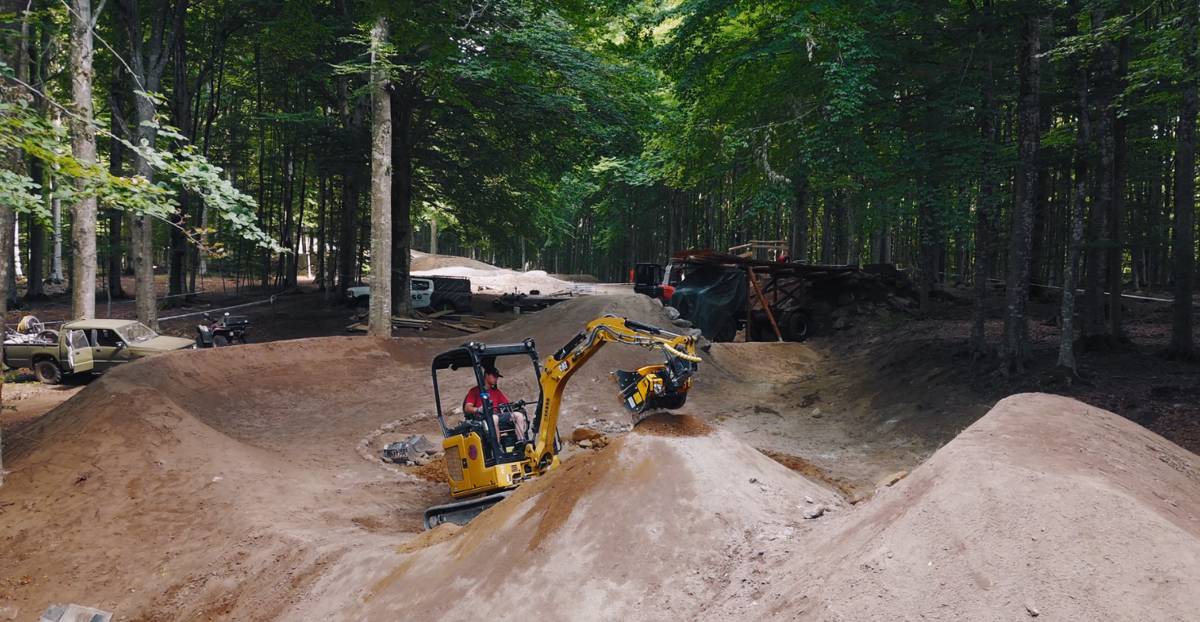
Italian specialist Tasso Trail has been tackling part of that process by screening excavated material directly on site using an MB Crusher MB-HDS207 shaft screener mounted on a Caterpillar mini excavator. Instead of automatically bringing additional aggregate or suitable fill into the project, rocky excavated soil can be processed into a more consistent material for constructing and shaping the trail.
It is a relatively small application for equipment more commonly associated with construction, excavation and material processing, but the underlying principle is familiar. If useful material can be recovered and prepared where it is excavated, fewer truck movements and less imported material may be required.
Briefing
- Tasso Trail is using an MB Crusher MB-HDS207 shaft screener on a Caterpillar mini excavator for mountain bike trail construction.
- Excavated rocky soil is screened on site to produce more consistent material for trail construction and shaping.
- Tasso Trail uses the attachment particularly on rocky sections, climbs and berms where control of the finished surface is important.
- Processing native material can reduce reliance on imported aggregate and the associated transport movements.
- Trail construction places considerable emphasis on drainage, compaction and surface durability, particularly around bike-specific features.
Building the Trail from the Ground Up
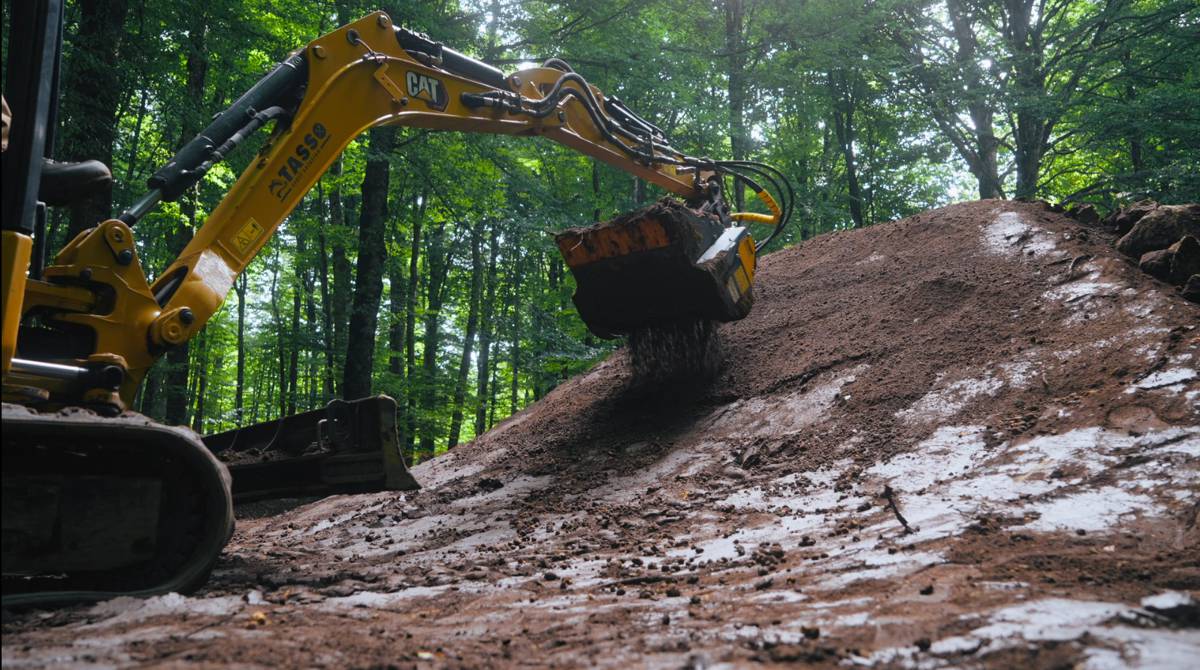
Mountain bike trail construction occupies an interesting position between landscaping and civil engineering. The finished structure is relatively lightweight, but its surface has to deal with water, erosion, repeated wheel loads and the concentrated forces generated by braking and cornering.
The International Mountain Bicycling Association’s guidance on bike park construction emphasises layered compaction of earthen features and careful drainage planning. It also notes that loose rock on riding surfaces can reduce traction and increase maintenance requirements, while rocky soils can be screened to improve the material used in construction.
Tasso Trail uses the MB-HDS207 to process soil containing rocks of different sizes. Material can be screened at the excavation point before being placed into the trail structure, giving the builder greater control over the material used for the base and finished sections.
“We used to spend a lot of time raking the soil and bringing in additional material. Now we can prepare exactly the gradation we need right on-site,” explains Emiliano Pinzi of Tasso Trail. “That allows us to work faster while achieving a much more consistent result.”
Mechanised screening allows material preparation to become part of the excavation cycle, particularly where a mini excavator is already being used for shaping the trail.
Surface Preparation and Drainage
Water is one of the persistent engineering problems in natural-surface trail construction. Poorly managed runoff can remove surface material, create depressions and accelerate deterioration, while standing water can soften sections of the trail and increase maintenance.
IMBA’s trail development guidance treats physical sustainability as a combination of alignment, grade, construction and drainage rather than surface treatment alone. Its guidance for bike-specific features similarly identifies drainage and compaction as fundamental to long-term performance.
Screening addresses only one part of the trail-building problem. Alignment, local soil characteristics, water management and construction technique remain fundamental. What the attachment gives the contractor is greater control over one important variable: the material being placed and compacted.
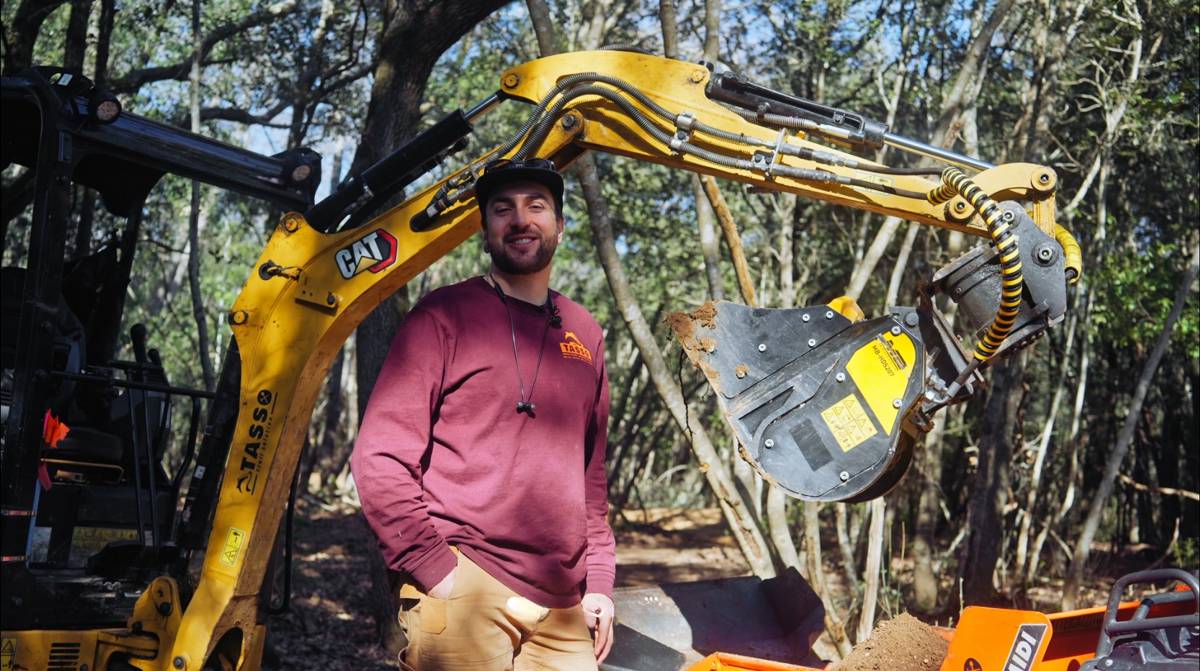
Tasso Trail says the shaft screener is particularly useful where naturally rocky ground makes that control more difficult: “We use the MB Crusher shaft screener in the rockiest sections, as well as on climbs and berms where the trail surface has to be perfect. Screening removes rocks and organic debris, giving us a much more uniform soil that’s easier to compact.”
Berms and shaped features put particular demands on construction material because their geometry has to survive both weather and repeated rider loading. IMBA guidance recommends compacting earthen features in layers rather than relying solely on final surface compaction, reducing the potential for uneven settlement over time.
The ability to process material does not remove that requirement, but it can give the trail builder a more predictable material with which to work.
Processing Material on Site
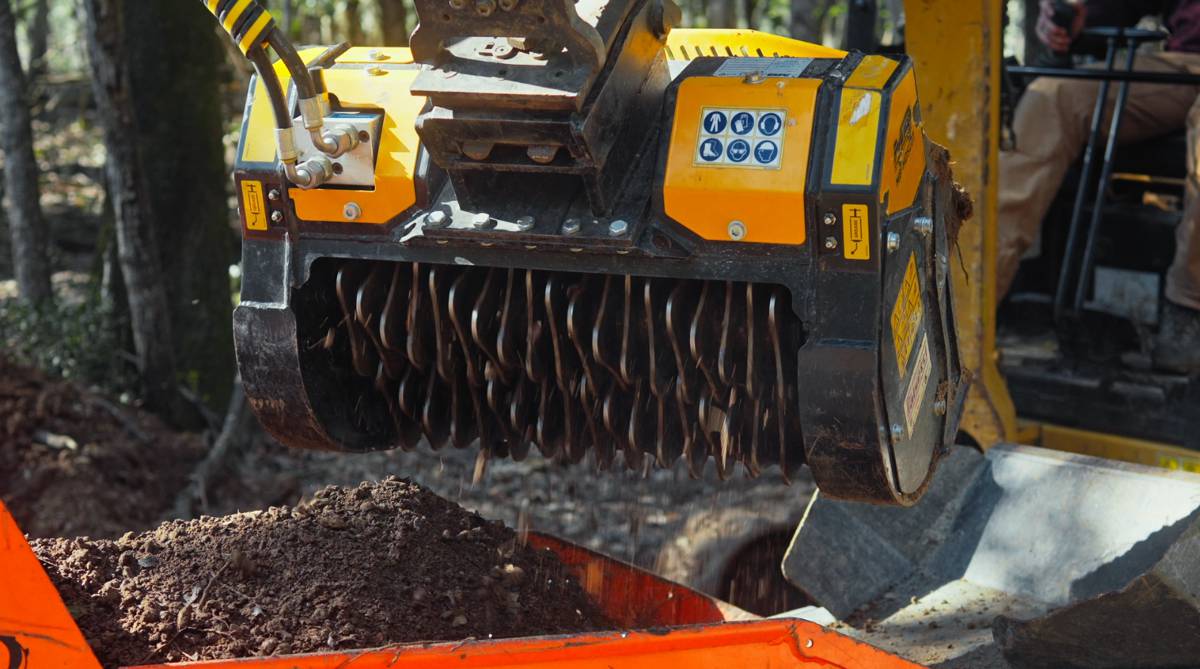
The MB-HDS207 sits at the smaller end of MB Crusher’s shaft screener range and is designed for carrier machines working where material needs to be selected directly on site. MB Crusher’s product literature positions its shaft screeners across applications including excavation, road works, landscaping, recycling and aggregate processing, with interchangeable shaft kits allowing different materials to be handled.
Trail building presents a useful variation on those conventional applications because access frequently determines how material is handled. A trail being constructed on a mountainside or through woodland may be some distance from a conventional loading and processing area. Every tonne of imported material has to reach the working face, while excavated material that cannot be reused may have to travel in the opposite direction.
Processing suitable native material with the excavator already working on the trail can shorten that chain considerably. The machine excavates the material, the attachment screens it and the usable fraction remains available for construction.
The precise savings will depend heavily on the site. Soil composition, access, haul distance, required material characteristics and environmental restrictions will determine whether processing native material makes sense. There will also be projects where local material is simply unsuitable regardless of how effectively it is screened.
Where suitable material is available, the contractor can make better use of something already within the project boundary. That becomes particularly valuable on restricted mountain tracks, through forests or in recreational areas where deliveries may involve smaller vehicles, additional handling and longer travel times.
IMBA’s bike park construction guidance recommends examining native soils before assuming imported material will be necessary, noting that suitable on-site soil can sometimes avoid trucking while maintaining native soil characteristics.
None of that makes imported aggregate redundant. Engineered trails can require different materials according to local geology, drainage, loading and the type of feature being constructed. Screening is fundamentally a separation and preparation process; it cannot turn unsuitable soil into material possessing properties it does not have.
For trail builders working with usable but excessively rocky ground, however, it provides another option between laborious manual preparation and importing replacement material.
A Different Job for Compact Equipment
Compact excavators have become increasingly versatile tool carriers. Trail construction exploits many of the same capabilities required on urban and restricted-access construction sites: manoeuvrability, controlled excavation, grading and the ability to change attachments as the job progresses.
Adding material processing extends that versatility without requiring a separate screening machine to follow the excavation operation.
For specialist contractors, that can matter more than outright production. A trail project may involve relatively modest quantities of material spread across a long, narrow and difficult-to-access worksite. Bringing another machine into the operation is not always practical, even where its production capacity would be higher.
The attachment approach effectively takes the processing operation to the material.
Mountain bike trails may be recreational infrastructure, but their builders still contend with familiar construction variables: unsuitable material, restricted access, drainage, compaction, haulage and maintenance. Once the riders arrive, most of that work disappears beneath their tyres.
Key Industry Questions
- What is Tasso Trail using to process excavated material? The company is using an MB Crusher MB-HDS207 shaft screener mounted on a Caterpillar mini excavator.
- Why screen soil during mountain bike trail construction? Screening can remove oversized rock and unwanted material, giving builders a more consistent soil for placement, shaping and compaction.
- Can screened native soil replace imported aggregate completely? Not necessarily. Its suitability depends on soil properties, drainage requirements, trail design and the engineering requirements of individual features. Screening separates material but does not fundamentally change its geotechnical properties.
- Why is on-site processing particularly useful on remote trails? Material transport can become disproportionately expensive or difficult where access is restricted. Processing suitable excavated material close to where it will be used can reduce hauling and handling.
- Why are drainage and compaction important on mountain bike trails? Water and soil displacement are major contributors to trail deterioration. Appropriate drainage and layered compaction help constructed features retain their shape and reduce maintenance requirements.
- Where does Tasso Trail use the shaft screener? The supplied project information identifies rocky sections, climbs and berms as areas where the company particularly uses the attachment.
- Does trail construction use conventional civil engineering principles? Many of them. Excavation, material selection, drainage, grading and compaction are all relevant, although they are applied at a different scale and towards the particular requirements of natural-surface recreational infrastructure.
- What is the advantage of an excavator-mounted screener? It allows the carrier machine already performing excavation and shaping work to process material at the working location, potentially avoiding the need for separate processing equipment.
Strategic Takeaways
- Native material can become a useful construction resource where its properties are suitable and excessive rock or debris is the principal obstacle to reuse.
- Restricted access can make material logistics disproportionately important on relatively small recreational infrastructure projects.
- Attachment versatility can be more valuable than maximum production where work is distributed along narrow or difficult terrain.
- Trail durability depends on the complete construction system, particularly drainage, alignment and compaction, rather than screening alone.
- Specialist recreational construction provides a credible secondary application for compact earthmoving equipment and attachments developed for conventional construction work.