EBRD Road Finance Reinforces Moldova’s Gateway to European Markets
Moldova’s road network has moved back into the spotlight following a fresh commitment from the European Bank for Reconstruction and Development. A further €150 million project finance package has been agreed to rehabilitate and modernise key road corridors across the country, reinforcing Moldova’s position as a vital transport gateway between the European Union and Eastern Europe.
This latest financing builds on an earlier €150 million loan agreed in 2024 and a €40 million facility signed in June for an earlier roads project. Taken together, the EBRD’s signed funding for Moldova’s road sector this year now stands at €190 million, while cumulative EBRD investment in Moldovan road upgrades has reached an impressive €692 million. Few signals are clearer about the strategic importance of transport infrastructure to the country’s economic and political trajectory.
Prioritising the Roads that Matter Most
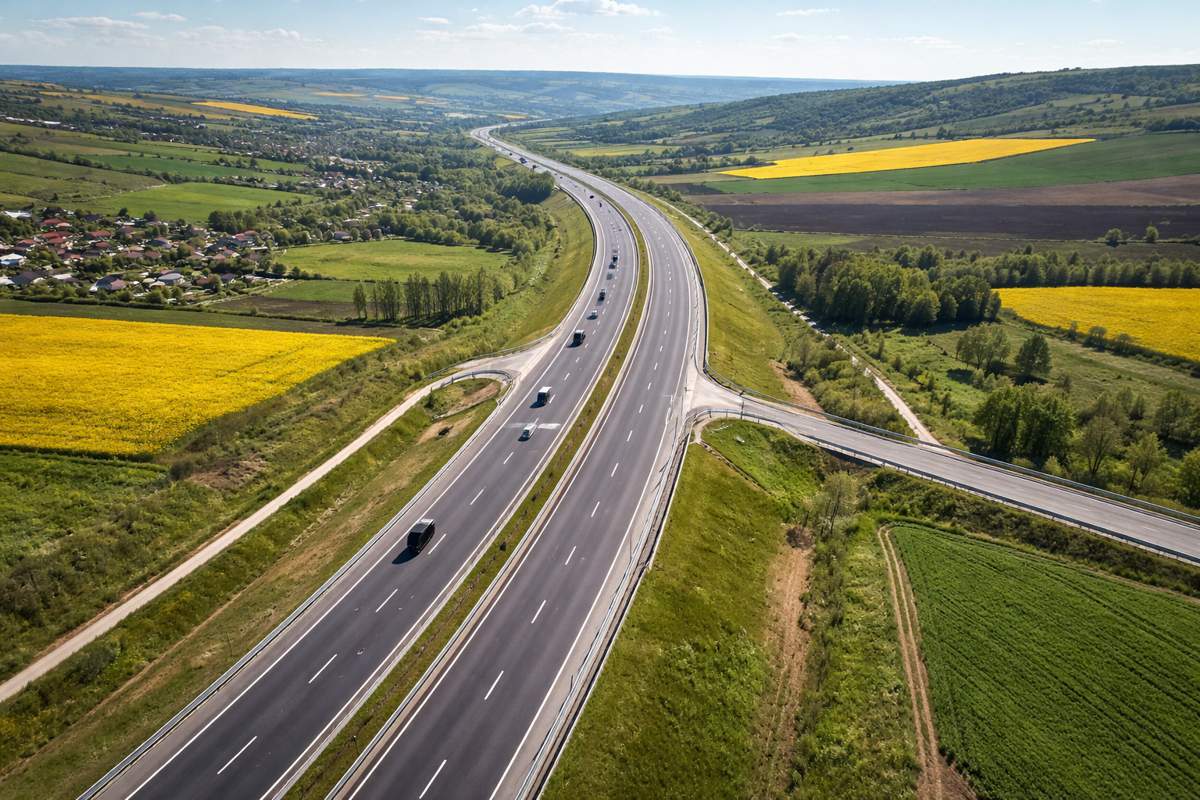
At the heart of the new loan is a focus on two critical routes that underpin Moldova’s domestic mobility and international connectivity. The M2 Chisinau ring road, a vital artery encircling the capital, will be upgraded and widened to ease congestion and improve safety. Meanwhile, the M1 corridor linking Chisinau to Leuseni at the Romanian border will undergo significant rehabilitation, strengthening one of Moldova’s most important cross border links with the EU.
Both roads form part of the Trans European Transport Network, better known as TEN T. Their strategic value goes far beyond national borders, positioning Moldova as a bridge between the EU to the west and Ukraine and other eastern markets. As traffic flows evolve in response to geopolitical shifts, these corridors are expected to carry increasing volumes of freight and passenger traffic in the years ahead.
Preparing for Post War Traffic Growth
One of the most significant drivers behind this investment is the anticipated surge in EU Ukraine traffic once post war reconstruction gathers pace. As rebuilding efforts begin in earnest, demand for reliable transport corridors linking Ukraine with EU markets is expected to rise sharply. Moldova’s geography places it squarely on that route.
Well maintained, high capacity roads will be essential to accommodate this growth. The upgraded M1 and M2 corridors will help ensure that Moldova can handle increased transit traffic efficiently, safely, and in line with international standards. In doing so, the country strengthens its role as a dependable logistics and trade partner at a time when resilience and redundancy in transport networks matter more than ever.
Supporting Economic Growth and Regional Integration
Beyond the immediate construction works, the EBRD’s investment aligns closely with Moldova’s broader economic objectives. Improved road infrastructure reduces transport costs, shortens journey times, and enhances reliability for businesses and consumers alike. For a small, open economy such as Moldova’s, these gains translate directly into improved competitiveness.
The upgraded routes will also reinforce Moldova’s transport links with its neighbours, particularly Romania and Ukraine. This enhanced connectivity supports regional integration and trade, while also aligning with the EU Solidarity Lanes initiative, which aims to facilitate smoother movement of goods between Ukraine and EU member states. For Moldova, participation in this initiative underscores its growing integration into European transport and trade systems.
Modern Asset Management for Long Term Value
A notable element of the new financing package is the planned investment in specialised equipment and software to support a national Road Asset Management System. Rather than focusing solely on new construction, this approach reflects a shift towards lifecycle management of infrastructure assets.
By adopting data driven asset management practices, Moldova’s road authorities can better prioritise maintenance, allocate resources more efficiently, and extend the lifespan of existing infrastructure. Over time, this reduces total ownership costs and helps avoid the cycle of deferred maintenance that has plagued road networks in many countries.
Linking Infrastructure with E Mobility Goals
The EBRD’s support extends beyond conventional road works. As part of the wider programme, the Bank is also assisting the Moldovan government in developing a national e mobility strategy. This initiative aims to promote the deployment of electric vehicle fleets and the rollout of charging infrastructure across the country.
Integrating e mobility considerations into road planning reflects a broader shift towards sustainable transport. As vehicle electrification gathers pace across Europe, Moldova’s ability to accommodate electric vehicles will be increasingly important for both domestic users and international transit traffic. The strategy positions the country to benefit from emerging mobility trends while reducing emissions from the transport sector.
EU Accession and the Role of Transport Infrastructure
Transport investment carries added significance in the context of Moldova’s evolving relationship with the European Union. In November 2023, the European Commission recommended that the Council begin accession negotiations with Moldova, following the granting of EU candidate status in June 2022.
To support sustained economic growth and convergence with EU standards, Moldova’s transport sector must deliver reliable access to European markets. Upgraded roads that comply with international norms are a prerequisite for deeper economic integration. They also help ensure that Moldova can maintain access to traditional markets to the east, even as trade patterns shift in response to regional instability.
Resilience Amid Geopolitical Disruption
Russia’s war on Ukraine and the resulting EU sanctions have disrupted long established trade routes across the region. For Moldova, these changes have presented both challenges and opportunities. While traditional eastward links have been affected, the country’s strategic location continues to enable transport flows between Ukraine, Romania, and wider EU markets.
Key corridors connect Ukraine to Romania and onward to the Danube River via Moldova’s Giurgiulesti port, providing alternative routes for trade. Safe, modern, and well maintained road networks are essential to keep these flows moving. The EBRD backed rehabilitation programme plays a crucial role in ensuring that Moldova can meet this demand under difficult circumstances.
The EBRD’s Expanding Role in Moldova
The scale of the EBRD’s engagement in Moldova underscores the country’s importance within the Bank’s regional strategy. Since the start of Russia’s full scale invasion of Ukraine, the EBRD has provided €1.7 billion to Moldova to help mitigate the economic consequences of the conflict.
Overall, the Bank has invested almost €2.9 billion in 195 projects across the country to date, with 64 per cent of its portfolio focused on sustainable infrastructure. Roads, energy, and transport continue to feature prominently, reflecting their central role in economic resilience and long term development.
Building Roads that Carry More Than Traffic
Taken together, the latest €150 million loan represents more than a routine infrastructure upgrade. It is a strategic investment in Moldova’s future as a connected, resilient, and increasingly European economy. By prioritising key corridors, embracing modern asset management, and linking road development with sustainability goals, the programme sets a clear direction of travel.
As regional dynamics continue to evolve, Moldova’s roads will carry not just vehicles, but trade, opportunity, and closer integration with Europe. The EBRD’s continued backing ensures that these routes are fit for purpose, today and for decades to come.