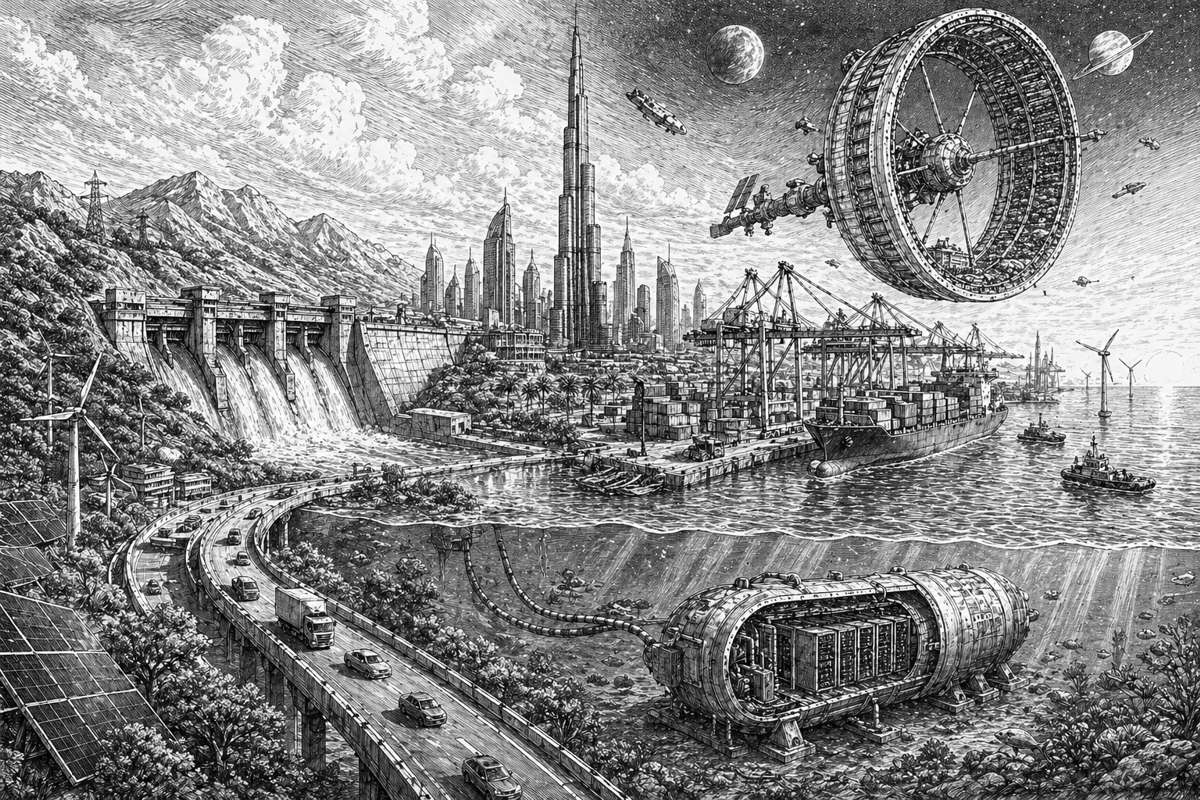
Building Megaprojects for Future Generations
For years, sustainability sat awkwardly at the edge of megaproject delivery. It appeared in glossy bid documents, tucked behind engineering schedules and financial models, often expressed through renderings rather than hard specifications. The real decisions were taken elsewhere. Design loads followed historical weather patterns, procurement prioritised lowest upfront cost, and environmental commitments leaned heavily on future offsets. That arrangement has quietly collapsed.
The pressure did not come from one direction. Insurers began recalibrating risk as losses mounted. Lenders started pricing climate exposure into covenants and due diligence. Engineers found themselves designing for conditions that no longer matched historical datasets. Supply chains tightened, forcing a rethink of material availability and carbon intensity. Sustainability moved from narrative to constraint, from aspiration to operating condition.
Across the global infrastructure ecosystem, the numbers tell their own story. The Global Infrastructure Hub now frames the climate transition as a defining factor in private infrastructure investment, with more than half of private capital in 2023 classified as green. Meanwhile, Swiss Re has projected that insured losses from climate disasters could reach USD 145 billion in 2025, and the European Environment Agency has recorded more than EUR 822 billion in cumulative climate-related damages since 1980. A striking share of that damage has occurred in just the past few years.
That shift has altered the language inside project rooms. Discussions that once circled around offsets and reporting now centre on reference design temperatures, drainage capacity under extreme rainfall, embodied carbon per cubic metre and post-event recovery times. These are not abstract concerns. They shape engineering decisions, financing structures and long-term asset performance. The megaproject brief has changed, and it has done so faster than many expected.
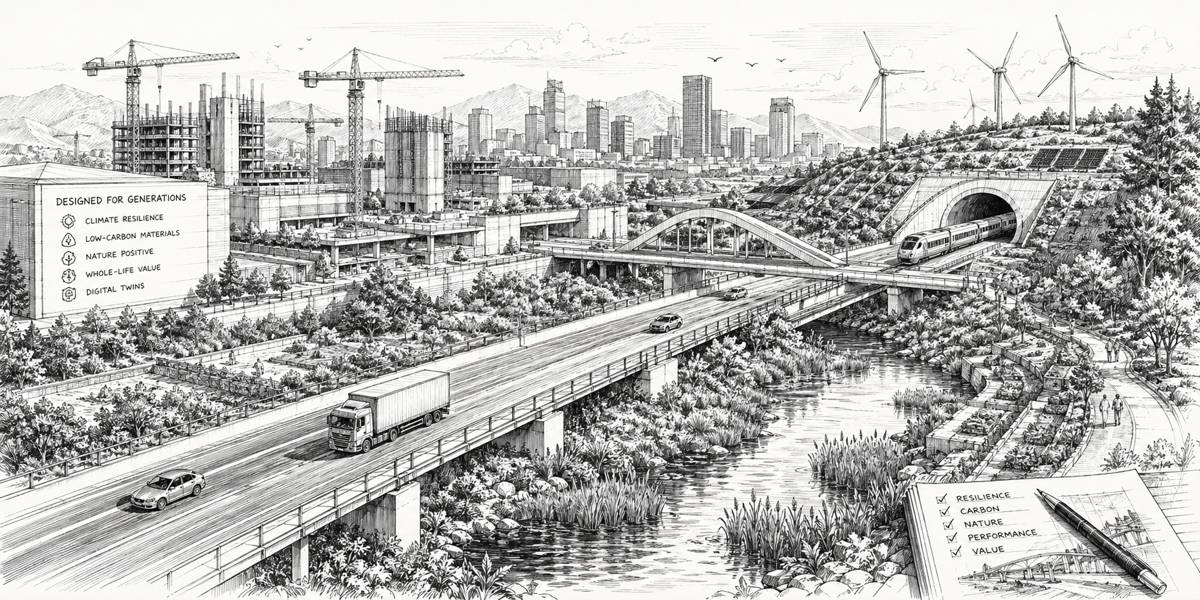
Briefing
- Climate resilience has become a financial discipline, with analysis from the World Resources Institute showing average returns of 27 percent on adaptation investments, often delivering more than ten dollars in benefits for every dollar invested.
- Embodied carbon is moving into procurement law, with Buy Clean policies in the United States and Environmental Product Declarations becoming standard in major tenders.
- Low-carbon materials are scaling rapidly, with warm mix asphalt and recycled inputs delivering emissions reductions of 15 percent to 35 percent and significant energy savings.
- Nature-based infrastructure is now engineered for performance, achieving measurable reductions in runoff, flood risk and maintenance demand when integrated properly.
- Whole-life asset performance is overtaking lowest-cost procurement, supported by digital twins and lifecycle modelling that extend asset life and reduce long-term costs.
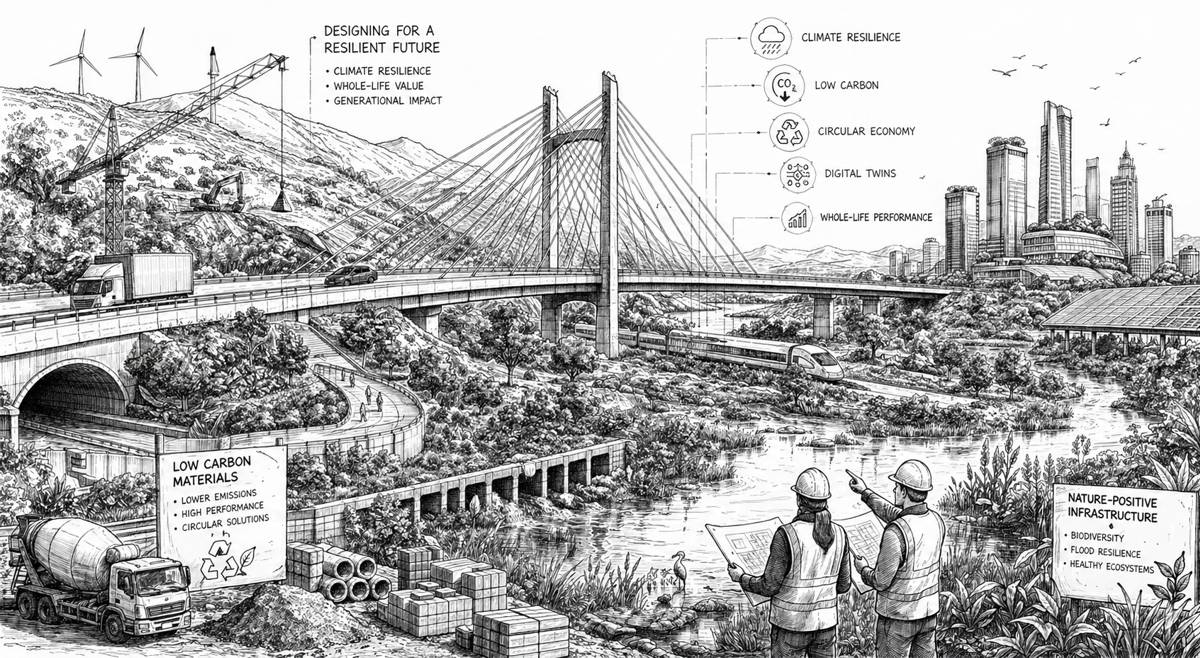
Capital Now Prices the Whole Asset
Finance has become one of the most effective forces reshaping megaproject delivery. It rarely speaks in slogans, but it moves quickly when risk becomes measurable. The OECD estimates that around USD 6.9 trillion in sustainable infrastructure investment will be required annually by 2030. At the same time, the United Nations Environment Programme has warned that adaptation finance gaps in developing economies could reach USD 365 billion per year by 2035. Current flows fall far short.
Scarcity sharpens decision-making. Investors are no longer content with infrastructure that performs well under ideal conditions but struggles under stress. Revenue resilience, operational continuity and exposure to climate risk are now central to asset valuation. The Global Infrastructure Hub has noted that while infrastructure remains attractive for its relatively stable returns, a significant share of assets still lack credible net zero pathways or interim targets. That gap is becoming harder to ignore.
Risk is also becoming more visible. Global disaster losses continue to rise, with a substantial portion uninsured. Premiums in exposed regions are climbing sharply, while the cost of critical components, particularly in energy and grid systems, has increased significantly over recent years. The assumption that infrastructure delivers predictable returns is being tested in practice. Funds that understand climate pricing and resilience are preserving value. Those that do not are beginning to see erosion in asset performance.
The consequence is straightforward. Sustainability has moved onto the spreadsheet. It now influences financing terms, covenant structures and long-term valuation models. Once that happens, it stops being optional.
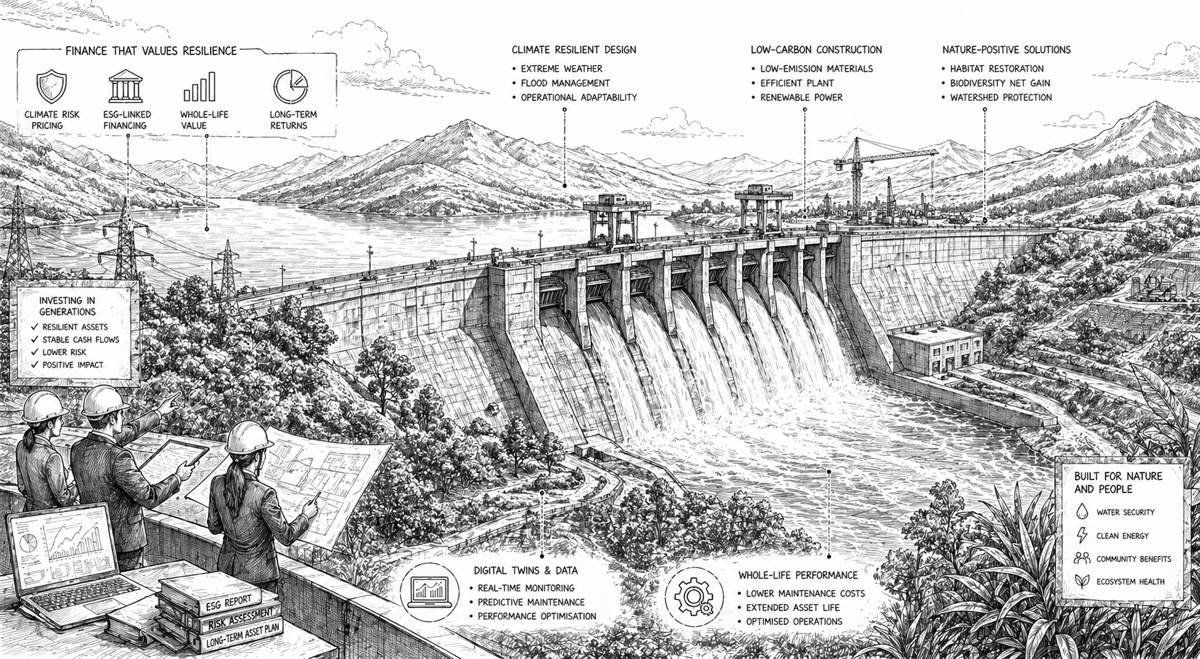
Resilience Becomes a Design Load
The engineering response has followed quickly. Climate resilience is no longer treated as a contingency. It is becoming a baseline design requirement. The World Meteorological Organization confirmed that 2024 was the warmest year on record, reinforcing what engineers have already been experiencing in the field. The Coalition for Disaster Resilient Infrastructure estimates global climate-related disaster losses at roughly USD 700 billion annually.
The economic argument is well established. The World Bank has long maintained that resilient infrastructure delivers multiple times its cost in avoided losses. More recent assessments suggest that even modest increases in upfront cost can yield significantly higher lifetime value. Designing for future climate conditions is no longer a premium option. It is basic asset protection.
This shift is visible across transport systems. The PIARC has developed frameworks to help operators reassess assets against evolving climate risks. In the United Kingdom, national strategies now explicitly acknowledge the impact of flooding, heatwaves and storms on infrastructure performance. Design standards are being updated to reflect changing conditions rather than relying on historical data.
Practical examples are emerging globally. In Indonesia, climate-resilient road programmes are integrating hydraulic upgrades, slope stabilisation and bridge design improvements to maintain service during extreme weather. Similar approaches are appearing in Europe, where drainage capacity, pavement resilience and temperature tolerance are being redefined.
The implication is clear. Historical weather patterns are no longer reliable design inputs. Infrastructure must be built for the conditions it will face, not the conditions it was built in.
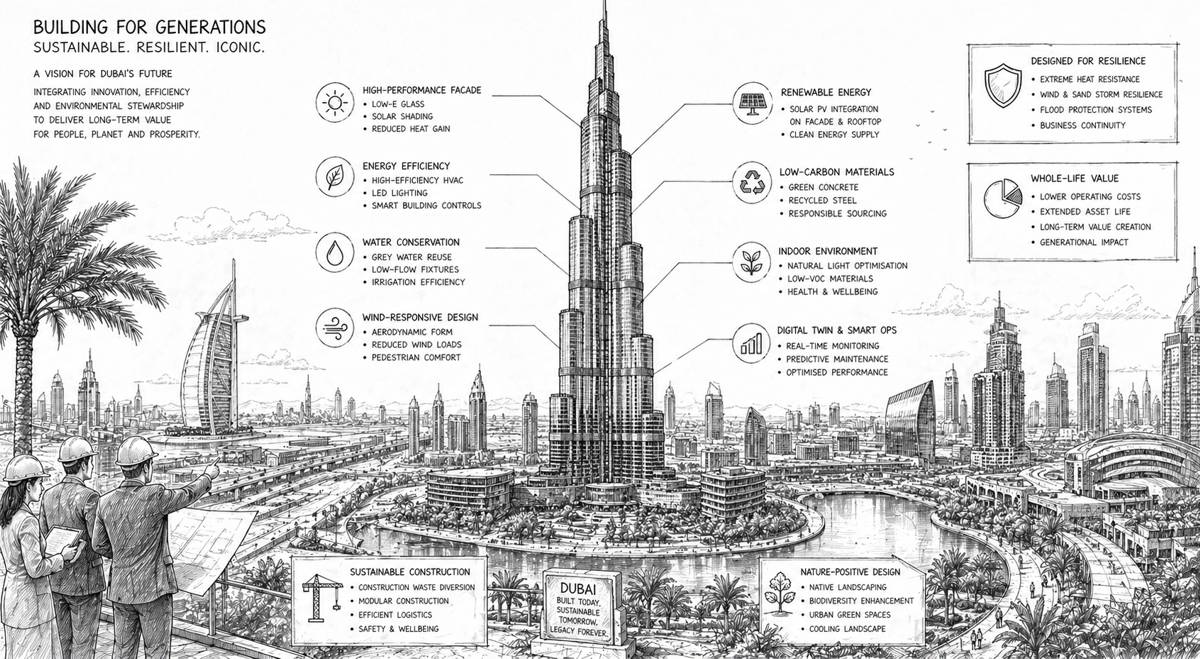
Carbon Walks Into Procurement
While resilience is reshaping design, carbon is reshaping procurement. The construction sector’s carbon footprint remains heavily influenced by materials, particularly cement and steel. The International Energy Agency continues to highlight the emissions intensity of cement production and the challenges of reducing it at scale.
What has changed is how this issue is being addressed. Procurement frameworks are increasingly setting limits on embodied carbon rather than simply reporting it. The Global Cement and Concrete Association has introduced rating systems to standardise carbon measurement, while organisations such as the World Resources Institute have documented the rapid expansion of green public procurement policies.
In the United States, federal and state-level initiatives are driving demand for low-carbon materials through enforceable specifications. Environmental Product Declarations are becoming a standard requirement, providing transparency on carbon performance at the material level. This shift turns carbon from a reporting metric into a procurement condition.
Asphalt offers a more grounded example of how change is happening. Warm mix asphalt technologies allow production at lower temperatures, reducing energy consumption and emissions. Recycled materials, particularly reclaimed asphalt pavement, are being reused at scale. These are not experimental technologies. They are operational improvements that deliver measurable results.
“Recycling old asphalt reduces CO2 emissions in the production of new asphalt by up to 50 percent.” — Christopher Elofsson a Project Manager at Skanska.
The challenge for project sponsors is less about innovation and more about implementation. Supply chains are evolving, material availability is changing, and procurement strategies must adapt. Long-term planning, supplier diversification and contractual flexibility are becoming essential.
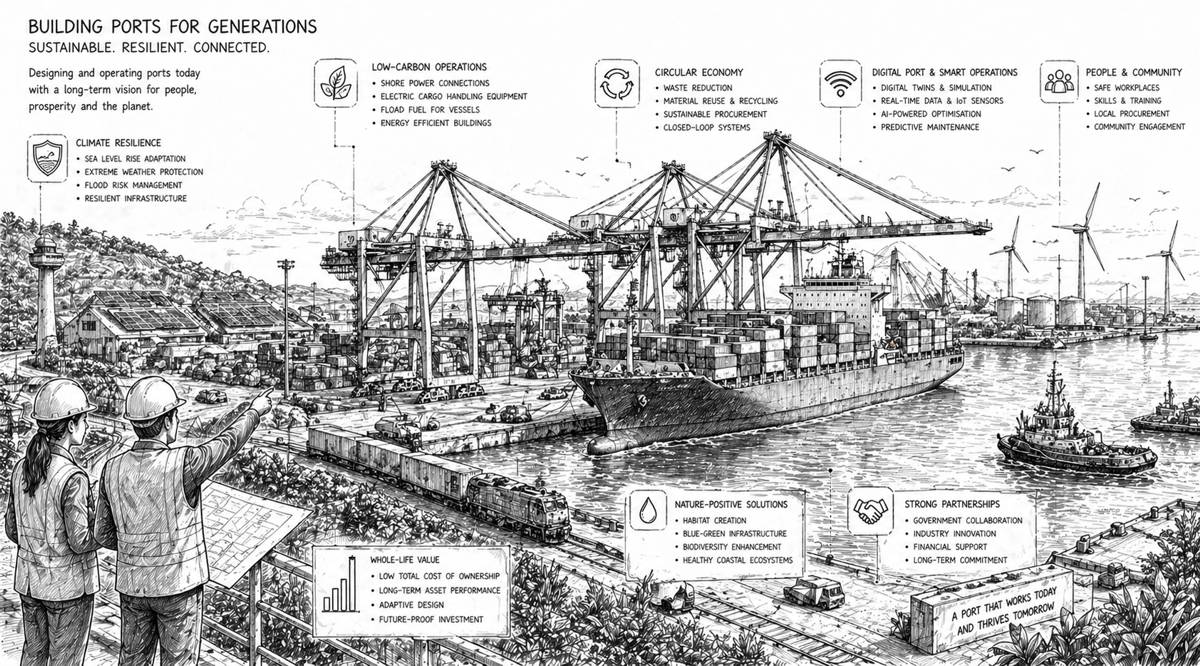
Nature Takes a Structural Role
Nature-based infrastructure has moved beyond aesthetics. It is increasingly being used as a functional component of engineering systems. The UN Environment Programme has highlighted the potential for nature-based solutions to contribute to a majority of Sustainable Development Goal targets when integrated with built infrastructure.
The key is integration. Natural systems deliver value when they are designed to perform specific functions. Wetlands can absorb floodwater, forests can stabilise slopes, and green infrastructure can reduce urban heat and manage runoff. These functions can complement or even replace traditional engineering solutions.
Examples from around the world illustrate this shift. The Room for the River programme in the Netherlands has reduced flood risk by allowing rivers to expand into designated areas rather than confining them. In China, sponge city initiatives are designed to absorb and manage rainfall, reducing pressure on drainage systems.
In Mozambique, the city of Beira has combined mangrove restoration, drainage improvements and flood management infrastructure to reduce risk for a significant portion of its population. These systems work together, forming integrated solutions rather than isolated interventions.
The financial implications are increasingly recognised. Nature-based systems can reduce maintenance costs, extend asset life and improve resilience. When these benefits are quantified, they become part of the business case rather than an externality.
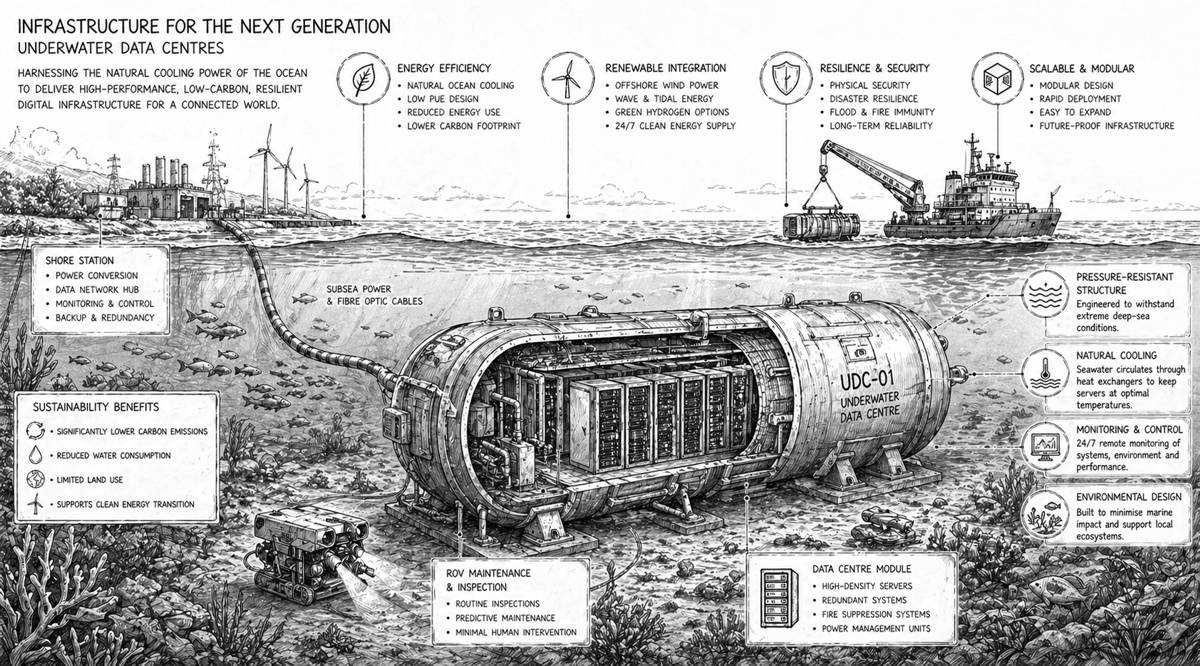
Whole-Life Thinking Replaces Lowest Cost
The traditional focus on upfront cost is being challenged by a growing emphasis on lifecycle performance. Infrastructure assets operate over decades, and their true cost is determined by maintenance, resilience and operational efficiency.
The OECD has highlighted the limited adoption of lifecycle costing in project appraisal, noting that many decisions still prioritise initial cost over long-term value. This approach can lead to higher maintenance costs, reduced durability and increased risk.
Examples of more advanced approaches are emerging. In Switzerland, tools such as NISTRA evaluate projects across multiple indicators, including environmental and social impacts. In Denmark, lifecycle assessment tools are used to analyse environmental impacts across the full asset lifecycle.
Evidence supports this shift. The Asian Infrastructure Investment Bank has found that modest increases in upfront investment can lead to significant reductions in maintenance costs. These findings are consistent with broader research showing that resilient infrastructure often pays for itself through avoided losses and improved performance.
Discount rates are also evolving, reflecting the long-term nature of infrastructure investments. Lower rates for long-term benefits increase the value of resilience and sustainability measures, aligning financial models with engineering realities.
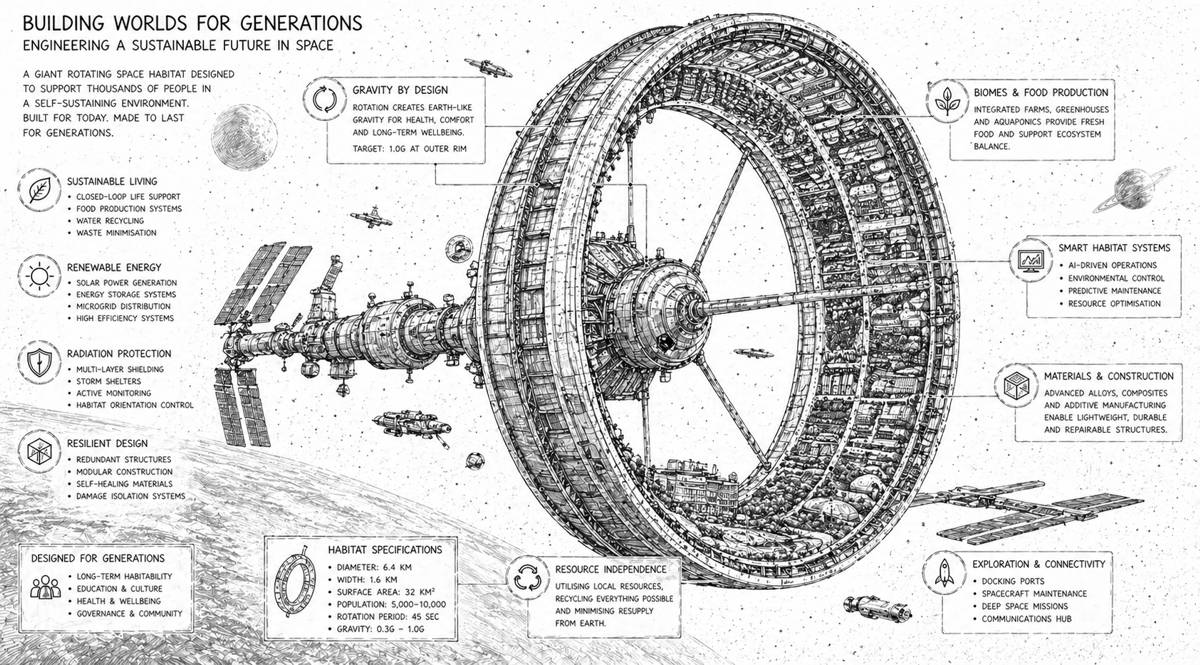
Digital Twins Extend the Asset Life
The operating phase of infrastructure is gaining more attention, driven in part by digital technologies. Digital twins allow assets to be monitored and analysed in real time, providing insights into performance, maintenance needs and potential failures.
These technologies are delivering tangible benefits. Predictive maintenance can extend asset life and reduce costs, while real-time data improves operational efficiency. The integration of digital twins into infrastructure projects is becoming more common, particularly in complex systems such as transport networks and energy infrastructure.
Examples include digital models of waterways in the Netherlands and integrated energy systems in the United Kingdom. These systems allow engineers and operators to test scenarios, optimise performance and respond to changing conditions.
For investors and asset owners, digital twins provide greater transparency. Performance can be measured and verified, reducing uncertainty and improving decision-making. This capability is increasingly being reflected in contracts and financing structures.

What Building for Generations Looks Like
The dividing line in megaproject delivery is no longer between sustainable and conventional projects. It is between projects designed for past conditions and those designed for future realities.
Projects that continue to rely on outdated assumptions risk underestimating climate impacts, material constraints and operational challenges. Those that incorporate resilience, carbon considerations and lifecycle performance into their design are better positioned to deliver long-term value.
For sponsors, this means redefining the project brief. Infrastructure must be designed for future conditions, not historical averages. Materials must be selected based on lifecycle performance, not just initial cost. Natural systems must be considered as part of the engineering solution. Maintenance and performance must be embedded into long-term planning.
The underlying shift is one of mindset. Climate, materials, biodiversity and finance are no longer external factors. They are integral to the project itself. Recognising this changes how infrastructure is planned, designed and delivered.
The result is not necessarily more complex infrastructure. It is better infrastructure. Better designed, better maintained, better understood and better aligned with the conditions it will face. That is what building for generations now requires.