Hydrogen Power Steps into the Data Centre Mainstream
The race to decarbonise the digital economy has reached a critical juncture. As data centres expand at breakneck speed, driven largely by artificial intelligence workloads, the question of how to power them reliably without relying on diesel is no longer theoretical. It is becoming a defining challenge for infrastructure planners, energy providers and policymakers alike.
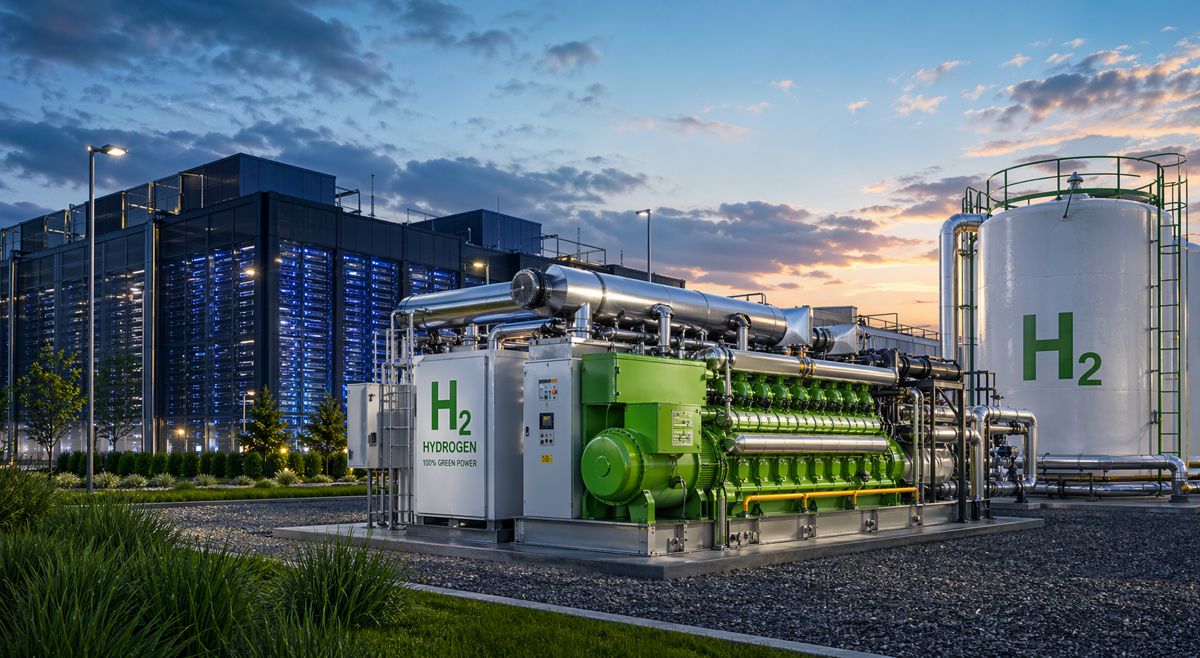
A recent large-scale demonstration by INNIO Group in collaboration with the Net Zero Innovation Hub for Data Centers marks a notable shift in what is technically and commercially viable. For the first time at a meaningful industrial scale, a 3 MW hydrogen-fuelled gas engine has been validated under real-world data centre conditions, offering a credible alternative to conventional diesel backup systems.
What makes this milestone significant is not simply the use of hydrogen, which has long been discussed as a clean energy carrier, but the demonstration of performance characteristics that data centres demand. These facilities cannot tolerate even momentary instability. Backup systems must respond instantly, handle volatile loads and maintain uninterrupted operation under extreme conditions. Historically, diesel generators have been the only technology capable of meeting these requirements consistently.
The successful test suggests that hydrogen-fuelled engines may now be entering that same performance bracket, opening a new pathway for low-carbon, high-reliability power systems in mission-critical environments.
Briefing
- 3 MW hydrogen-powered gas engine successfully tested under real data centre load conditions
- Demonstration validated rapid response, stability and resilience comparable to diesel systems
- Industry leaders including Microsoft, Google and Data4 witnessed and assessed the live trial
- Hydrogen identified as a viable pathway to replace diesel in backup and prime power roles
- Growing AI-driven demand is accelerating the shift toward hybrid and behind-the-meter energy systems
Meeting the Demands of AI-Driven Infrastructure
Data centres are no longer static, predictable energy consumers. The rise of machine learning, high-performance computing and cloud services has transformed them into dynamic, high-intensity environments with fluctuating load profiles that can change in milliseconds.
This shift has profound implications for power infrastructure. Traditional grid connections, even when reinforced, struggle to keep pace with rapid scaling requirements. At the same time, operators face increasing scrutiny over carbon emissions, particularly in regions with stringent climate targets such as the European Union and parts of North America.
Recent projections from industry analysts suggest that behind-the-meter and hybrid energy systems will expand significantly over the next decade. Estimates indicate adoption could rise from roughly 10 to 20 percent of new data centre builds in 2025 to as much as 50 to 60 percent by 2030. That trajectory reflects a growing need for self-sufficient, flexible energy solutions that can be deployed quickly and operate independently of constrained grids.
Hydrogen, in this context, offers a compelling proposition. When produced from low-carbon sources, it provides a near-zero-emission fuel that can be stored, transported and used on demand. The challenge has always been whether it can deliver the same operational performance as diesel under real-world conditions.
Proving Performance at Scale
The recent validation effort focused on a 3 MW-class Jenbacher gas engine operating entirely on hydrogen. Conducted at INNIO’s research facility, the test subjected the engine to demanding operational scenarios designed to replicate the realities of modern data centres.
Rather than relying on steady-state conditions, engineers introduced complex load variations, including rapid spikes and drops associated with AI workloads. These conditions are particularly challenging, as they require backup systems to respond instantly while maintaining stable output without interruption.
The engine’s performance was assessed against strict criteria, including start-up time, transient response and load-following capability. Observers from major industry players, including Microsoft, Google and Data4, were present to evaluate whether the system could meet operational expectations.
“Data centers are the backbone of the digital economy, and their energy demands are accelerating rapidly. This validation test demonstrates that INNIO’s technology delivers the transient performance, resilience, and flexibility data centers require, even when operating on 100% hydrogen,” said Dr. Olaf Berlien, President and CEO of INNIO Group.
The outcome confirmed that hydrogen-fuelled engines can achieve the fast response and stability required for mission-critical operations, a benchmark that until now has been dominated by fossil fuel-based systems.
A Collaborative Model for De-Risking Innovation
One of the more notable aspects of this development lies in how it was achieved. The Net Zero Innovation Hub for Data Centers brings together industry stakeholders to jointly define technical requirements and evaluate emerging solutions in a structured environment.
Participants including Data4, Schneider Electric, Vertiv, Google and Microsoft collaborate to identify technologies capable of meeting future demands. This collective approach reduces uncertainty by aligning technical validation with real operational needs rather than theoretical benchmarks.
The process began with a global request for information targeting low-carbon alternatives to diesel backup systems. Hydrogen and other clean fuels emerged as leading candidates, reflecting both their environmental potential and growing availability in industrial supply chains.
INNIO’s engine technology was selected for large-scale validation based on its established track record with natural gas systems. The company then adapted and tested the platform for hydrogen operation, working closely with the Hub’s technical team throughout the process.
“This successful test validates not only a scalable clean back-up solution, but also the novel collaborative Hub approach to accelerate the adoption of innovative solutions in the data center industry,” said Alberto Ravagni, CEO of the Net Zero Innovation Hub for Data Centers.
This collaborative framework could prove as important as the technology itself, offering a repeatable model for accelerating innovation across the infrastructure sector.
Hydrogen Versus Diesel in Backup Power
Diesel generators have long been the default choice for backup power in data centres due to their reliability, energy density and established supply chains. However, their environmental impact has become increasingly difficult to justify, particularly as operators commit to net zero targets.
Hydrogen presents a fundamentally different proposition. When combusted in engines or used in fuel cells, it produces water vapour rather than carbon dioxide. This characteristic makes it an attractive option for reducing emissions in applications where electrification alone is not feasible.
That said, hydrogen is not without its challenges. Production methods vary widely in carbon intensity, with so-called green hydrogen requiring renewable energy inputs that are not yet universally available. Storage and distribution infrastructure also remains underdeveloped in many regions, posing logistical hurdles for widespread adoption.
Despite these constraints, momentum is building. Governments across Europe, Japan and parts of the Middle East are investing heavily in hydrogen ecosystems, recognising their potential role in decarbonising hard-to-abate sectors. The data centre industry, with its growing energy footprint, is emerging as a key candidate for early adoption.
Integrating Hydrogen Into Data Centre Architecture
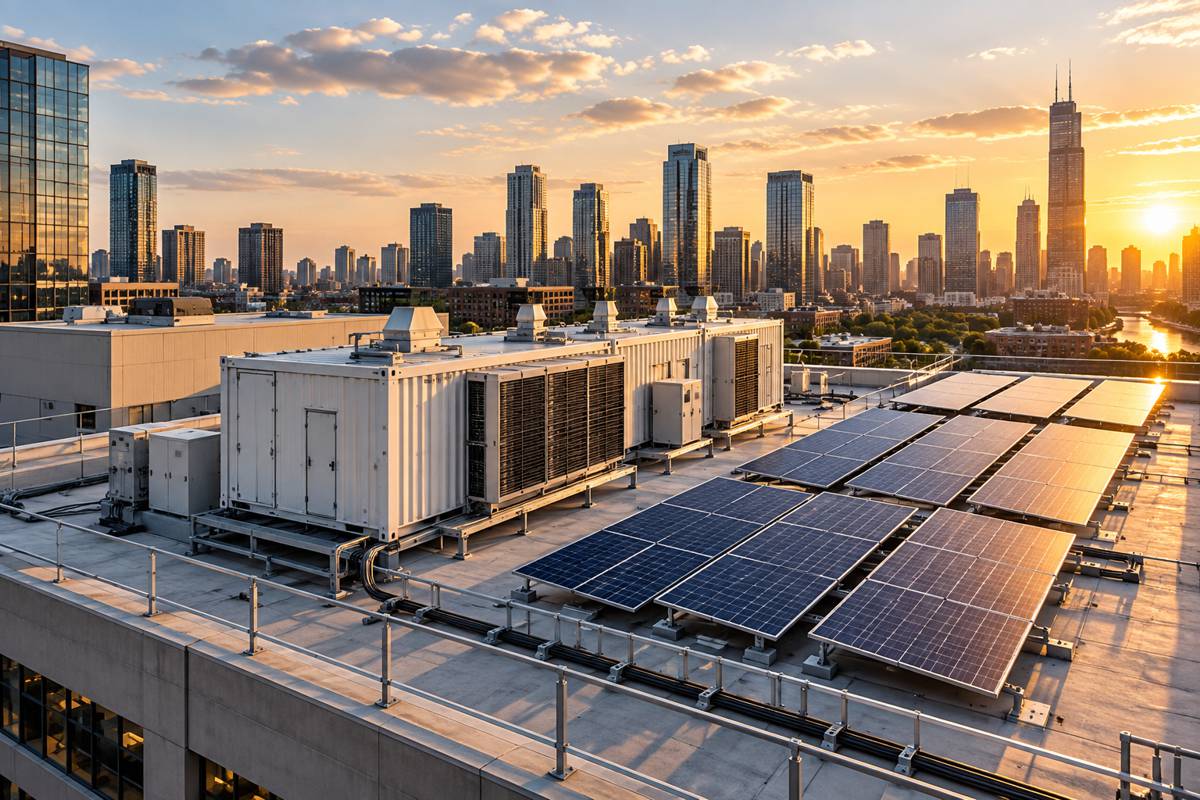
The successful demonstration of hydrogen-powered backup systems raises broader questions about how such solutions can be integrated into future data centre designs. Behind-the-meter generation is likely to play a central role, allowing operators to manage power supply directly on site.
This approach offers several advantages. It reduces reliance on grid connections, shortens deployment timelines and provides greater resilience against outages. In regions where grid capacity is constrained, it may also enable new data centre developments that would otherwise face delays.
Hydrogen-based systems can be configured to operate alongside other energy sources, including renewables and battery storage, creating hybrid architectures that balance reliability with sustainability. These systems can also contribute to grid stabilisation by providing flexible load management and peak shaving capabilities.
However, scaling this approach will require coordinated efforts across multiple fronts. Fuel availability must be secured, storage solutions optimised and regulatory frameworks adapted to accommodate new technologies. Permitting processes, in particular, could become a bottleneck if not streamlined.
From Demonstration to Deployment
While the 3 MW test represents a significant milestone, it is only the beginning of a broader transition. Moving from pilot projects to widespread deployment will involve addressing practical considerations that extend beyond technical performance.
Supply chains for hydrogen must expand to meet growing demand, supported by investment in production, transport and storage infrastructure. At the same time, cost competitiveness will play a decisive role, particularly as operators weigh the financial implications of transitioning away from established diesel systems.
Dual-fuel capabilities may offer a pragmatic pathway during this transition period, allowing engines to operate on both hydrogen and conventional fuels as supply chains mature. This flexibility could help mitigate risk while enabling gradual adoption.
INNIO Group and the Net Zero Innovation Hub for Data Centers have indicated that further collaboration will focus on these critical enablers, including infrastructure development, regulatory alignment and integration into data centre architectures.
Powering the Next Phase of Digital Growth
The convergence of digital expansion and energy transition is reshaping the infrastructure landscape. Data centres, once peripheral to energy debates, are now at the centre of discussions about sustainability, resilience and economic growth.
The successful validation of hydrogen-powered backup systems at scale signals a shift in what is achievable. It suggests that low-carbon alternatives can meet the stringent performance requirements of mission-critical environments, challenging long-held assumptions about the limitations of clean energy technologies.
For construction and infrastructure professionals, the implications are far-reaching. New design paradigms will emerge, supply chains will evolve and regulatory frameworks will adapt to accommodate changing energy systems. Those who anticipate these shifts and position themselves accordingly will be better equipped to navigate the transition.
In practical terms, hydrogen may not replace diesel overnight. Yet the direction of travel is becoming increasingly clear. As demand for digital infrastructure continues to surge, the pressure to deliver reliable, scalable and sustainable power solutions will only intensify.
The recent demonstration does not resolve every challenge, but it provides a tangible indication that the industry is moving beyond theory and into implementation. And in a sector where reliability is paramount, that shift carries considerable weight.