Mitsubishi Electric Redefine Industrial Interfaces in the Age of Smart Manufacturing
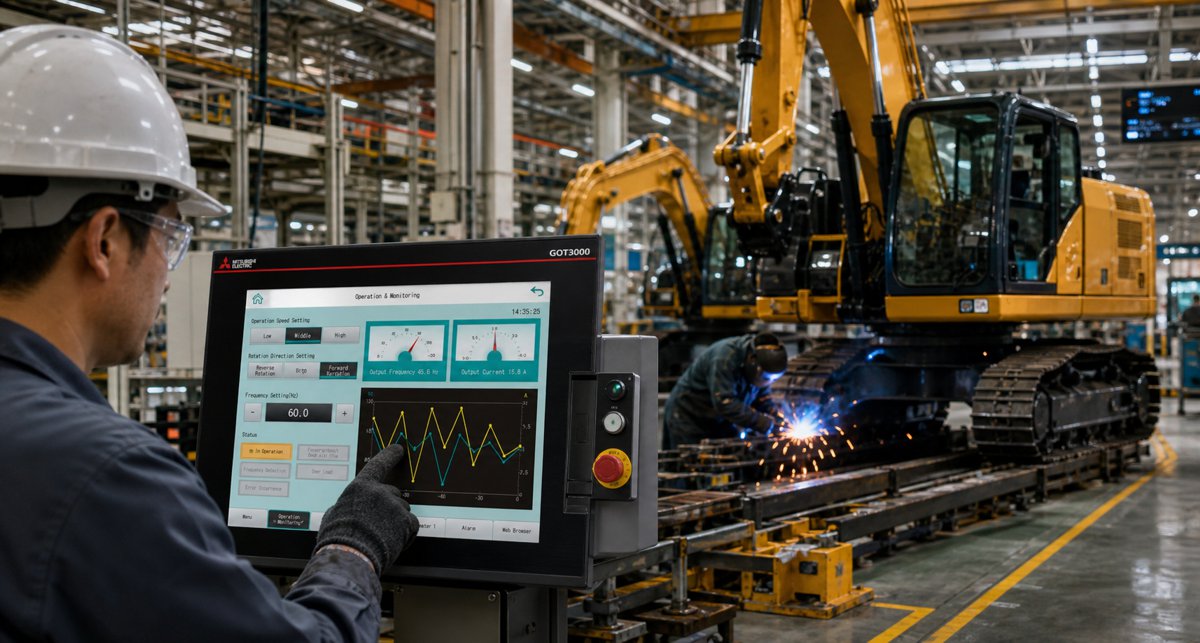
Manufacturing is no longer just about machines and output. It is increasingly about data, connectivity, and the ability to act on insights in real time. Against that shifting landscape, Mitsubishi Electric has introduced its latest Human-Machine Interface platform, the GOT3000, positioning it as a central component in the evolution of digitally connected factories.
The launch comes at a time when manufacturers across sectors are under pressure to modernise operations, improve productivity, and integrate operational technology with enterprise-level systems. HMI devices, once confined to simple operator panels, are now expected to serve as intelligent nodes within a broader digital ecosystem. The GOT3000 reflects that shift, moving beyond traditional control interfaces to function as a bridge between shop-floor equipment and higher-level digital infrastructure.
At its core, the system is designed to support ongoing digital transformation strategies. Manufacturers are no longer satisfied with isolated automation. They want visibility across assets, predictive insights, and secure connectivity. The GOT3000 has been developed to respond to those demands, combining familiar usability with capabilities that align with modern industrial architecture.
Briefing
- Introduces advanced HMI functionality that integrates factory systems with enterprise IT environments
- Supports open communication standards including OPC UA and cloud connectivity
- Enhances remote monitoring, predictive maintenance and system visibility through secure networking
- Combines high-definition display technology with multi-touch operation for improved usability
- Designed for seamless integration across legacy systems and modern automation platforms
A Strategic Shift in the Role of HMI
For decades, HMIs served a relatively straightforward purpose. They provided operators with a visual interface to control machinery and monitor basic performance indicators. That role is now expanding rapidly, driven by the rise of Industry 4.0 and the increasing importance of data-driven decision-making.
The GOT3000 reflects this transition. Rather than acting solely as a local interface, it operates as a gateway that connects operational technology with IT systems. This enables manufacturers to extract meaningful insights from production data while maintaining operational continuity. In practical terms, it allows production managers to view, analyse and respond to real-time information across multiple assets and facilities.
This shift aligns with broader industry trends. According to research from organisations such as McKinsey & Company, digital transformation in manufacturing can increase productivity by up to 20 percent while significantly reducing downtime. Achieving those gains depends heavily on the ability to integrate systems and make data accessible. The GOT3000 is designed to support that integration without adding unnecessary complexity.
Connectivity as the Foundation of Modern Manufacturing
One of the defining features of the GOT3000 is its emphasis on connectivity. By supporting widely adopted communication standards such as OPC UA, the platform enables seamless data exchange between devices, systems and cloud environments. This interoperability is essential in modern factories, where equipment from multiple vendors must work together reliably.
The inclusion of both client and server capabilities within the OPC UA framework allows the HMI to both retrieve and distribute data across networks. This makes it possible to connect not only to programmable logic controllers and automation devices but also to enterprise resource planning systems and cloud-based analytics platforms.
Connectivity extends beyond traditional industrial protocols. The system incorporates features such as USB-C interfaces, NFC-based interactions and a built-in web browser. These additions may seem incremental, yet they reflect a broader push towards flexibility and ease of access. Engineers and operators can configure and monitor systems without relying on dedicated hardware, streamlining workflows and reducing dependency on specialised tools.
Future compatibility also plays a role. Support for network camera integration and video connectivity opens the door to enhanced monitoring capabilities. In environments where visual inspection is critical, such as semiconductor manufacturing or pharmaceuticals, this capability can significantly improve oversight and quality control.
Security and Remote Operations Move to the Forefront
As factories become more connected, cybersecurity has become a central concern. Industrial systems are increasingly exposed to external networks, making robust protection measures essential. The GOT3000 addresses this challenge through encrypted communication protocols, data encryption and integrated virtual private network functionality.
These features enable secure remote access to equipment and systems. Maintenance teams can diagnose and resolve issues without being physically present, reducing downtime and operational costs. In industries where continuous operation is critical, such as automotive manufacturing or logistics, this capability is particularly valuable.
Remote access also supports predictive maintenance strategies. By continuously monitoring system performance and analysing trends, manufacturers can identify potential issues before they escalate into failures. This approach is widely recognised as a key component of modern asset management. Research from Deloitte highlights that predictive maintenance can reduce maintenance costs by up to 25 percent while improving equipment uptime.
The GOT3000’s secure connectivity framework enables these strategies to be implemented without compromising system integrity. It allows organisations to scale digital initiatives across multiple sites while maintaining consistent security standards.
Engineering Efficiency and System Integration
Introducing new capabilities often comes at the cost of increased complexity. One of the more practical aspects of the GOT3000 is its focus on maintaining a familiar engineering environment. Existing users of Mitsubishi Electric’s HMI systems will find continuity in the design tools and workflows, reducing the learning curve and enabling faster deployment.
At the same time, the platform introduces enhancements that streamline interface development. Engineers can create and customise screens more efficiently, allowing for rapid adaptation to changing operational requirements. In fast-moving production environments, this flexibility can make a tangible difference.
Integration with Mitsubishi Electric’s MX Controller platform further strengthens the system’s capabilities. By enabling tighter communication between the HMI and control systems, the platform reduces engineering overhead and improves system responsiveness. Support for industrial networks such as CC-Link IE TSN ensures compatibility with high-speed, time-sensitive applications.
Backward compatibility remains a key consideration. Many manufacturers operate a mix of legacy and modern equipment, and replacing entire systems is rarely feasible. The GOT3000 is designed to integrate with existing infrastructure, allowing organisations to upgrade incrementally rather than undertaking large-scale replacements.
Enhancing the Operator Experience
While connectivity and integration are critical, the human element remains central to industrial operations. The GOT3000 introduces a high-definition display capable of rendering millions of colours, providing clearer visualisation of data and system status. This level of detail can improve situational awareness, particularly in complex production environments.
The use of a capacitive multi-touch interface brings a level of familiarity to industrial controls. Operators can interact with systems using gestures similar to those found on consumer devices, such as swiping and pinching. This can reduce training requirements and minimise input errors, especially for new personnel.
Dynamic animations and smoother screen transitions contribute to a more intuitive user experience. Although these features may appear cosmetic, they can enhance usability by making interfaces easier to navigate and interpret. In environments where operators must respond quickly to changing conditions, clarity and responsiveness are essential.
The addition of video capabilities further strengthens operational oversight. By enabling live and recorded video feeds, the system allows operators to visually assess processes and investigate issues. In the event of a malfunction, comparing recorded footage with real-time conditions can help identify root causes more quickly, reducing downtime and improving recovery times.
Industry Applications and Market Impact
The GOT3000 is intended for use across a range of industries, including automotive manufacturing, semiconductor production, material handling and pharmaceuticals. Each of these sectors faces increasing pressure to improve efficiency, maintain quality and adapt to changing market conditions.
In automotive production, for example, the ability to monitor and adjust processes in real time can support just-in-time manufacturing strategies. Semiconductor facilities, which require extremely precise control and monitoring, can benefit from enhanced visualisation and connectivity. Material handling operations can improve logistics efficiency through better system integration, while pharmaceutical manufacturers can strengthen compliance and traceability.
The broader impact lies in the system’s ability to support digital transformation at scale. As manufacturers adopt more advanced technologies, the need for cohesive, integrated systems becomes more pressing. The GOT3000 provides a platform that can support that transition, enabling organisations to move towards more connected and intelligent production environments.
The timing of the launch is also significant. With global manufacturing undergoing rapid change, investments in automation and digital infrastructure continue to grow. According to data from International Federation of Robotics, industrial robot installations have reached record levels, reflecting a broader trend towards automation. HMI systems play a crucial role in managing and optimising these automated processes.
A Platform Built on Experience
The development of the GOT3000 draws on more than a decade of HMI design experience. Mitsubishi Electric has incorporated feedback from a wide user base, refining the system to address real-world operational challenges. This iterative approach is evident in the balance between advanced functionality and practical usability.
“With the GOT3000, we’re enabling customers to advance their digital transformation with confidence, combining advanced performance with trusted engineering to drive the next generation of smart production,” said Go Wakamatsu, General Manager, HMI System Dept. at Mitsubishi Electric.
“Built on over 12 years of HMI design expertise and informed by feedback from thousands of users, the GOT3000 not only reflects our long legacy of successful HMI developments, but delivers what customers need for smarter, more efficient manufacturing.”
These remarks underline the company’s focus on continuity as well as innovation. While the system introduces new capabilities, it remains grounded in established engineering principles that prioritise reliability and ease of use.
Shaping the Next Phase of Industrial Digitalisation
As manufacturing continues to evolve, the boundaries between physical operations and digital systems are becoming increasingly blurred. The ability to connect, monitor and optimise processes in real time is no longer optional. It is becoming a fundamental requirement for competitiveness.
The GOT3000 reflects that reality. By combining connectivity, security, usability and integration, it provides a platform that aligns with the direction of modern manufacturing. It does not attempt to redefine the role of HMI overnight. Instead, it extends its capabilities in a way that supports gradual, sustainable transformation.
For construction professionals, infrastructure operators and industrial stakeholders, the implications are clear. As projects become more complex and data-driven, the tools used to manage them must evolve accordingly. Systems like the GOT3000 are part of that evolution, enabling organisations to harness the full potential of their assets while maintaining control and reliability.