Traffic is Created by Cities Not Just Roads
Traffic congestion is often blamed on inadequate roads, poor junction design or a lack of capacity. Yet new international research suggests that view only tells part of the story. The way cities are built, how neighbourhoods are arranged, where jobs are concentrated and how people use urban space may be just as influential in determining whether traffic flows or stalls.
That matters far beyond academic debate. Governments worldwide are investing billions in roads, rail systems, smart mobility tools and urban regeneration. If congestion is shaped as much by land use as transport infrastructure, policymakers may need to rethink where money goes and how cities grow. Building another lane may ease pressure temporarily, but it may not solve the root cause.
Researchers from ETH Zurich and the University of Wisconsin-Madison examined 30 major cities worldwide to explore the relationship between urban development and traffic congestion. Their findings, published in Nature Communications, suggest that traffic is not simply the product of roads. It is the outcome of how cities function over time.
For the global construction and infrastructure sector, the implications are considerable. Developers, transport authorities, planners and investors may need to coordinate more closely if future cities are to remain productive, liveable and commercially efficient.
Briefing
- Study examined 30 global cities to analyse links between urban form and congestion
- Researchers found two-way causal relationships between city development and traffic patterns
- Mixed-use neighbourhoods were associated with lower traffic pressure
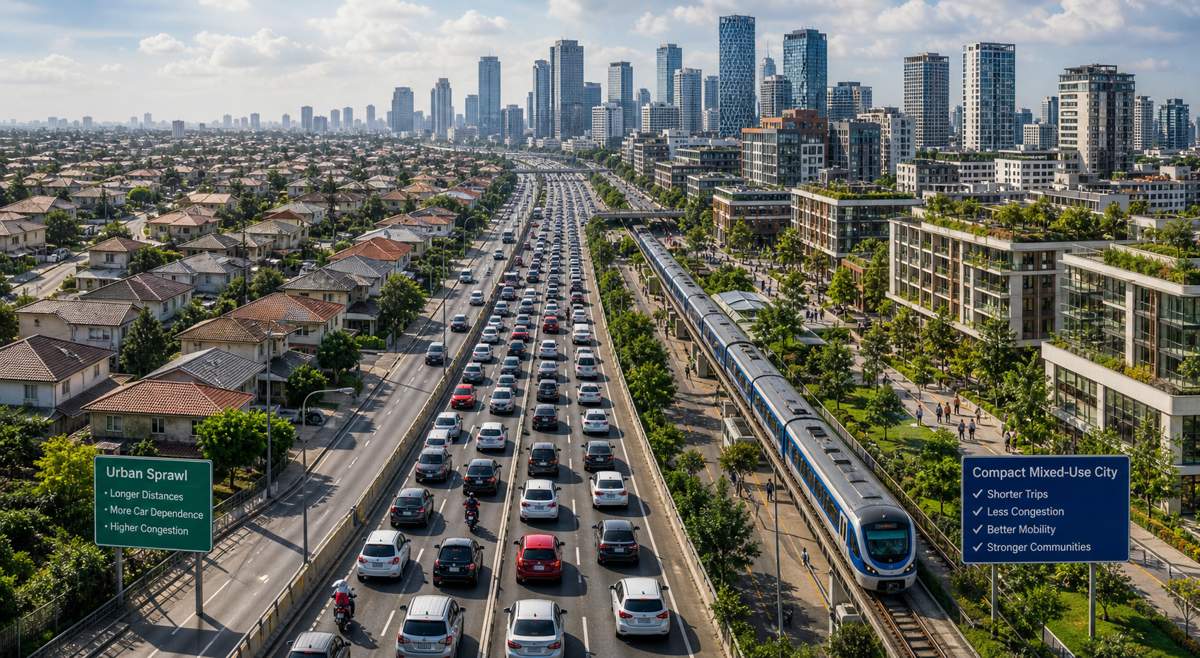
- Urban sprawl and concentrated activity zones tended to increase congestion
- Findings could reshape transport planning, housing policy and infrastructure investment
Thirty Cities Under the Microscope
The study compared metropolitan areas across different continents, including Zurich, Singapore and Los Angeles. Rather than relying on anecdotal observations, researchers combined large-scale geospatial datasets with real-world congestion data to understand how cities behave.
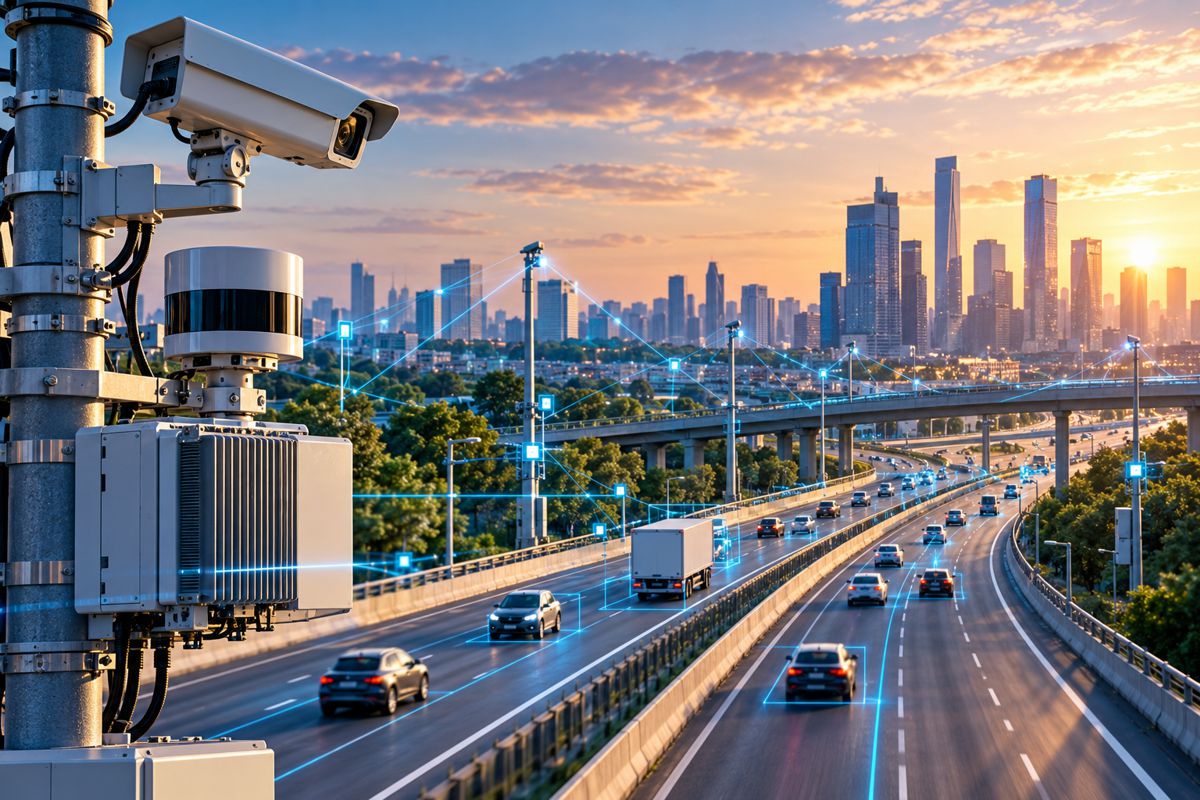
Traffic information came from HERE Technologies, which gathers movement and congestion patterns using connected vehicle and mapping data. In Los Angeles alone, more than 18,000 road sections were included, with traffic conditions measured in five-minute intervals.
That level of granularity is significant. Many traffic studies rely on annual snapshots or peak-hour counts. This research instead captured the pulse of city movement throughout the day, allowing planners to compare not only where congestion occurs, but how it evolves.
Roads Matter But They Are Not the Whole Story
The researchers examined road networks, junction density and connectivity, but they also studied urban shape, district layouts, green spaces and land use. Residential zones, shopping areas, education hubs, sporting districts and administrative centres were all included.
This broader lens produced a clearer picture. A city’s traffic load was linked not only to transport infrastructure but also to how people are distributed across urban areas. If housing is far from employment centres, commuting pressure rises. If leisure facilities cluster in one district, weekend traffic intensifies. If homes, offices and amenities are mixed together, trip distances can fall.
Lead researcher Yatao Zhang summarised it directly: “Traffic is created by what people do, not just by the existence of roads.”
That line cuts to the heart of a long-running industry challenge. Engineers can optimise junctions and widen corridors, but if planning systems continue separating homes from jobs and services, congestion can simply be reproduced elsewhere.
The Hidden Cost of Urban Sprawl
One of the clearest signals from the study was the impact of sprawling development patterns. Low-density outward growth often means longer travel distances, greater car dependence and higher demand on arterial roads.
This is a familiar issue in fast-growing cities across North America, the Middle East, Africa and parts of Asia. Peripheral housing developments may appear commercially attractive due to lower land values, yet they can impose expensive long-term infrastructure burdens. Roads, utilities, public transport links and maintenance costs all rise as cities spread.
For contractors and infrastructure investors, that creates a strategic dilemma. Sprawl can generate substantial project pipelines in the short term, but compact, efficient urban growth may deliver stronger long-term returns through lower congestion costs and better productivity.
According to the OECD, congestion imposes significant economic costs through lost time, fuel waste and supply chain inefficiency across developed economies. Urban form therefore becomes an economic variable, not just a planning issue.
Why Mixed Use Development Is Back in Focus
The study also found that mixed-use areas, where people can live, work and access services nearby, tend to generate less traffic pressure. This aligns with planning models increasingly adopted in Europe and parts of Asia.
Developments that combine housing, retail, workspace and leisure functions can reduce commuting distances and spread travel demand across the day. For infrastructure planners, this can lower the need for repeated road expansion and create stronger conditions for walking, cycling and public transport.
That does not mean every district should become a dense mixed-use core. Cities require industrial land, logistics corridors and specialised employment zones. However, the research suggests that overly rigid separation of uses may worsen congestion.
For developers, this could influence future land values. Locations that support integrated neighbourhood models may become more attractive as municipalities seek growth without gridlock.
Singapore and Zurich Show Different Models
The comparison between Singapore and Zurich highlighted how urban structure changes outcomes. Singapore’s more defined residential districts feeding major employment centres create strong commuter flows tied closely to land-use change. When residential areas expand, transport demand reacts quickly.
Zurich presents a different pattern, with housing more widely distributed across the city. That diffuses demand and weakens the direct relationship between any one housing area and commuter pressure.
Neither model is universally right or wrong. Rather, the findings show that every city has its own traffic logic shaped by decades of planning choices. Imported solutions often fail because they ignore local urban structure.
That is a useful reminder for international consultants and contractors. Smart mobility systems, road widening schemes or rail expansions need to fit the city they serve, not simply replicate what worked elsewhere.
What This Means for Construction and Infrastructure
For the construction sector, the study strengthens the case for integrated planning. Roads, rail, housing, commercial development and digital traffic systems can no longer be treated as isolated silos.
Large projects may increasingly require combined modelling of land use and mobility impacts before approval. That could expand demand for digital twins, GIS platforms, traffic simulation, mobility analytics and scenario planning tools.
For transport agencies, it may also mean judging success differently. Instead of measuring only kilometres built or junction throughput, authorities may focus more on accessibility, average journey times and how development patterns reduce demand growth.
Consultancies, planners and civil engineering firms that can bridge transport design with urban economics may be especially well positioned.
Smarter Cities Need Smarter Questions
Professor Martin Raubal of ETH Zurich noted that the method could help predict how changes such as a major shopping centre might affect traffic in the medium term. That forecasting ability could be valuable for cities trying to avoid costly mistakes before construction begins.
The wider lesson is simple enough. Congestion is not merely a road problem. It is often a city design problem expressed through roads.
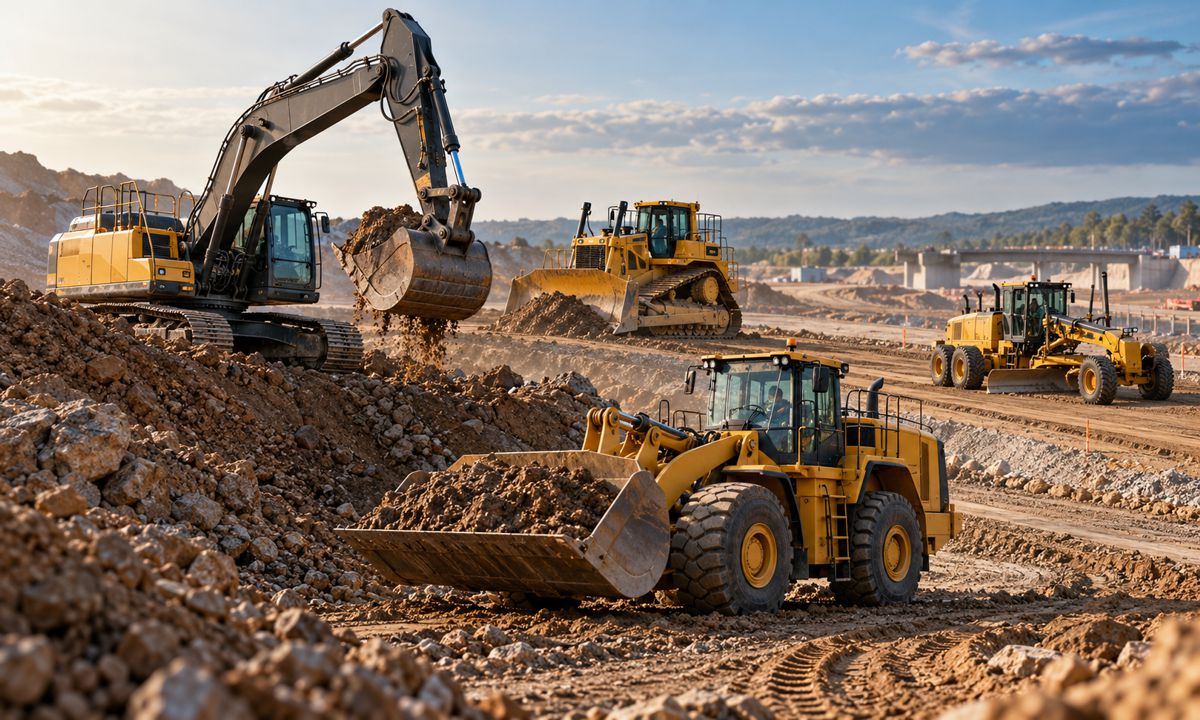
For an industry under pressure to deliver sustainable growth, resilient mobility and better returns on public spending, that distinction matters. The future of traffic management may begin long before the first excavator arrives on site.