Rebuilding Ghana’s Eastern Corridor with Precision Topcon Technology
Ghana’s decision to modernise a crucial stretch of its Eastern Corridor is far more than a roadworks programme. It is a strategic intervention in trade logistics, regional mobility and long-term economic resilience. The reconstruction of the Ashaiman Roundabout to Akosombo Junction section will strengthen one of the country’s most important transport arteries, linking the Port of Tema with inland markets and onward freight routes to Burkina Faso.
Spanning 63.7 kilometres and carrying a reported contract value of more than €256 million, the project ranks among the most significant live highway upgrades in West Africa. Once complete, it is expected to reduce congestion, improve journey reliability, support safer travel and increase freight efficiency on a route that underpins domestic and cross-border commerce.
For construction professionals and policymakers alike, the scheme offers another lesson that’s becoming harder to ignore. Large transport corridors can no longer be delivered efficiently using analogue methods alone. Accuracy, digital coordination and machine control are increasingly central to delivering complex infrastructure on time and to specification.
Briefing
- Ghana is upgrading 63.7 km of the Eastern Corridor between Ashaiman Roundabout and Akosombo Junction.
- The route is vital for freight moving from the Port of Tema to northern Ghana and Burkina Faso.
- Works include expansion from single carriageway sections to dual or triple lanes and a new flyover.
- Contractor Inzag is using digital construction systems from Topcon across grading, paving and survey operations.
- The project is scheduled for completion in late 2029 and is expected to reshape national mobility.
A Road That Carries National Importance
The Eastern Corridor has long served as one of Ghana’s principal north-south transport routes. It channels imported goods arriving through Tema, one of West Africa’s busiest ports, into inland commercial centres and neighbouring landlocked economies. When such corridors become congested or deteriorate, the economic impact can ripple far beyond the road itself.
According to the World Bank and regional transport studies, efficient logistics corridors are strongly linked to lower trade costs, stronger agricultural supply chains and improved industrial competitiveness. In practical terms, smoother highways mean faster truck turnarounds, reduced fuel use and more dependable delivery schedules.
That helps explain the scale of the Ghanaian investment. Expanding capacity on this route is not simply about adding lanes. It is about protecting a national growth engine and strengthening Ghana’s role as a gateway economy in West Africa.
Engineering Under Live Traffic Conditions
Projects of this kind rarely unfold on empty ground. The Eastern Corridor remains operational, meaning construction teams must rebuild sections while managing live traffic, constrained access and changing ground conditions. That creates a balancing act between progress, safety and maintaining public mobility.
The route is being widened from single-lane sections to dual or triple lanes in each direction, alongside construction of a new flyover. Such upgrades demand extensive earthworks, drainage coordination, surfacing operations and traffic staging. Where space is tight, every movement of labour, aggregates and heavy plant must be carefully sequenced.
Mistakes on linear infrastructure projects can be expensive. A grading error repeated over kilometres can lead to material waste, delays and costly rework. That is why contractors increasingly rely on digital workflows rather than traditional stake-and-string methods alone.
Digital Construction Moves Centre Stage
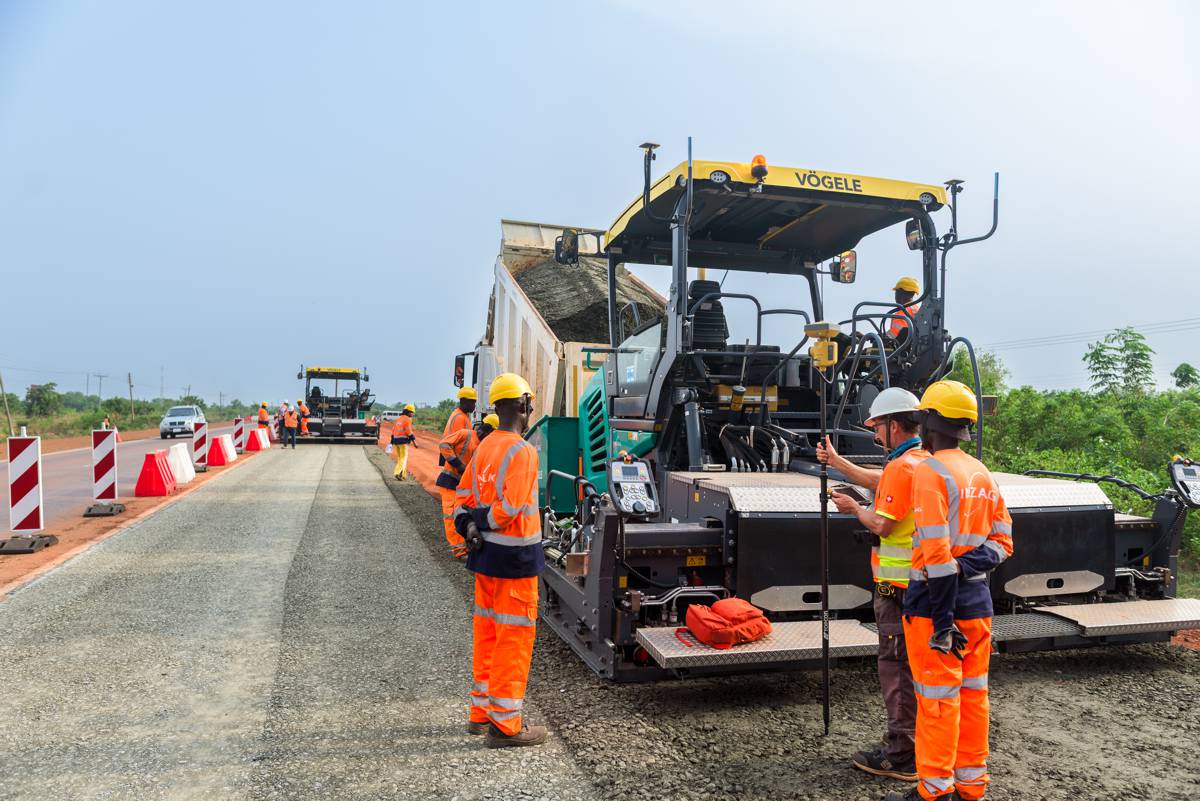
Contractor Inzag has integrated construction technology from Topcon Positioning Systems across the project, applying machine control and digital workflows to graders, pavers and slipform equipment.
Rather than treating technology as an add-on, the systems were introduced as part of a connected delivery model linking design data, surveying, grading and paving. That approach creates what many in the sector call a digital thread, allowing field operations to work from coordinated models rather than fragmented paper plans.
For long highway schemes, the benefits can be substantial. Digital machine control can improve tolerance accuracy, reduce staking requirements, limit over-excavation and help contractors use labour more efficiently. It also allows progress to continue with greater consistency during tight possession windows or traffic-managed shifts.
Precision With mmGPS
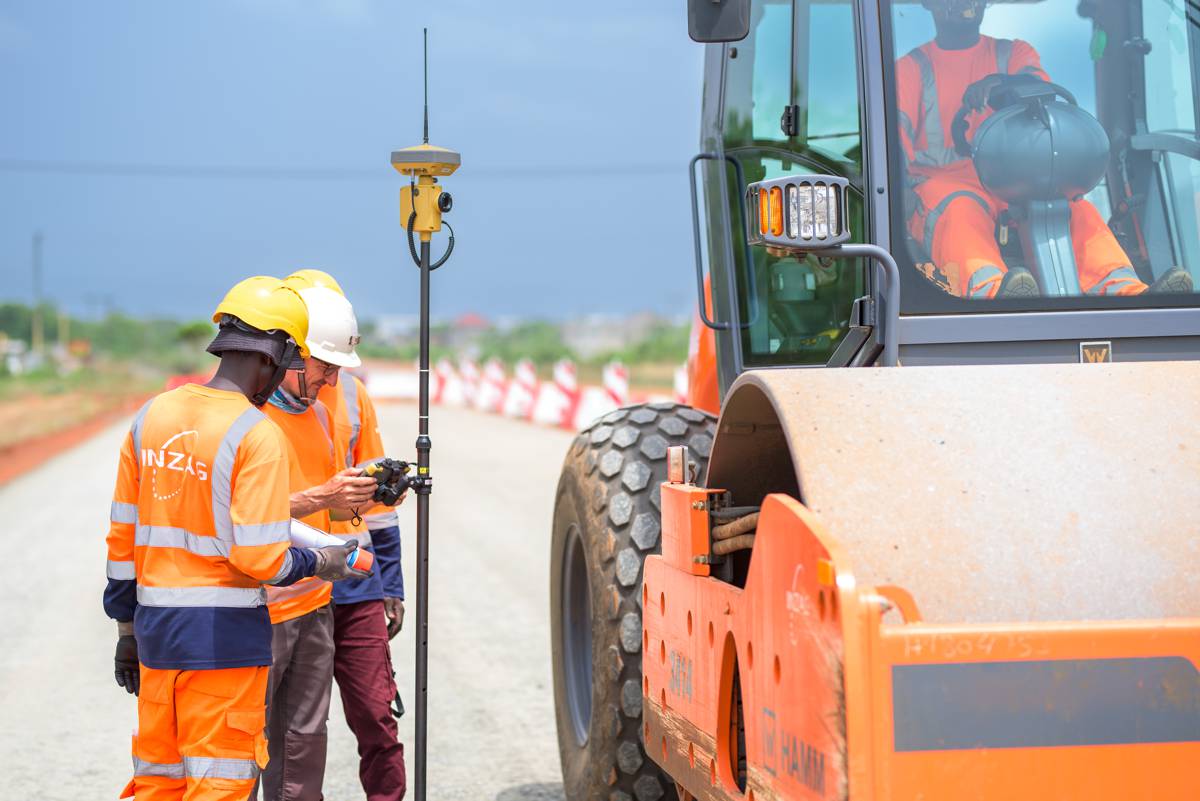
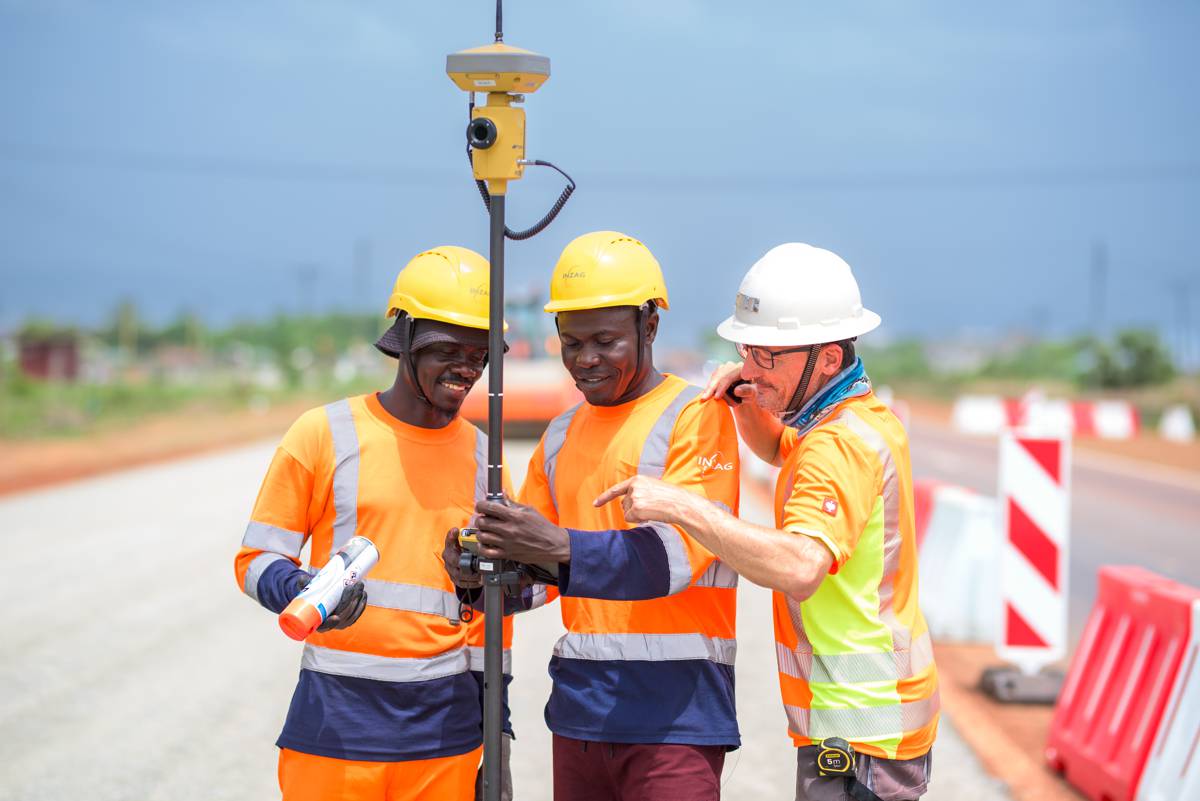
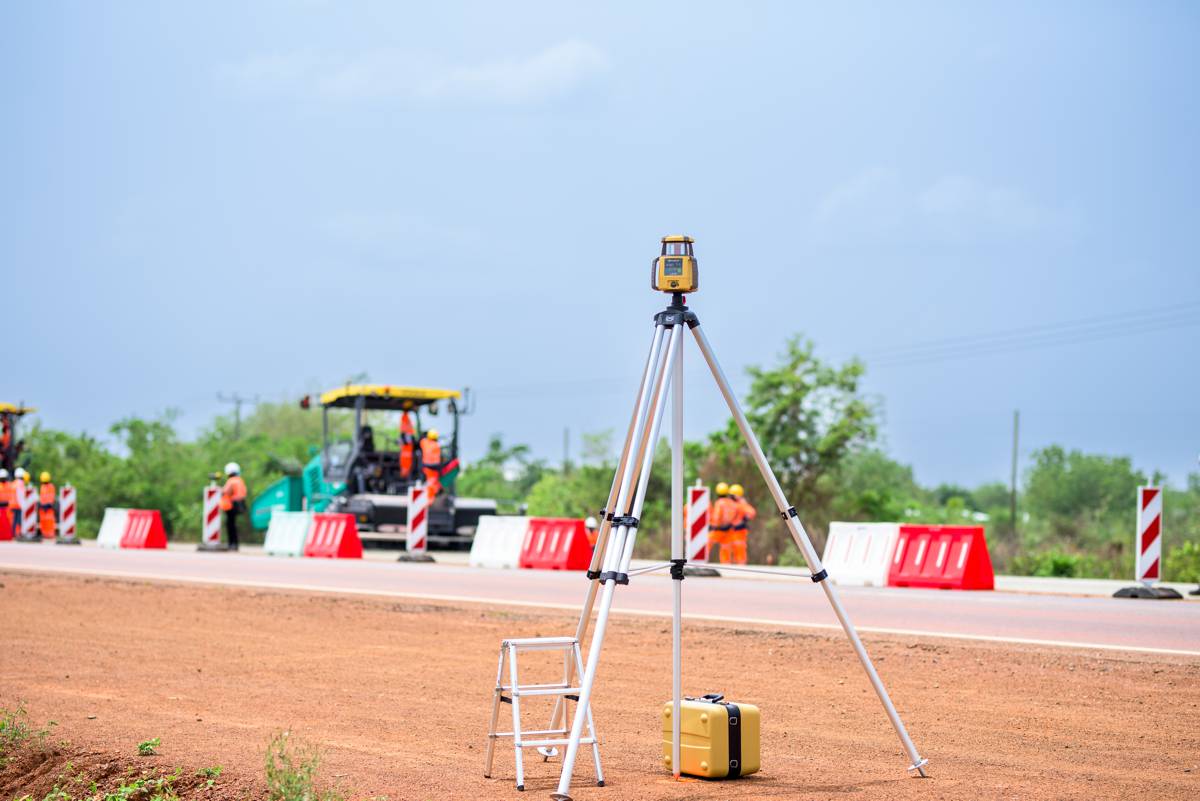
One of the systems deployed is Topcon’s millimetre GPS, or mmGPS, used on two motor graders and a slipform machine. The technology combines satellite positioning with local augmentation to deliver highly accurate vertical control, particularly valuable where tight tolerances are required.
That matters on road corridors where formation levels and crossfall consistency directly influence drainage, pavement life and ride quality. If levels drift, water retention and premature surface distress can follow. Precision during earthworks often determines long-term asset performance.
José Pinto, surveyor at Inzag, described the operational impact: “The accuracy we achieve with mmGPS has changed the way we work. It gives us confidence in every measurement, even in difficult conditions, and it reduces the time we spend checking and rechecking levels. It allows us to focus on progress rather than corrections. Even at this early stage, the technology has already demonstrated strong potential to improve productivity, accuracy, and work efficiency.”
Smoother Paving Through Data-Led Workflows
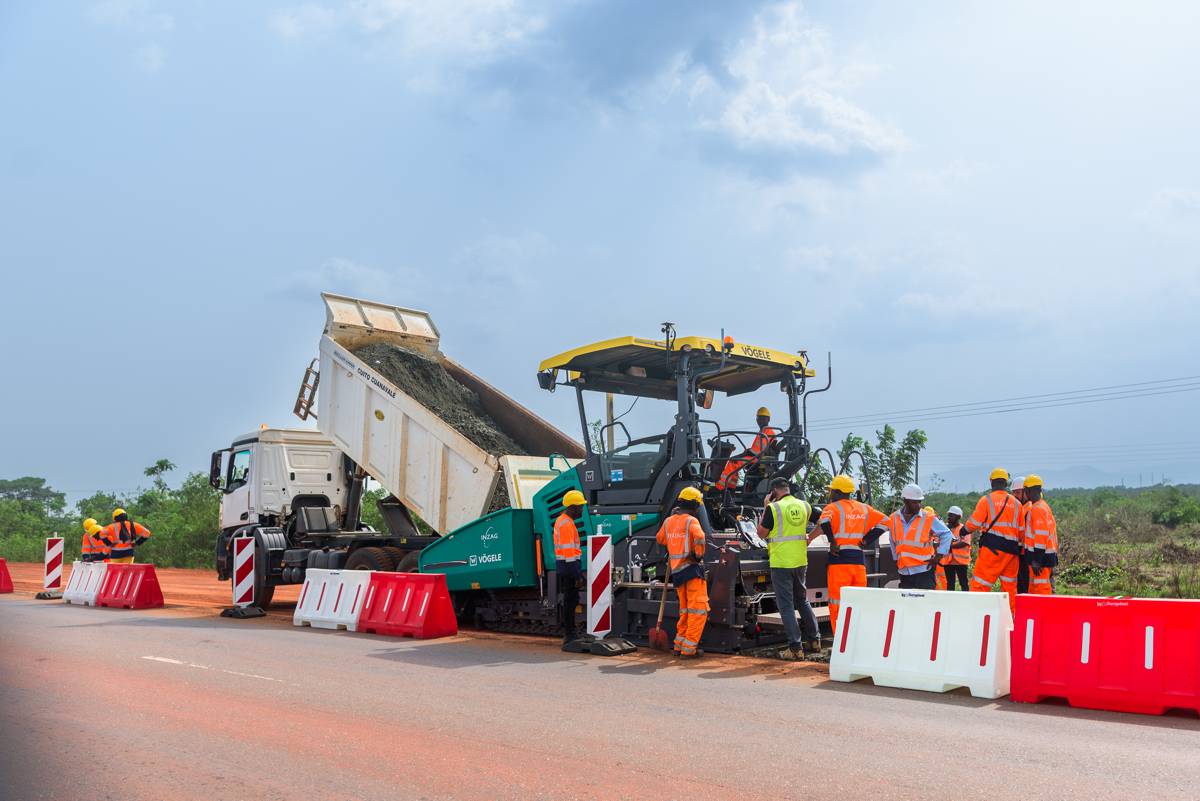
The project is also using SmoothRide resurfacing technology to support paving operations. By combining 3D design information with GNSS positioning, such systems are intended to help maintain surfacing accuracy and steady paving output even where site access is constrained.
Road agencies worldwide are placing greater emphasis on ride quality because smoother pavements can lower vehicle operating costs, reduce tyre wear and improve user satisfaction. Research from transport bodies including the OECD has repeatedly linked better road condition with broader economic productivity.
For contractors, smoother delivery also reduces the likelihood of remedial grinding or correction passes, protecting margins and programme certainty.
Skills Transfer
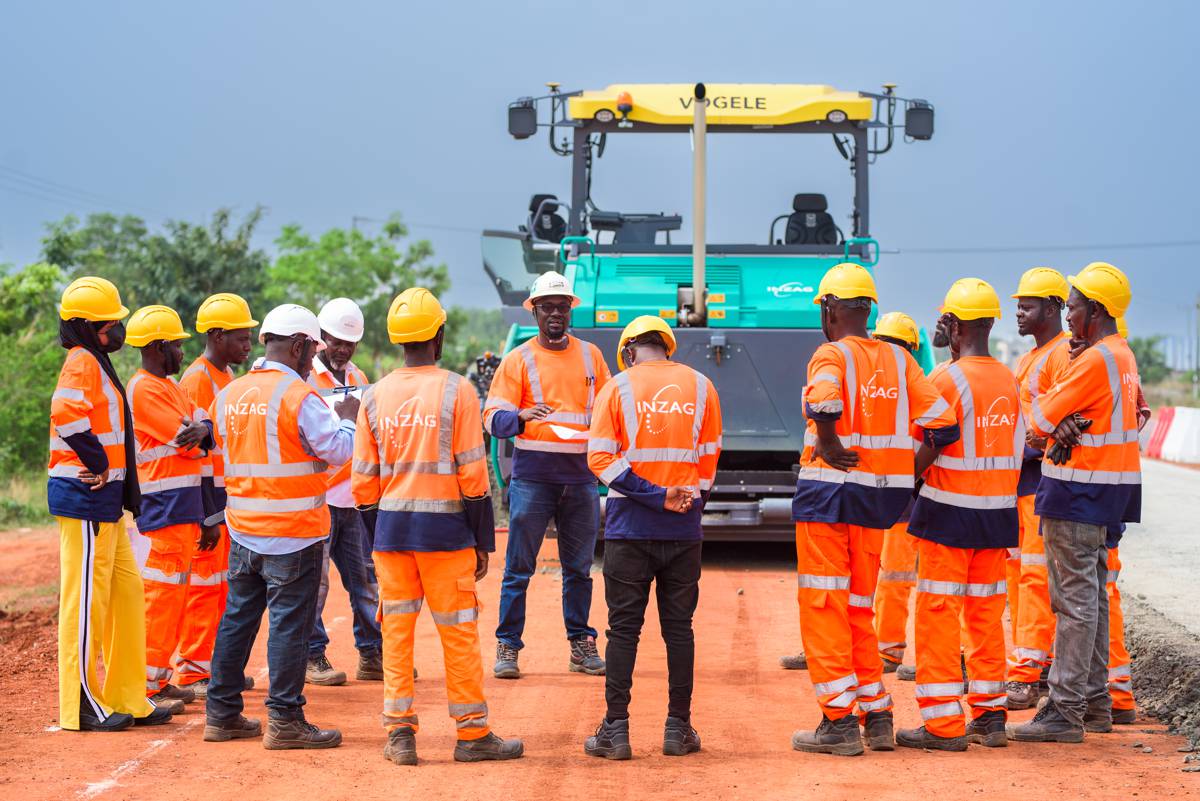
Technology alone rarely transforms a project. Training, adoption and operator confidence often determine whether investment delivers genuine returns. On the Ghana corridor, Topcon specialists were involved in installation, setup and hands-on workforce support.
Luca Nocentini, Senior 3D Paving Application Specialist at Topcon, has played a notable role in supporting deployment on site. His involvement highlights how specialist expertise is becoming increasingly important as paving systems grow more data-driven and integrated.
He said: “Our goal is always to empower the contractor, not just equip them. From the first day on site, we worked side by side with Inzag’s teams to ensure every system was optimized for their workflow. The commitment and professionalism of their operators made it a true partnership.”
That human element can be overlooked. Yet on major infrastructure programmes, well-trained operators frequently make the difference between average productivity and exceptional delivery.
Partnership on the Ground
Inzag’s project leadership has also emphasised the value of responsive technical support during live operations, where downtime or unresolved calibration issues can quickly become costly.
José Teles, project manager at Inzag, said: “Topcon understands the realities of delivering a project of this scale. Their technology gives us the precision we need, but it’s the consistency of their support that truly makes the difference. They don’t just provide solutions but are also on hand for any additional support and invested in our success.”
That reflects a broader industry shift. Contractors increasingly judge suppliers not only by equipment performance, but by uptime support, training depth and ability to solve problems in the field.
What Completion Could Mean for Ghana
When the upgraded corridor opens, expected in late 2029, the benefits should extend well beyond motorists. Faster freight flows from Tema to northern Ghana could improve supply chain reliability for manufacturers, traders and agricultural producers. Reduced congestion near Ashaiman may also deliver measurable urban productivity gains.
There are safety implications too. Modernised geometry, better traffic separation and improved junction layouts often contribute to lower collision risk when paired with effective enforcement and maintenance.
For Ghana, the scheme represents a long-term bet on connectivity. For the wider infrastructure sector, it demonstrates that successful corridor renewal now depends as much on digital execution and skilled deployment as on asphalt, aggregates and concrete. That old divide between civil engineering and technology is fading fast.