JCB Strengthens Generator Security with CESAR Emissions Verification
The global construction and infrastructure industries are under growing pressure to tighten emissions compliance while tackling persistent equipment theft. The role of traceability in mobile power generation has now moved from a back-office concern to a frontline operational priority.
At the 2026 annual meeting of the Association of Manufacturers and Suppliers of Power Generating Systems, JCB signalled a clear shift in how generator fleets are identified, secured and verified across the UK.
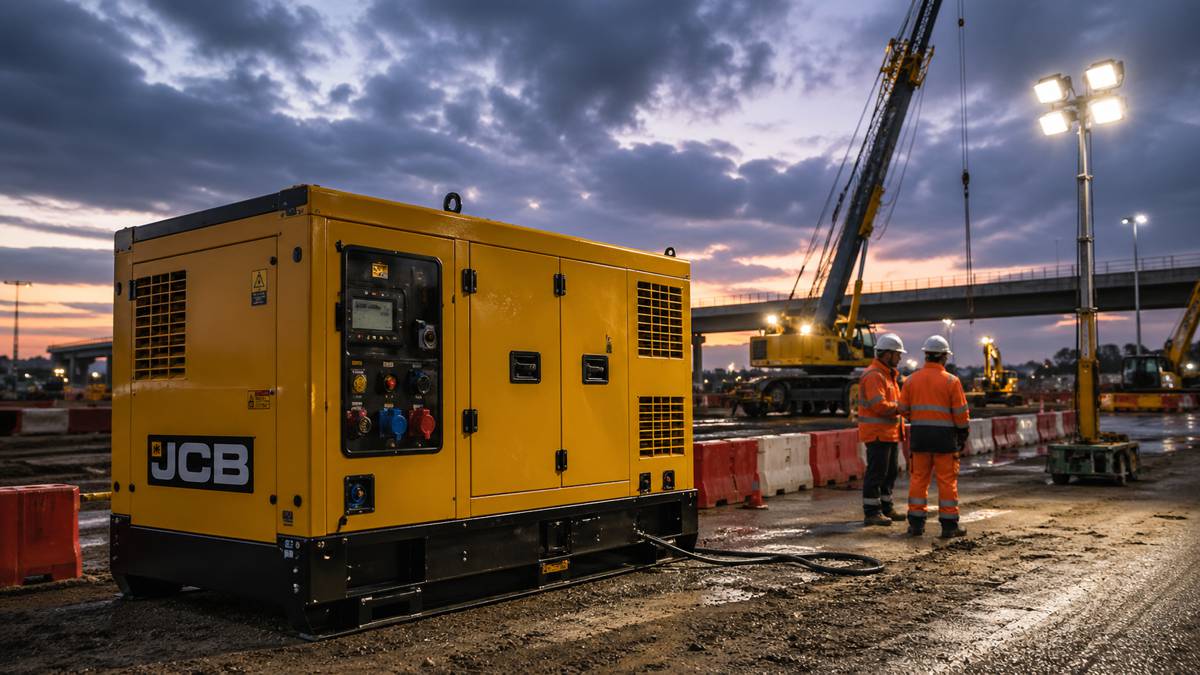
The company’s latest move centres on strengthening both physical security and emissions transparency within its Stage V generator range. It’s a pragmatic response to the realities of modern equipment usage, where assets frequently move between construction sites, hire fleets and infrastructure projects. In an industry where accountability increasingly extends beyond ownership to environmental compliance, reliable identification systems are becoming essential rather than optional.
At its core, the initiative reflects a wider industry recalibration. Contractors, plant hire firms and infrastructure operators now require more than performance metrics when selecting equipment. They need certainty that assets are compliant with evolving emissions standards, easily traceable across complex supply chains, and protected against theft. JCB’s approach aims to address all three pressures in a single, integrated step.
Briefing
- JCB is enhancing security and emissions visibility across its Stage V generator range
- The announcement was made at the AMPS 2026 annual meeting in the UK
- Adoption of CESAR Emissions Compliance Verification strengthens asset traceability
- Over 700,000 CESAR systems are now deployed across construction and agriculture
- The move reflects growing industry demand for compliance transparency and theft prevention
The Rising Importance of Generator Traceability
Power generation equipment occupies a unique position within construction and infrastructure projects. Unlike fixed assets, generators are routinely redeployed, hired and transferred between locations, often with limited oversight once they leave the depot. This mobility creates operational flexibility, but it also introduces risk, particularly when it comes to asset tracking and emissions compliance.
The challenge has intensified as regulatory frameworks tighten across Europe. Stage V emissions standards, introduced to limit pollutants from non-road mobile machinery, demand accurate verification of compliance throughout an asset’s lifecycle. For contractors working on publicly funded infrastructure or large-scale developments, failure to demonstrate compliance can lead to delays, penalties or exclusion from projects.
In parallel, equipment theft remains a persistent issue. According to industry bodies such as the Construction Equipment Association, stolen plant and machinery cost the UK economy tens of millions of pounds annually. Generators, due to their portability and resale value, are particularly vulnerable. This convergence of regulatory and security pressures has accelerated demand for robust identification systems that can serve both compliance and recovery purposes.
Integrating Security and Emissions Verification
JCB’s strategy builds on the established CESAR security framework, a widely adopted system designed to deter theft and aid recovery of stolen equipment. Developed and managed by the Construction Equipment Association and implemented by Datatag, the CESAR scheme combines visible and covert marking technologies with a national registration database.
The addition of CESAR Emissions Compliance Verification extends this concept beyond security. By linking a machine’s identity to its emissions classification, the system allows operators, regulators and buyers to verify compliance quickly and reliably. This dual-purpose functionality reflects a broader shift towards data-driven asset management, where identification is not just about ownership, but also about environmental accountability.
JCB was the first AMPS member to adopt CESAR ECV for its RS generator range, setting a precedent within the power generation segment. The move aligns generator equipment with practices already common in construction machinery, creating consistency across sectors that often share the same operational environments.
Tiago Courinha, JCB Global Business Head for Power Generation, underlined the practical focus behind the decision: “Customers want confidence that their equipment is compliant, secure and easy to identify. By backing clear identification and emissions checks, we’re supporting solutions that work on site and add real value for owners and operators.”
Industry Backing Signals Broader Adoption
The significance of JCB’s move lies not only in the technology itself, but in the endorsement it represents from a major manufacturer. Industry-wide adoption of standards often depends on early leadership from established players, particularly in sectors where equipment interoperability and shared practices are critical.
Viki Bell, CEO of the Construction Equipment Association, highlighted the wider implications: “JCB’s continued support for CESAR ECV is important for the wider sector. It shows that security and emissions visibility are being taken seriously at manufacturer level and that there is real value in giving customers practical support from the outset.”
This sentiment is echoed across the supply chain. Rental companies, in particular, stand to benefit from enhanced traceability, as they manage large, frequently rotating fleets. For them, the ability to verify both ownership and emissions status at a glance can streamline operations, reduce administrative burden and improve customer trust.
Kevin Howells, Managing Director of Datatag Ltd, pointed to the growing confidence in the system: “Passing 700,000 systems supplied is an important milestone for CESAR and a clear sign of the confidence the industry continues to place in the scheme. JCB’s support for CESAR ECV in the generator sector helps extend those benefits into another important part of the equipment market.”
Implications for Contractors and Infrastructure Projects
For contractors and project owners, the implications are immediate and practical. Equipment verification processes, which can often be time-consuming and inconsistent, become more streamlined when identification and compliance data are integrated into a single system. This is particularly relevant for large infrastructure projects, where multiple contractors and suppliers operate under strict environmental and safety requirements.
The approach also supports risk management strategies. With clear identification in place, the likelihood of unknowingly deploying non-compliant equipment is reduced. At the same time, enhanced security measures can lower insurance costs and minimise downtime associated with theft or loss.
From a procurement perspective, the move adds another layer of transparency. Buyers and hire firms can make more informed decisions, backed by verifiable data rather than relying solely on documentation or supplier assurances. In a market where reputational and regulatory risks are closely linked, that level of confidence carries tangible value.
Aligning with Broader Industry Trends
JCB’s initiative reflects a wider convergence of digitalisation, sustainability and security within the construction and infrastructure sectors. As equipment becomes more connected and data-rich, the boundaries between asset management, compliance monitoring and operational efficiency are increasingly blurred.
Across Europe, regulatory frameworks continue to evolve, with stricter emissions targets and greater emphasis on lifecycle accountability. At the same time, advances in telematics and data analytics are enabling more sophisticated tracking and reporting capabilities. Identification systems such as CESAR ECV sit at the intersection of these trends, providing a foundation for more integrated and transparent operations.
The power generation sector, often seen as a supporting function within construction, is now firmly within the spotlight. Temporary power solutions are critical to infrastructure delivery, from road construction to large-scale civil engineering projects. Ensuring that these assets meet both environmental and security standards is no longer a secondary consideration.
A Practical Step Towards Greater Confidence
JCB’s decision to strengthen security and emissions verification across its generator range may appear incremental, yet its implications are far-reaching. By aligning asset identification with compliance requirements, the company is addressing a set of challenges that cut across the entire infrastructure ecosystem.
The move doesn’t rely on complex new technologies or sweeping changes to operational practices. Instead, it builds on established systems, enhancing them to meet current demands. That pragmatic approach increases the likelihood of widespread adoption, particularly in an industry where simplicity and reliability are often valued over innovation for its own sake.
As the sector continues to balance environmental responsibilities with operational realities, measures that deliver clarity, accountability and protection will gain traction. JCB’s latest step suggests that the future of equipment management lies not in isolated solutions, but in integrated systems that serve multiple purposes with equal effectiveness.